
This converted bus has the warm, practical charm I always love in a space that has to work hard and still feel inviting. Set within a green summer homestead, the design leans rustic without becoming heavy, pairing weathered wood, matte black metal, and soft natural textiles with the compact ingenuity of a tiny home. What makes it special is the way the layout unfolds with surprising grace: every inch feels considered, yet nothing feels fussy.
As a concept design, it imagines the best version of off-grid living with a cook’s sense of priorities and a homesteader’s respect for materials. I’m drawn to how the bus balances romance and utility, from the sun-washed exterior to the interior’s layered storage, multipurpose furnishings, and gentle, cabin-like atmosphere that turns a narrow footprint into something remarkably livable.
Exterior
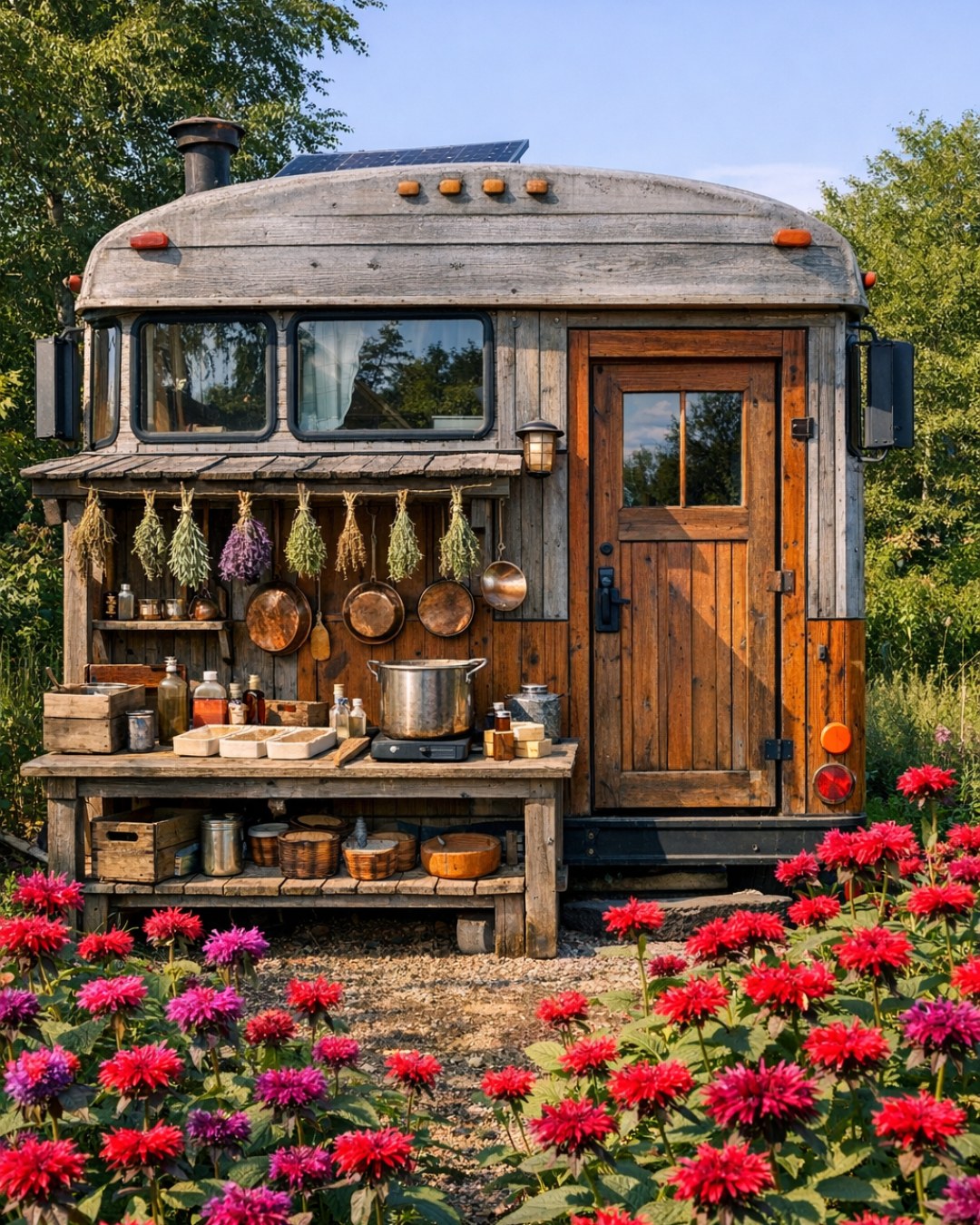
From the outside, the bus keeps enough of its original silhouette to preserve that adventurous, road-worn character, but it is softened by the landscape and by thoughtful rustic detailing. The body appears refinished in a muted cream or faded sage tone, with natural cedar accents around the entry and window trims that make it feel rooted to the homestead rather than merely parked there. I can easily picture gravel underfoot, vegetable beds nearby, and a simple wood platform step leading to the door, all of it contributing to a lived-in, summer-camp-meets-modern-cottage mood.
What I find most effective is the balance between utility and welcome. Roof-mounted solar panels, a compact awning, and exterior storage compartments are integrated without visual clutter, while potted herbs, lantern lighting, and a couple of folding chairs create a gentle sense of domesticity. The finish palette stays earthy and restrained, which allows the bus to sit comfortably against tall grass, warm sunlight, and the handmade textures of an active homestead.
Living Room
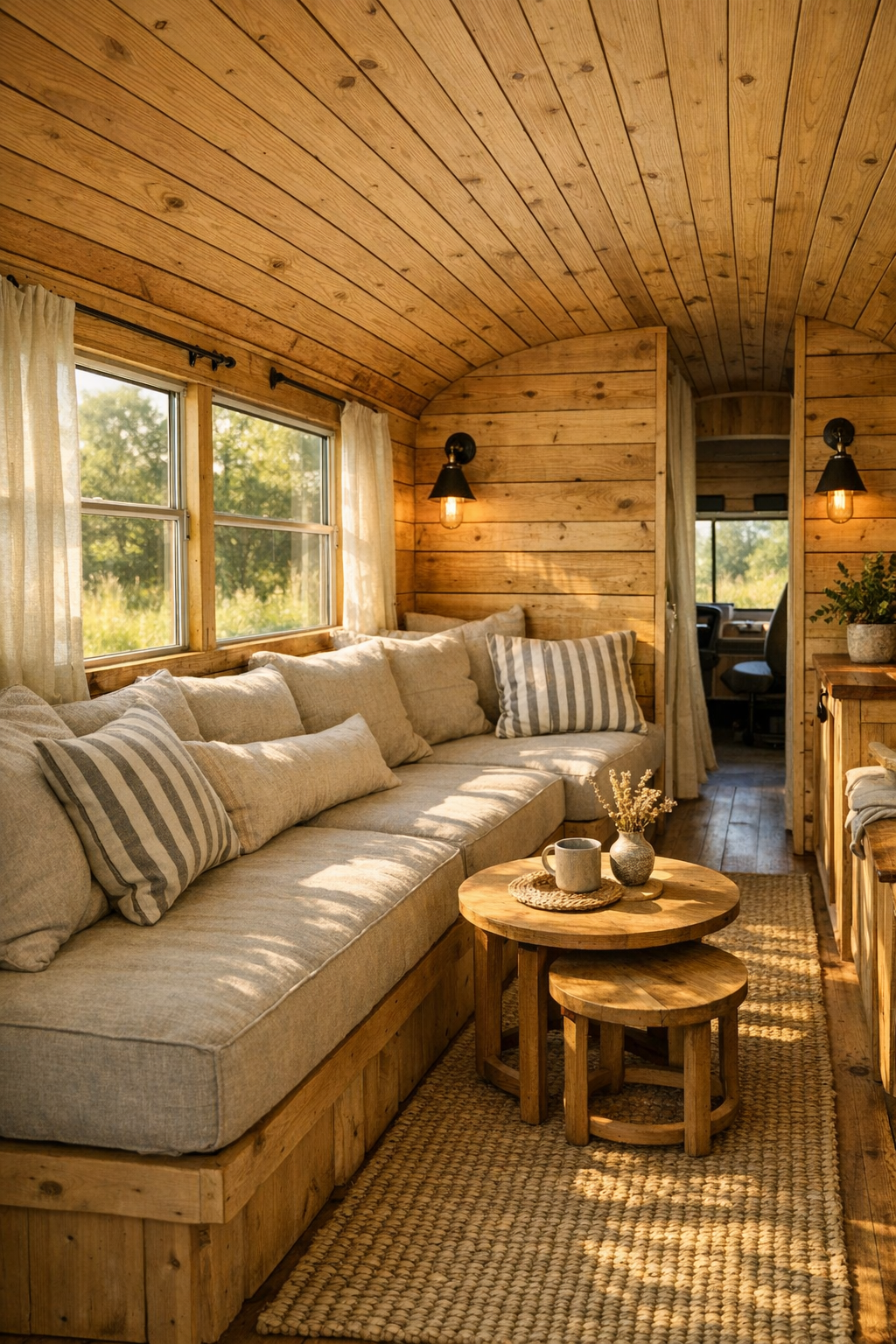
The living room uses the bus’s narrow dimensions intelligently, turning one side into a built-in bench sofa layered with oatmeal linen cushions, ticking-stripe pillows, and a wool throw in tobacco and rust tones. Opposite, slim wall shelving and low-profile cabinetry keep the circulation path open, while honey-toned wood planks run along the walls and ceiling to create a continuous envelope that visually widens the space. I like that the palette feels pantry-simple and honest: cream, bark brown, soot black, and sun-faded green.
Light does much of the heavy lifting here. Large bus windows are left mostly unobstructed, perhaps dressed only with relaxed flax curtains, so daylight washes across the grain of the wood and catches the matte finish of black reading sconces. A petite nesting table, a woven jute rug, and a compact cast-iron stove or stove-look heater give the room a true sense of habitation, making it feel less like a vehicle interior and more like a small, deeply satisfying cabin room.
Dining Room
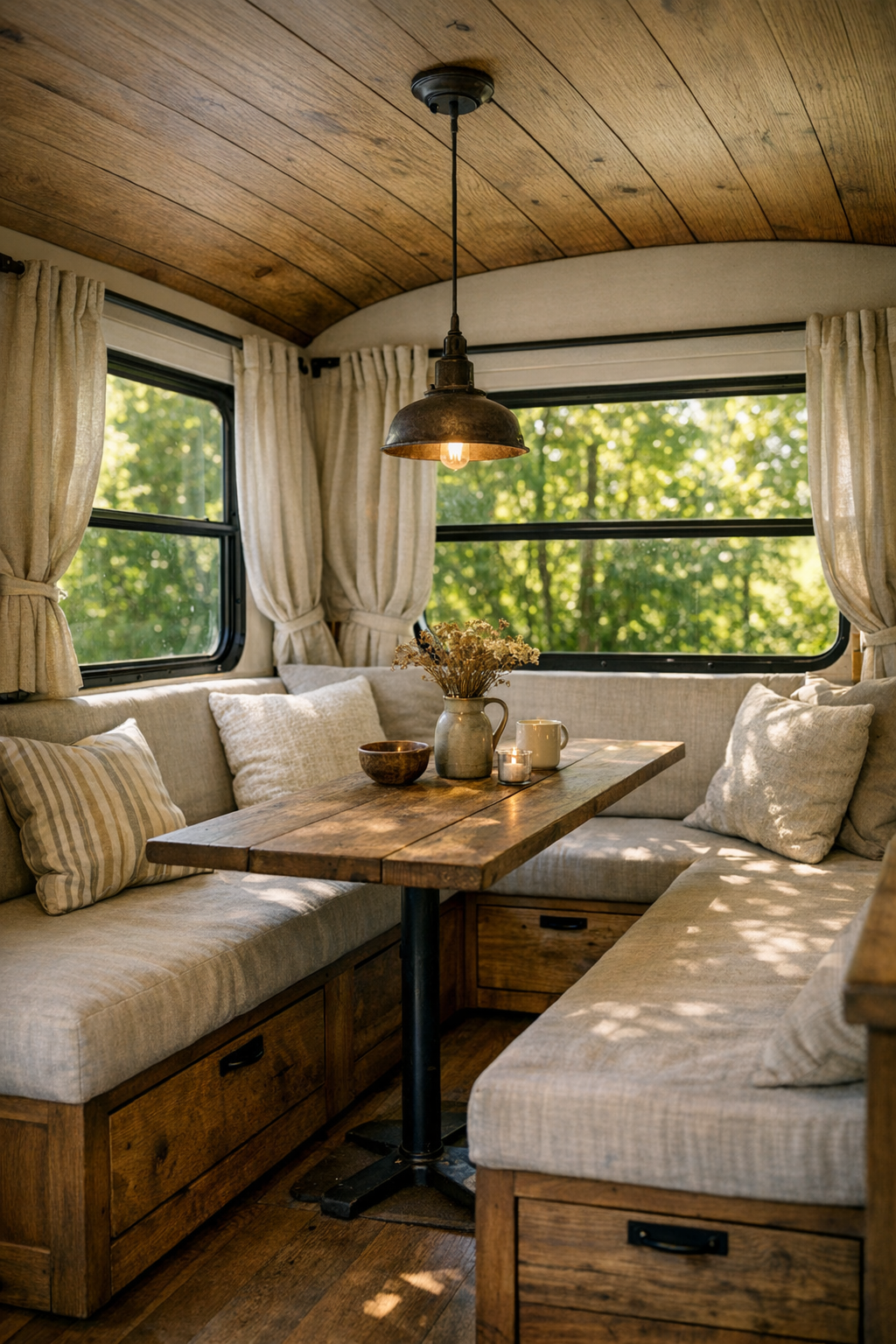
In a home like this, the dining area has to earn its place, and here it does so beautifully. A compact banquette paired with a slim rectangular table creates an efficient dining nook that likely doubles as prep space, desk space, and evening gathering spot. The joinery matters: storage tucked beneath the seats, rounded table corners for easier movement, and durable wood surfaces with a hand-rubbed finish that can take the wear of daily meals, canning projects, and the occasional loaf of bread cooling by the window.
The styling stays restrained but warm, which is exactly right for a bus interior. I imagine a vintage-style pendant in aged brass or blackened metal hanging overhead, with a simple ceramic vase, a linen runner, and maybe a bowl of tomatoes or peaches providing color. With the windows framing the surrounding greenery, the whole nook feels intimate and grounded, like a breakfast corner in a country cottage distilled to its most useful and beautiful essentials.
Kitchen
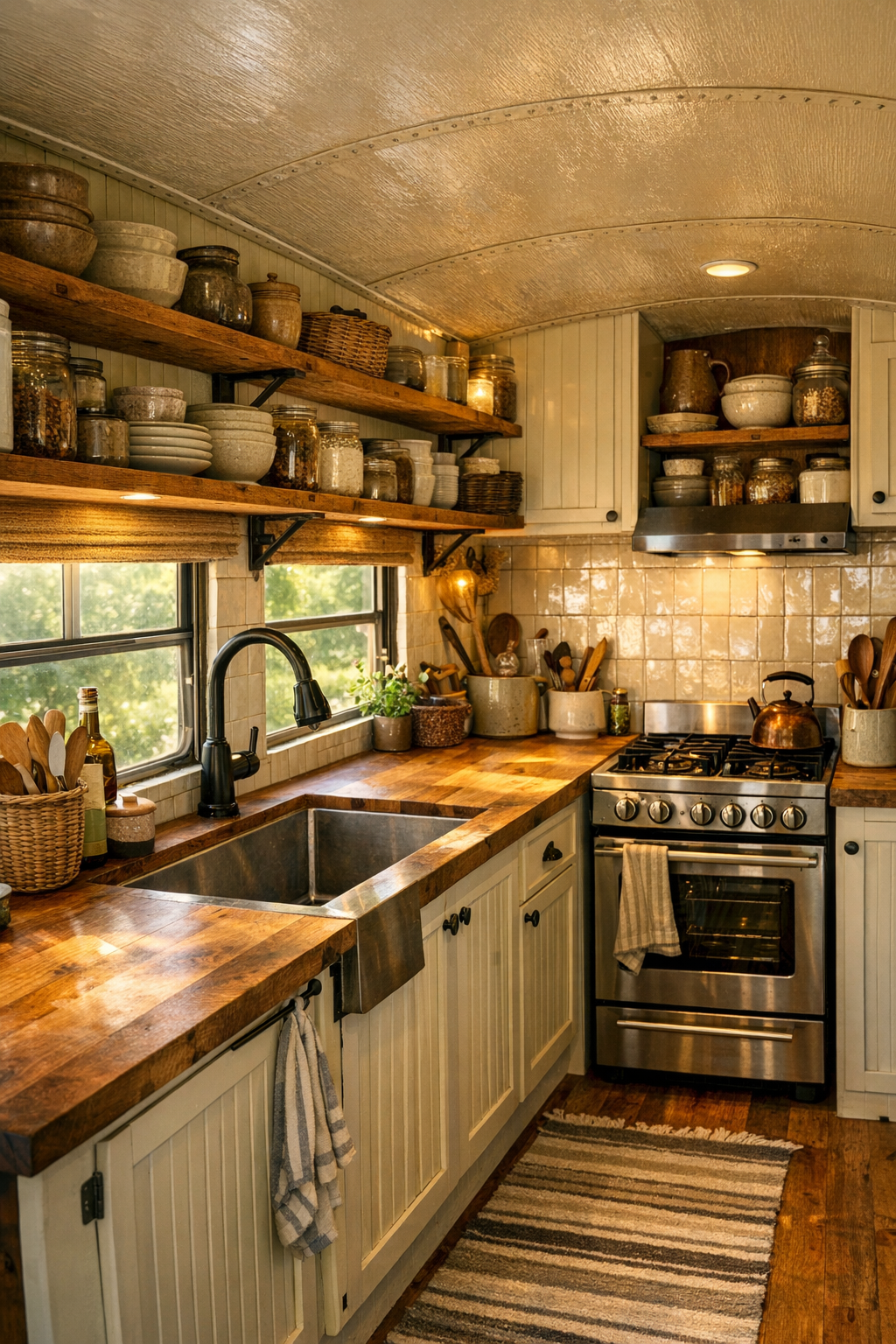
The kitchen is where this design becomes especially compelling to me, because it clearly understands how real cooking happens in a small footprint. One galley wall likely holds the main working elements in sequence: a compact propane range, butcher-block counters, a deep farmhouse-style sink adapted for the scale, and open shelves stocked with stoneware, jars of grains, and everyday tools. The finishes are practical but handsome, with soapstone or soapstone-look accents, unlacquered brass hardware, beadboard cabinet fronts, and a backsplash of creamy zellige tile or simple enamel panels that reflect light beautifully.
What makes the space breathtaking is less its size than its fluency. There appears to be enough counter landing space to chop, knead, and plate, plus smart storage for spices, cast-iron pans, and pantry staples, which any serious cook knows is half the battle. I can imagine windows over the counter bringing in herbs-and-garden views while task lighting tucked beneath shelves keeps the work surface bright after sunset. It feels organized, tactile, and deeply usable, which is my favorite kind of kitchen luxury.
Bedroom
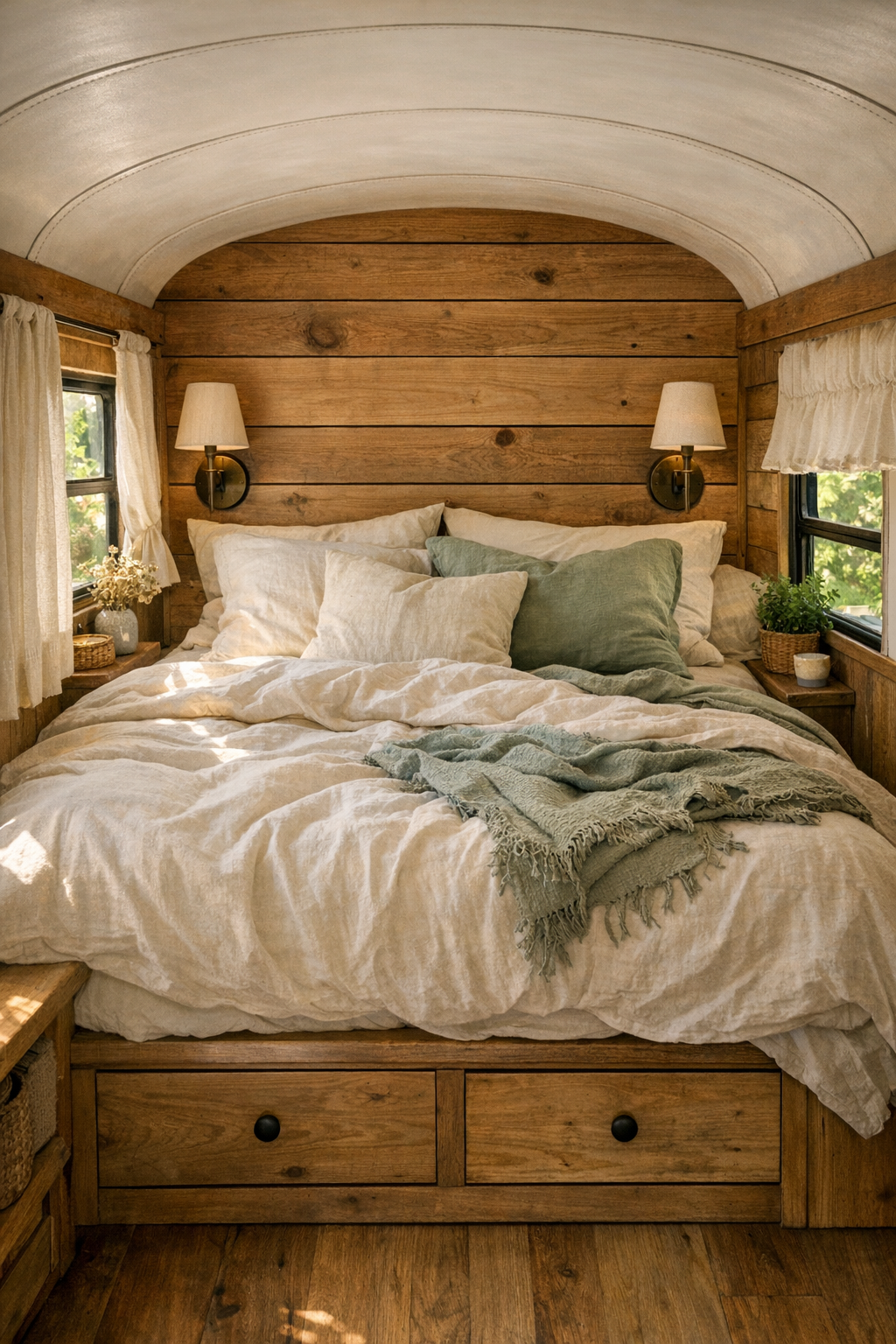
The bedroom turns the rear or tucked-away portion of the bus into a true retreat, and I appreciate how it avoids gimmick in favor of softness and order. A built-in bed platform, likely elevated to allow for drawer storage beneath, is dressed simply with washed linen bedding in ivory, clay, and muted sage. Wood cladding continues here for cohesion, but the effect is gentler because the textiles take over: a quilted coverlet, a nubby throw, and perhaps a small woven shade or curtain that adds privacy without blocking all the morning light.
Because the footprint is compact, every detail has to contribute to comfort. Wall-mounted sconces free the side surfaces, cubbies replace bulky nightstands, and a narrow ledge offers just enough room for a book, glasses, or a cup of tea. The result feels cocooning rather than cramped, the kind of room where the sound of evening insects outside and the faint scent of sun-warmed wood would make falling asleep feel wonderfully easy.
Bathroom
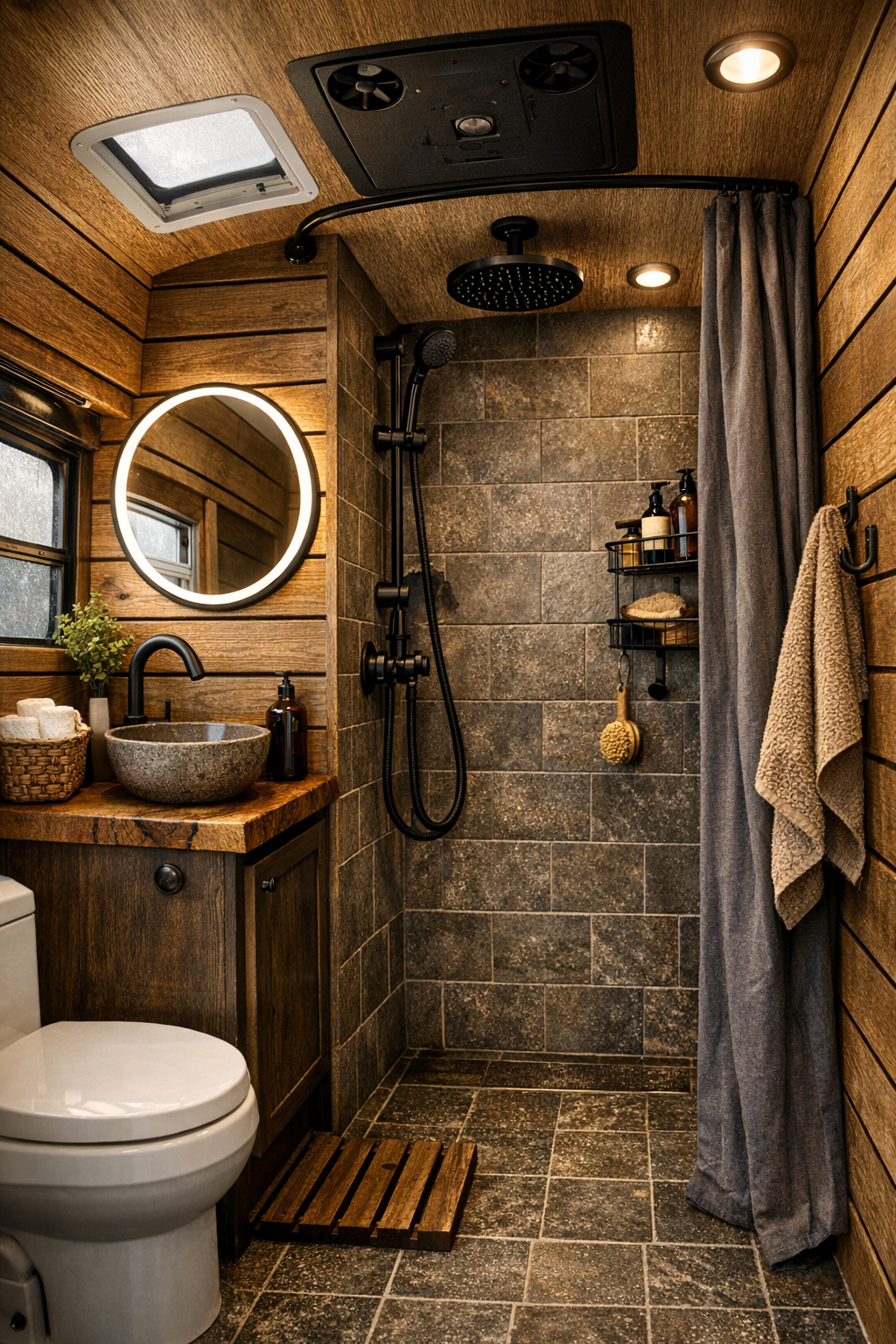
The bathroom in an off-grid bus has to be disciplined, and this one appears to approach that challenge with real design intelligence. I picture a compact wet-room layout with a small shower zone, a corner or wall-mounted vanity, and a composting toilet integrated as neatly as possible into the cabinetry plan. Materials do the work of elevating the room: vertical wood slats sealed for moisture resistance, small-scale stone or encaustic-look floor tile for grip, and brushed metal fixtures in black or aged brass for contrast.
What prevents it from feeling purely utilitarian is the attention to tone and texture. A rounded mirror, a soft linen hand towel, and warm lighting bring tenderness to a room that could otherwise feel mechanical. Even a tiny niche for soap and a shelf for apothecary bottles matter here. In a home this size, the bathroom succeeds by feeling calm, easy to clean, and visually consistent with the rest of the bus rather than cut off from it.
Other Areas
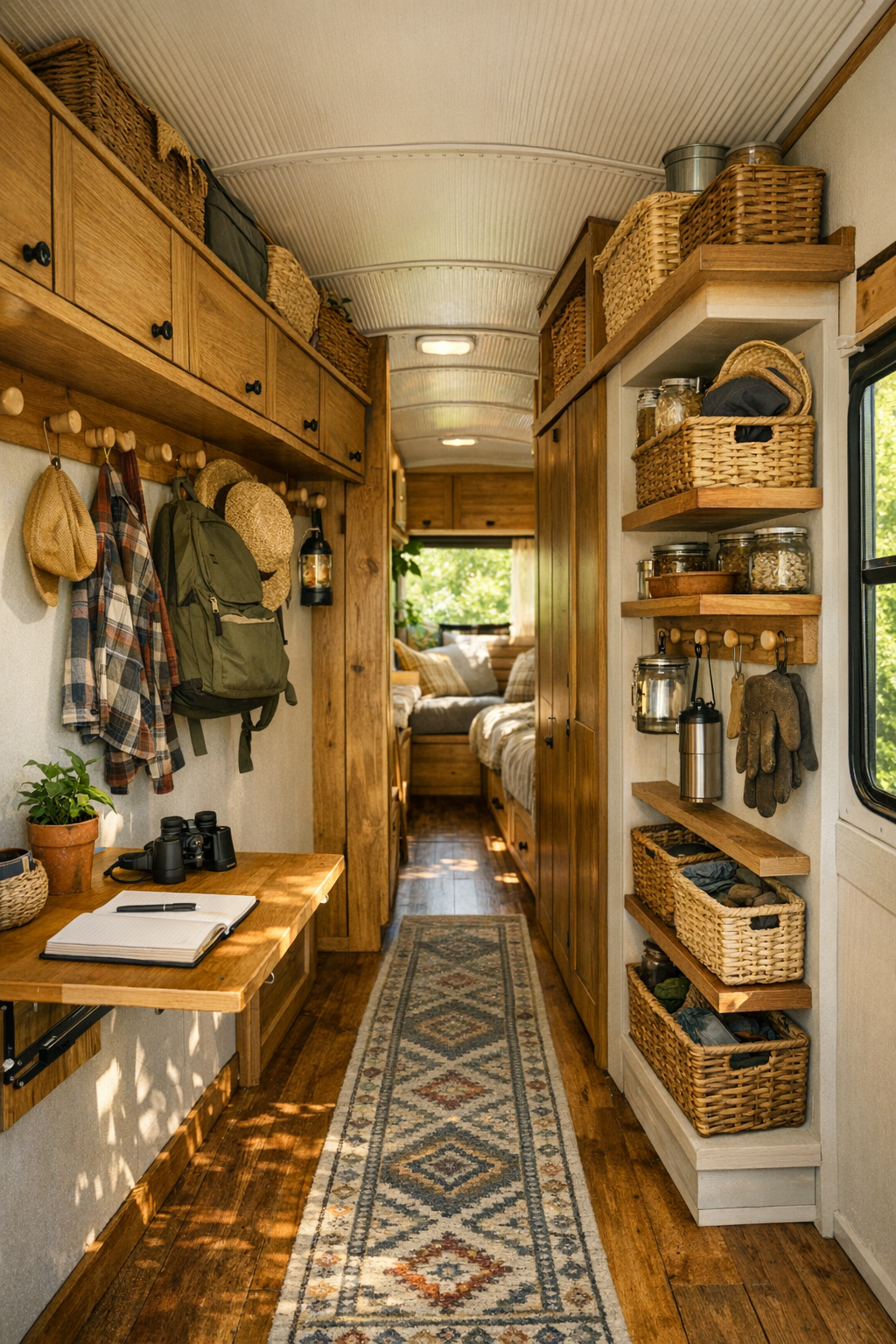
What often distinguishes a memorable small home from a merely clever one is everything in between, and this bus seems especially thoughtful in those transitional zones. Hallway stretches become storage opportunities through overhead cabinets, slim hooks, inset shelving, and bench bases that conceal gear, preserves, linens, or tools. There may even be a fold-down work surface or a petite desk niche, which I find enormously valuable in a home tied to seasonal rhythms and hands-on living.
I also imagine the entry area being handled with care, since that threshold does so much emotional work in a rural setting. A durable runner, a peg rail for hats and market bags, and a shallow shelf for boots or baskets would help the bus feel orderly from the moment you step inside. These small utility moments are what make the entire layout feel breathtaking to me: not grand gestures, but a chain of smart, tactile decisions that support daily life beautifully.
Why You'd Live Here
You’d live here for the same reason people are drawn to a well-run kitchen: everything has purpose, and that purpose creates its own kind of beauty. This bus makes off-grid living feel less like compromise and more like refinement, with a layout that respects movement, storage, light, and the everyday rituals of cooking, resting, washing, and gathering. It is rustic in the best sense of the word, shaped by materials that feel honest and by choices that support real use.
I think what lingers most is the mood of the place. It offers independence without austerity, charm without clutter, and a deep connection to summer landscape without sacrificing comfort. For anyone who wants a home that feels handcrafted, capable, and unexpectedly serene, this converted bus presents a compelling vision of living small and living well.