
This converted bus has the kind of easy summer spirit that makes me want to kick off my shoes, slice up a bowl of watermelon, and leave the windows open until dusk. From the outside, it carries that familiar hardworking silhouette, but inside it has been softened into a bright, thoughtfully layered homestead retreat with natural wood, airy textiles, and just enough vintage character to feel personal rather than themed. As a concept design, it imagines bus living at its most welcoming: practical, light-filled, and deeply comforting.
What makes this home special to me is how carefully it balances mobility with the rituals of everyday life. The rooms flow one into the next with a sense of calm purpose, and every finish seems chosen to make small-space living feel generous instead of tight. I can picture muddy sandals by the door, a simple lunch spread on the table, and family drifting in and out all afternoon, which is always my favorite sign that a home is doing something right.
Exterior

The exterior keeps the recognizable charm of a classic bus while giving it a fresh homestead sensibility that feels perfect for warm-weather living. The body is painted in a creamy white with soft sage trim, a combination that instantly cools the profile and makes it feel settled into the landscape rather than parked on it. Matte black hardware around the door and storage compartments adds a clean outline, while wood accents at the entry steps and a slim roof rack bring in that handmade, lived-with warmth I always love.
I especially like the way the setting enhances the design. Parked near tall grass or a lake edge, this bus would look right at home with linen curtains stirring in the windows and a pair of folding chairs tucked outside. It has a humble, unpretentious beauty, and that matters in a small dwelling like this because the exterior sets the tone for everything inside: simple, useful, and ready for long meals, sun-faded afternoons, and the kind of summer evenings when nobody is in a rush.
Living Room
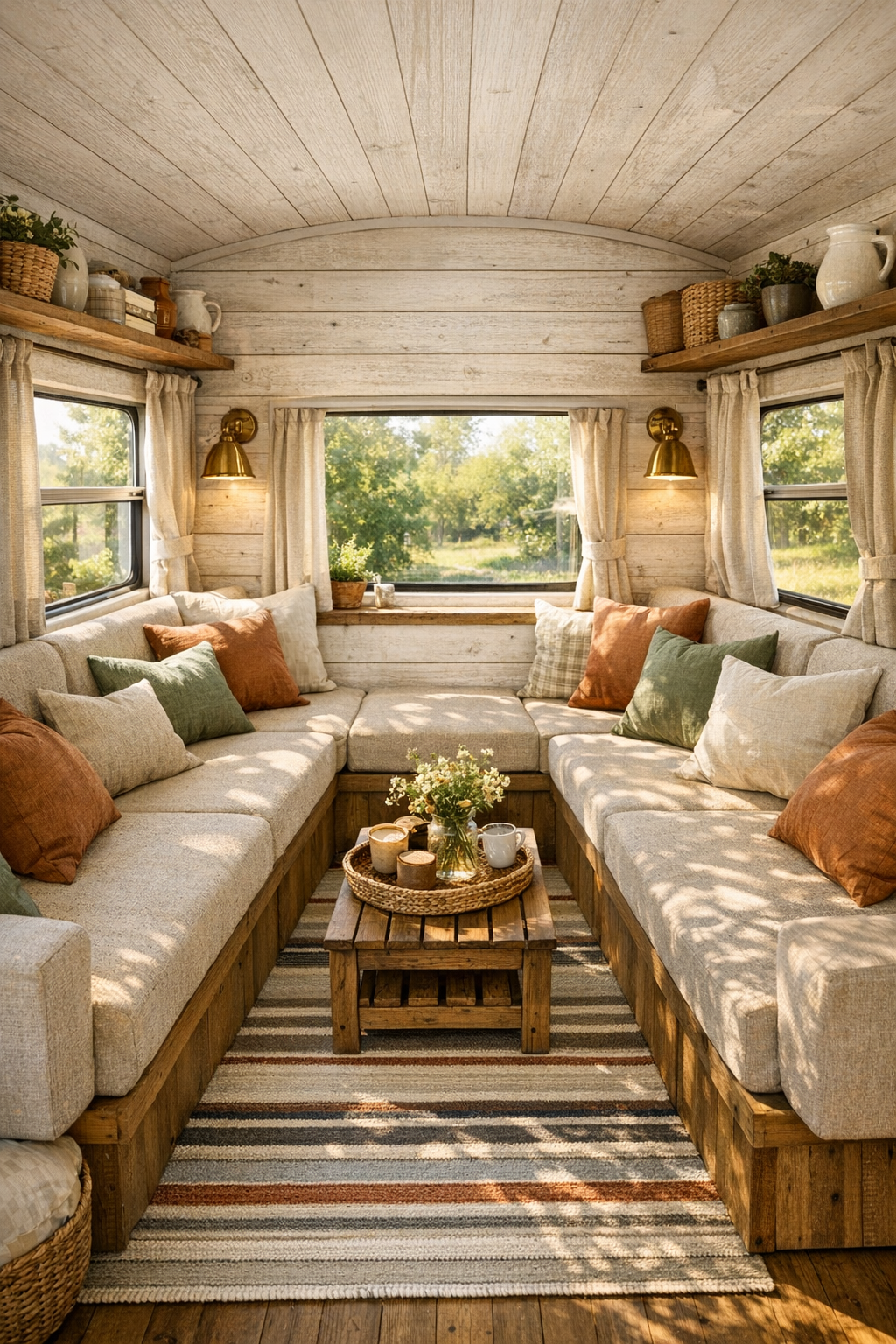
The living room is compact, but it does not feel cramped because the palette is kept so light and the furnishings are scaled with real care. A built-in bench-style sofa runs along one side beneath the windows, upholstered in a durable oatmeal fabric with plenty of soft cushions in muted sage, clay, and faded blue. Underfoot, a flatwoven rug in a subtle stripe adds pattern without visual clutter, and I can just imagine children stretching out there with books or a tray of snacks while the late-day light pours in.
What really makes the room work is the layering of texture. Whitewashed wood walls bounce light beautifully, and the ceiling is finished in narrow planks that draw the eye upward, helping the bus feel taller than it is. There is likely a small nesting coffee table or an upholstered ottoman doing double duty, which is exactly the kind of smart choice I appreciate in a home where every inch has to serve the family well. A pair of warm brass sconces and a few open shelves for baskets, cookbooks, or summer pitchers keep the mood relaxed and domestic instead of overly minimal.
Dining Room
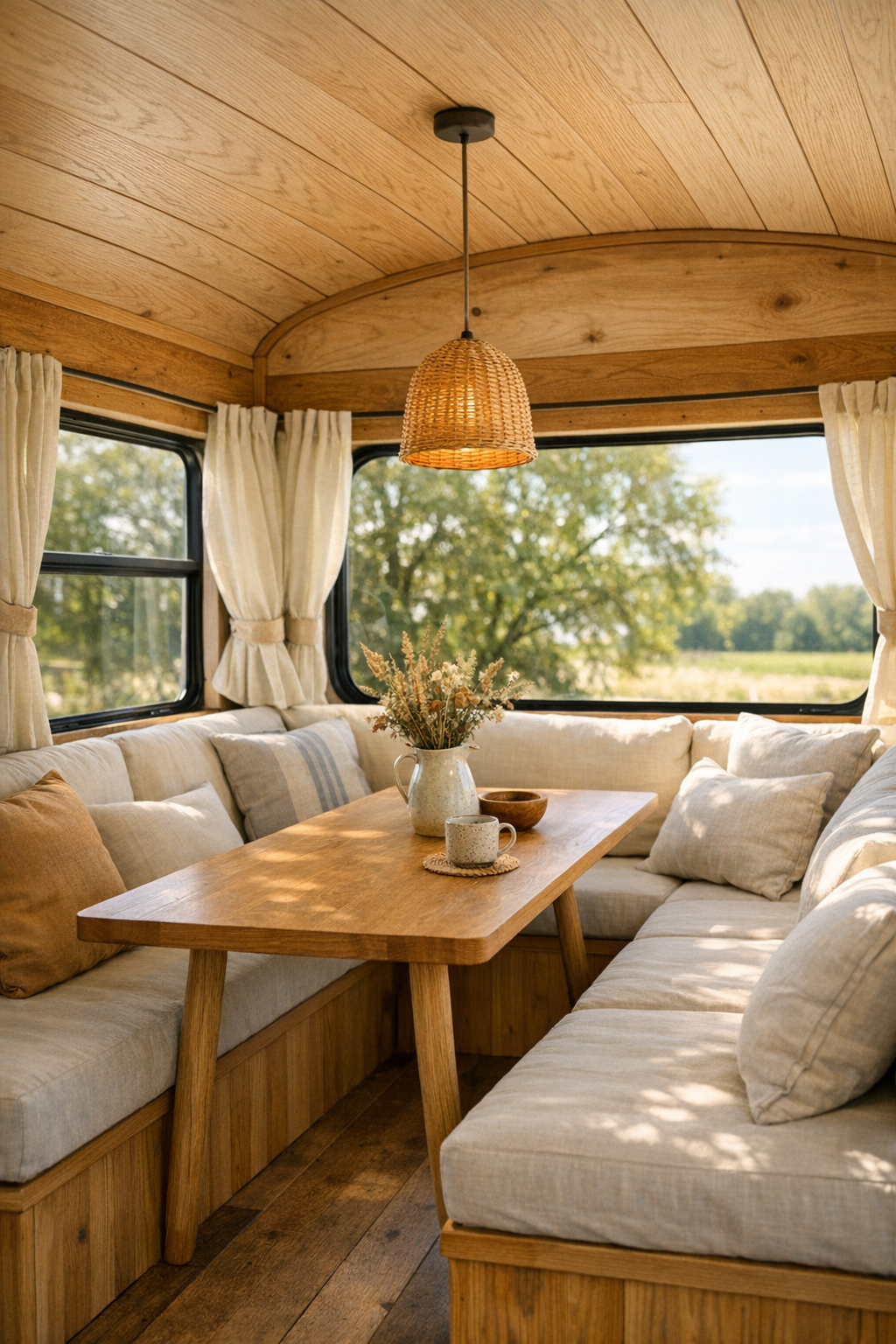
The dining area feels like the heart of the bus, and I always notice when a small home gives this space the attention it deserves. Here, a slim built-in table sits beside the windows, likely finished in natural oak or sealed butcher block, with enough room for relaxed breakfasts, card games, or a simple dinner with grilled vegetables and corn on the cob. A banquette on one side makes the layout more efficient, and I would absolutely choose seat cushions in a washable fabric because family meals, especially in summer, have a way of becoming deliciously messy.
The styling is understated but warm, which keeps the dining room feeling useful every day. A petite pendant in woven rattan or enamel adds shape overhead without overwhelming the narrow footprint, and the window line brings in changing views like living artwork. I love spaces like this because they invite lingering. Even a plate of plain buttered noodles for picky eaters would feel a little more special here, set beside a vase of wildflowers and a stack of linen napkins that make an ordinary Tuesday supper feel cared for.
Kitchen
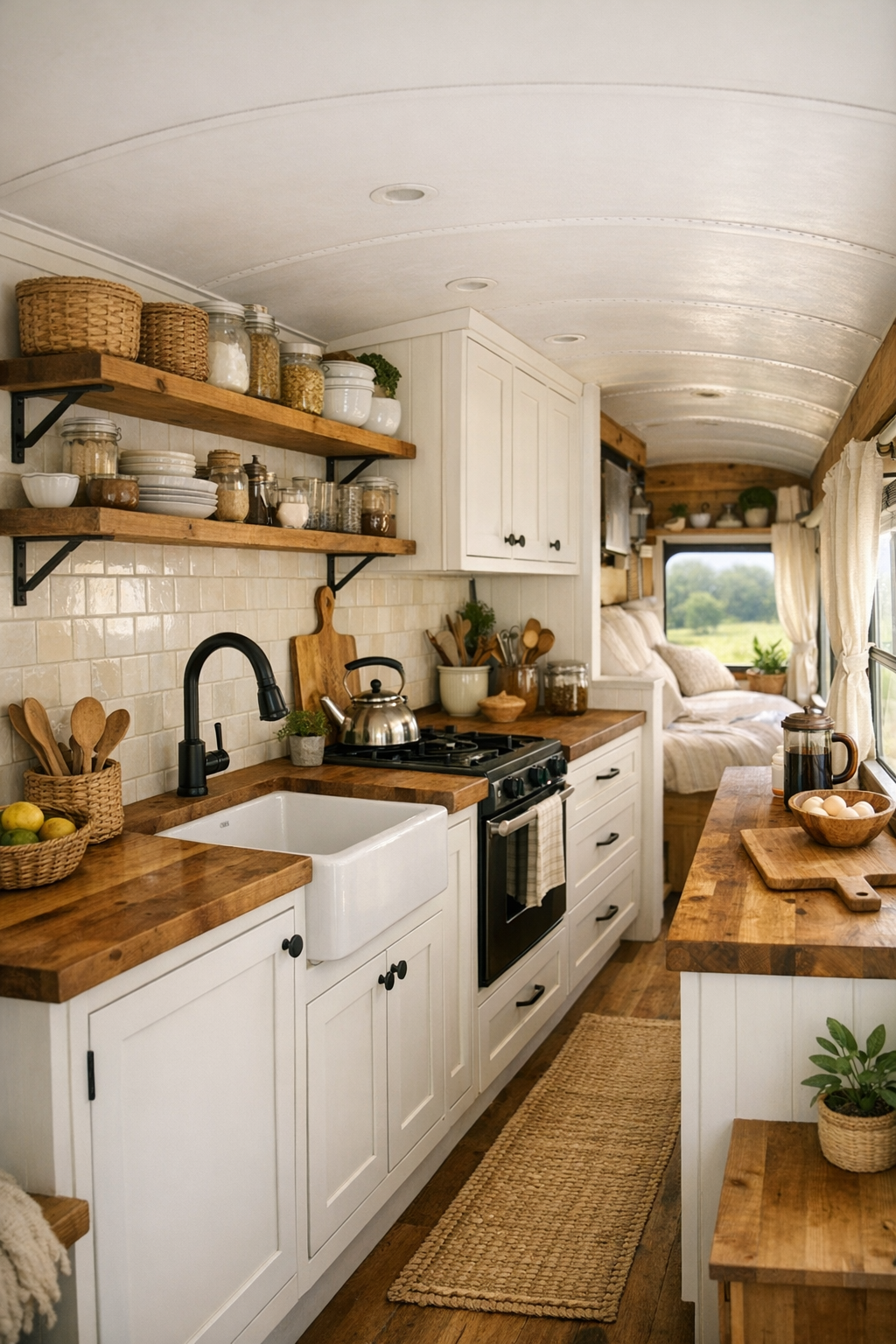
The kitchen is one of my favorite parts because it understands that a small cooking space still needs to feel generous if you actually use it. The cabinetry appears simple and Shaker-inspired, painted a soft warm white or pale sage, with wood counters or butcher-block sections that add an inviting, hardworking quality. Open shelving keeps everyday dishes within reach, and I can picture neatly stacked bowls, mason jars with dry goods, and a crock of wooden spoons waiting near the stove.
It is beautifully practical, too, which is something I always look for as a home cook. A compact farmhouse-style sink, brushed brass or black fixtures, and a narrow galley layout make movement efficient without feeling sterile. The backsplash may be done in creamy square tile with dark grout or in beadboard for a cottage touch, and both would suit the home well. I especially appreciate a kitchen like this in summer, when meals are often simple: cut fruit, sandwiches, pasta salad, maybe one pan of roasted vegetables with a little ranch on the side for anyone who needs a familiar option.
Bedroom
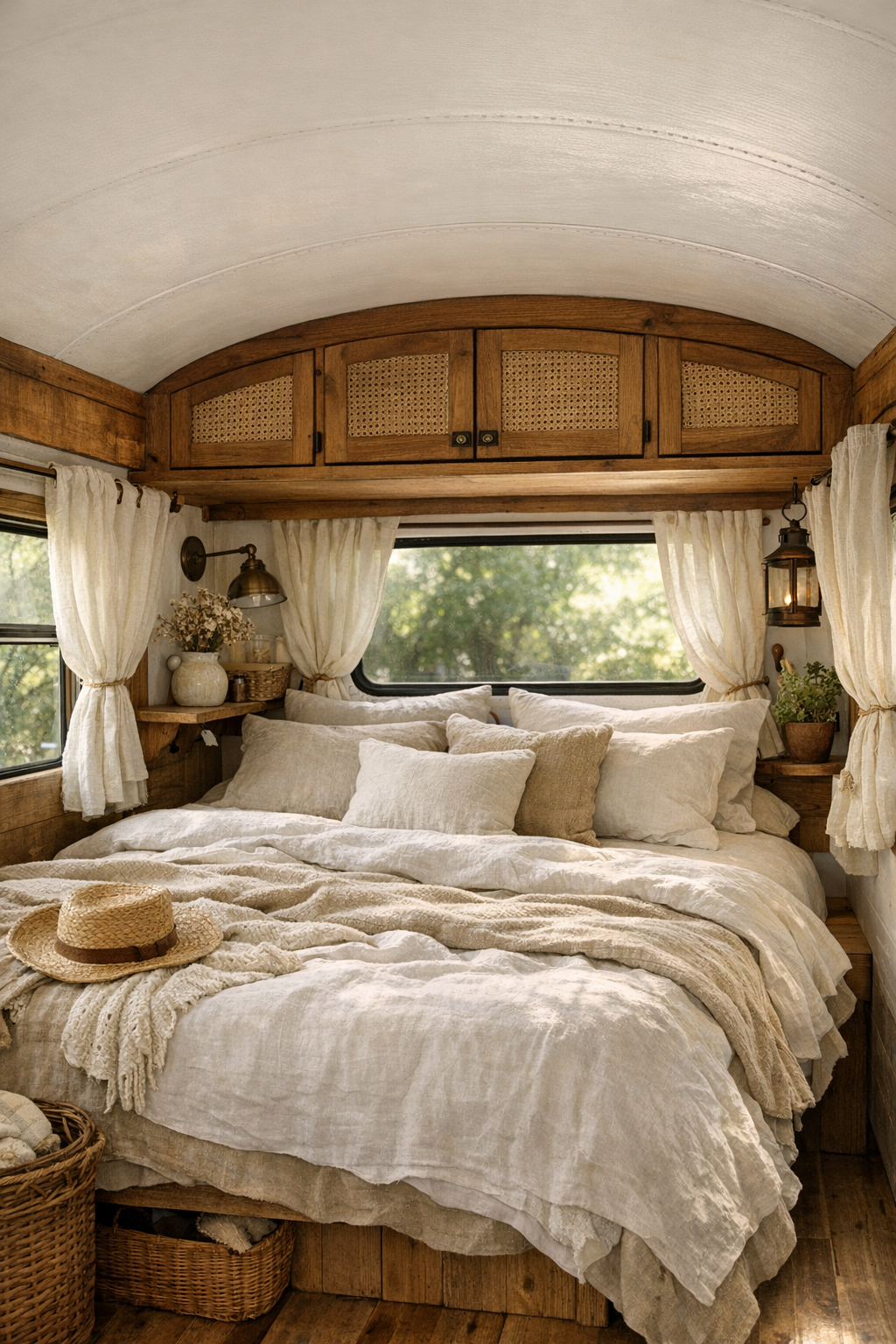
The bedroom carries the calmest energy in the whole bus, which is exactly what I would want after a long day outside. The bed is likely tucked neatly into the rear with built-in framing, dressed in breathable white and flax linen bedding that looks soft enough for afternoon naps. Muted tones keep the room restful, and I can imagine a quilt folded at the foot in a faded patchwork or ticking stripe, adding that collected touch that makes a compact sleeping area feel rooted and personal.
Storage is probably integrated all around the bed, and that is one of the smartest details in a home like this. Overhead cabinets in matching wood, narrow cubbies for books, and perhaps a tiny ledge for a lamp or a glass of water would make the room highly functional without losing its softness. I also love the possibility of small curtains, woven shades, or simple linen panels filtering the morning light. It would be such a lovely place to wake up slowly, with the windows cracked open and the whole space holding onto the coolness of early summer.
Bathroom
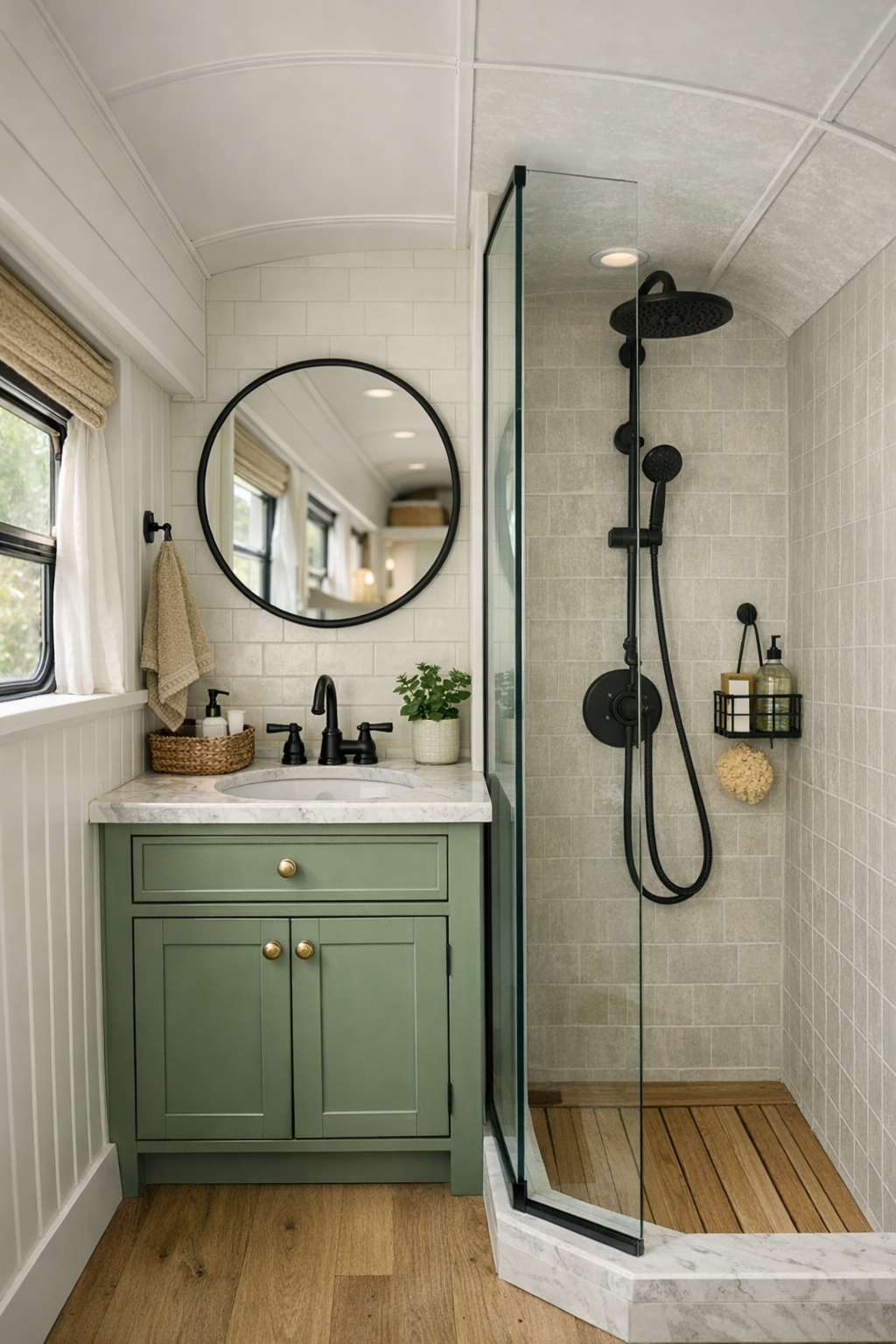
The bathroom is small, of course, but this design treats it with the same care as the larger spaces. I picture a compact vanity in painted wood, perhaps in sage or warm white, topped with a simple countertop and a petite basin sink. The walls might be clad in vertical beadboard or zellige-look tile, both of which add texture without heaviness, and a round mirror would help soften the many straight lines that naturally come with bus architecture.
What keeps it feeling fresh is the balance of utility and charm. A glass shower partition, light-toned tile, and slim black or brass fittings would make the room feel cleaner and more open, while hooks, baskets, and a narrow shelf would provide just enough storage for towels and everyday essentials. In a home like this, I always think the bathroom should feel easy to maintain, but still pleasant enough that even quick routines feel a little nicer. This one seems to understand that beautifully.
Other Areas
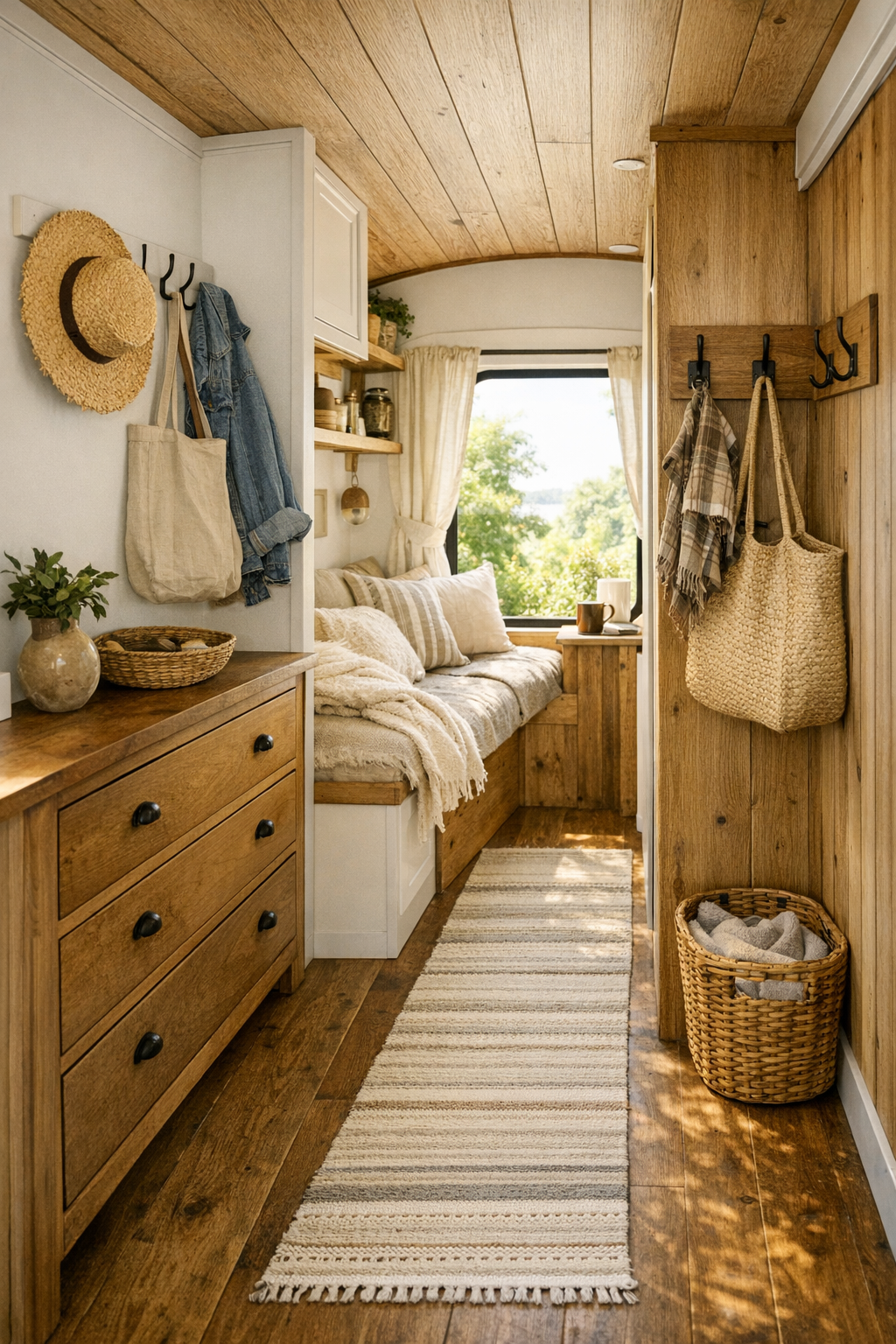
What impresses me most in the remaining spaces is how intentionally the transition zones are handled. Hallway storage, entry hooks, under-bench drawers, and tucked-away compartments likely do the heavy lifting, keeping the main rooms peaceful and uncluttered. In a family-minded design, those practical details matter just as much as pretty ones. I would want a spot for sun hats, towels, picnic supplies, and a basket for shoes, because that is how summer living stays enjoyable instead of chaotic.
There is also room in a home like this for small moments of beauty that make daily routines sweeter. Maybe a reading perch by a window, a narrow desk ledge for journaling or meal planning, or a tiny bunk nook that children would instantly claim as their own. Even the circulation path can feel charming when it is lined with wood grain, soft runners, and carefully chosen hardware. Those quieter areas are often what make a compact home truly livable, because they show that the design is thinking not just about looks, but about real family rhythms.
Why You'd Live Here
You would live here because it proves that small-scale summer living does not have to feel like a compromise. This bus has personality, but it also has discipline, and that is a wonderful combination in design. Every room supports the next, the materials feel approachable and durable, and the overall mood is one of ease. It is the kind of place that encourages simple meals, slower mornings, and togetherness without forcing anything.
I think that is what stays with me most. This home is charming, yes, but it is also deeply usable, and as someone who believes a good home should make everyday life gentler, I find that very appealing. Whether you are serving lemonade and sandwiches after a day outside or settling in with a quiet cup of coffee before anyone else wakes up, this converted bus offers a lovely reminder that thoughtful design can make even the smallest home feel abundant.