
This accessible RV camper leans into emerald and bronze in a way that feels surprisingly grown-up, almost like a boutique hotel distilled into a compact footprint. From the outside in, the palette is rich without feeling heavy, and the whole home has that calm, tailored mood I always hope for in a small space: every surface works hard, every inch feels intentional, and nothing reads as purely utilitarian even though accessibility is clearly at the heart of the design.
What makes this place special to me is how it solves real daily needs without losing warmth or personality, which is not always easy in a mobile home setting, especially in a concept design like this one. I can picture pulling up after a long week, kicking off my shoes, and immediately feeling held by the soft lighting, rounded edges, clever storage, and that beautiful mix of deep green cabinetry, brushed bronze accents, and natural wood tones that keep the camper from ever feeling clinical.
Exterior
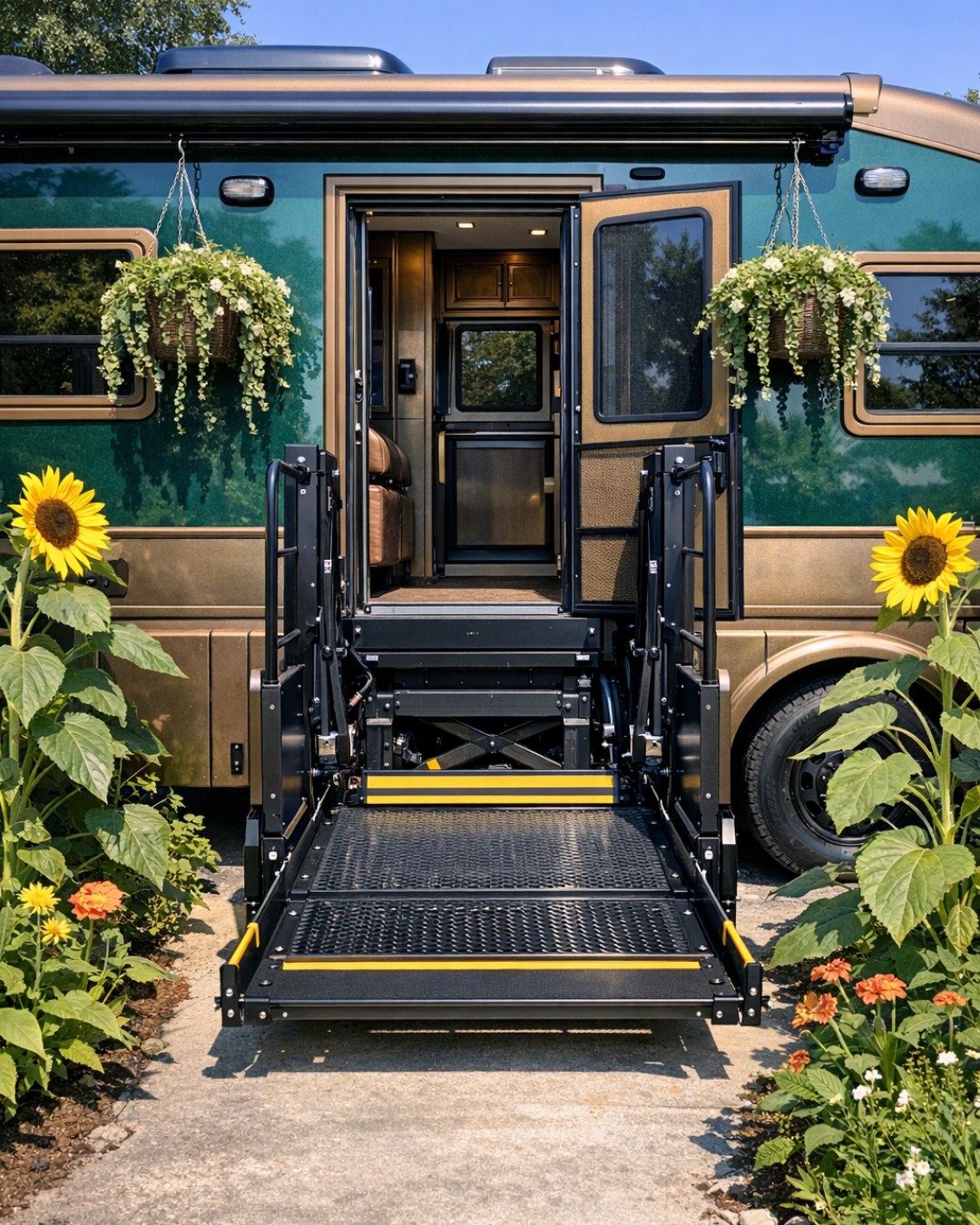
The exterior sets the tone right away with a streamlined silhouette softened by thoughtful detailing. The body is finished in a muted mineral cream, while the entry door, window trim, and lower cladding introduce saturated emerald panels and warm bronze framing that catch the light beautifully. Instead of making the accessibility features feel separate or added on, the design integrates them into the architecture itself with a low-profile entry, a broad powered door opening, and a gently graded ramp solution that feels sleek and considered.
I especially like the way the metalwork is handled here. Bronze rail elements, flush-mounted exterior lighting, and clean-lined grab points read more like custom hardware than medical support pieces, which gives the whole camper a polished, residential quality. Large windows keep the façade from feeling closed in, and the overall look balances adventure and comfort in a way that feels ideal for someone who wants mobility without sacrificing style.
Living Room
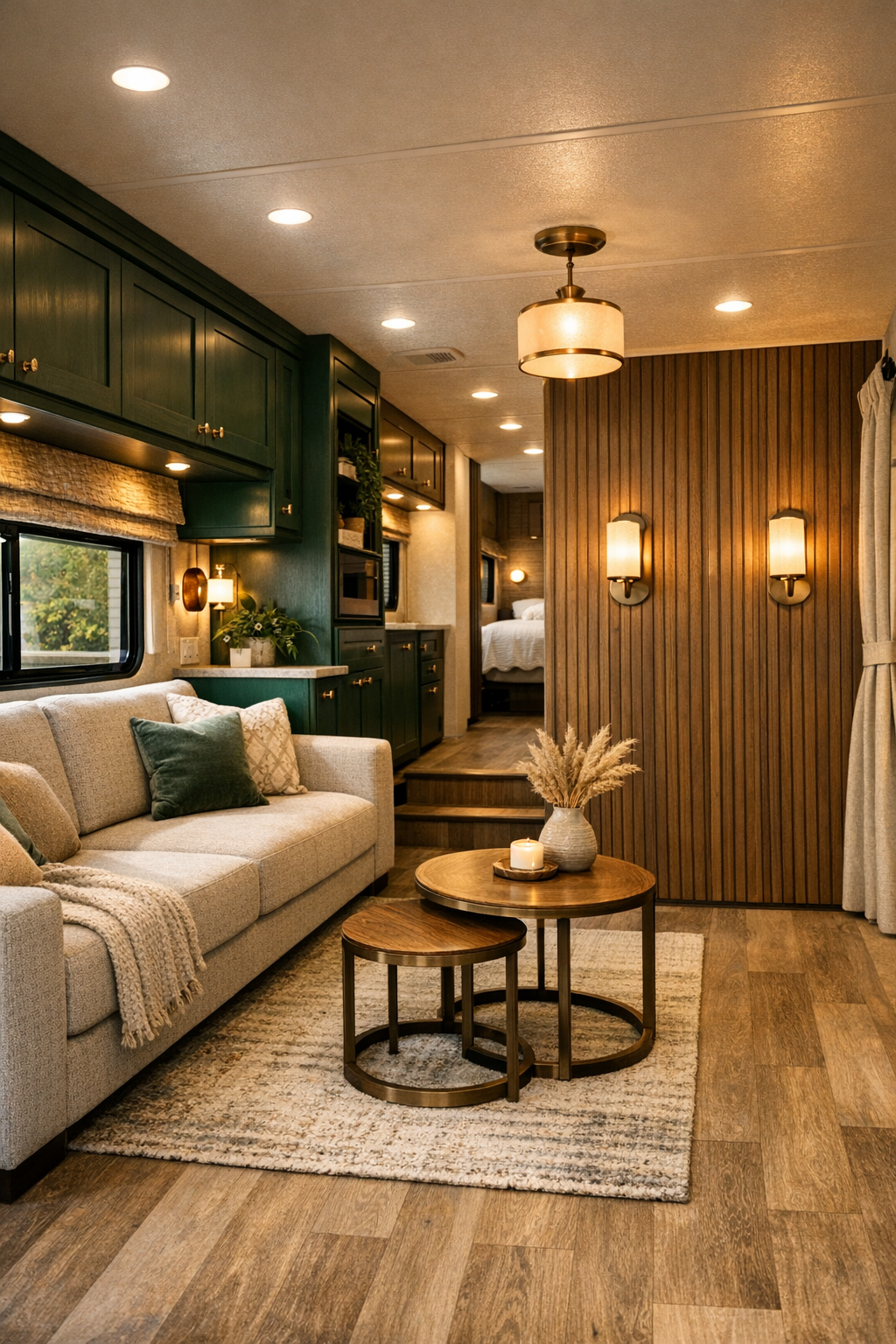
The living room is where the emerald palette really comes alive, but it is tempered with enough texture and light to keep it from overwhelming the space. A low-profile sofa in performance fabric sits against fluted walnut paneling, with deep green built-ins wrapping one side in a way that adds storage without making the room feel boxed in. The circulation path is generous for a camper, and that extra openness changes everything; the room feels breathable, easy to move through, and genuinely relaxing instead of overly compressed.
Bronze reading sconces, a slim rail for adjustable lighting, and soft under-cabinet glow layer the illumination so the room can shift from practical daytime use to cozy evening lounging. I can imagine setting my laptop on the nesting tables for a quick work session before dinner, then tucking everything away in seconds. The fabrics do a lot of heavy lifting too: nubby oatmeal upholstery, a woven flatweave rug, and a few leather accents bring in that tactile comfort that makes a compact space feel lived in rather than staged.
Dining Room
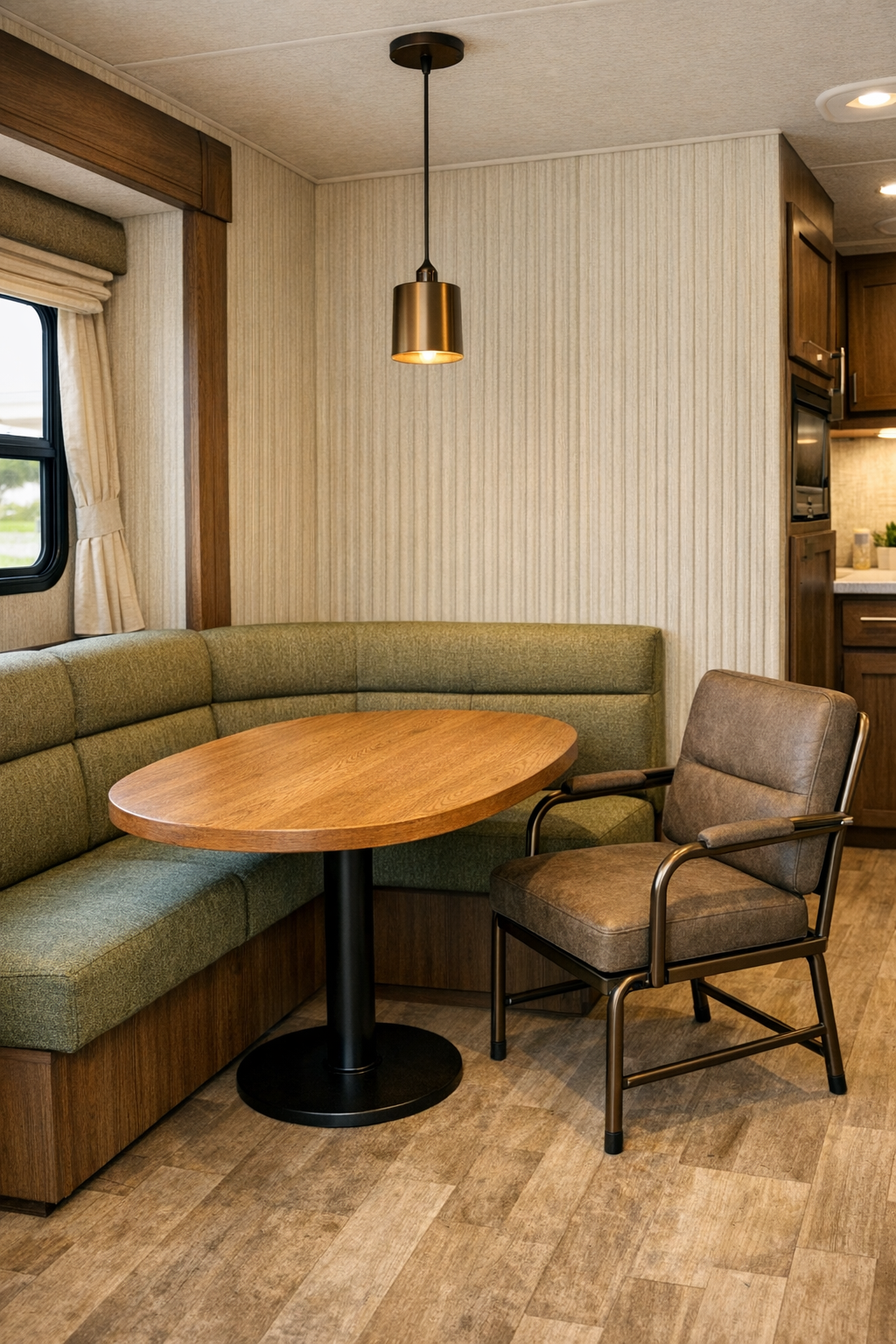
The dining area is compact, but it never feels like an afterthought. A rounded-edge table in warm oak is paired with a built-in banquette upholstered in soft moss-toned vinyl, which is both durable and visually tied to the rest of the camper. Across from it, a movable bronze-framed chair keeps the layout flexible and accessible, and I love that the table proportions leave enough clearance to move comfortably without that awkward squeeze that so many small dining setups create.
What gives this area charm is the way the finishes are layered. The wall behind the banquette has a subtle vertical texture that catches the light, and a petite bronze pendant drops just low enough to define the space without crowding it. It feels like the kind of spot where I would actually want to sit with coffee and do meal planning for the week, because it is bright, organized, and close to the kitchen while still feeling distinct from it.
Kitchen
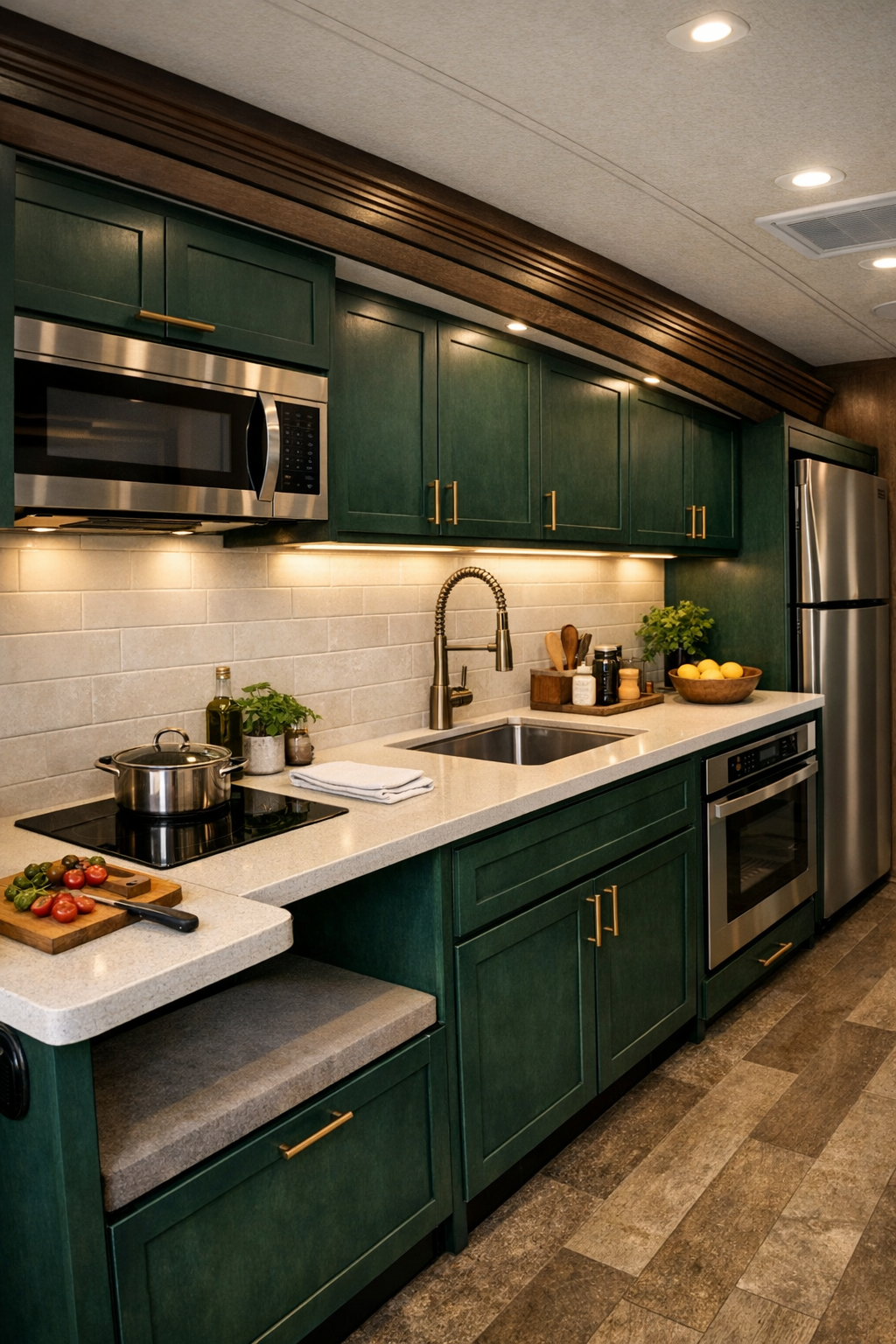
This kitchen is easily my favorite part of the camper because it understands that good design and real-life cooking have to meet in the middle. The cabinetry is a velvety emerald with slim bronze pulls, and the counters are a pale quartz that bounces light all around the room. The layout is linear and efficient, with lowered prep sections, easy-reach storage, and appliances integrated so cleanly that the whole wall reads as one cohesive composition instead of a crowded row of functions.
I can tell a cook had a hand in the vision here, because the practical details are exactly what you want when life is busy. There is enough uninterrupted counter space for chopping and meal prep, the backsplash is a satin-finish tile that wipes down easily, and the open shelving is used sparingly so it feels styled rather than cluttered. Bronze task lighting under the cabinets adds warmth, while a darker toe-kick grounds the room and gives the cabinetry that furniture-like feel I am always drawn to.
Bedroom
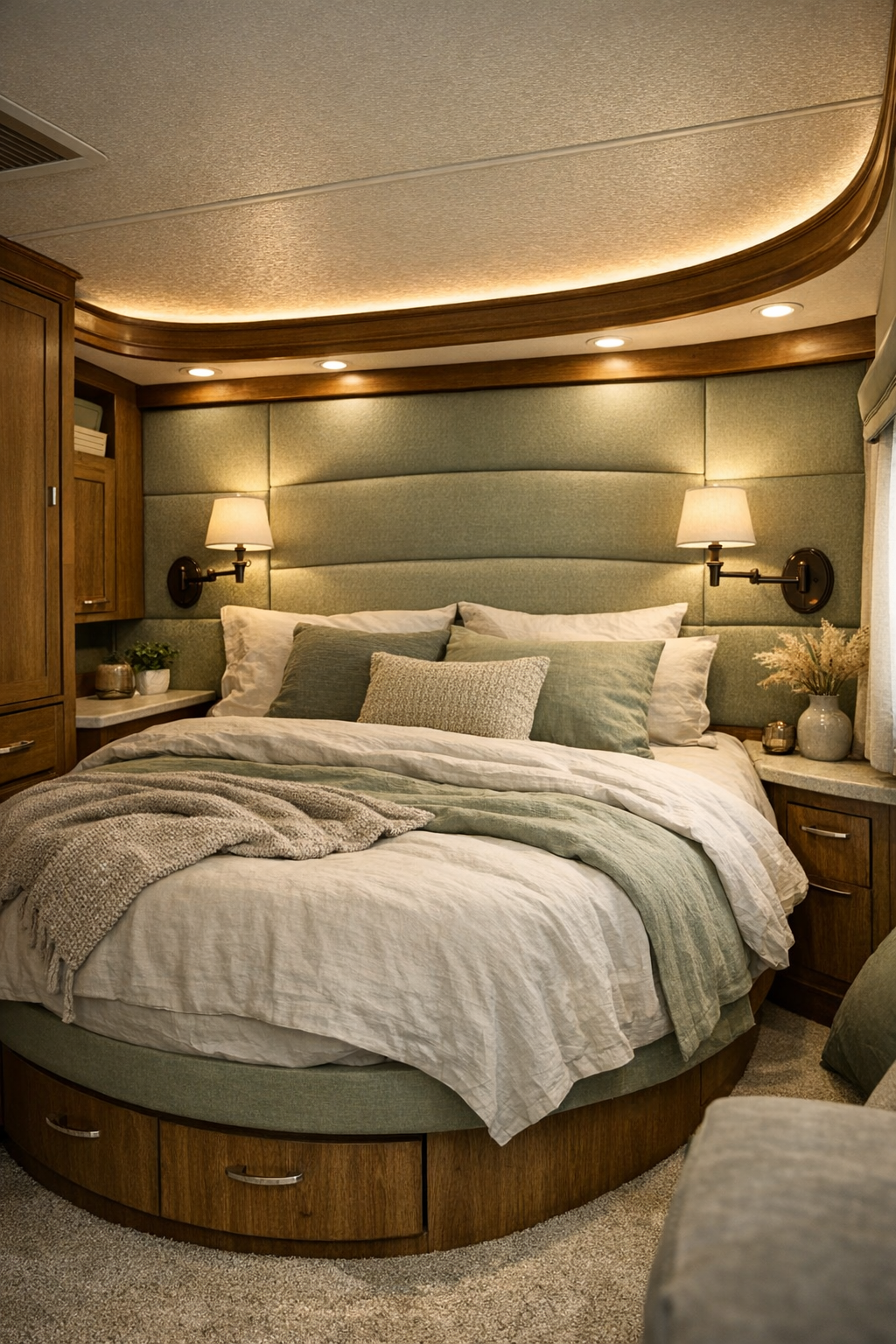
The bedroom proves that accessible design can still feel cocooning and beautiful. Instead of crowding in oversized furniture, the room uses a platform bed with softly rounded corners, integrated side shelving, and upholstered wall panels in a muted sage that echo the deeper greens used elsewhere. The palette shifts slightly calmer here, with more warm neutrals and fewer high-contrast moments, which makes the space feel restful the second you step into it.
Lighting is especially well handled. Bronze swing-arm sconces free up surface space, a slim cove detail casts a soft ambient glow, and the window treatments are layered for privacy and light control without bulk. I can imagine this being one of those tiny bedrooms that somehow sleeps incredibly well, partly because the materials are so quiet: washed linen bedding, oak trim, matte finishes, and just enough built-in storage to keep everyday things close but out of sight.
Bathroom
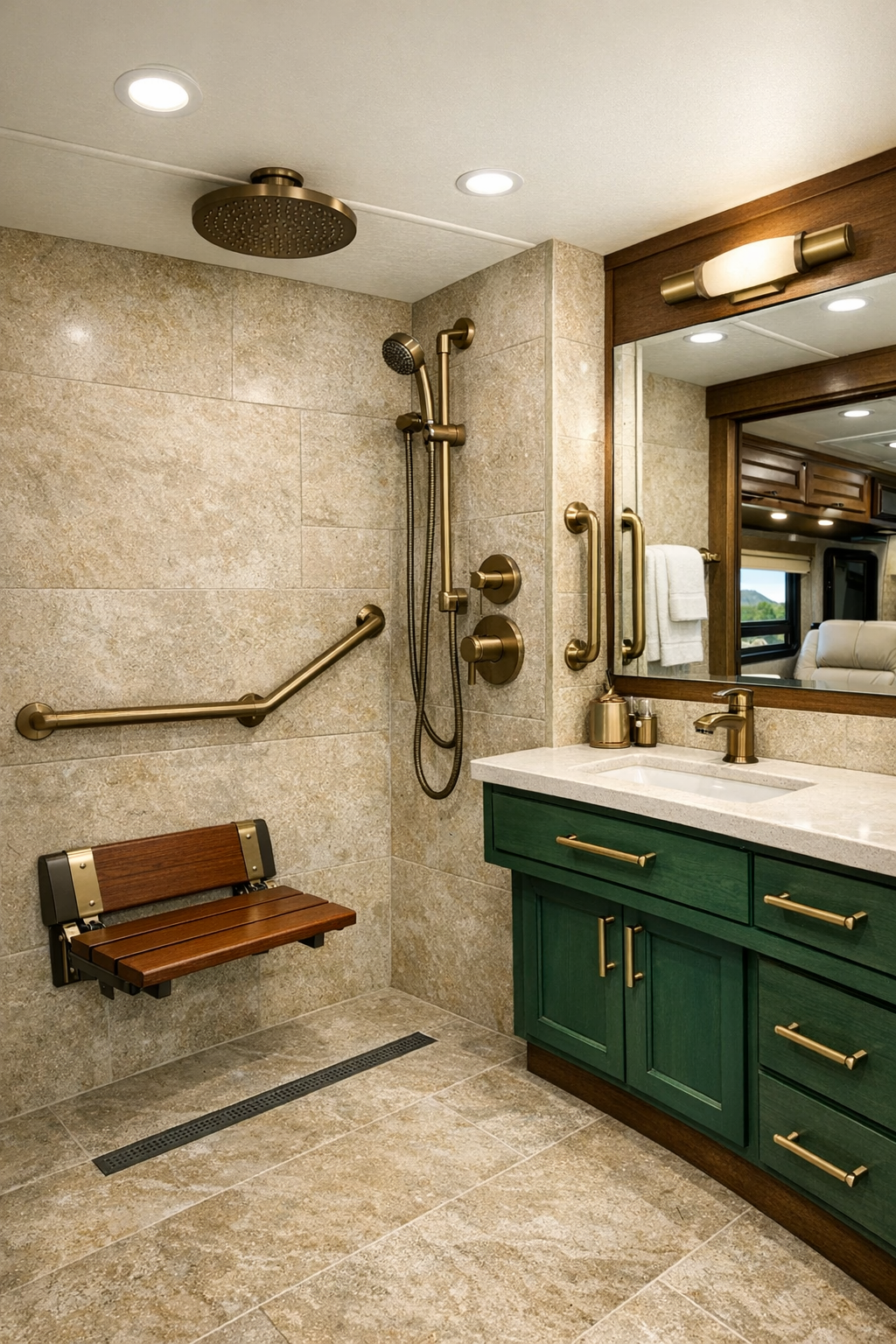
The bathroom is where this camper’s thoughtful planning really shines. It uses a wet-room approach, but the finishes elevate it far beyond basic functionality. Large-format stone-look wall panels in a soft sand tone minimize visual seams, while emerald cabinetry below the sink ties the room back to the rest of the interior. The fixtures are all done in a brushed bronze finish that adds warmth and makes the space feel intentionally designed rather than merely equipped.
There is clear maneuvering space, a curbless shower entry, a fold-down teak seat, and beautifully integrated grab bars that read like part of the trim package. Even the mirror is generous enough to expand the room visually, which matters so much in a compact footprint. If I were touring this in person, this would be the room that made me stop and think, okay, this is how you do accessible design without sacrificing atmosphere.
Other Areas
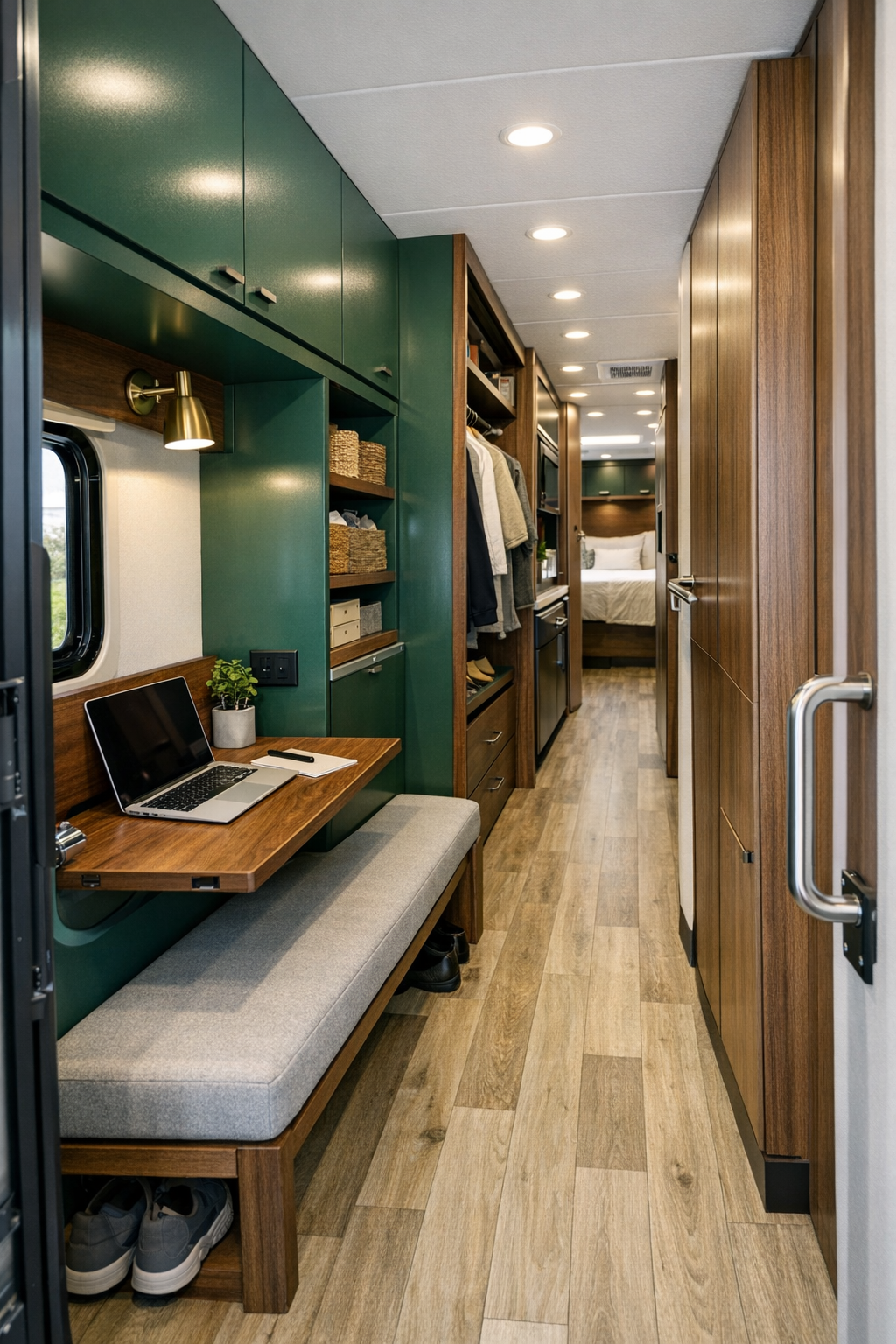
What impressed me most in the remaining zones is how much utility is tucked into them without breaking the visual rhythm of the camper. The entry transition includes concealed shoe storage, a slim bench perch, and charging cubbies, while the corridor millwork uses the same emerald-and-walnut language as the main spaces so it all feels connected. Overhead storage is carefully proportioned and easy to access, and even the hardware placement seems calibrated for comfort and convenience.
There are also a few multiuse moments that make this camper feel especially livable, like a compact workstation that folds out from a cabinet wall and a wardrobe zone with adjustable hanging and drawer storage. Those are the kinds of features I always appreciate because they acknowledge real routines: working between stops, unpacking groceries, managing laundry, and keeping clutter under control. In a home this size, good design is really about reducing friction, and these supporting spaces do exactly that.
Why You'd Live Here
You would live here because it offers something that is honestly pretty rare: mobility, accessibility, and genuine design confidence all in one place. So many compact homes ask you to choose between practicality and personality, but this camper refuses that trade-off. The emerald and bronze palette gives it depth, the accessible features are gracefully integrated, and the planning makes everyday routines feel easier instead of more complicated.
For me, the best homes are the ones that quietly support real life while still giving you a little lift every time you walk in, and this one absolutely does that. It feels polished but not precious, efficient but not cold, and compact without ever seeming deprived. If you want a camper that treats design as part of comfort rather than an extra, this is the kind of space that would be very hard to forget.