
I’m always drawn to homes that prove small spaces can still feel calm, generous, and beautifully lived in, and this soft sage accessible tiny home does exactly that. Set against what I imagine as a quiet, green edge-of-town backdrop, it has that rare mix of cottage warmth and clean, practical planning, with a palette that feels instantly soothing. The whole home is wrapped in gentle color, natural texture, and light that seems to soften every edge, creating an atmosphere that feels grounded instead of cramped.
What makes it especially memorable is how thoughtfully accessibility is woven into the design, not as an afterthought but as part of the beauty of the home itself. Even as a concept design, it feels incredibly believable to me: wide clearances, easy transitions, layered lighting, and smart storage are all handled with a level of care that makes the space feel graceful and easy to move through. It’s the kind of home that feels like it would support real life on busy weekdays and slower Sunday mornings alike.
Exterior
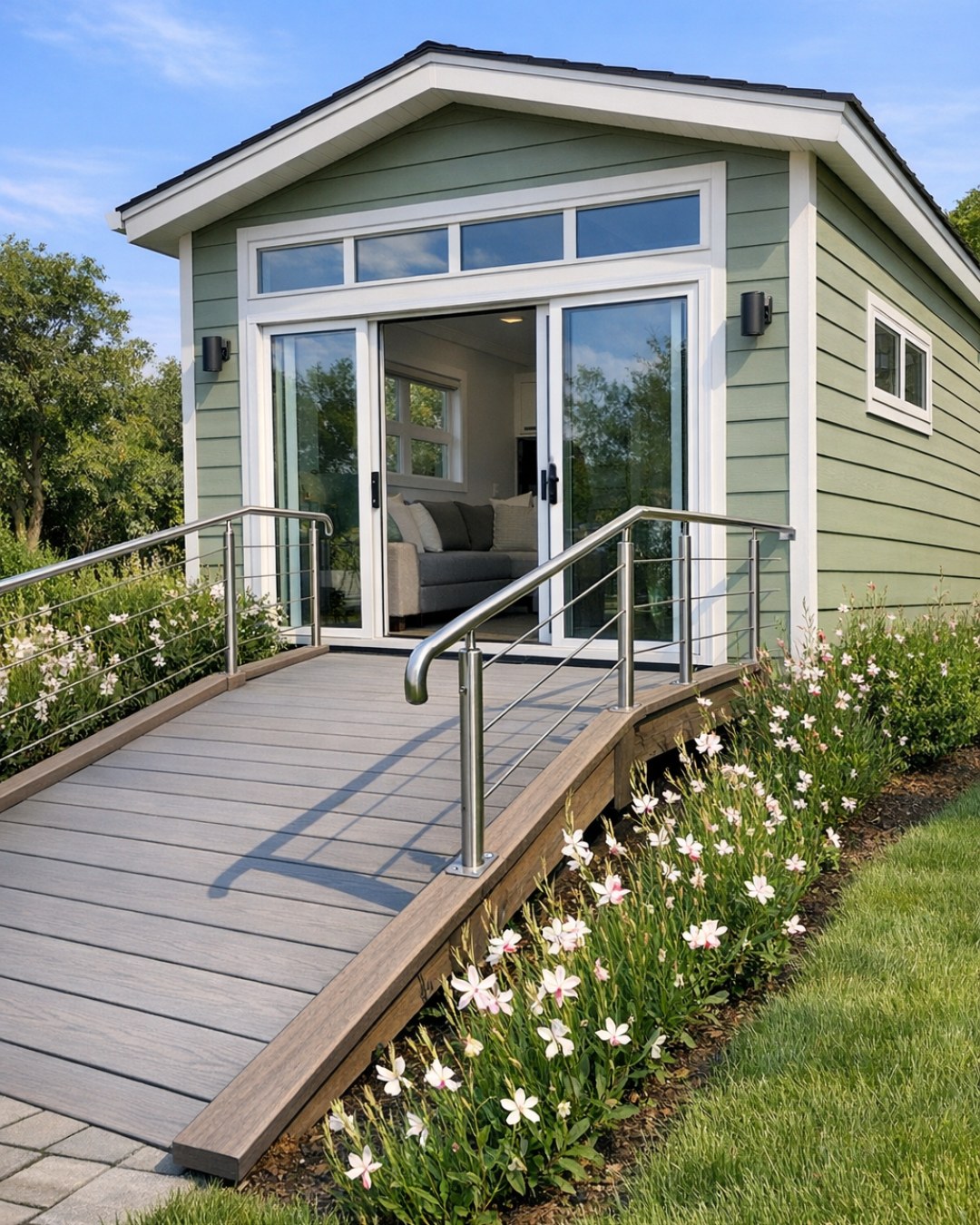
The exterior has a softness that immediately sets the tone, starting with the sage-green siding that gives the tiny home its gentle personality. Instead of leaning rustic or overly modern, the architecture sits in that sweet spot between the two, with simple lines, a compact footprint, and crisp trim that keeps everything looking fresh. A low-entry approach and welcoming front path hint at the accessible planning inside, while warm wood accents at the porch and doorway stop the home from feeling too crisp or utilitarian.
I especially love how the finishes seem chosen to age well and feel approachable. The muted green cladding pairs beautifully with matte black hardware, broad windows, and a natural-toned roofline that doesn’t fight for attention. There’s a quiet confidence to it. It feels polished, but not precious, like the kind of exterior that would still look lovely with a couple of herb pots by the door and a well-used outdoor bench where you could set groceries down after a long day.
Living Room
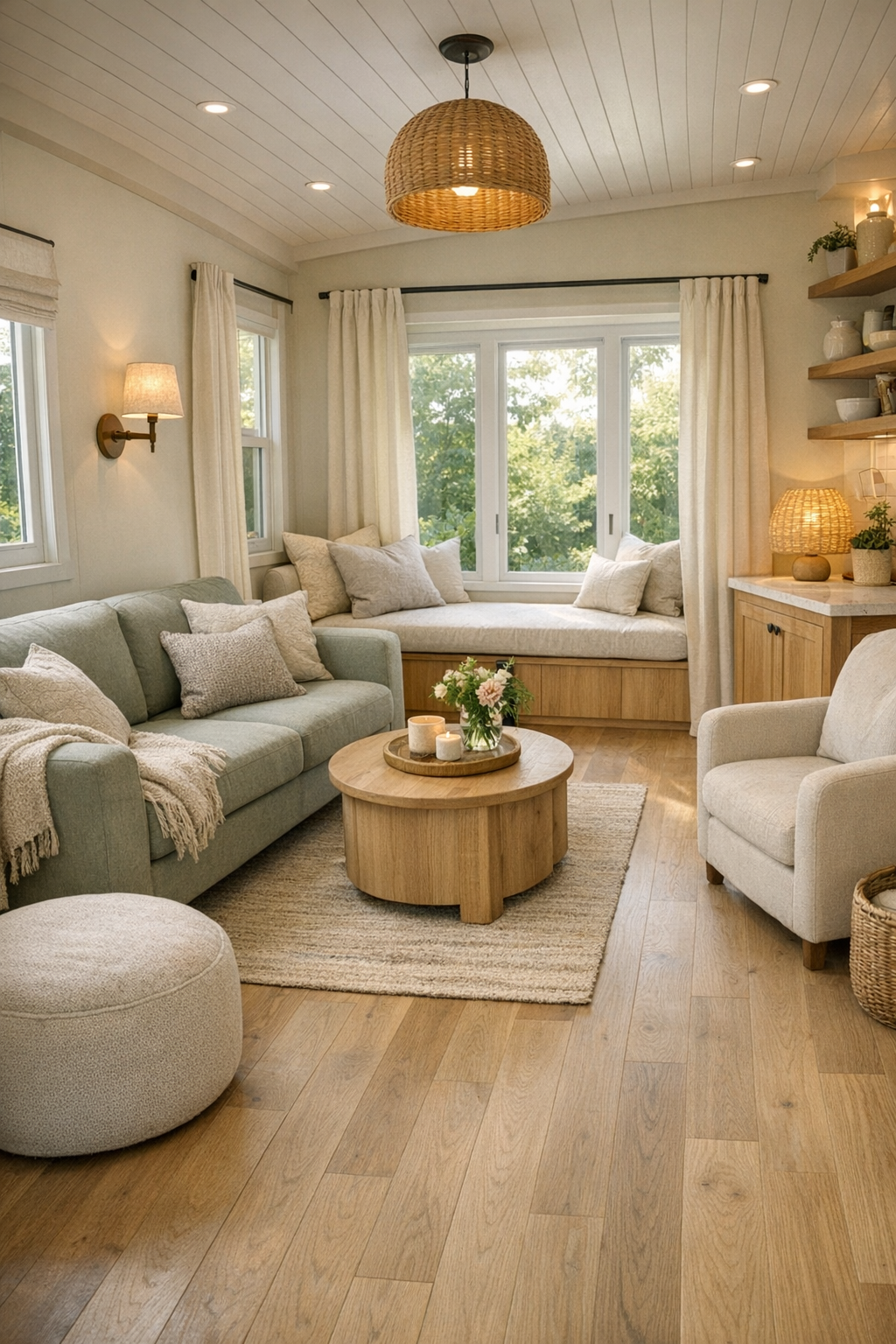
The living room feels airy in that very satisfying way tiny homes sometimes achieve when every inch is doing real work. The color story stays close to the exterior palette, with soft sage carried inside through millwork and accent upholstery, then balanced by creamy walls, pale oak flooring, and warm white textiles. A compact sofa with a slightly deeper seat makes the room feel comfortable instead of temporary, and I can picture it layered with oatmeal linen pillows and a knit throw that would make winter evenings feel especially cozy here in the Midwest.
The layout appears to prioritize circulation first, which is such a smart move in an accessible home. There’s open turning space, rounded furniture edges, and a nesting coffee table setup that can shift as needed without making the room feel sparse. Lighting does a lot of heavy lifting too: a slim ceiling fixture for ambient light, a wall-mounted sconce for reading, and natural light pouring in from larger-than-expected windows. The overall effect is uncluttered but warm, which honestly feels like the dream when life is busy and you want your home to lower your stress the second you walk in.
Dining Room
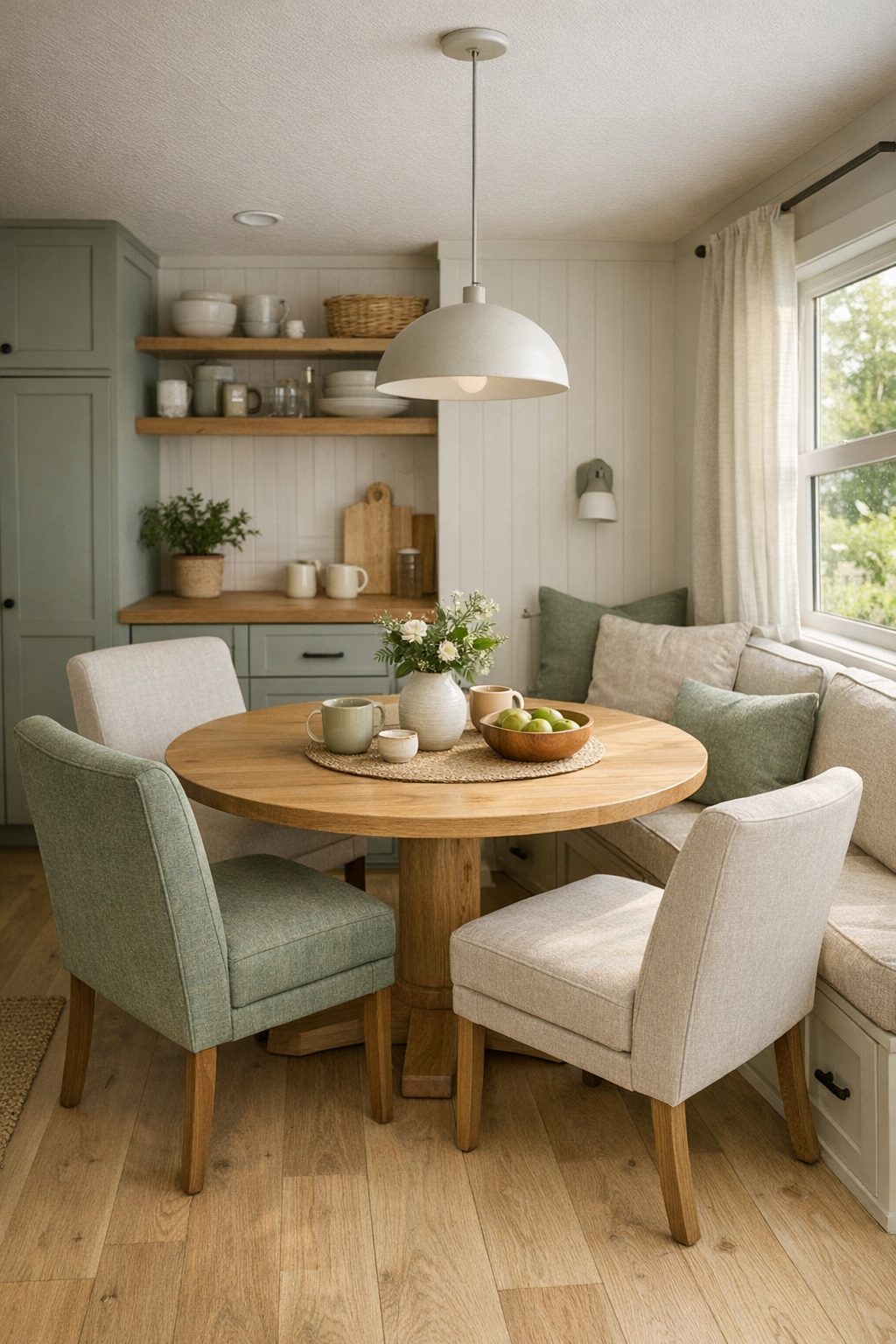
The dining area is compact, but it doesn’t feel squeezed in. It reads more like a purposeful extension of the living space, with a small round or softly oval table that encourages flow and makes movement easier. I love that choice because it removes hard corners and lets the room feel friendlier. The chairs look supportive and sturdy without being bulky, likely in light wood with upholstered seats in a warm neutral fabric that ties back to the rest of the home.
What gives this area its charm is the way utility and atmosphere meet. A pendant overhead brings a focal point without dropping too low, and nearby built-in shelving or a slim sideboard offers storage for everyday dishes, linens, or even a little coffee setup. If I were living here, this is exactly where I’d imagine doing a quick weeknight dinner prep reset, then sitting down with something simple and homemade while the late afternoon light comes through the window. It feels intimate, organized, and very easy to maintain.
Kitchen
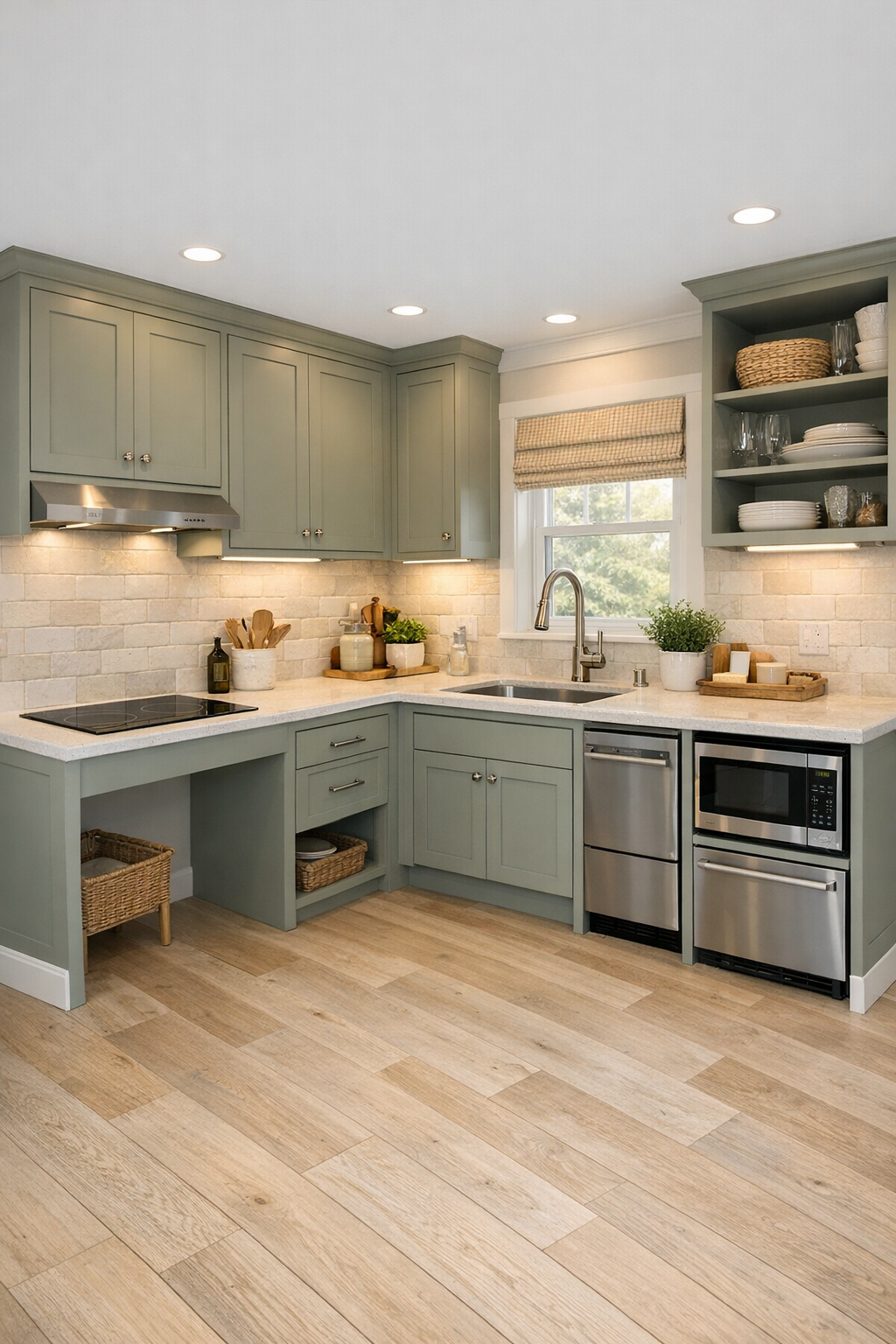
The kitchen is where this home really wins me over, because it feels designed for actual daily life, not just for photos. The cabinetry in a muted sage tone gives the room personality without overwhelming it, and I can see flat-panel or lightly detailed doors paired with slim brass or black pulls for a clean finish. Lighter countertops, probably a soft quartz with subtle movement, keep everything bright, while a full-height backsplash in a handmade-look tile adds just enough texture to make the room feel special.
Accessibility shows up here in really smart ways: open knee space where needed, easy-reach storage, wide pathways, and appliances that look integrated into the design rather than awkwardly adapted. I appreciate a kitchen that understands meal prep has to be efficient, especially on busy workdays, and this one seems to. There’s likely a single-basin sink, under-cabinet lighting, and carefully considered drawer storage that makes pots, pantry staples, and everyday tools easier to access. It’s compact, but it feels deeply usable, which to me is always more beautiful than excess.
Bedroom
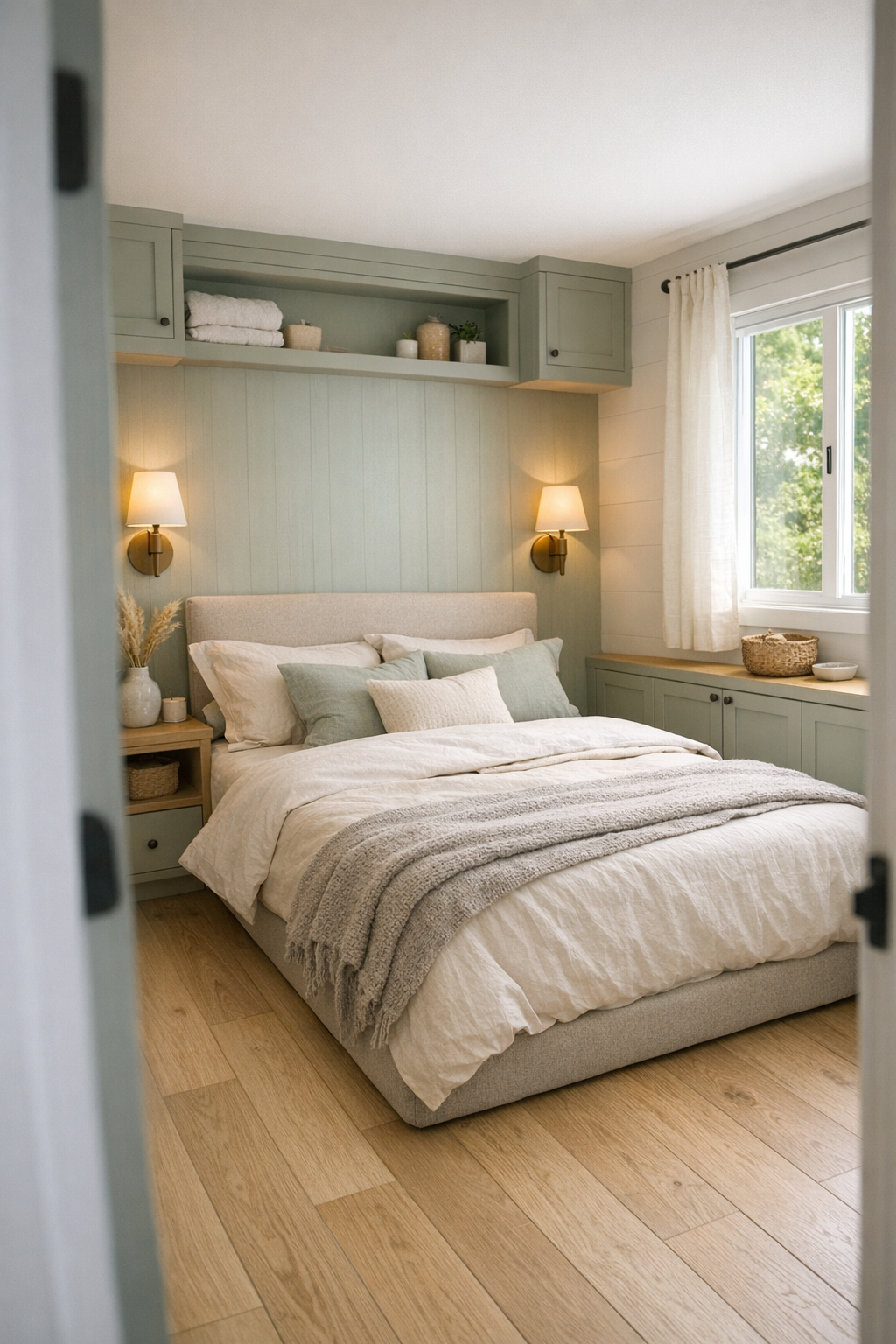
The bedroom takes a quieter turn, leaning into softness and restfulness in a way I really appreciate. Instead of trying to cram in too much furniture, the room appears to focus on essentials done well: a comfortable bed with accessible clearance, integrated nightstands or wall shelves, and layered bedding in ivory, stone, and muted green. The palette is restrained, which helps the room breathe, and the textures do the emotional work—washed linen, soft cotton, maybe a lightly quilted coverlet that makes the space feel inviting without adding visual heaviness.
I also like how the lighting in a room like this can be both practical and calming. Wall-mounted sconces free up surface space, blackout drapery or woven shades help with comfort, and built-in storage keeps clutter from stealing the calm. In a tiny home, the bedroom really has to earn its peace, and this one seems to do that by being simple, accessible, and beautifully edited. It feels like the kind of room where you’d actually sleep well, which honestly is one of the biggest luxuries any home can offer.
Bathroom
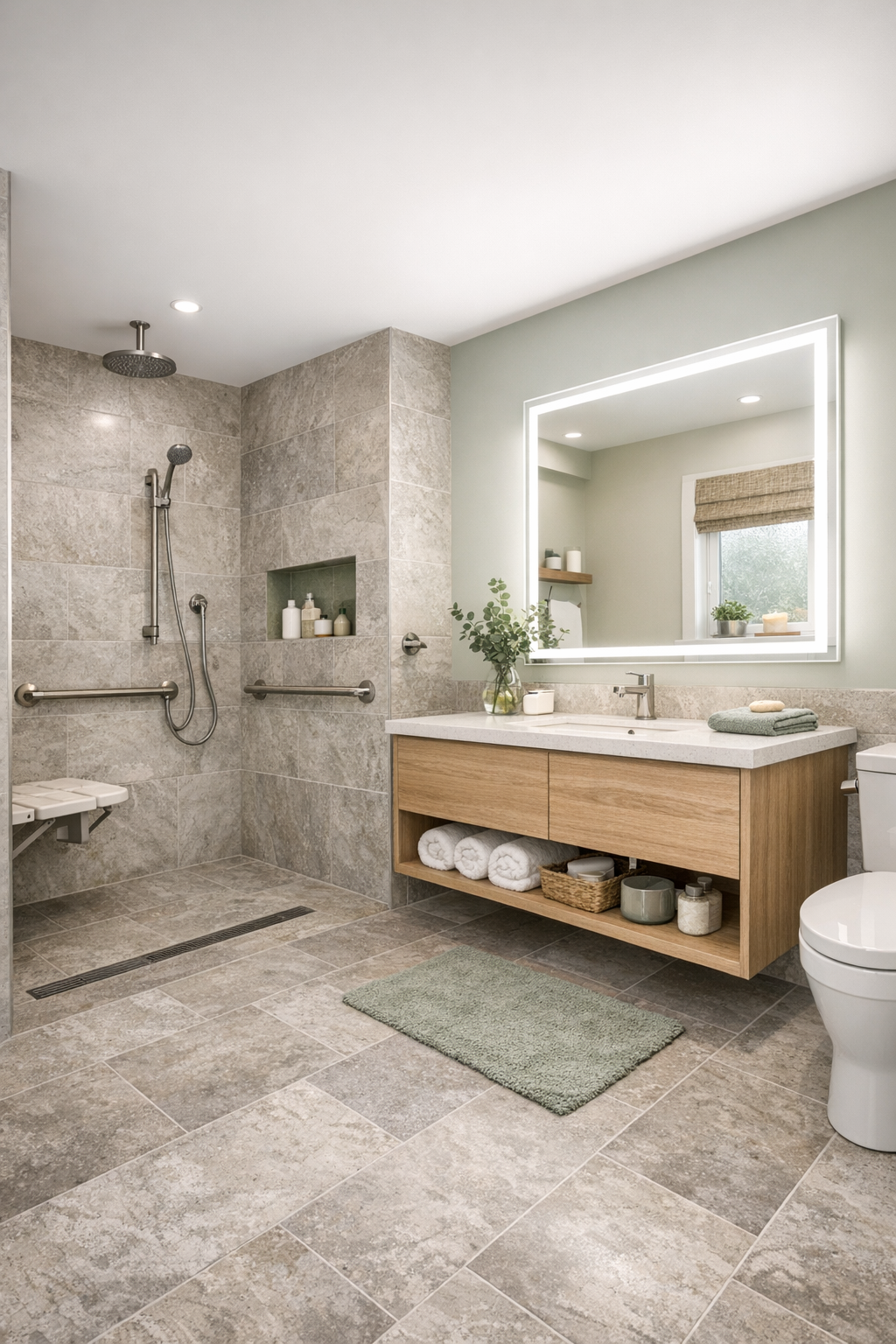
The bathroom carries the same thoughtful tone, and I think that consistency is part of what makes the home feel so resolved. Rather than stark accessibility cues, the design seems to favor seamless, elegant solutions: a curbless shower, easy-to-clean large-format tile, a floating vanity, and hardware that feels substantial and attractive. Soft stone tones and sage accents keep the palette connected to the rest of the home, while brighter reflective surfaces help bounce light around the compact footprint.
This is also where texture and contrast become especially important. Matte tile underfoot, a lightly grained vanity finish, and polished fixtures create depth without cluttering the eye. I can imagine a well-placed mirror with integrated lighting, open shelving for towels, and enough maneuvering space to make the room feel comfortable instead of tight. It’s practical, yes, but it also has that spa-like clarity that makes even a quick morning routine feel a little more manageable.
Other Areas
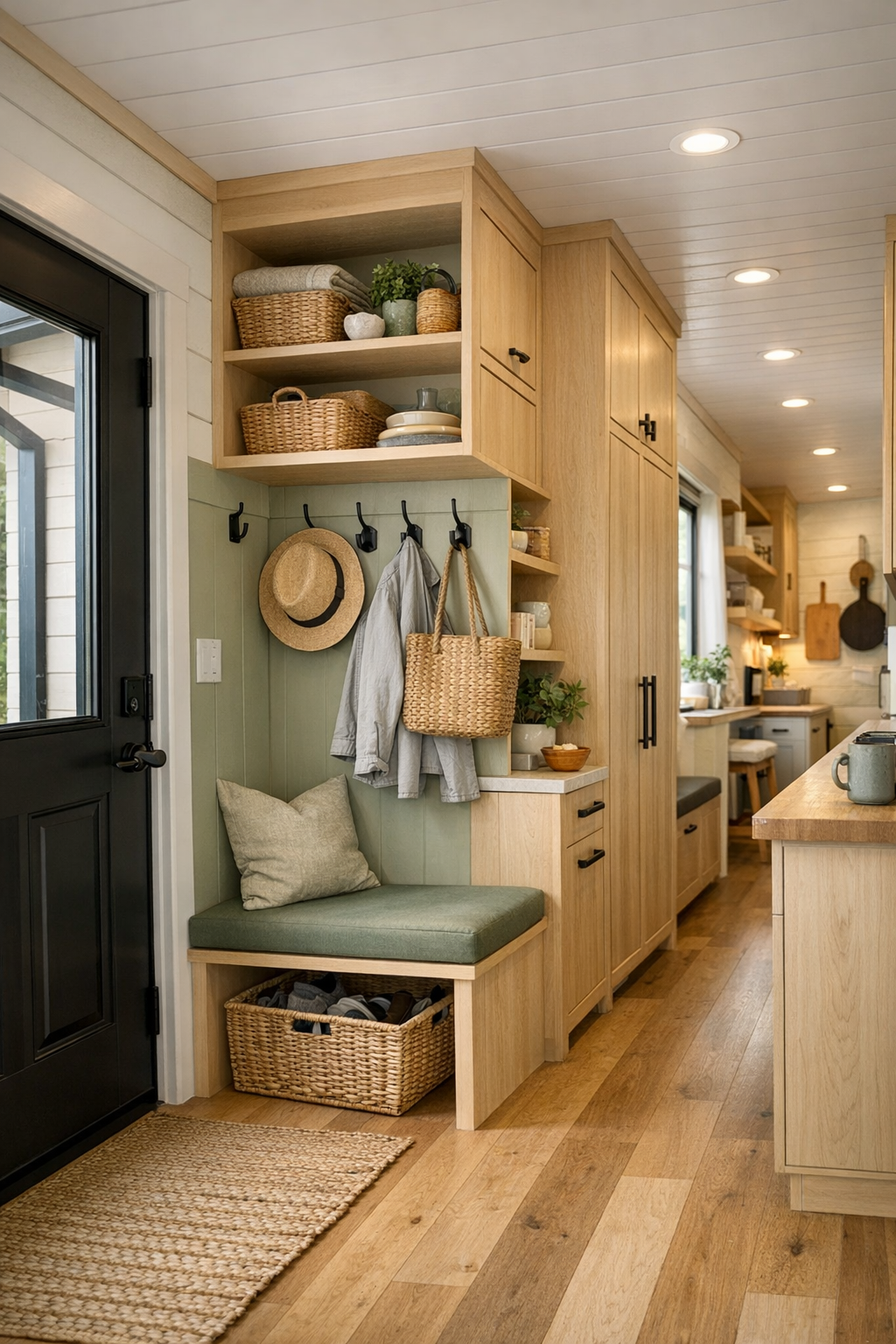
What I find especially smart are the in-between spaces, because that’s usually where tiny homes either shine or start to feel chaotic. Here, circulation zones, entry storage, and any built-in work nook or utility wall appear to be treated with the same care as the main rooms. A bench near the door, concealed hooks, shallow cabinetry, and open shelving in just the right places would make everyday routines so much easier. In a home this size, having a spot for bags, shoes, pantry overflow, or even a folding step stool matters more than people think.
If there’s a loft alternative, hallway niche, or multipurpose corner, it likely follows the same philosophy of softness plus function. I can picture pale wood joinery, simple black accents, and baskets or bins that keep the look tidy without becoming too styled. These supporting areas are what make the whole house feel livable, especially for someone balancing work, errands, and home life. They help the home stay beautiful on a random Tuesday, not just in a perfectly staged moment.
Why You'd Live Here
You’d live here because it understands that beautiful design and practical living should never be separate conversations. This home makes accessibility feel natural, calming, and fully integrated, while the soft sage palette and warm materials give the entire space a sense of comfort that never feels overdone. It’s edited, but not cold; compact, but not cramped. That balance is hard to pull off, and this design does it with real grace.
For me, the biggest appeal is that it feels ready for everyday life. It supports movement, simplifies routines, and still leaves room for the rituals that make a house feel personal—morning coffee, weeknight cooking, folding laundry while a lamp glows in the living room, and ending the day in a bedroom that feels genuinely peaceful. In a world where so many homes are either stylish or functional, this one makes a strong case for being both.