
This sage green craftsman-style park model RV has the kind of presence that makes me slow down and really look. From the outside, it carries that familiar handcrafted warmth I associate with classic American cottages, but inside, it unfolds with a polish and restraint that feels especially thoughtful. The scale is compact, of course, yet the mood is anything but cramped: soft greens, warm woods, creamy painted finishes, and carefully layered textures give the home a settled, gracious character that feels rooted in both utility and comfort.
What makes this home especially memorable is how skillfully it balances charm with precision. As a concept design, it imagines small-footprint living without sacrificing beauty, storage, or everyday ease. I’m drawn to homes that work hard and still feel generous, and this one does exactly that, using craftsman detailing, built-in millwork, and a calm, nature-based palette to create rooms that feel coherent, welcoming, and quietly luxurious.
Exterior
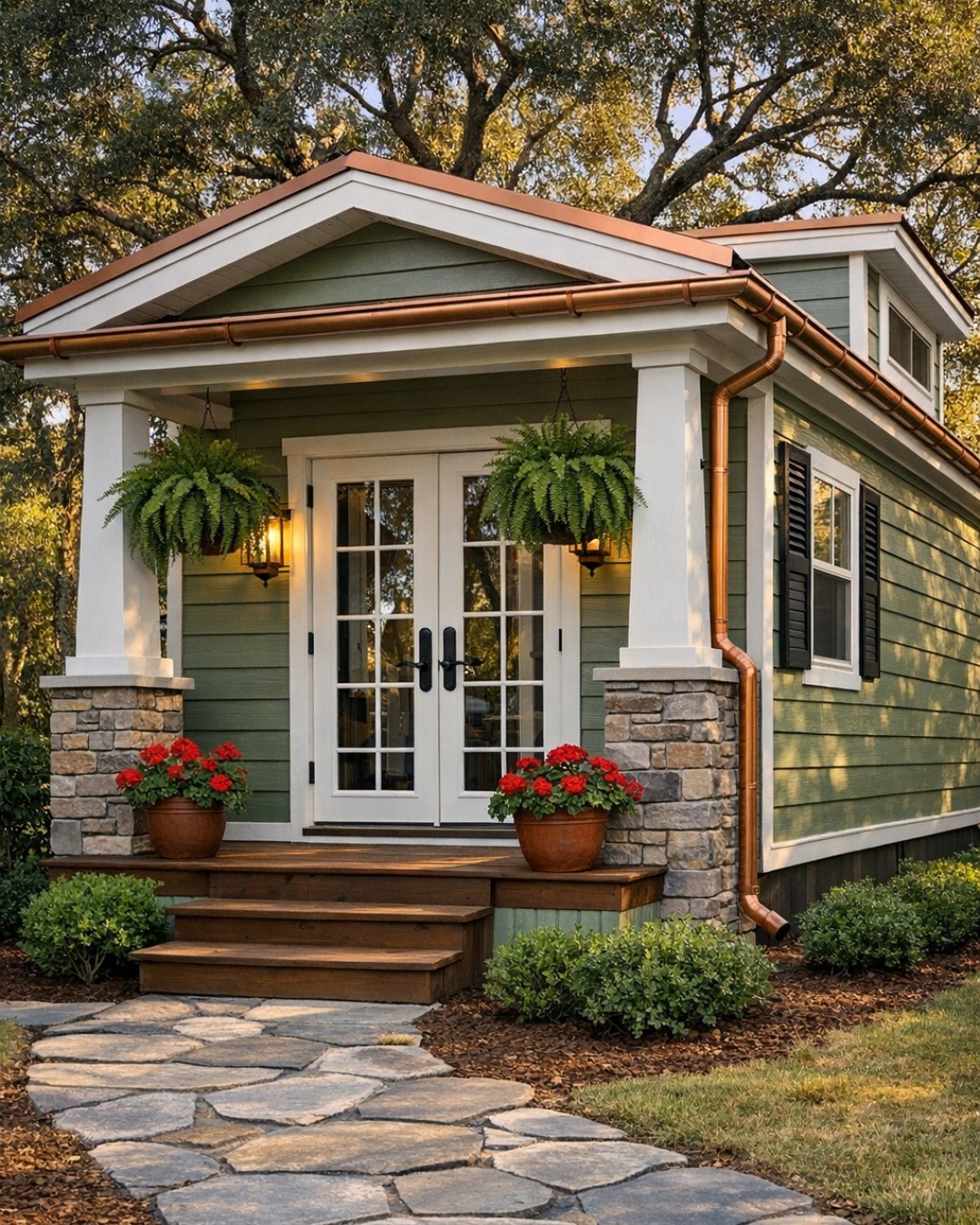
The exterior leans fully into the craftsman language, and I think that confidence is what makes it so appealing. The sage green siding gives the home a gentle, grounded presence, while crisp trim in a warm off-white keeps the color feeling fresh rather than rustic. Bracket details, substantial window casings, and a modest but well-defined porch line add depth and shadow, which is especially important on a smaller structure. Instead of trying to disguise its park model proportions, the design celebrates them with proportionate architectural details that make the facade feel intentional and composed.
I can easily imagine the finish palette shifting beautifully with the light throughout the day. In morning sun, the green would read airy and botanical; by late afternoon, it would feel richer and more enveloping. Natural wood at the entry door, matte black hardware, and lantern-style exterior lighting complete the look with just enough contrast. The effect is cottage-like but not precious, practical but still polished, which is exactly the combination I want in a compact home that aims to feel enduring.
Living Room
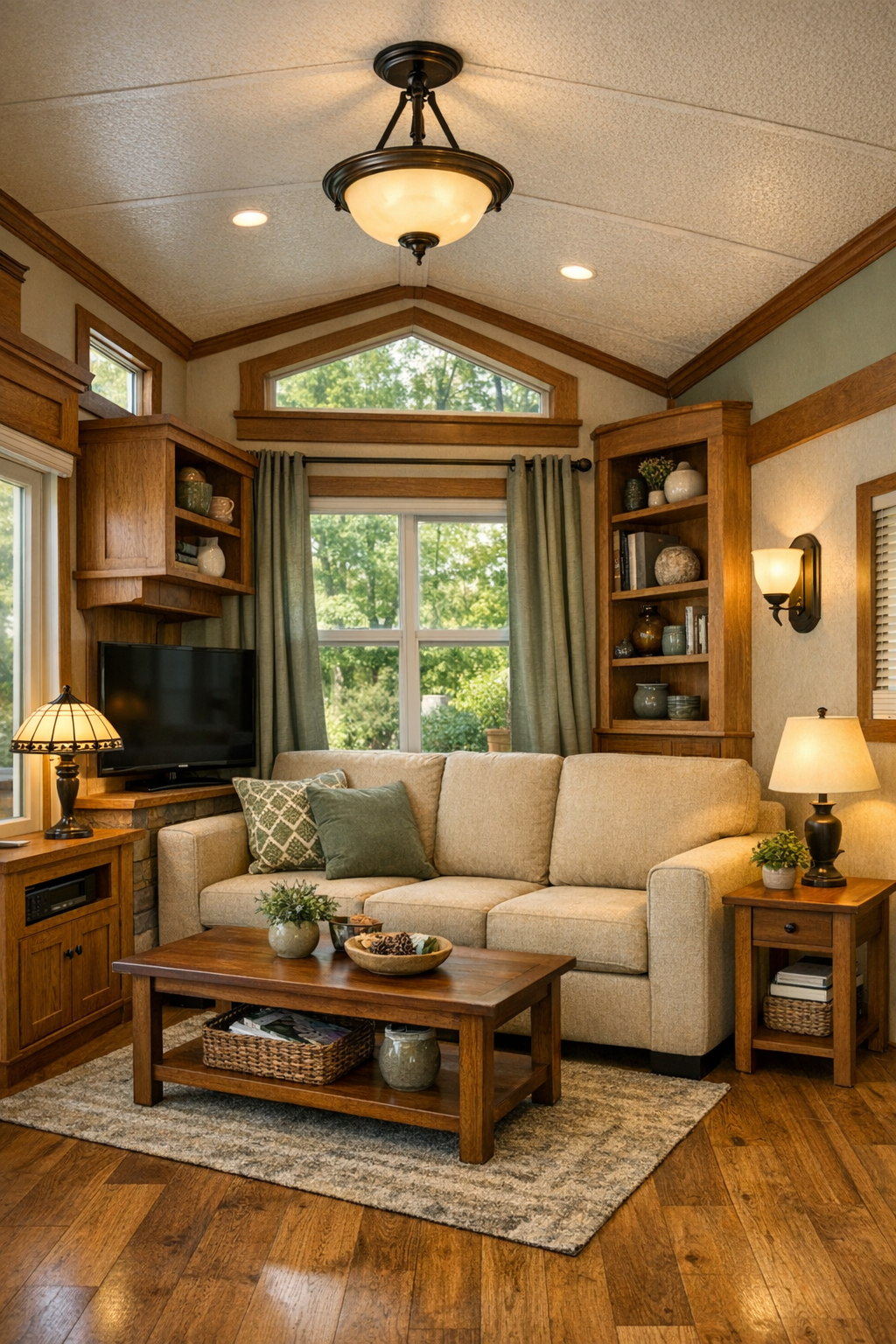
The living room feels designed around the idea of visual calm. Rather than crowding the footprint, the furniture is scaled with real discipline: a compact upholstered sofa in a warm oat or flax tone, a pair of occasional chairs with exposed wood frames, and a craftsman-style coffee table that brings in solid, honest materiality. I’d expect to see white oak or a similar medium-toned wood repeated here in the flooring, shelving, and trim, creating a seamless flow that visually widens the room. The sage notes from the exterior likely reappear in muted accents, perhaps in throw pillows, a painted built-in, or woven textiles that soften the architecture.
Lighting is where a room like this really earns its atmosphere. A central fixture in bronze or blackened metal, perhaps with opal glass, would set the tone overhead, while sconces or a table lamp keep the edges of the room warm in the evening. I love when compact homes use built-ins instead of bulky freestanding pieces, and this room seems made for that strategy: a window bench, low cabinetry, or open shelves for books and ceramics would give the space both utility and personality. The feeling is intimate and composed, the sort of room where tea, conversation, and a good cookbook would all feel equally at home.
Dining Room
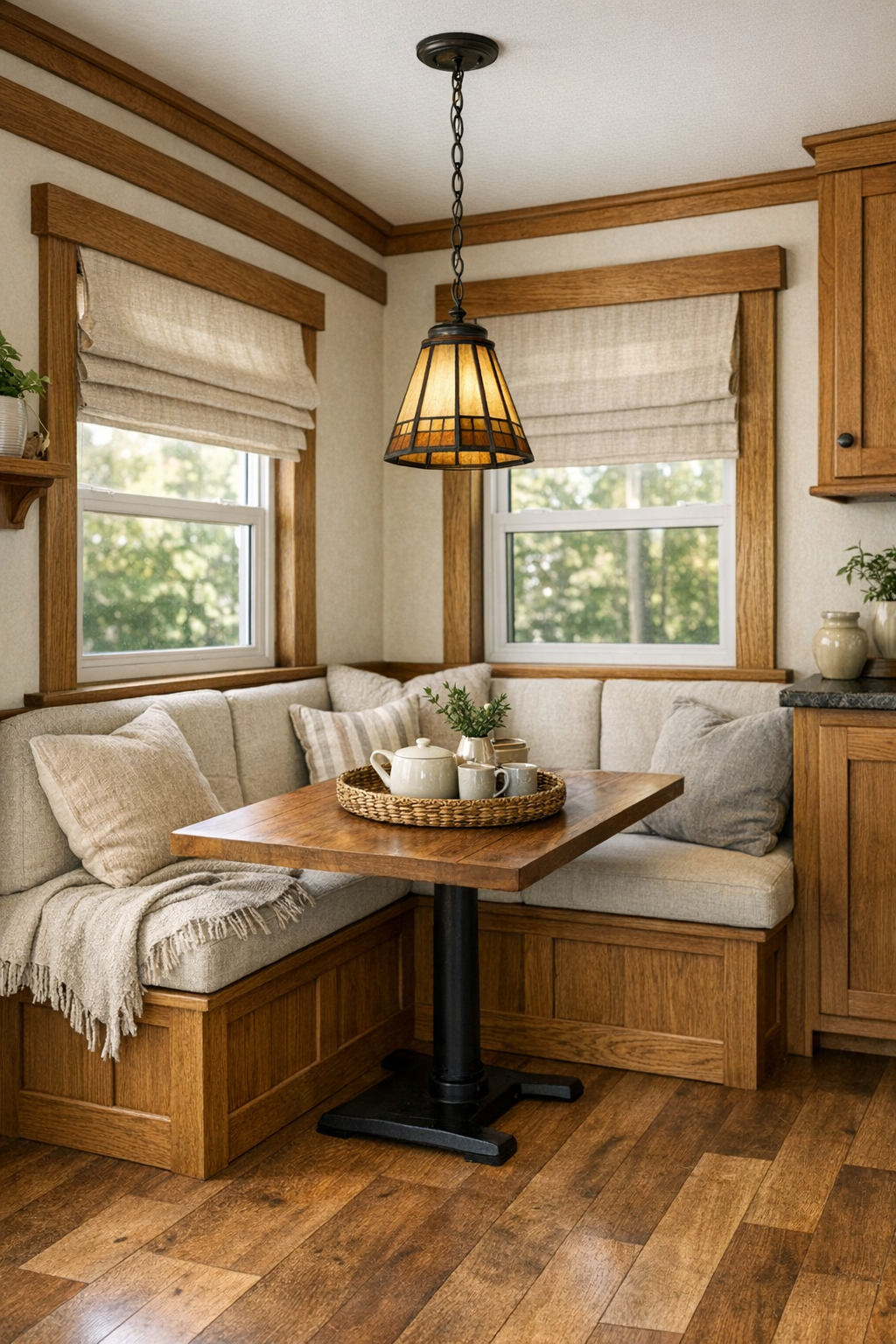
In a home this size, the dining area has to do more than one job, and that practical demand often produces the smartest design decisions. Here, I imagine a built-in banquette tucked neatly along a wall or beneath windows, upholstered in a durable neutral fabric with subtle texture. Paired with a compact rectangular pedestal or trestle table, it would preserve circulation while still allowing for comfortable meals, work sessions, or lingering coffee. The craftsmanship matters here: paneled bench bases, tailored cushions, and wood edging would make the area feel architectural rather than simply furnished.
The palette is likely kept deliberately quiet so the room can breathe. Creamy walls, wood trim, and soft green undertones create a gentle backdrop for stoneware dishes, linen napkins, and the kind of everyday objects that become part of the decor. As someone who cooks, I always notice whether a dining space feels connected to the kitchen, and this one almost certainly does, making serving and cleanup feel natural. A pendant with a handcrafted silhouette, perhaps in metal or seeded glass, would define the zone without overwhelming it, giving the dining area its own glow inside the broader open-plan layout.
Kitchen
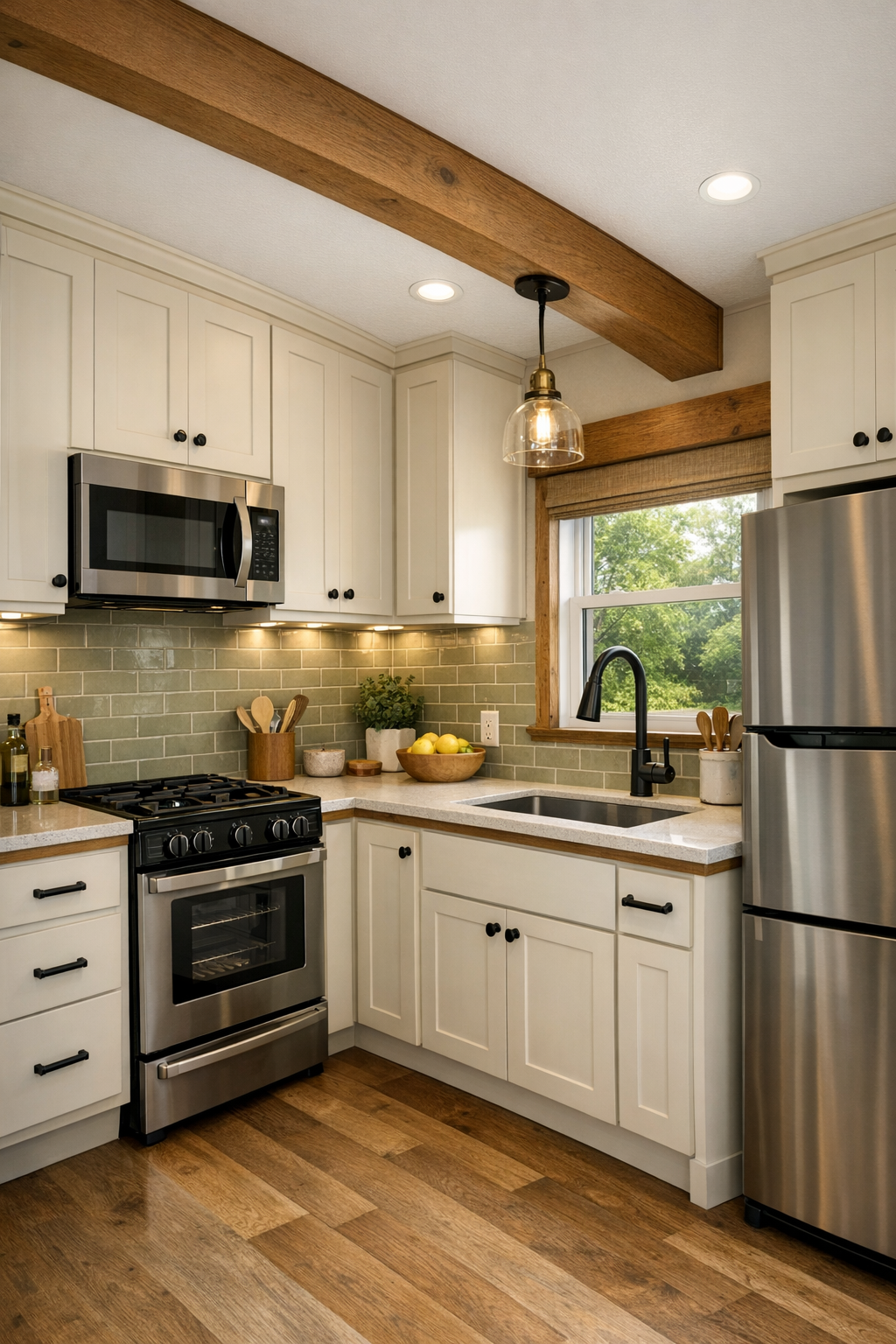
The kitchen is where a park model either wins me over completely or loses me, and this one absolutely wins. It appears to understand that a compact kitchen still needs genuine working surfaces, intelligent storage, and finishes that can take daily use. I picture shaker-style cabinetry in a warm painted tone, perhaps a soft cream or pale mushroom, grounded by butcher block or lightly veined quartz counters that keep the room bright. A sage tile backsplash would be an elegant nod to the exterior color, tying the whole home together in a way that feels subtle and deliberate rather than overly matched.
What I find especially compelling is the likely attention to workflow. Even in a reduced footprint, there is room for deep drawers, vertical pantry storage, open shelving for frequently used pieces, and under-cabinet lighting that makes prep work easier. As someone who spends a lot of time cooking, I appreciate kitchens that anticipate real habits: where the cutting board lands, where spices are within reach, where a kettle can live without cluttering the counter. This one feels like it would support all of that. The fixtures probably lean classic—aged brass or matte black hardware, a practical single-basin sink, compact but full-function appliances—so the kitchen reads not as a compromise, but as a distilled version of a very good one.
Bedroom
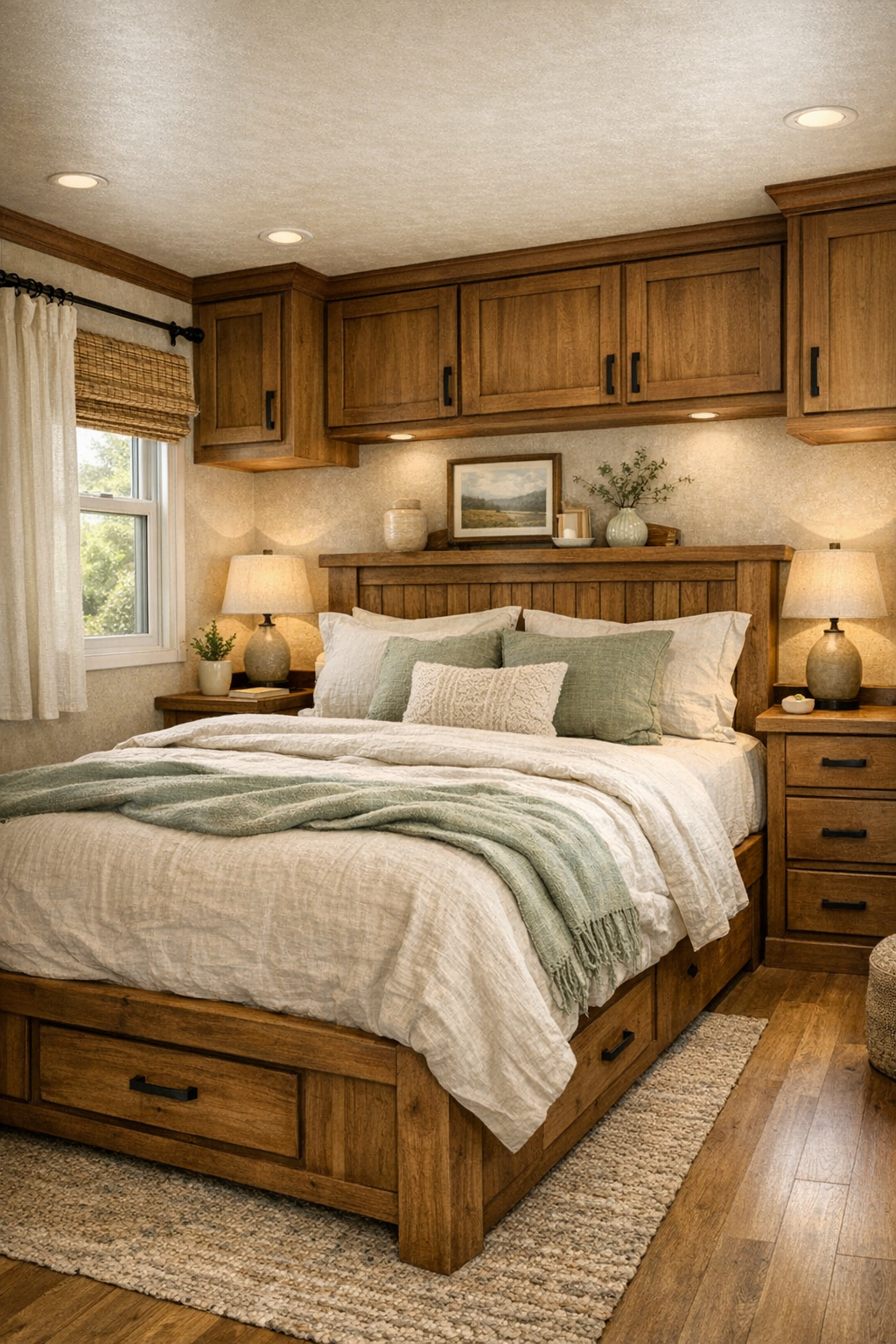
The bedroom appears to lean into serenity rather than excess, which is exactly the right move in a small home. A simple bed frame in wood or painted craftsman millwork would anchor the room, likely flanked by built-in night ledges or narrow sconces in place of traditional tables. That substitution is smart: it saves floor area while maintaining all the comfort cues we expect. Bedding in washed linen, soft cotton, and restrained earth tones would add depth without visual noise, letting texture do the decorative work that pattern might otherwise do in a tighter room.
I suspect storage is integrated wherever possible, and that’s often the mark of a truly successful compact bedroom. Drawers beneath the bed, cabinetry overhead, or a small wardrobe with divided interior organization would help keep the room restful rather than crowded. Window placement would be crucial here too, allowing light to wash across the walls and making the ceiling feel a little taller. The overall effect is cocooning but not closed-in, with that pleasant, tucked-away feeling that reminds me of a well-designed guest room in an old lakeside cottage.
Bathroom
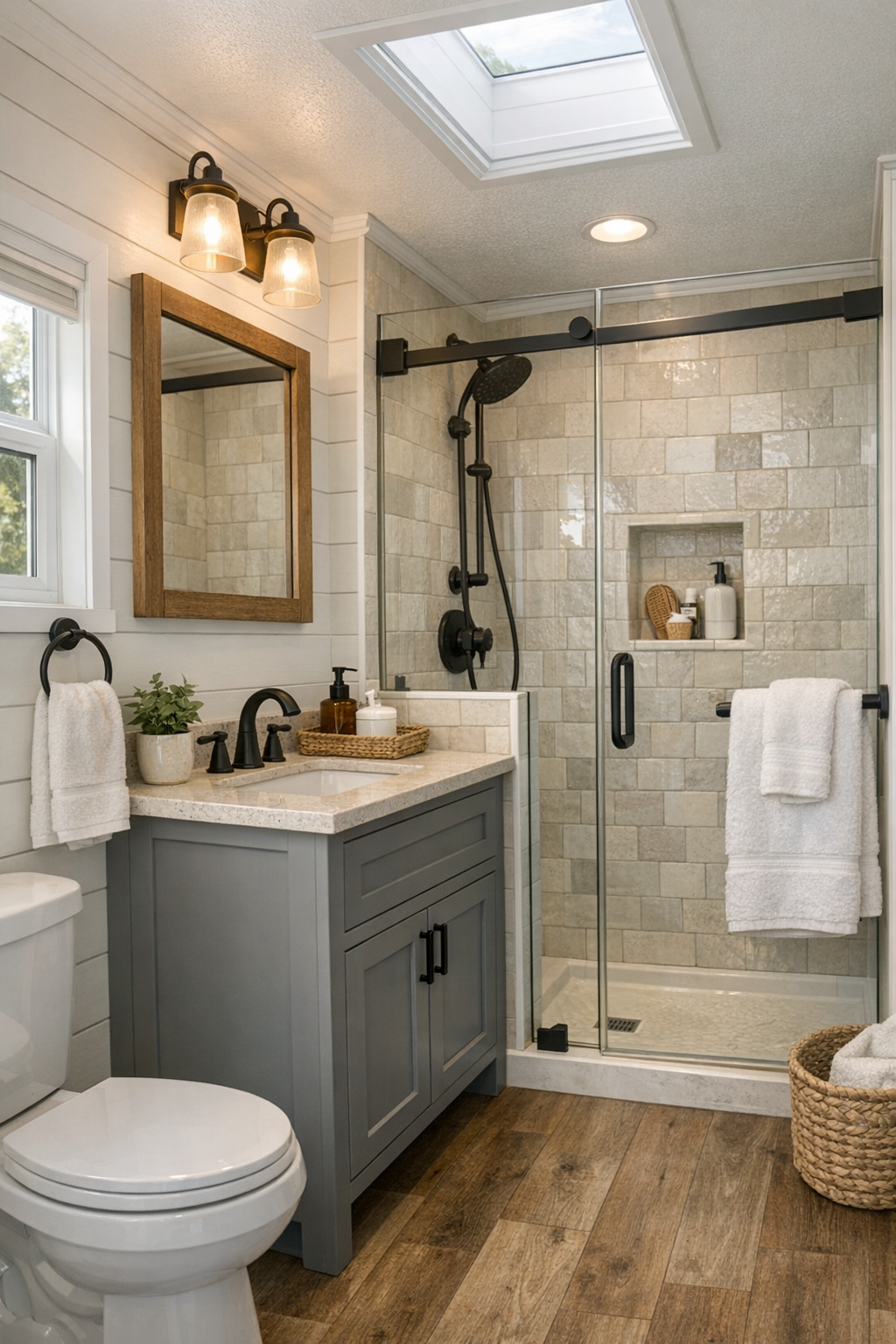
A bathroom in a park model has to be ruthlessly efficient, but that doesn’t mean it has to feel utilitarian. Here, I imagine a room finished with the same discipline as the rest of the home: a compact vanity with shaker fronts, a stone or quartz countertop, and a mirror framed in wood or dark metal to echo the craftsman vocabulary. Tile would do much of the visual heavy lifting, possibly in a soft white, pale gray, or muted green, with a handmade look that brings variation and life to a small envelope. The room would feel clean, tailored, and thoughtfully scaled.
I always pay attention to how bathrooms handle light and texture, because those elements can completely change the experience of a modest space. A glass shower enclosure or a light shower curtain would keep sightlines open, while warm brass or matte black plumbing fixtures could add definition. Hooks, recessed niches, and narrow shelving would be carefully placed so nothing feels improvised. The result is likely more spa-like than one might expect in a park model RV, with just enough softness in textiles and finishes to make the room feel restorative rather than merely functional.
Other Areas
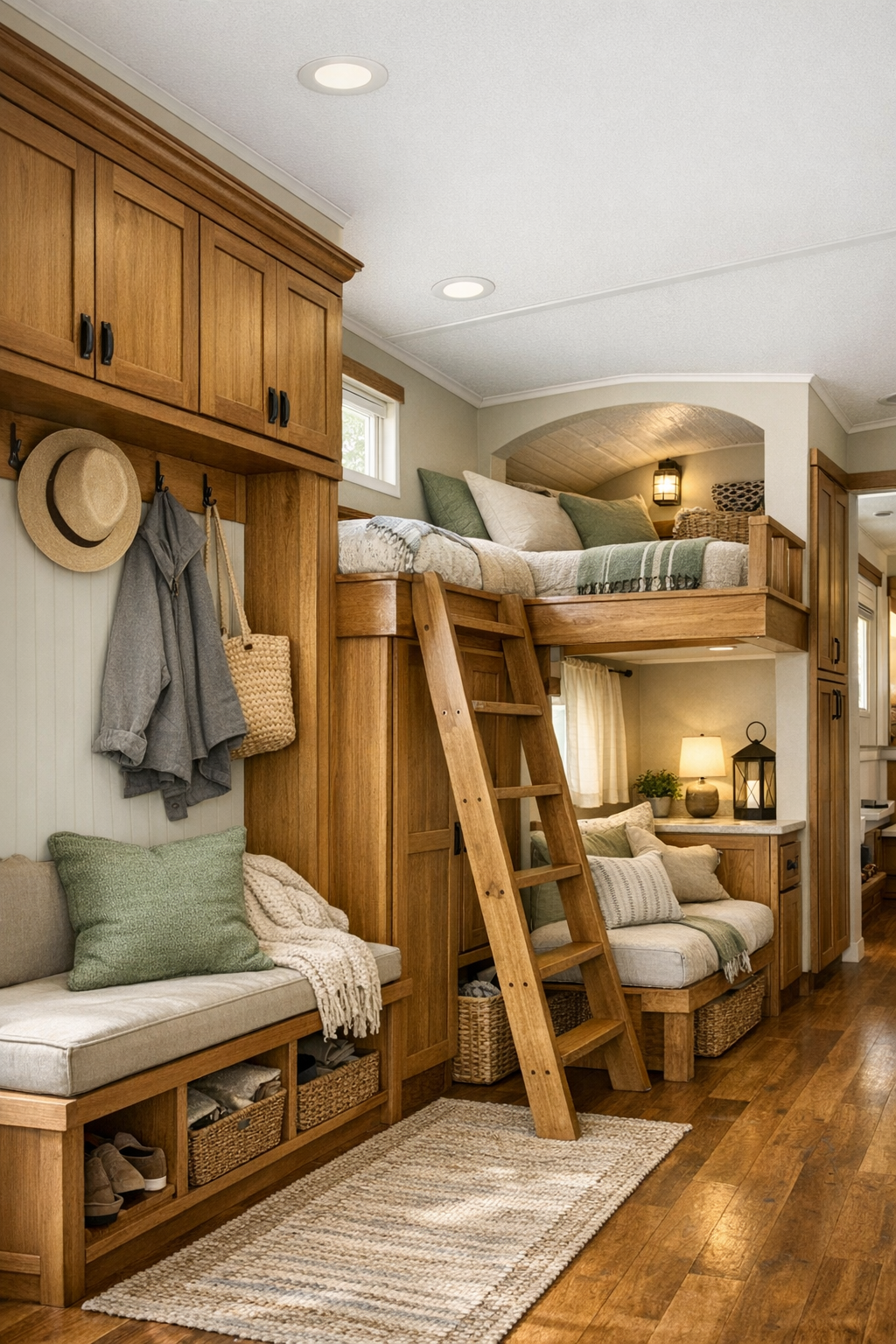
The secondary spaces are often where small homes reveal their intelligence, and I suspect that is very true here. A compact entry zone with hooks, a bench, and concealed storage would establish order immediately, which matters tremendously when every square foot is visible. Hallway walls might be used for shallow cabinetry, display ledges, or even integrated utility storage, all finished to match the surrounding millwork so these practical elements disappear into the architecture. In a home with this kind of design consistency, even circulation space can feel considered and attractive.
If there is a loft, reading nook, or flexible bonus corner, I imagine it handled with the same measured charm as the main rooms. Perhaps there is a small desk beneath a window, a ladder leading to a sleeping loft, or a tucked-away bench piled with cushions and a wool throw. These are the details that make a compact home feel personal rather than merely efficient. I especially appreciate when these in-between areas support real daily rituals—taking off shoes, storing market bags, reading before dinner, setting down a tray of herbs or produce—because that is what turns design into lived comfort.
Why You'd Live Here
You’d live here because it proves that small-scale living can still feel dignified, beautiful, and deeply functional. This home doesn’t chase novelty; it invests in proportion, craftsmanship, and materials that soothe the eye and support daily life. I find that especially persuasive. The sage green exterior gives it personality, while the interior builds a complete atmosphere from warm wood, soft painted surfaces, practical built-ins, and rooms that know exactly what they need to do.
You’d also live here because it has the rare ability to feel edited without feeling deprived. Whether you love the craftsman detailing, the cottage-like warmth, or simply the idea of a home that asks less from you while giving quite a lot back, this park model offers a compelling vision. It feels like a place where meals would be simple but satisfying, mornings quiet, and every object chosen with care. For anyone drawn to thoughtful design in a compact footprint, that is a very attractive promise.