
There is something deeply comforting about a home that knows exactly what it wants to be, and this converted bus settles into the countryside with that kind of quiet confidence. From the outside, it carries the honest utility of an old working vehicle, but inside it opens into a snug, thoughtful retreat shaped by homestead sensibilities, practical craftsmanship, and a gentle appreciation for slower living. The whole place feels rooted in the land around it, with warm wood tones, hardworking finishes, and little touches that make the compact footprint feel generous rather than spare.
What makes this home so memorable is the way it turns necessity into beauty, blending off-grid ingenuity with the familiar coziness of a farmhouse kitchen and a well-kept guest room; it is a concept design, but one imagined with such care that I could almost hear the screen door of my childhood home somewhere in the background. Every inch has a purpose, yet nothing feels cold or overly engineered. Instead, the bus feels welcoming, personal, and quietly resilient, like the kind of place where supper is always simmering and muddy boots have a proper place by the door.
Exterior

The exterior keeps much of the bus’s original character, and that is exactly the right choice. Rather than disguising its bones, the design leans into them, softening the long profile with muted country colors, matte paint, and natural wood accents that make the structure feel at home against open fields and gravel paths. A small entry deck and simple awning create a gracious threshold, while planter boxes, lantern-style sconces, and a pair of sturdy chairs give it the look of a tiny rural porch, the kind of spot where you might shell peas in the evening light.
I especially like the balance between ruggedness and charm. The roofline is put to work with solar panels arranged neatly rather than conspicuously, and the storage elements are integrated so they do not interrupt the silhouette. There is an appealing honesty to the materials here: weathered timber, blackened metal, practical steps, and windows trimmed in a way that makes them read almost like those of a narrow cottage. It feels capable, self-sufficient, and unpretentious, which is a lovely combination in any home, especially one planted in the quiet of the countryside.
Living Room
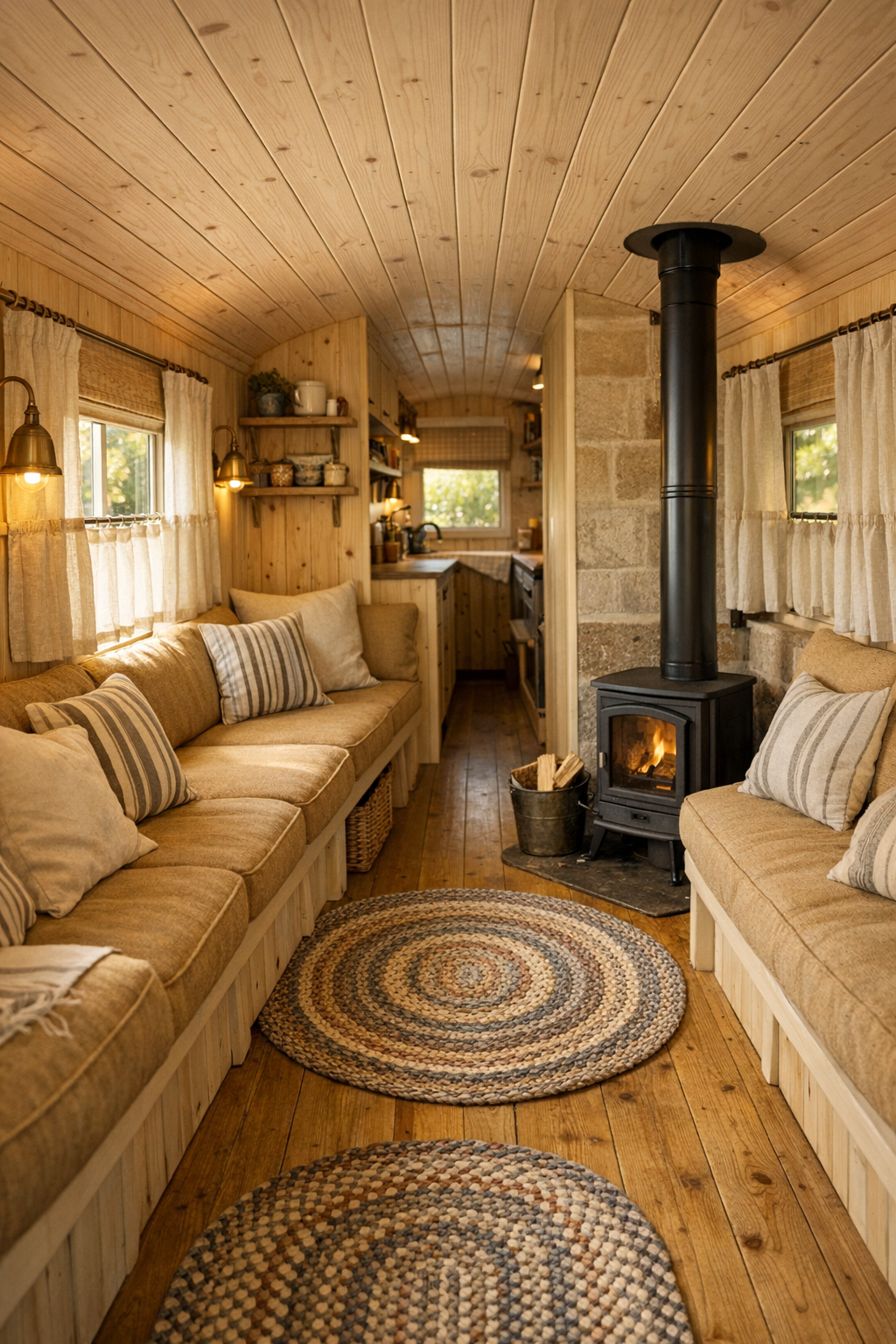
The living area makes the smartest use of the bus’s narrow proportions by turning them into an asset. Built-in bench seating hugs one side beneath the windows, layered with wheat-colored cushions, faded ticking-stripe pillows, and a wool throw in soft oat and rust tones. Across from it, a slim wood-burning stove anchors the room with old-fashioned charm, while pale pine paneling and a whitewashed ceiling keep the space from feeling closed in. The aisle remains clear and easy to move through, which gives the room a natural rhythm and lets the eye travel from one end of the bus to the other.
What warms this room most is its texture. There are braided rugs underfoot, a small cabinet with wire-mesh doors for books and pantry crocks, and a fold-down table that can serve as a writing desk or a place to snap beans. The lighting is soft and practical, with brass reading sconces, shaded lamps, and daylight pouring through linen café curtains. It feels like a room made for conversation, mending, and rainy afternoons, where every piece has been chosen for comfort as much as for scale.
Dining Room
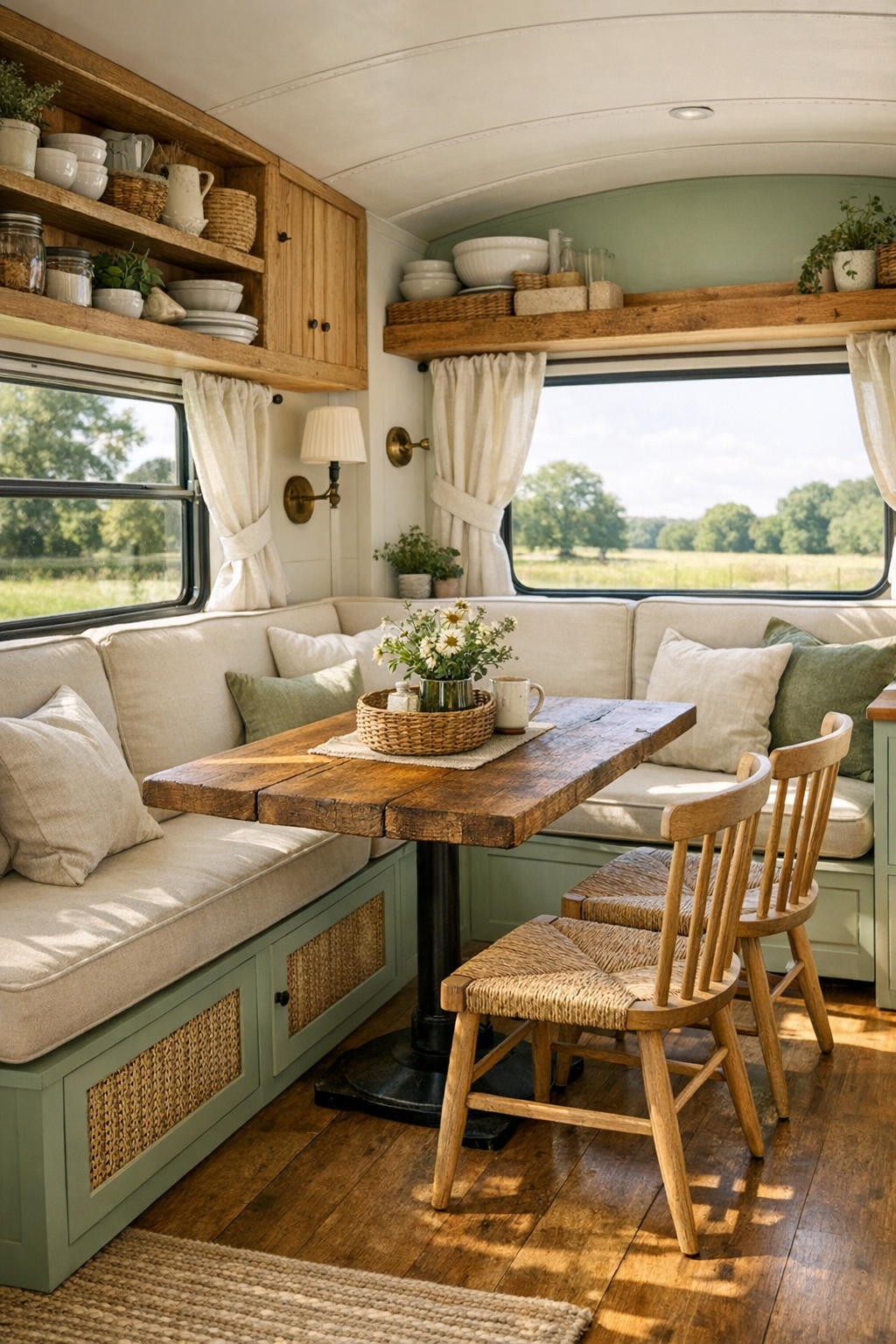
The dining area is modest in size but full of heart, tucked neatly into a window-lined section where the view does much of the decorating. A built-in banquette on one side and a simple spindle-back chair or two on the other create a charming, flexible arrangement that feels borrowed from a country breakfast nook. The table itself is likely a hardworking piece in butcher-block or reclaimed oak, softened by rounded corners and a hand-rubbed finish that can take daily use without a fuss. In a home this compact, it is exactly the right sort of table: useful, sturdy, and handsome in a quiet way.
I can picture this being one of the sweetest spots in the whole bus, especially in the morning when light falls across a crock of dried herbs and a bowl of apples. The palette stays gentle and grounded, with cream upholstery, soft green or muted blue accents, and touches of black iron in the hardware and light fixture overhead. Open shelving nearby might hold stoneware mugs and everyday dishes, making the space feel even more lived in. It has the pleasant intimacy of a place where meals are simple, stories are long, and nobody is in a hurry to clear the table.
Kitchen
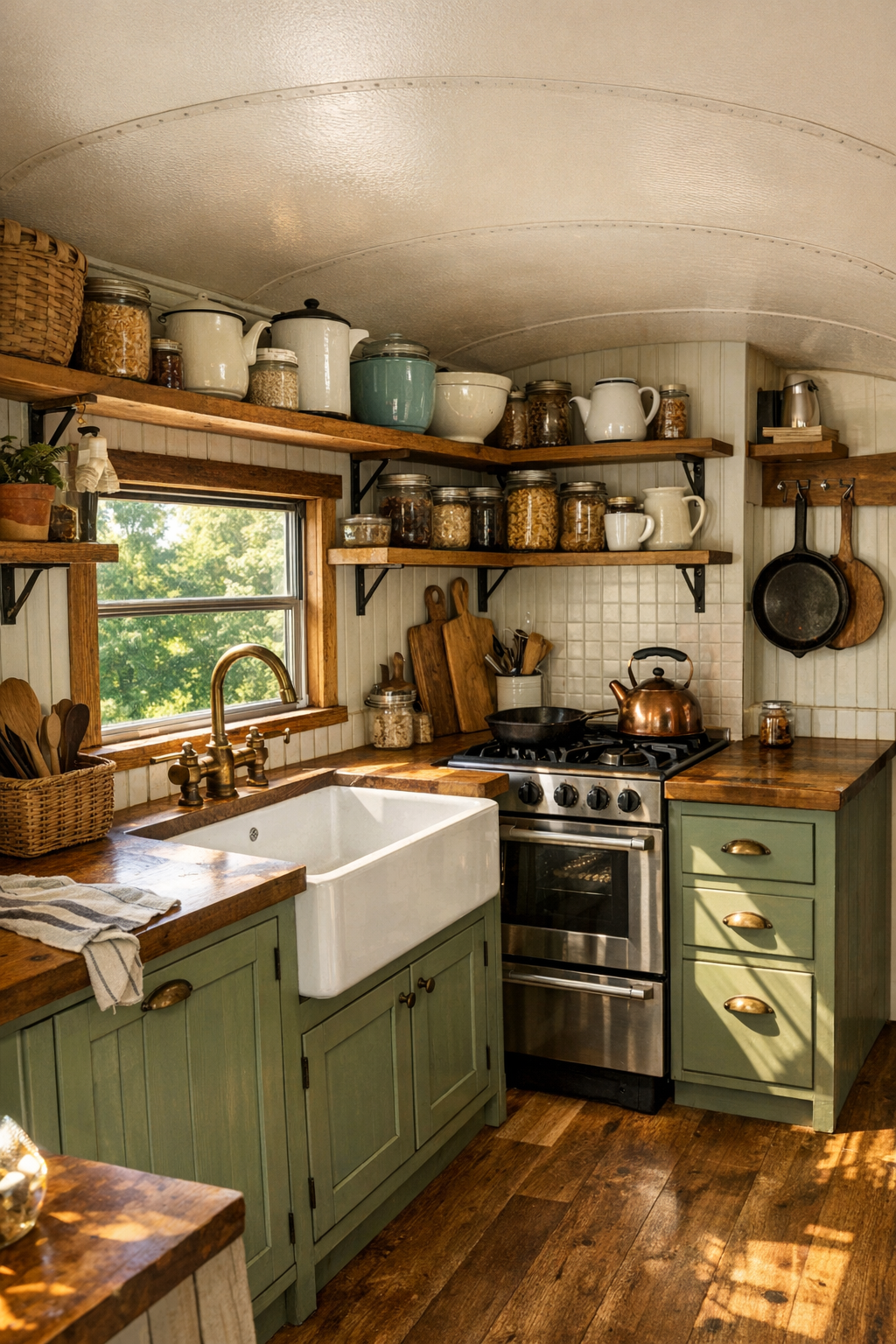
The kitchen is where this home’s homestead spirit comes through most clearly. Though compact, it is laid out with the kind of commonsense efficiency any good cook would appreciate, with counters placed to allow for easy prep, reachable storage, and just enough room to work without wasted motion. Cabinetry in painted sage or warm cream pairs beautifully with butcher-block counters, while a deep apron-front sink gives the whole space a distinctly farmhouse soul. Open shelves lined with jars, enamelware, and baskets keep daily essentials close at hand and add a sense of abundance without cluttering the room.
There is also a lovely marriage here between rustic character and off-grid practicality. A smaller range or cookstove fits neatly into the galley plan, and undercounter refrigeration, concealed storage, and efficient lighting make the kitchen feel thoroughly current while still warm and familiar. I would not be surprised to find beadboard details, a rail for hanging utensils, and hooks for drying towels near the window. It feels like a kitchen built by someone who truly cooks, someone who understands that beauty in a working kitchen comes from order, ease, and the pleasure of well-used things.
Bedroom
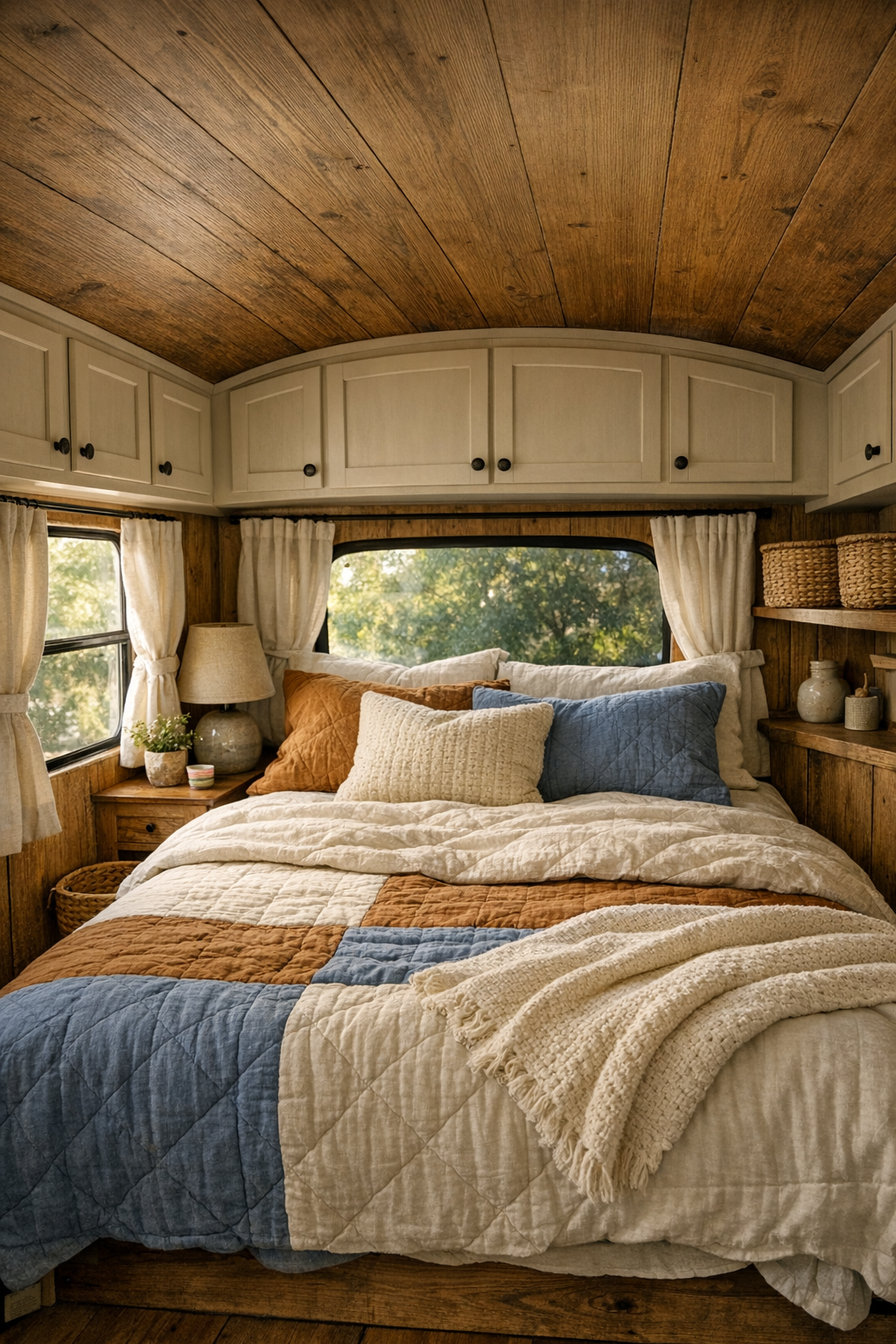
The bedroom proves that a small footprint need not feel stingy. By placing the bed snugly into the rear of the bus and wrapping it with built-in storage, the design creates a sleeping space that feels cocooning rather than cramped. A quilted coverlet in soft cream, tobacco, and faded blue adds immediate warmth, while wood-clad walls and a simple headboard shelf provide both function and a sense of shelter. The windows are dressed simply, perhaps with linen panels or shades that filter the morning light into something calm and golden.
What I find most appealing is the way the room invites rest without unnecessary decoration. Baskets slide under the bed, overhead cabinets are trimmed neatly to match the walls, and a narrow ledge holds a book, a lamp, and maybe a little crock with dried flowers. The palette stays hushed and restful, built around natural fibers and muted country colors that feel timeless. It is the sort of bedroom that encourages early nights, cool sheets, and the sound of wind outside, which in my mind is a very fine luxury.
Bathroom
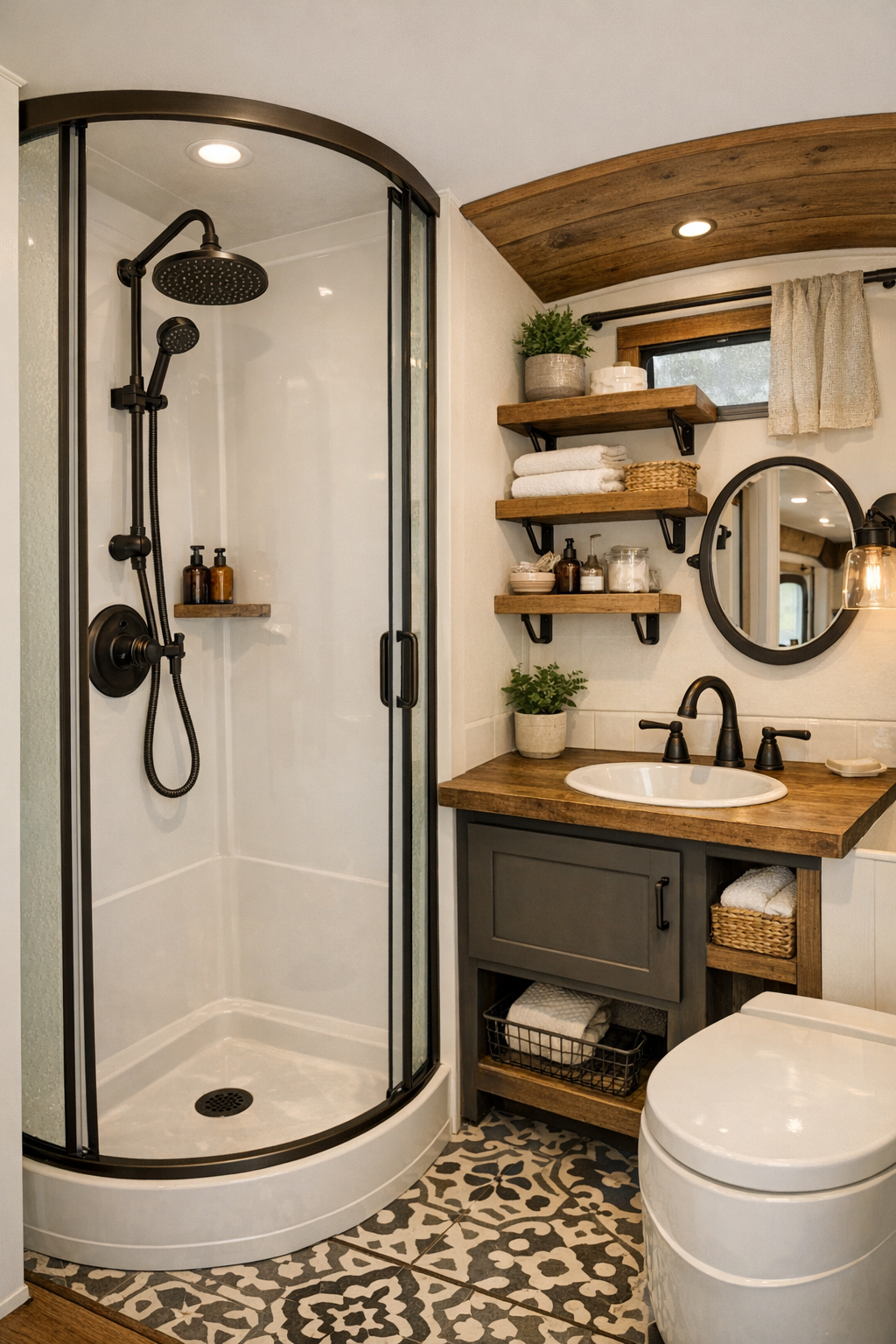
The bathroom is compact, as one would expect, but it has been handled with real grace. Instead of trying to mimic a full-size suburban bath, it embraces its scale with a neatly fitted shower, a small vanity, and efficient storage tucked wherever it can be. White or soft ivory wall surfaces brighten the room, while darker fixtures in oil-rubbed bronze or matte black give it definition. A little wood trim or open shelf keeps it connected to the rest of the bus so it does not feel sterile or separate.
I appreciate the sensible details here: perhaps a trough-style sink, a medicine cabinet built flush to save space, and hooks instead of bulky towel bars. The floor might be a durable patterned tile or a waterproof plank with a timeworn look, adding just enough visual interest without making the room busy. Good lighting matters enormously in a small bath, and here I imagine a pleasant glow from a vanity sconce paired with daylight from a frosted window. The result is tidy, fresh, and reassuringly functional, like a washroom designed for everyday use rather than show.
Other Areas
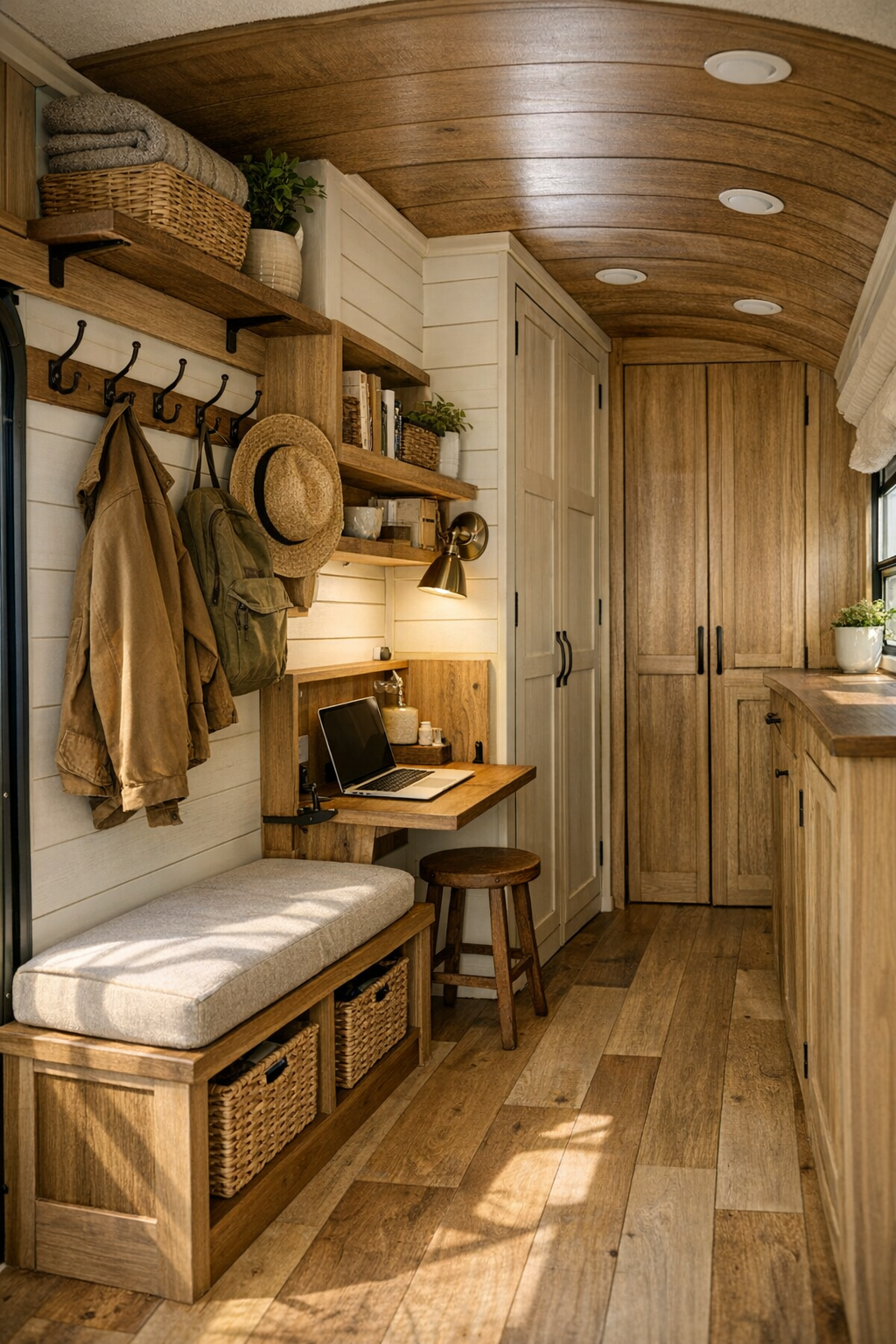
Some of the most impressive moments in a home like this are found in the in-between spaces. The corridor itself becomes useful, with hooks for hats and aprons, shallow shelves for preserves or seed packets, and bench storage near the entry for boots and tools. There may be a little work nook folded into one wall, just enough for writing a grocery list, paying bills, or setting down a basket from the garden. These secondary zones are where the bus truly earns its keep, proving that compact living can still support the rhythms of real life.
I would also expect thoughtful utility features woven beautifully into the design: concealed battery storage, tidy cabinetry for off-grid systems, perhaps a lofted shelf for seasonal items, and maybe even a pet bed tucked under a bench. None of it needs to call attention to itself. That, to me, is the pleasure of this design. The practical workings are integrated into the visual language of the home, with matching woodwork, simple hardware, and a palette that stays calm from one end to the other. It all feels orderly, capable, and deeply lived-in.
Why You'd Live Here
You would live here because it offers something many larger homes have forgotten: clarity. This bus does not waste space, materials, or attention. It gives every corner a purpose and every finish a sense of belonging, wrapping daily life in warmth, order, and a genuine connection to the landscape outside. For anyone drawn to off-grid living, simpler routines, or the romance of a home that feels handmade and honest, it delivers that dream without turning it into a gimmick.
I think, too, you would live here because it feels emotionally true. It borrows the best lessons from farmhouse living, thrift, resilience, comfort, and good sense, and translates them into a tiny home that still manages to feel generous. In a world that often mistakes excess for luxury, this little countryside bus suggests something wiser: that enough, when shaped with care, can be more than beautiful. It can feel like home.