
There is something especially comforting about a home that feels earned by the land around it, and this converted bus captures that feeling beautifully. Set on a working homestead, it leans into a rustic, off-grid spirit without giving up warmth or intention, pairing weathered wood, practical built-ins, and hardworking finishes with the kind of cozy details that make you want to kick off your boots and stay a while. As a concept design, it imagines self-sufficient living in a way that feels both grounded and surprisingly graceful.
What stands out to me most is how thoughtfully every inch is used. The design embraces the long, narrow footprint of the bus rather than fighting it, creating a home that feels orderly, sunlit, and deeply personal. It has the quiet confidence of a place where meals are made from scratch, muddy clothes have a place to land, and mornings begin with coffee, chores, and light pouring through the windows onto natural wood grain.
Exterior
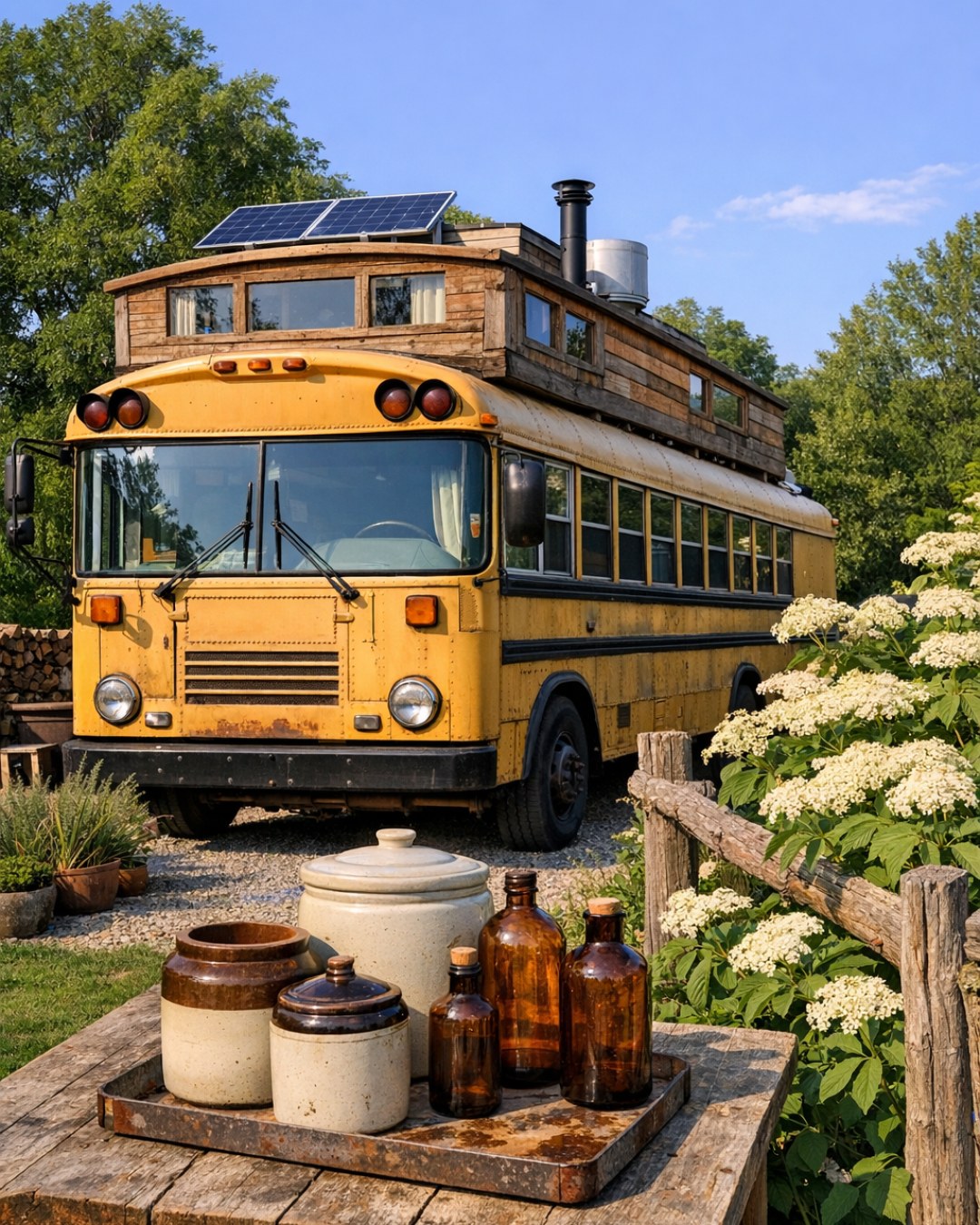
From the outside, the bus keeps much of its honest utilitarian character, but it is softened with homestead-ready details that make it feel fully rooted in its setting. The exterior finish combines muted cream paint with areas of exposed, restored metal and warm cedar trim, so the overall look lands somewhere between vintage farm vehicle and tiny country cottage. A simple awning shades the entry side, while planter boxes, stacked firewood, and a gravel path help the structure settle naturally into the landscape.
I like that the design does not try too hard to disguise what the home once was. Instead, it celebrates the bus shape and wraps it in materials that age well and feel appropriate to rural life. Solar panels on the roof, a rain catchment barrel nearby, and a compact deck with sturdy railings all contribute to that off-grid practicality, but the mood remains inviting rather than overly technical. It feels like the sort of place where a pair of rain boots by the door would look just right.
Living Room
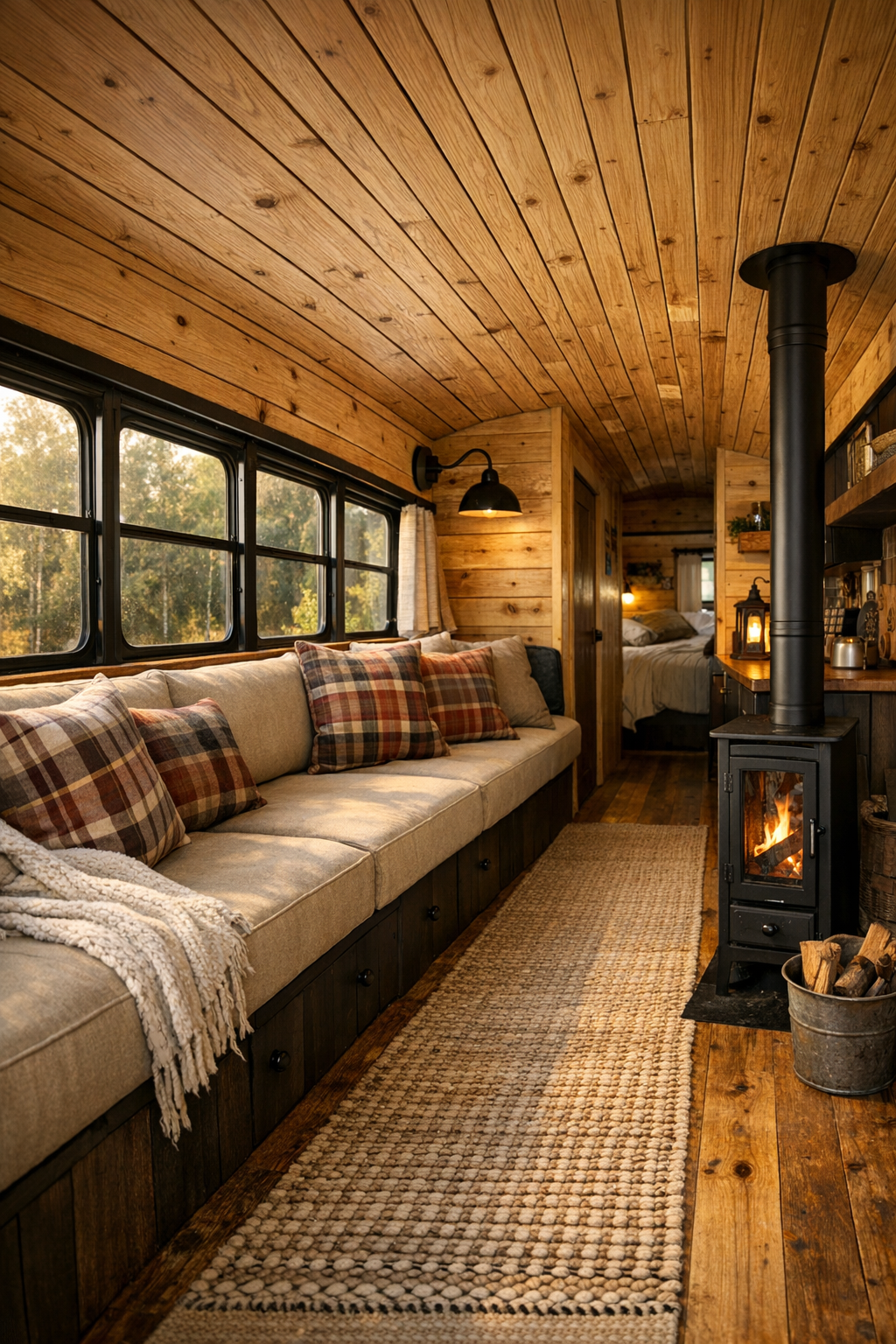
The living area is compact, but it is arranged with the kind of care that makes a small room work harder than some large ones. A built-in bench sofa runs along one wall beneath the windows, upholstered in durable oat-colored canvas and layered with soft plaid and ticking-stripe pillows in rust, moss, and cream. Across from it, a narrow wood-burning stove adds both function and heart, with a slate hearth tile below and a neat stack of split wood tucked into a recessed cubby.
The finishes here are simple and tactile: pine plank walls, a slightly darker wood ceiling with exposed ribs, matte black hardware, and a woven wool rug that brings in softness underfoot. Natural light does most of the work during the day, but in the evening I imagine the room glowing from wall sconces with warm brass accents and the gentle flicker of the stove. It is the kind of family space where you could read aloud, play a game after supper, or set out a tray of cornbread and soup and feel completely content.
Dining Room
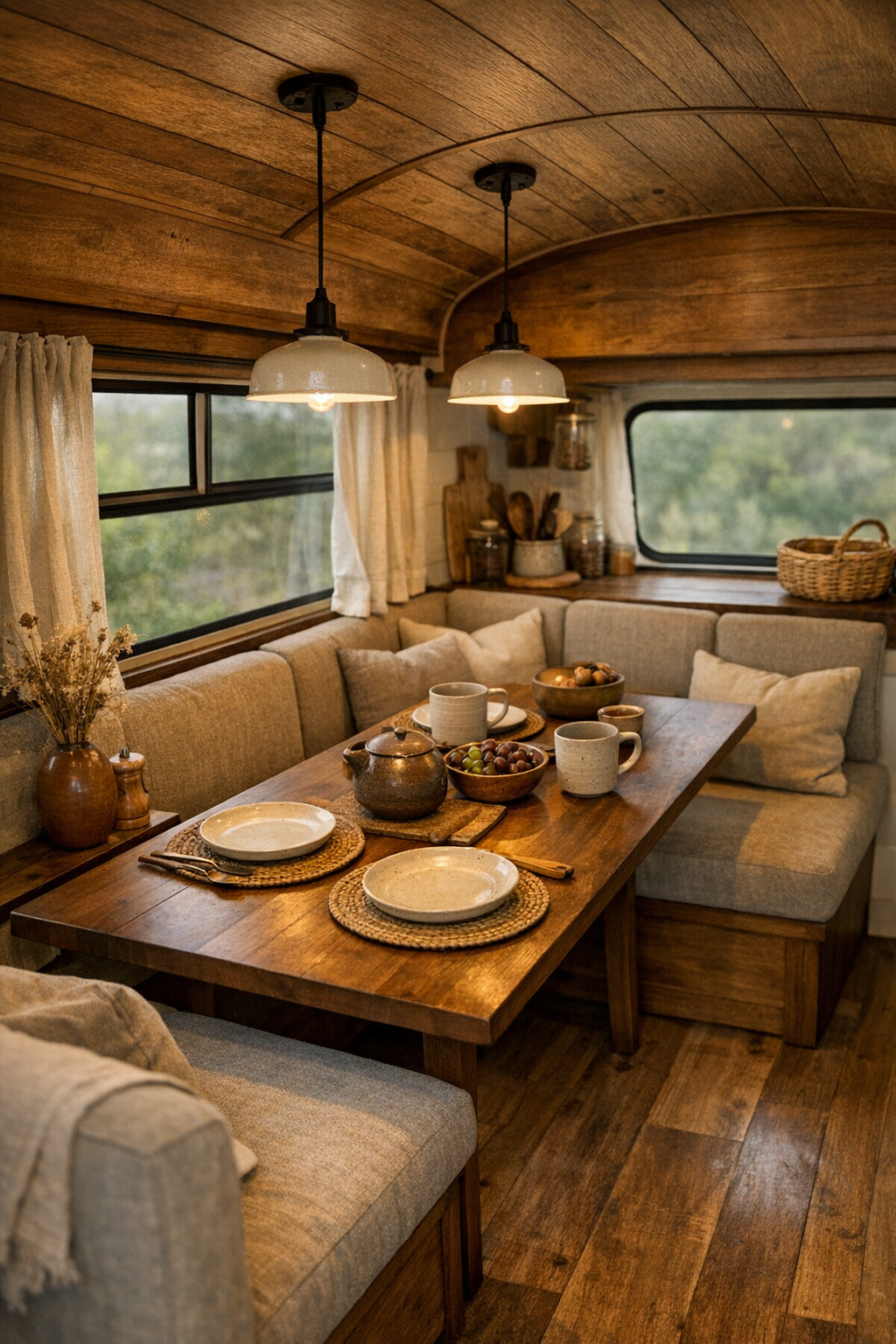
The dining area is beautifully integrated into the main living zone, with a custom banquette and slim farmhouse table scaled exactly to the bus interior. This is one of my favorite choices, because built-in seating always makes a small footprint feel generous, and it gives you hidden storage underneath for linens, pantry overflow, or even board games for rainy evenings. The table is finished in a hand-rubbed medium walnut tone, while the bench cushions are covered in washable flax-colored fabric that feels practical for everyday life.
Overhead, a pair of petite pendant lights with enamel shades create a focused pool of light that would make even a simple weeknight meal feel special. I can easily picture a big pot of stew set down here, with homemade biscuits and a few different toppings on the side to keep everyone happy, including picky eaters. A narrow shelf nearby holds stoneware mugs, small jars of dried herbs, and a vase of clipped wildflowers, adding just enough softness to keep the space from feeling too workmanlike.
Kitchen
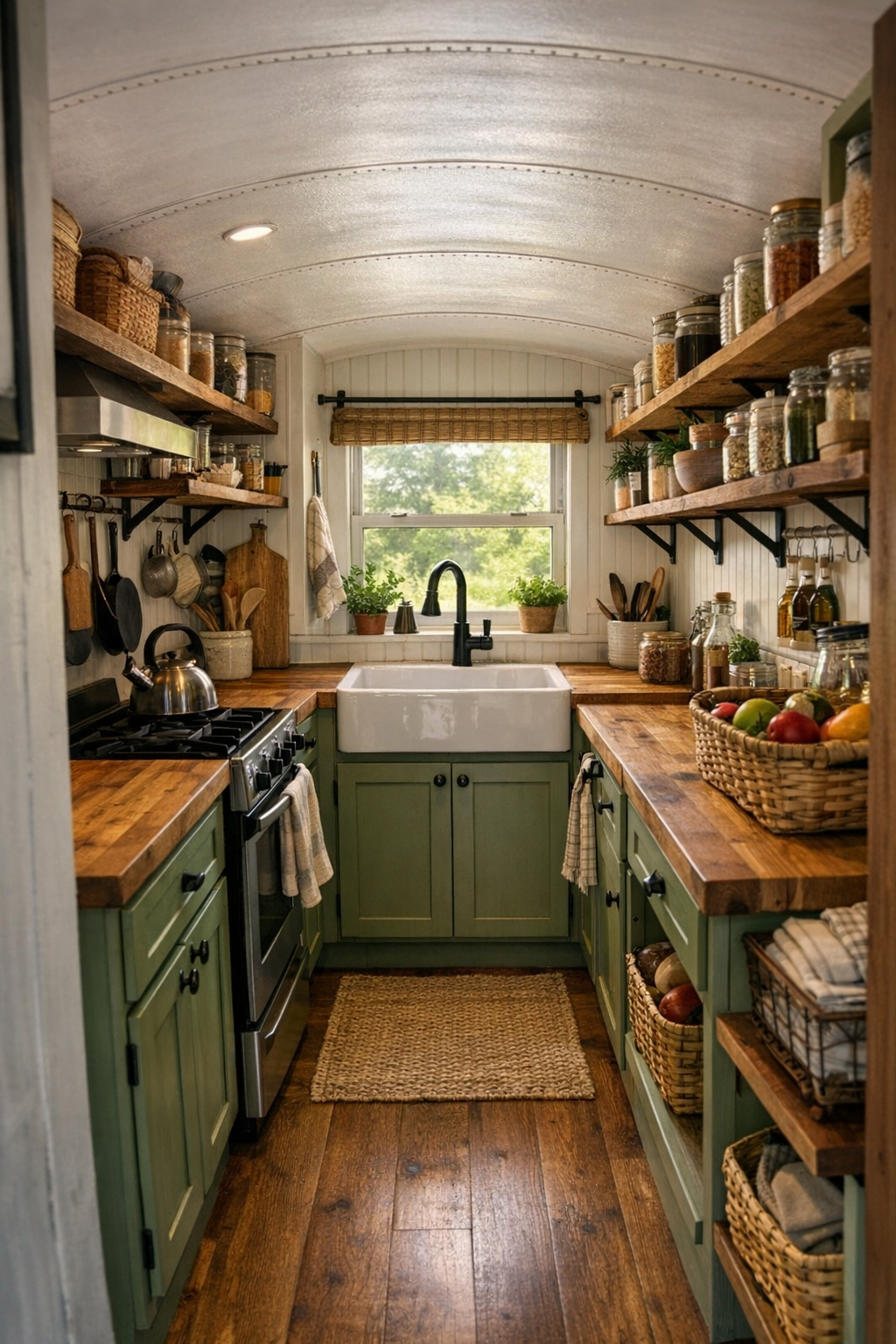
The kitchen is where this home really shows its self-sufficient intelligence. Running along one side of the bus, it uses every inch with open shelving, deep drawers, a compact propane range, and a farmhouse-style sink positioned beneath a window so even dish duty gets a pleasant view. Cabinet fronts in painted sage green ground the room nicely, while butcher block counters and a beadboard backsplash keep the look familiar, warm, and easy to live with.
I appreciate how the design balances charm with real usefulness. Hanging rails for utensils, baskets for root vegetables, and glass jars for grains and baking staples make the space feel ready for daily cooking, not just pretty to look at. For a family-minded cook, this layout would be a joy because everything is close at hand, and there is enough counter space for bread dough, a tray of muffins, or a little assembly line of toppings if you are trying to make one meal work for different tastes. The lighting is bright and honest, with under-shelf task lights and daylight bouncing off pale walls to keep the galley feeling open.
Bedroom
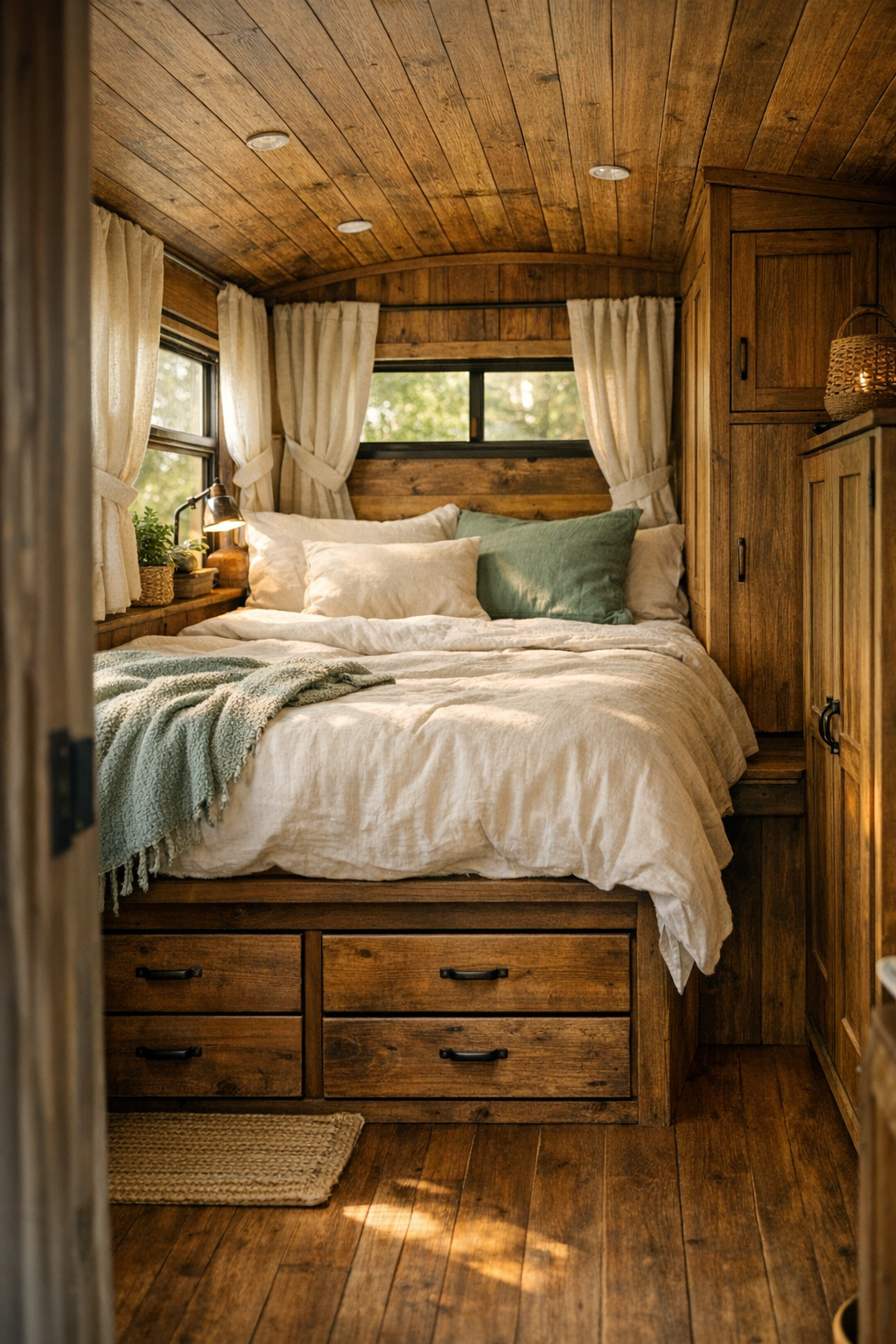
The bedroom is tucked into the quietest end of the bus, and it feels wonderfully calm. A raised bed platform makes room for deep storage drawers below, which is such a smart move in a home like this, and the bedding stays true to the overall palette with soft creams, muted greens, and a touch of faded brick red in a wool throw folded at the foot. Wood-framed windows on either side bring in cross ventilation and let the room wake up gently with the morning light.
Rather than filling the space with too much furniture, the design relies on built-in solutions: a narrow wardrobe, small reading sconces, and ledges instead of bulky nightstands. That simplicity makes the room feel restful, and the layered textiles keep it from feeling spare. I especially like the use of linen curtains and a natural jute runner, which add softness without clutter. It has the peaceful, end-of-the-day feeling every hardworking home needs.
Bathroom
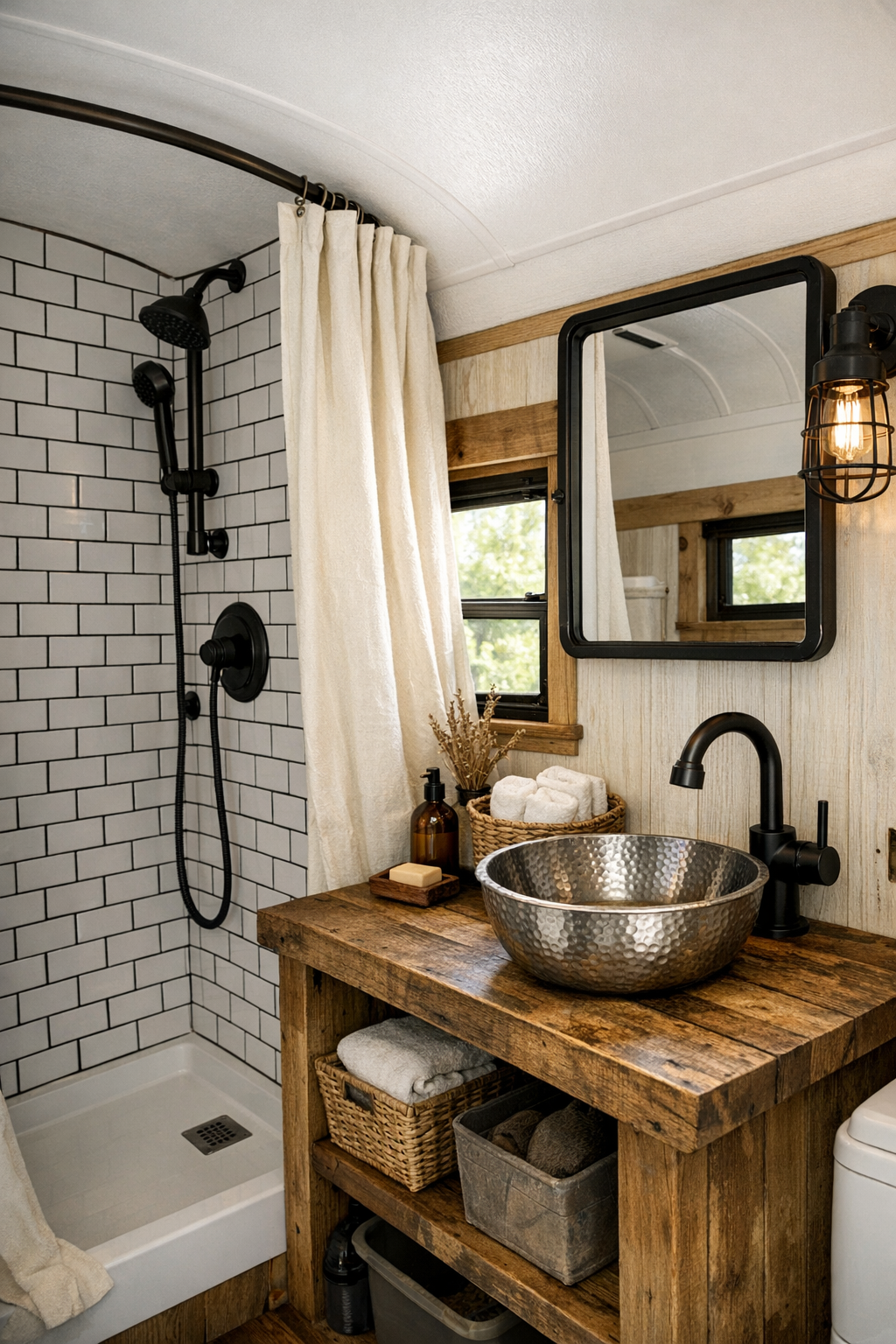
The bathroom proves that utility can still be attractive. It is small, of course, but thoughtfully finished with a compact shower lined in simple white tile, dark grout for a little graphic definition, and a curtain in heavyweight natural canvas that adds softness where a glass enclosure might feel too rigid. A petite vanity in reclaimed wood brings warmth, and a hammered metal basin sink gives the room a handcrafted, slightly rugged edge.
Because off-grid living asks more of every system, the design keeps the palette clean and calming, with just enough texture to make the room feel finished rather than purely functional. Open shelves hold neatly folded towels, soap, and practical storage baskets, while a small mirror with a black steel frame reflects light back into the space. I can imagine this being one of those rooms that works especially well after a long day outside, with everything easy to wipe down, easy to reach, and pleasing in its simplicity.
Other Areas
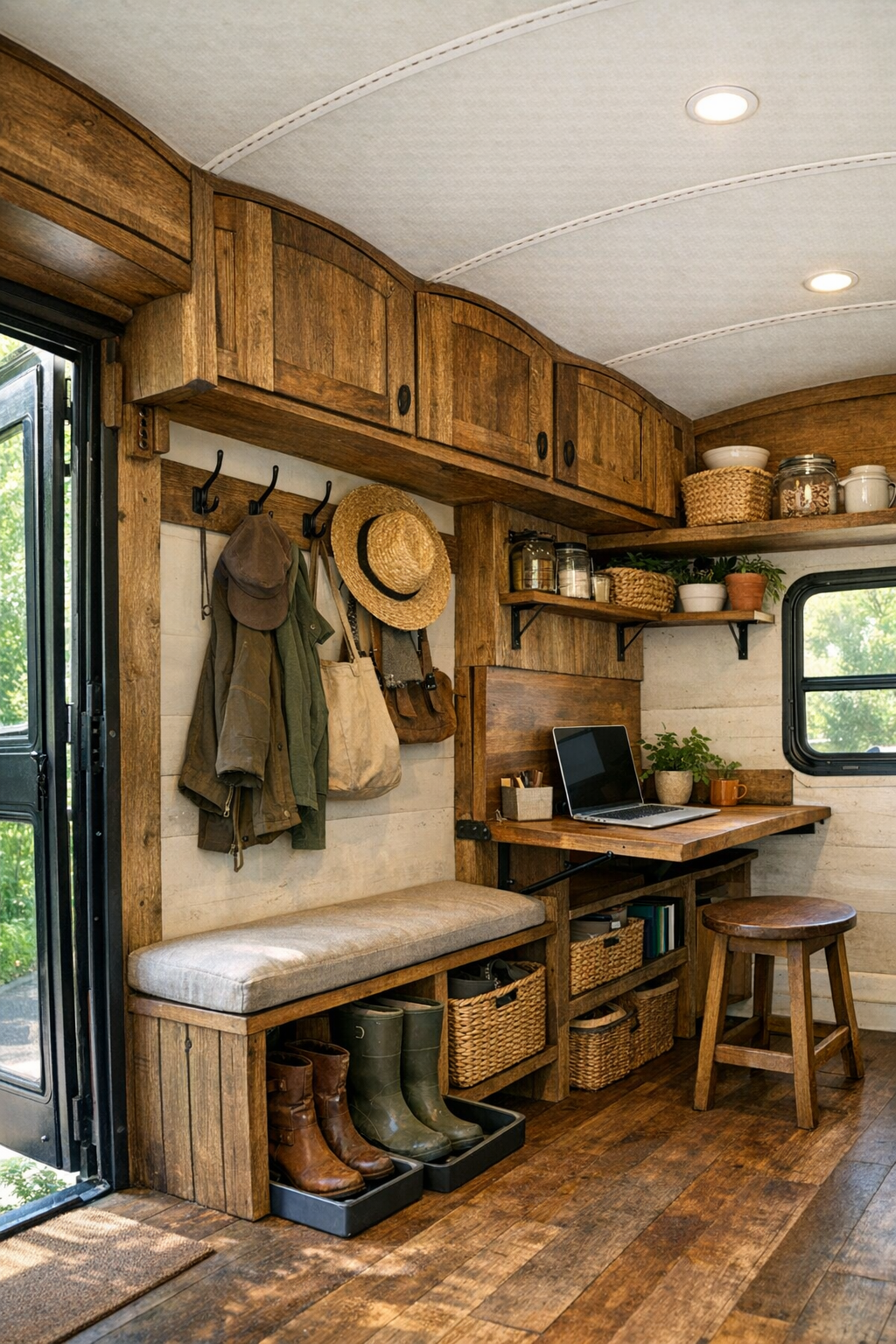
The transition spaces are where this bus becomes more than a clever tiny home and starts to feel truly livable. Near the entry, there is a hardworking mudroom moment with wall hooks, a bench, boot storage, and woven baskets for gloves, hats, and garden odds and ends. In a homestead setting, that kind of landing zone matters so much, and I always think it helps the whole home stay calmer when there is a clear place for muddy or everyday clutter to go.
There are also little multifunctional corners tucked throughout the layout: a fold-down desk that can serve as a household command station, recipe spot, or homeschool nook, upper cabinets fitted into former bus curves, and open cubbies for preserving jars and pantry goods. These details give the interior its real personality. The home does not just look rustic; it supports a rhythm of living that includes chores, cooking, making, and gathering, all with a sense of order and ease.
Why You'd Live Here
You would live here if you value a home that feels connected to daily life in a real, hands-on way. This bus is small, but it is not skimpy; it gives thoughtful attention to cooking, storage, rest, and the messy middle of country living. Every finish seems chosen to work hard and age gracefully, and that kind of practicality always feels beautiful to me.
More than that, it offers a style of living that invites people in close. Meals would naturally feel more special here, mornings more intentional, and routines more shared because the spaces are so carefully tuned to what a household actually does. For anyone drawn to rustic design, self-sufficiency, and the simple pleasure of a well-run home, this off-grid homestead bus has an easy, believable charm.