
From the road, this faded cream cottage has the kind of gentle, time-softened presence that makes a street feel loved. Its scale is modest, but the design has a quiet confidence to it, balancing cottage charm with a cleaner, more updated sensibility inside. I was taken with the way the home seems to settle into its setting so naturally, as if the pale exterior, weathered garden edges, and warm window glow had always belonged together.
Step indoors, though, and the whole mood shifts into something brighter, calmer, and more intentional. This concept design imagines a family-friendly retreat where soft neutrals, hardworking materials, and beautifully layered textures make everyday living feel a little more special. As someone who always notices whether a home could truly handle a weeknight dinner, muddy shoes, and a table full of guests, I found so much here to admire.
Exterior
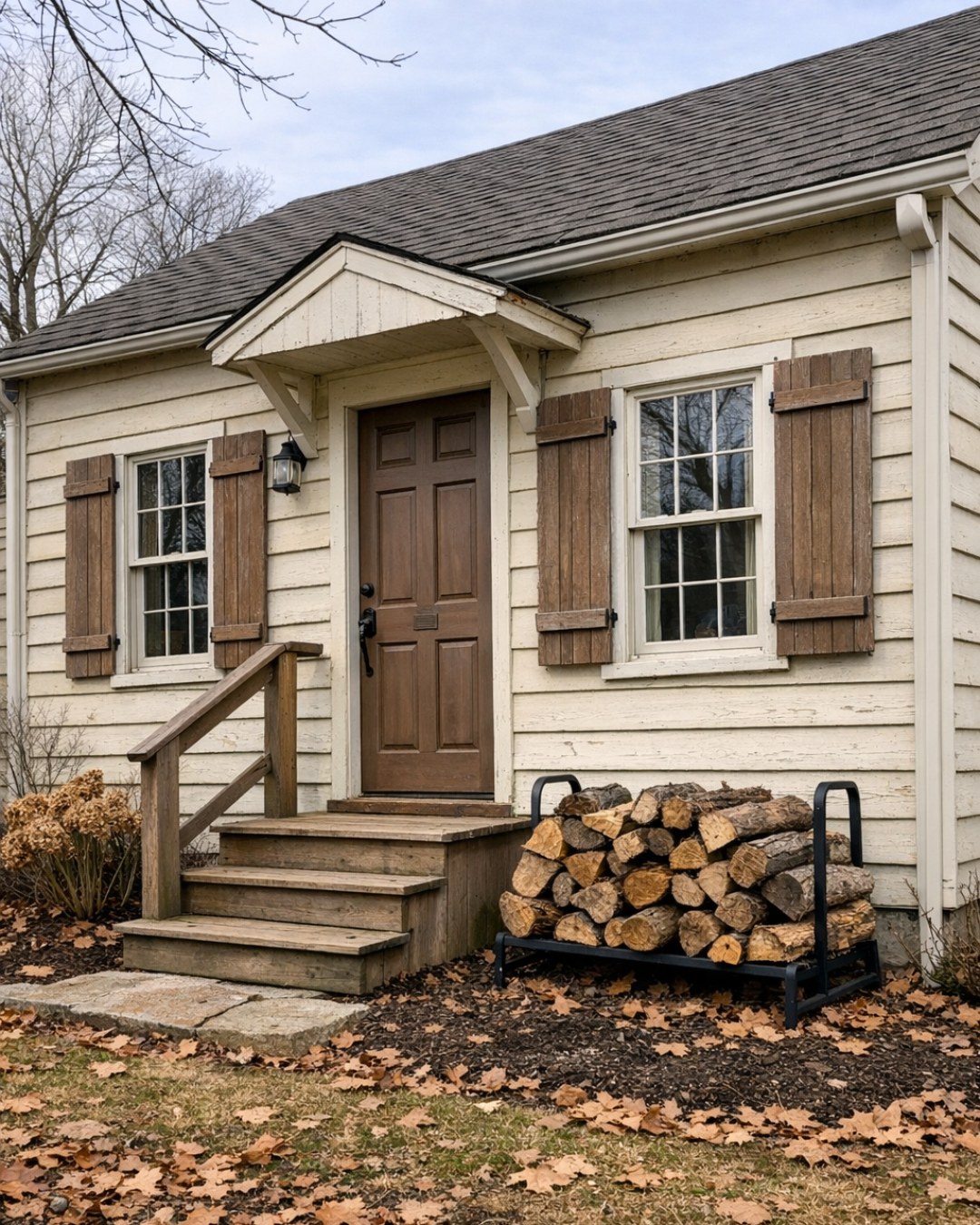
The exterior leans into classic cottage language without feeling overly precious. Faded cream siding, slightly chalky in finish, gives the house its lived-in sweetness, while crisp trim and a darker front door sharpen the look just enough. I like the balance here: simple divided-light windows, a compact covered entry, and a roofline that feels humble rather than showy. The landscaping follows that same spirit, with informal greenery, clipped shrubs, and a path that invites you in without too much fuss.
What keeps the facade from reading as nostalgic alone is the restraint. There is no over-decoration, just thoughtful proportion and a soft palette that lets texture do the work. I can imagine terracotta pots by the door, a worn bench under a front window, and porch lighting in an aged metal finish that glows beautifully in the evening. It is the kind of exterior that tells you the inside will be comfortable, welcoming, and designed for real life.
Living Room
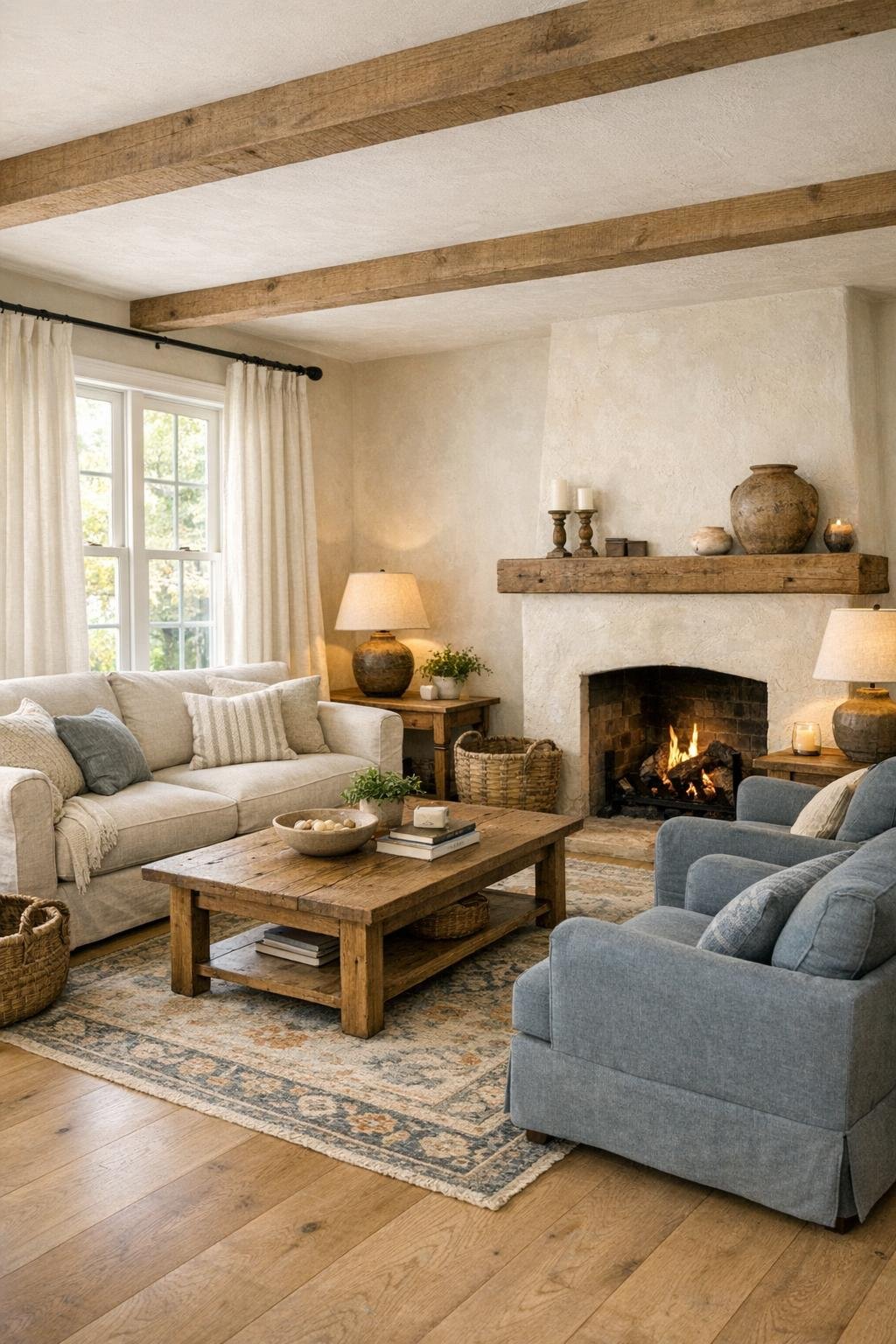
The living room opens up the story of the house with light walls, pale oak floors, and a layered mix of upholstery that feels polished but never stiff. A slipcovered sofa in a warm oatmeal tone anchors the room, paired with soft blue-gray accent chairs and a substantial wood coffee table that looks ready for board games, homework, or an oversized snack tray. The fireplace becomes the visual center, finished in creamy plaster with a simple wood mantel, while woven baskets, linen drapery, and a vintage-style rug add the kind of softness I always think a family room needs.
What I appreciate most is the layout. Seating is arranged for conversation as much as for television, which makes the room feel more connected and useful throughout the day. Table lamps and shaded sconces create a gentle evening glow, and there is enough contrast in the black metal curtain rods and framed artwork to keep the neutrals from falling flat. For families, this is exactly the sort of room that can handle both quiet mornings and a house full of company, and I could easily see tossing a washable throw over the sofa if little ones or picky snackers are part of the picture.
Dining Room
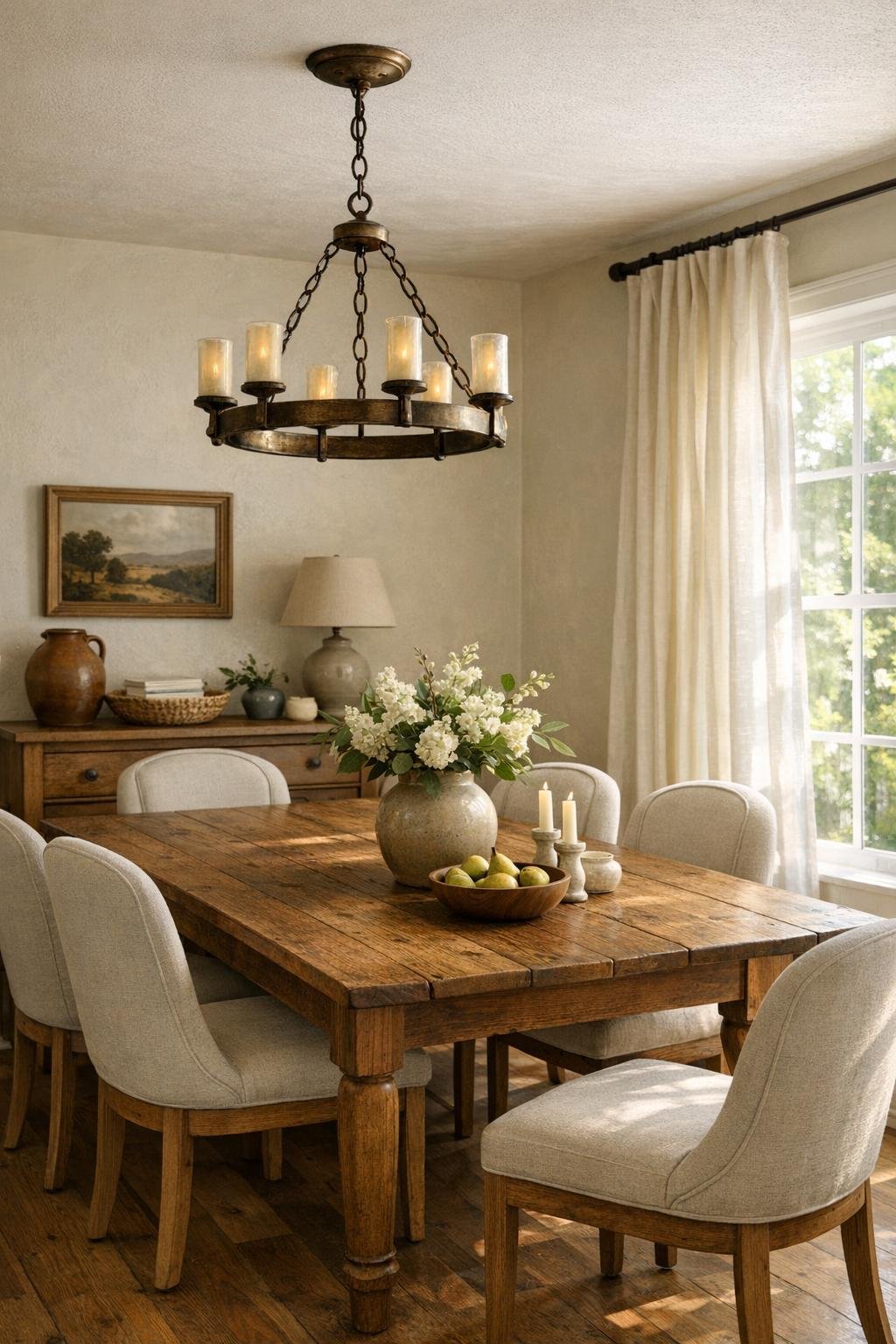
The dining room carries the same calm palette but introduces a touch more formality through shape and finish. A sturdy rectangular wood table sits at the center, surrounded by dining chairs with gently curved backs and woven or upholstered seats that soften the room. I love when a dining space feels ready for both everyday spaghetti night and holiday pie, and this one absolutely does. Overhead, a simple iron or aged brass fixture brings a bit of structure, while the walls stay quiet in a warm off-white that lets the furniture shine.
There is also a lovely sense of breathing room here. Rather than crowding the walls, the design leaves space for one handsome sideboard, a large piece of art, and perhaps a ceramic bowl or a vase of branches as the main decorative moment. Natural texture is what makes it memorable: the grain of the table, the nubby weave of the chairs, and soft drapery that moves beautifully in the light. If I were setting this room for my own family, I would add layered placemats and simple stoneware, because the whole space seems to ask for meals that linger a little longer.
Kitchen
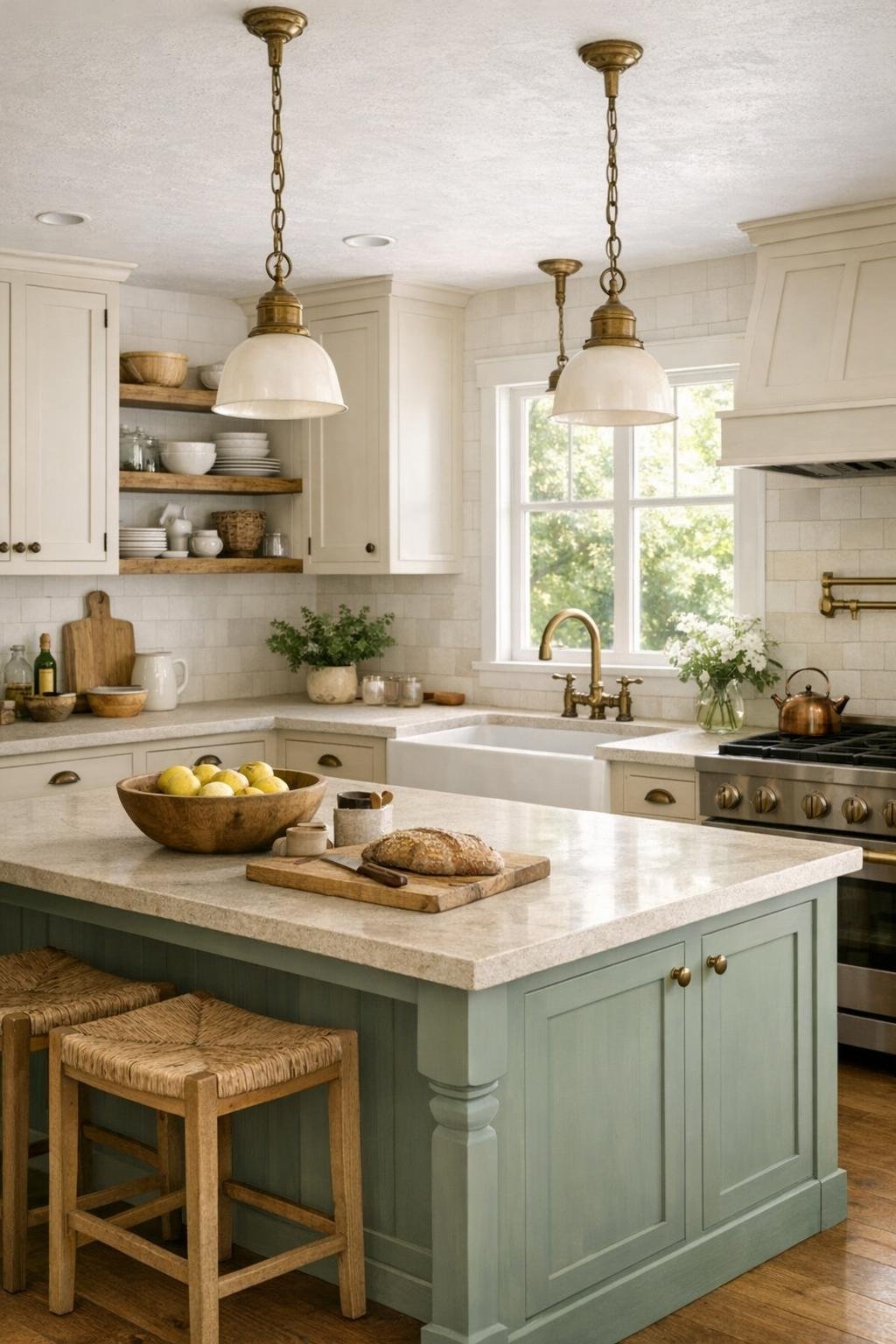
The kitchen is where this home really won me over. It pairs cottage warmth with the kind of practical planning that makes cooking feel easy, not crowded. Cabinetry in a muted creamy beige keeps the room soft, while a slightly deeper island color, perhaps a dusty sage or weathered taupe, gives it depth. Honed stone countertops, a white or pale handmade-look backsplash, and aged brass hardware bring just enough richness without turning the space fussy. I always look for a kitchen that can support a busy family meal, and this one has that nice mix of prep surface, storage, and open circulation.
The details are especially well considered. There is likely a farmhouse-style sink beneath a window, open shelving for everyday dishes, and pendant lights that cast focused light over the island while still feeling cozy at night. I can picture kids doing homework at the counter while something bubbles on the stove, and there is room for that little rhythm of family life to unfold naturally. For picky eaters, a layout like this is ideal too, because the island gives you space to set out toppings, fruit, or plain pasta separately and let everyone build a plate that works for them without making the meal feel less special.
Bedroom
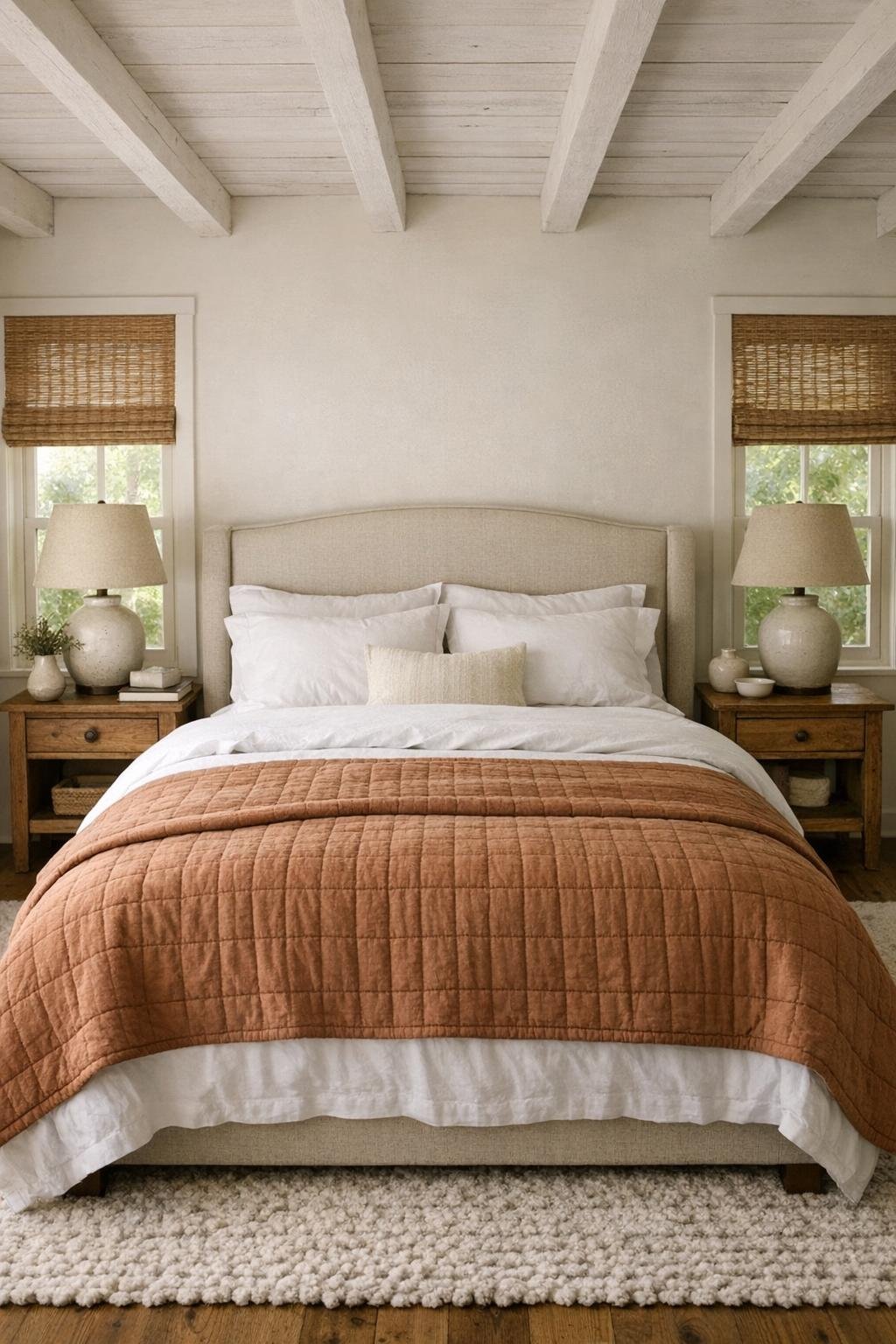
The bedroom takes the home’s softness and makes it feel deeply restful. A padded headboard in linen or brushed cotton sets the tone, backed by walls in a pale warm neutral that almost glows in daylight. The bed is layered with crisp white bedding, a quilt or coverlet in a dusty earth tone, and pillows in subtle stripes or botanical prints. I always think bedrooms should feel like an exhale, and this one does, especially with its pared-back furniture and the warmth of natural wood nightstands under ceramic lamps.
There is nothing flashy here, which is exactly why it works. Texture replaces ornament: woven shades, lightly rumpled bedding, a wool rug underfoot, and drapery that softens the edges of the room. The lighting feels gentle and practical, with bedside reading lamps and enough ambient light to make the room usable throughout the day. If this were my space, I would be thrilled by how calm it feels after a long evening of cleaning up dishes and packing lunches for the next day.
Bathroom
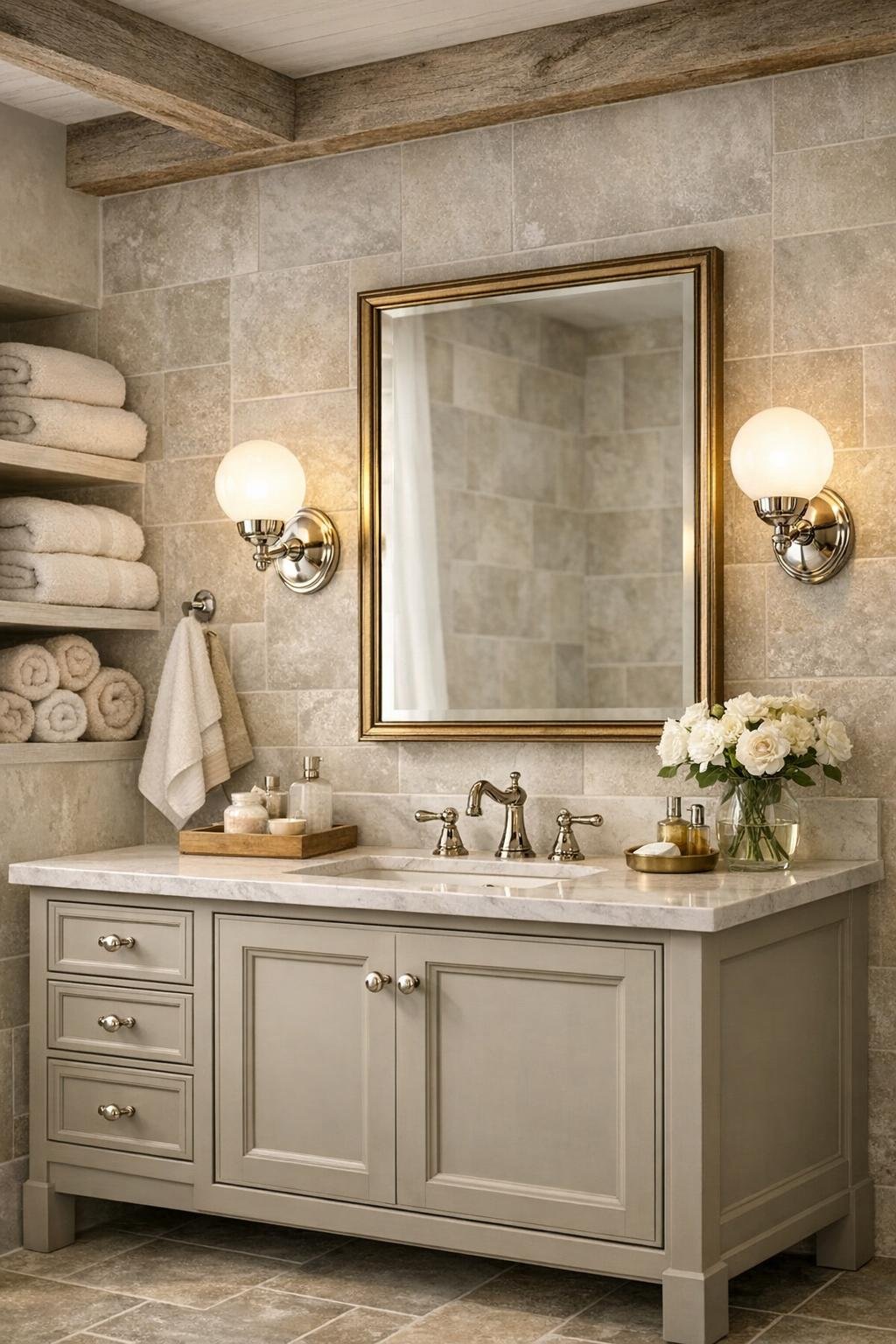
The bathroom is simple in palette but rich in texture, which is one of my favorite combinations. Soft stone-look tile, a painted vanity in a muted neutral, and polished nickel or unlacquered brass plumbing fixtures give the room a fresh, timeless quality. I can imagine a framed mirror with a bit of character, globe sconces with flattering light, and plush towels adding that important note of comfort. The whole room feels clean and easy without sliding into anything stark.
What stands out to me is the sense of balance between utility and warmth. There is likely good storage tucked into the vanity, enough counter space for the practical clutter of family life, and finishes that will age gracefully. A glass shower enclosure or a shower curtain in a soft stripe would fit beautifully here, depending on the layout, and either way the materials do the heavy lifting. It is the kind of bathroom that would make even a quick weekday routine feel a little calmer.
Other Areas
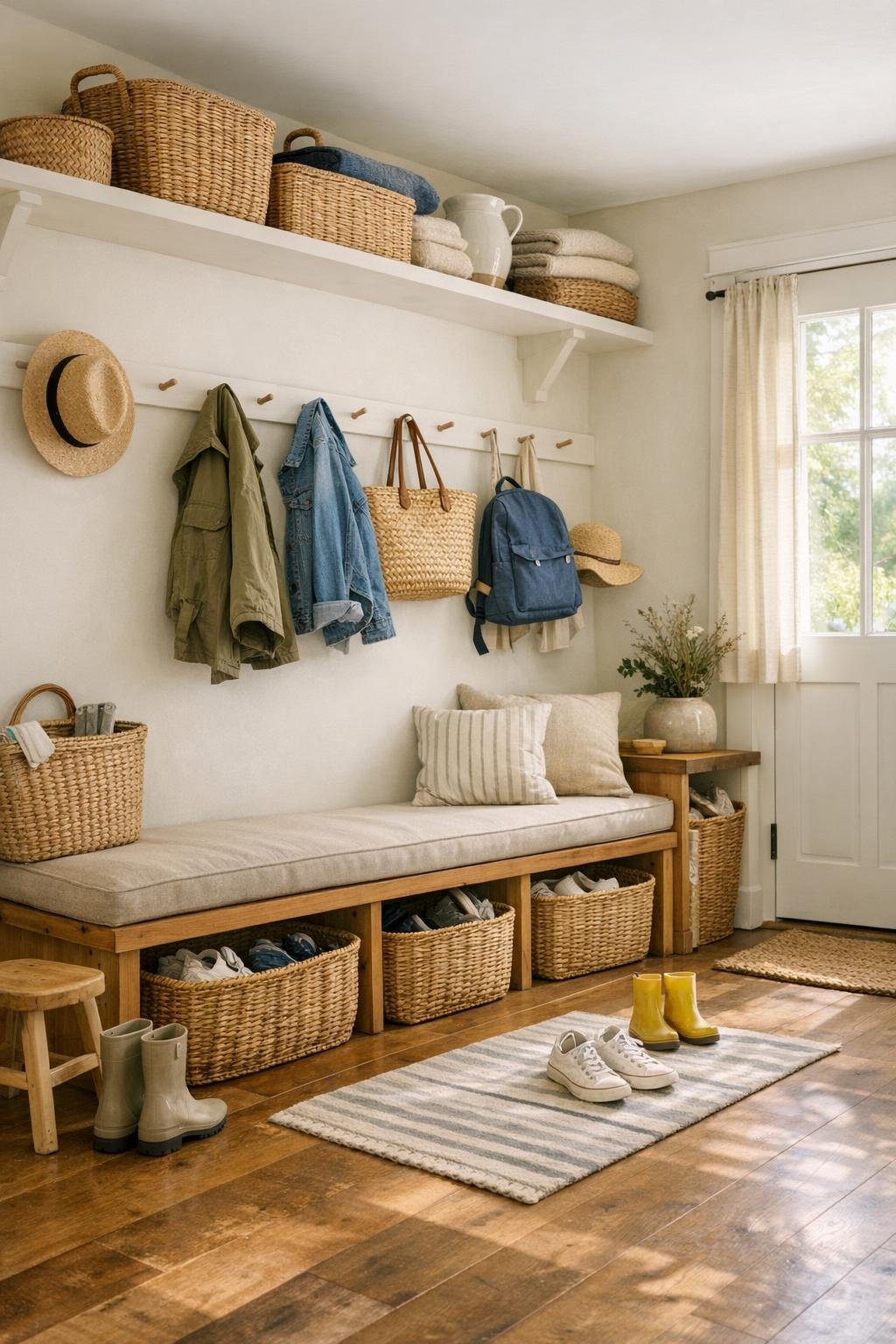
The supporting spaces in this home are just as thoughtfully handled. I can picture a small entry with peg rails, a built-in bench, and baskets underneath for shoes, which as a parent I always consider a minor miracle. A hallway might hold a narrow console and artwork in soft, natural tones, while a laundry area could feature simple cabinetry, a durable counter for folding, and enough charm to make chores feel less like a punishment. These are not flashy spaces, but they matter tremendously in how a home actually lives.
There may also be a breakfast nook, reading corner, or little upstairs landing turned into a work spot, each one using the same gentle palette of creams, woods, and muted greens or blues. What ties them together is the consistency of finish and mood: practical surfaces, soft textiles, and a sense that every corner has been asked to earn its keep. I always admire a house that remembers daily life happens in the in-between spaces too, not just the rooms guests see first.
Why You'd Live Here
You would live here because it understands something many homes miss: beauty is nicest when it makes daily life easier. This cottage is lovely to look at, yes, but it is even better in the way it supports gathering, cooking, resting, and keeping up with the little routines that shape a family’s days. Nothing feels overdone, and that restraint gives the home a lasting kind of appeal.
I also think people would be drawn to how comforting it feels without becoming predictable. The palette is soft, the materials are approachable, and the rooms invite you to settle in rather than simply admire them from a distance. For anyone who wants a home that can host a big Sunday meal, offer a quiet bedroom at day’s end, and still look beautiful with a pie cooling on the counter, this cottage makes a very convincing case.