
There is something especially moving to me about a home that has been reimagined instead of replaced, and this one carries that spirit in every corner. What began as an old single-wide now reads as a tidy, deeply personal park model RV-style retreat, with a humble footprint and a gracious sense of order that feels just right against a quiet rural backdrop. Even as a concept design, it feels wonderfully lived-in in the best emotional sense: practical, pretty, and full of the kind of decisions that come from knowing exactly what matters.
I’m drawn to the way the whole place balances thrift, memory, and comfort without ever seeming fussy. The mood is simple and sunlit, with painted wood surfaces, hardworking floors, soft neutral colors, and little touches of vintage charm that remind me of homes where supper was always on time and nothing useful was ever wasted. It is small-scale living with dignity, and that, to my mind, is often where the best design lessons are found.
Exterior
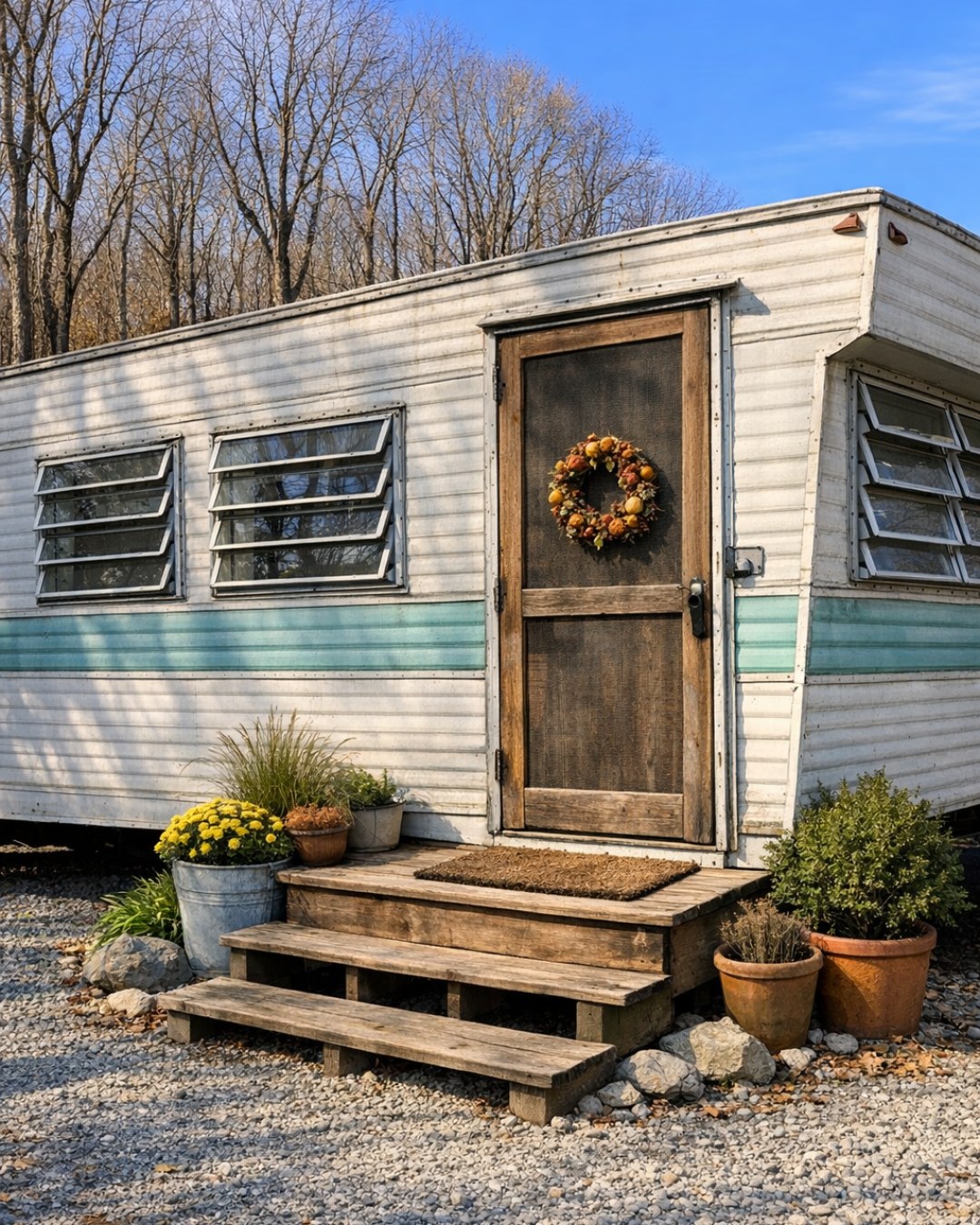
From the outside, the home has been given a clear, settled identity that softens its manufactured origins and leans into the coziness of a compact cottage. The siding appears in a warm off-white or light oat tone, bright enough to catch the daylight but gentle enough to sit naturally in a rural setting. Trim in a muted sage or weathered taupe grounds the shape, while a simple metal roof adds both practicality and a touch of farmhouse character. I can easily imagine window boxes, a modest porch rail, and a few sturdy rocking chairs doing a great deal to make the entry feel welcoming rather than temporary.
What makes the exterior work is its restraint. Instead of trying to disguise the scale, the design embraces it with better proportions, cleaner lines, and thoughtful add-ons like a small deck, skirting that feels finished, and well-placed planters. The pathways, gravel drive, and simple landscaping of native grasses and dependable perennials give it a sense of permanence. It reminds me of the old Midwestern habit of making a place shine through upkeep and care, not extravagance.
Living Room
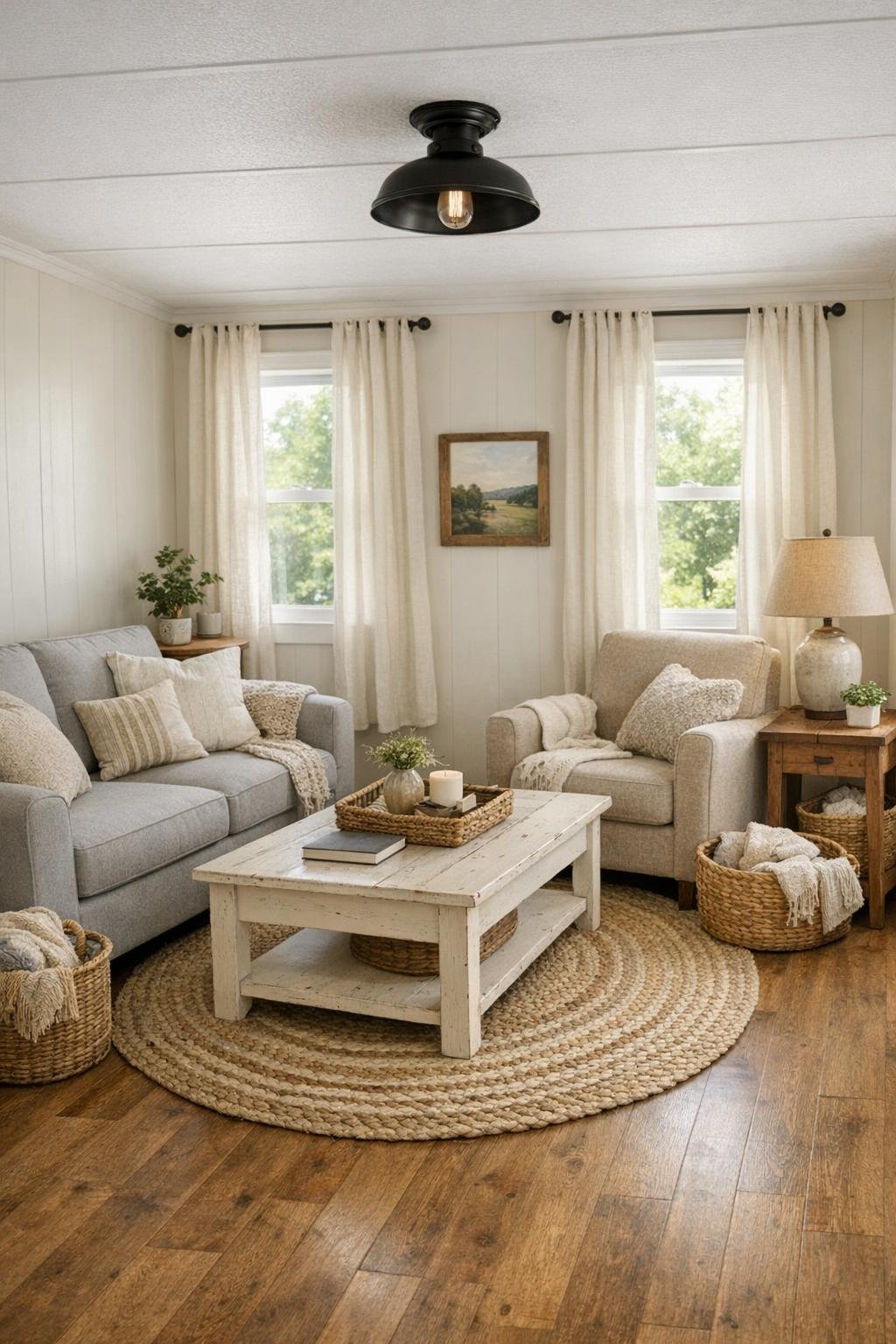
The living room is arranged to feel open without wasting an inch, and that kind of planning always impresses me. A compact sofa in a soft flax or faded denim tone sits against one wall, paired with a comfortable armchair and a painted wood coffee table that looks as though it could hold a pie tin, a stack of seed catalogs, and a pair of reading glasses all at once. The walls are done in a creamy white that bounces light beautifully, while the flooring—likely a durable wood-look vinyl in a warm oak finish—keeps everything cohesive and easy to care for. Modest windows dressed in linen curtains let the daylight do much of the decorating.
Texture carries this room more than ornament. There’s a braided rug underfoot, nubby throw blankets over the seating, and baskets tucked beneath side tables for practical storage. Lighting is layered simply: a table lamp with a pleated shade, perhaps a small ceiling fixture in matte black or brushed nickel, and maybe even a wall sconce near a reading chair. The overall feeling is one I know well from country homes: quiet, useful, and comforting, with enough polish to feel special and enough softness to make you stay awhile.
Dining Room
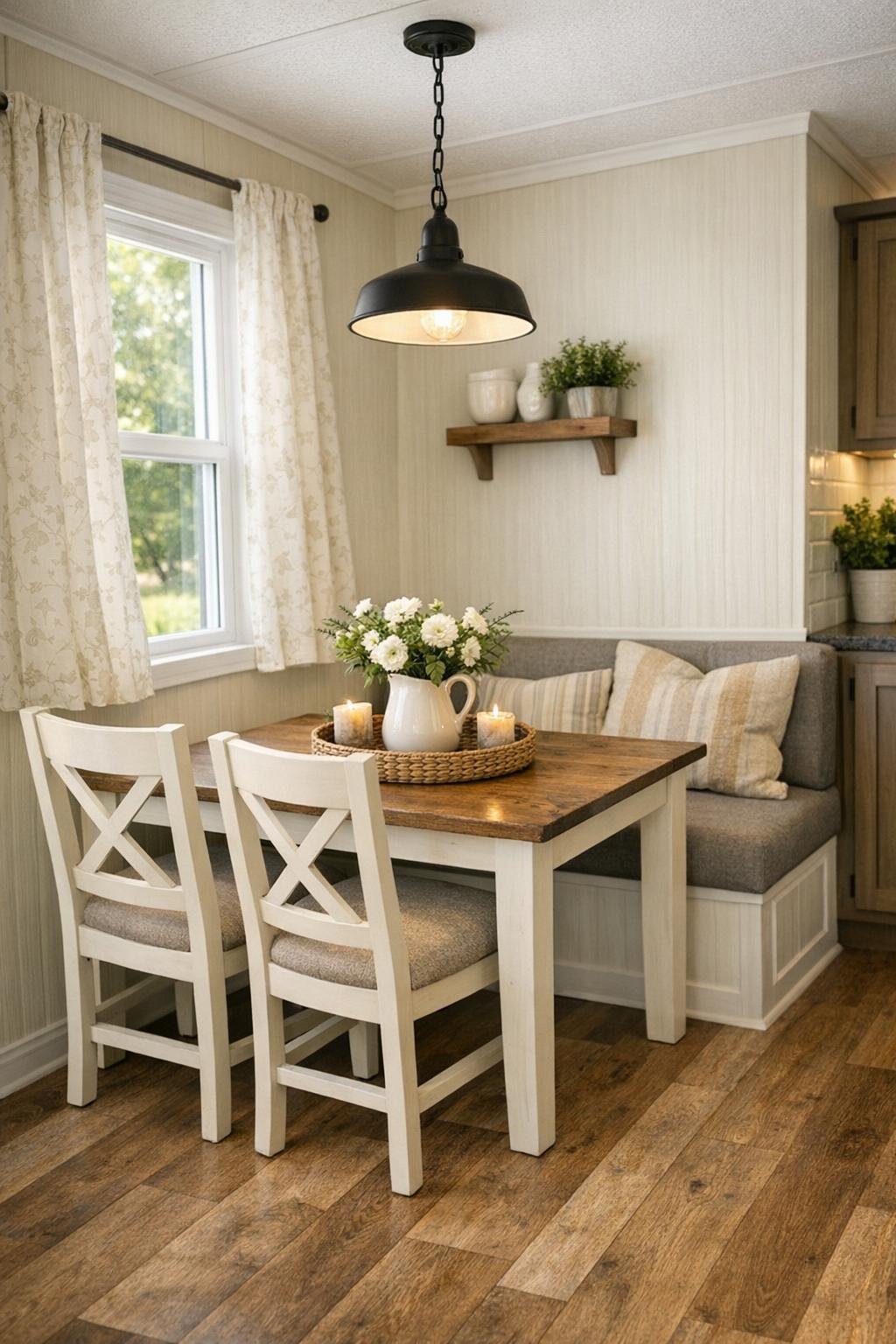
The dining area is likely tucked neatly between the living room and kitchen, but it still feels like its own meaningful place. I picture a small rectangular table in painted wood or lightly distressed oak, with a pair of classic chairs and perhaps a built-in bench to save space while adding charm. The scale is intimate, which suits the home beautifully; this is a place for morning coffee, a bowl of soup on a cold afternoon, or a card game after supper. A simple centerpiece—a crock with fresh stems, a ceramic bowl, or a folded quilted runner—would be more than enough.
What keeps the space from feeling cramped is the lightness of the finishes. Pale walls, slim furniture legs, and a modest pendant overhead help maintain visual breathing room. If there’s a nearby window, all the better: natural light can make even the smallest dining corner feel generous. I love rooms like this because they understand that gathering does not depend on square footage. It depends on warmth, comfort, and a table that says, sit down and stay.
Kitchen
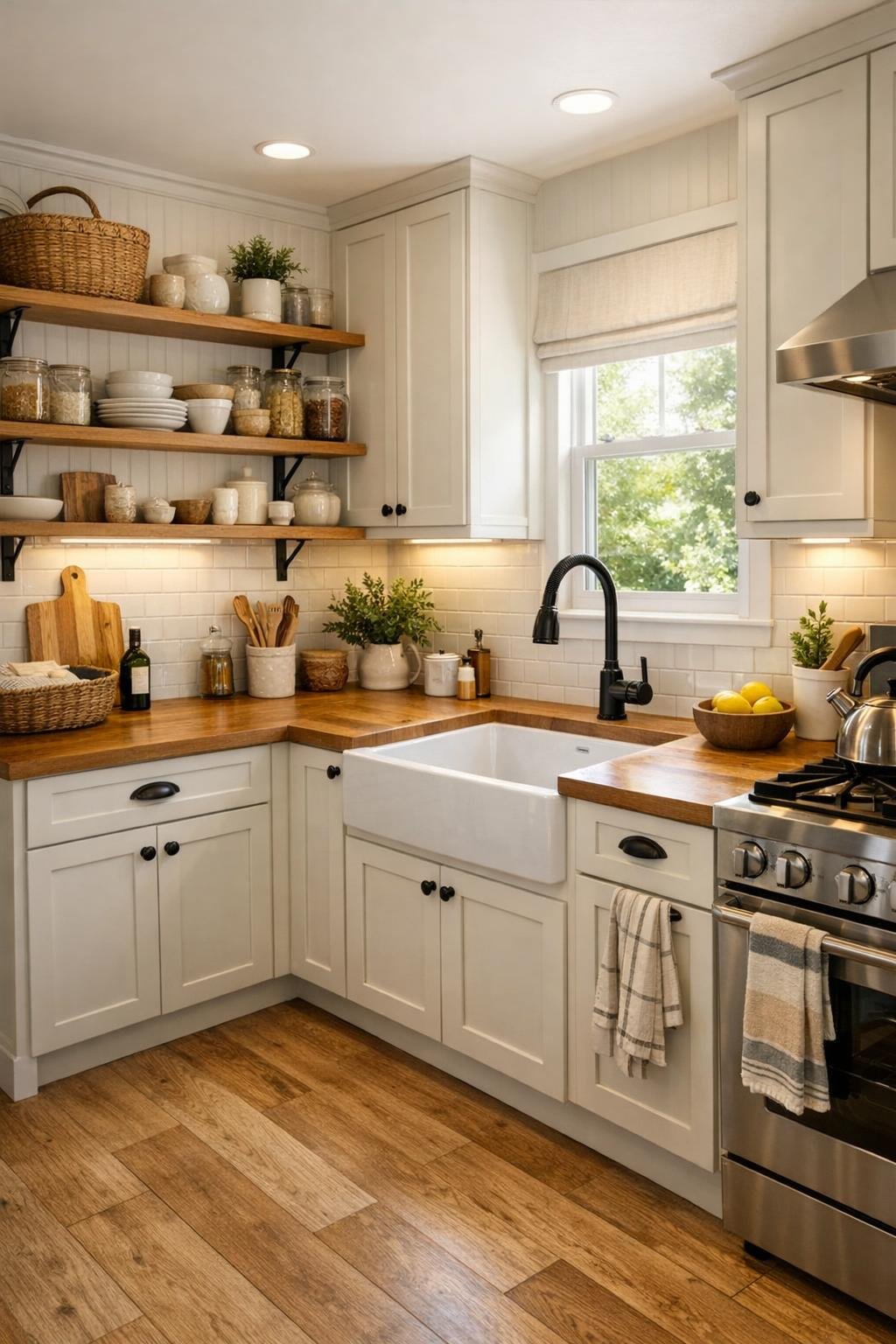
The kitchen is, to my eye, the heart of the whole transformation. In a home like this, the best kitchens are sensible down to the inch, and this one seems designed by someone who understands real daily use. The cabinetry is probably simple shaker-style, painted in a soft white, pale sage, or buttery cream, with dark pulls for a bit of contrast. Countertops in butcher block or a stone-look laminate add warmth and workability, and a classic apron-front sink or deep stainless basin would be exactly the right choice for a hardworking space. Open shelving for crockery and pantry jars brings personality without heaviness.
I can almost smell biscuits in a kitchen like this. Under-cabinet lighting, a cheerful window over the sink, and a compact but efficient appliance layout make it feel bright and capable rather than pinched. A beadboard backsplash or white subway tile would add that crisp, clean note every small kitchen needs. The beauty here is not just in the finishes but in the rhythm of the room: everything close at hand, everything easy to clean, everything arranged for a life where cooking still means love made visible.
Bedroom
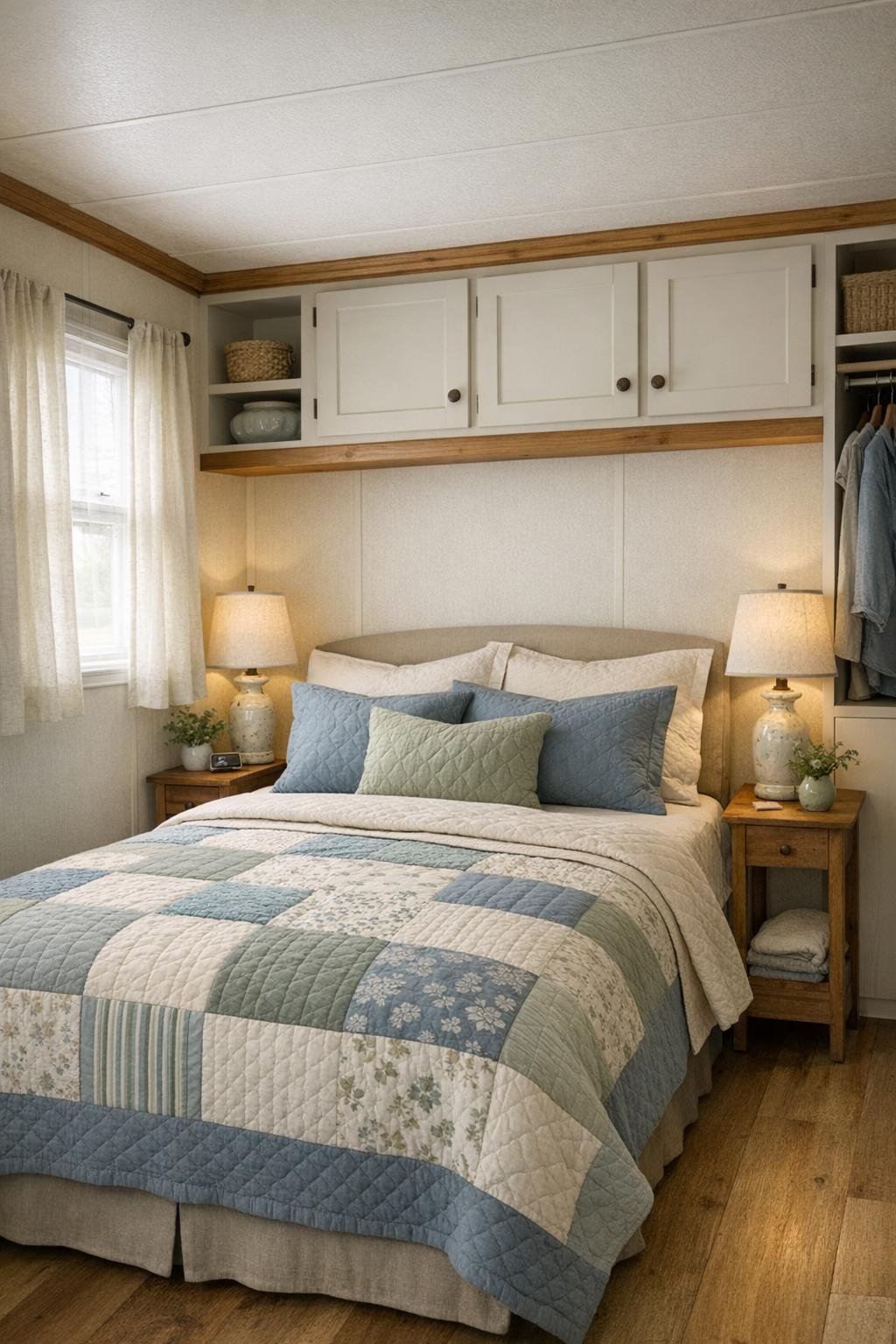
The bedroom takes the same modest footprint and turns it into a proper refuge. A bed dressed in white cotton, faded florals, or a simple quilt instantly softens the room, while built-in storage or narrow bedside tables make careful use of every wall. I imagine a muted palette here—warm ivory, dusty blue, pale sage, and touches of natural wood—because those are colors that settle the mind. If the ceiling is kept bright and the window treatments airy, the whole room would feel larger and gentler than its dimensions suggest.
There is a kind of old-fashioned wisdom in a bedroom that doesn’t ask too much of you. Perhaps there’s a reading lamp with a soft shade, a woven rug at the bedside, and a vintage dresser painted in milk white or weathered gray. Hooks instead of bulky furniture, drawers tucked beneath the bed, and a few framed heirloom-style prints help the room stay personal without clutter. It feels like the sort of place where one sleeps deeply, wakes early, and hears the weather before ever opening the blinds.
Bathroom
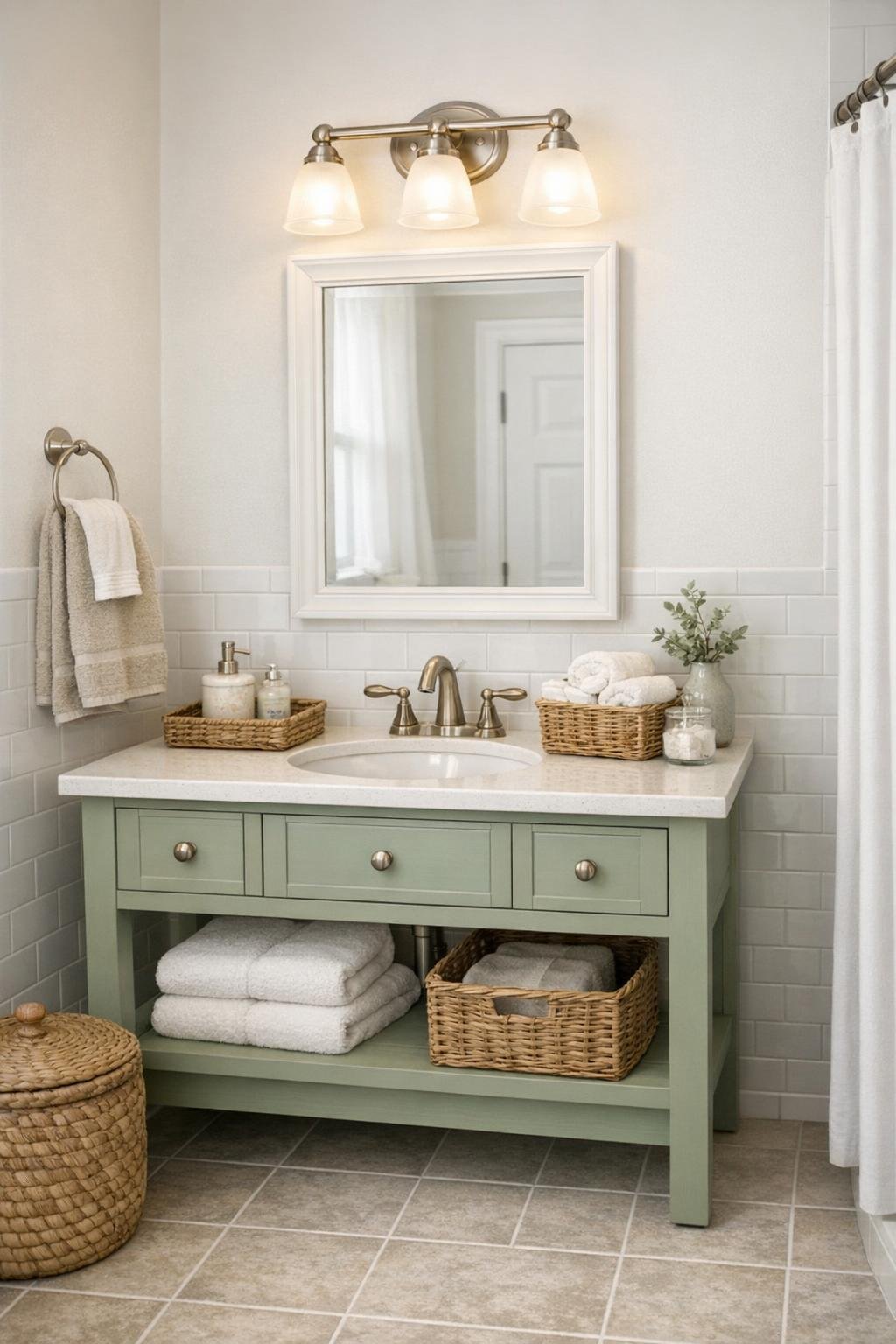
The bathroom appears to follow the same sensible, polished approach as the rest of the home. In a compact layout, every finish matters, and here I imagine a small vanity in painted wood, a white sink, and a framed mirror that lends presence without bulk. Walls in a clean warm white or very light gray keep the room fresh, while classic tile—perhaps penny tile on the floor or white rectangular tile in the shower—adds pattern in a quiet, timeless way. Good lighting is essential in a room this size, so a bright vanity fixture and reflective surfaces would do a great deal of work.
What I especially appreciate is the likelihood that this bathroom feels easy rather than overdesigned. Open shelves with rolled towels, a woven hamper, brushed metal hardware, and a shower curtain in a subtle stripe or botanical print would make it feel domestic and cared for. There is no need for extravagance when the proportions, cleanliness, and materials are this thoughtfully handled. Like a good old enamel basin, it is honest, useful, and handsome all at once.
Other Areas
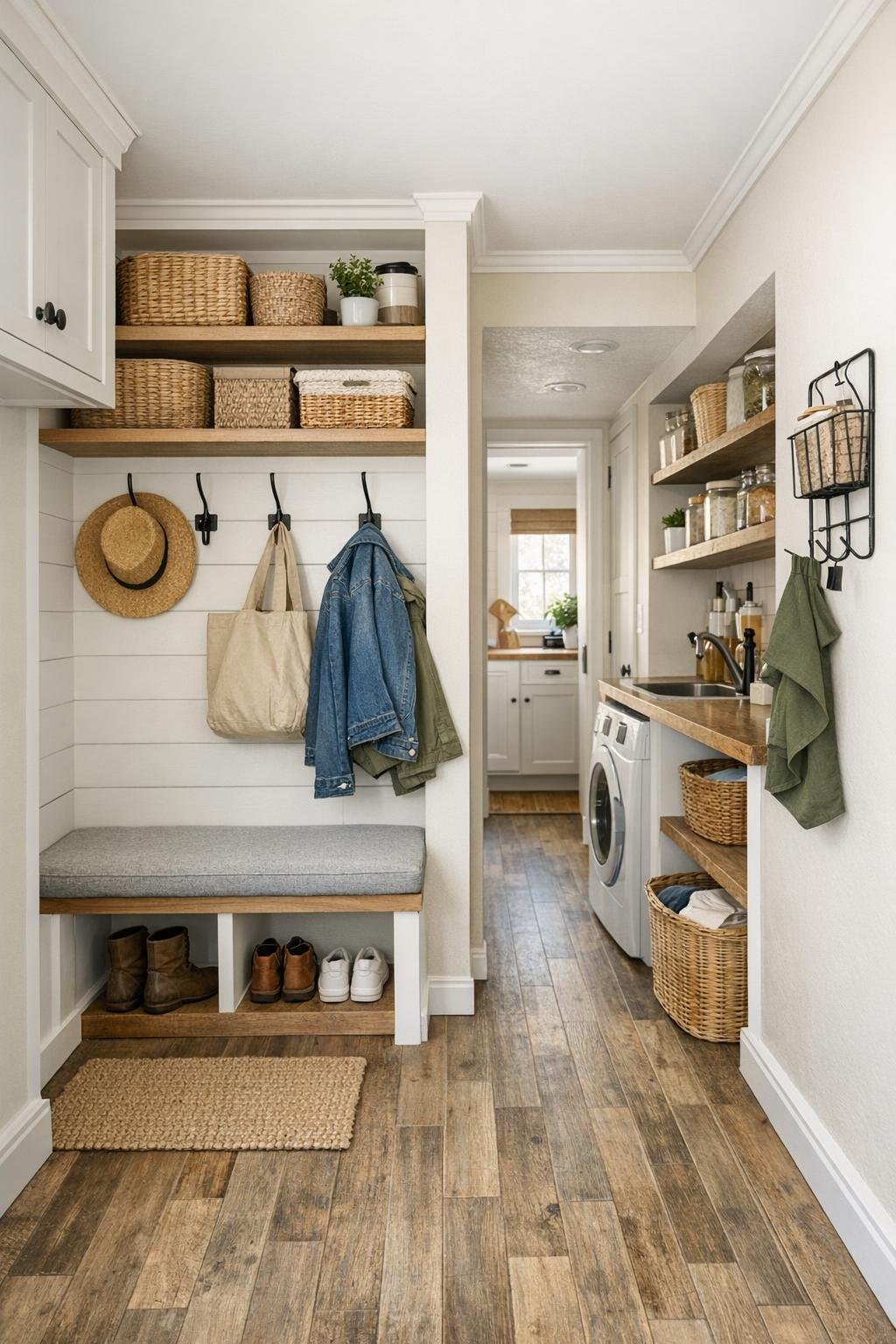
In a home of this scale, the in-between spaces matter tremendously, and I suspect they have been treated with real intelligence here. A short hallway may include shallow storage, hooks for coats and bags, and perhaps a narrow console or ledge for everyday necessities. If there is a porch, mud-entry, or laundry nook, those areas likely carry the same language as the rest of the home: painted paneling, durable floors, open shelving, and a place for everything. These are the spaces that keep a small home from becoming a crowded one.
I am especially fond of the idea of a multipurpose corner—a writing desk by a window, a reading bench with storage underneath, or a washer-dryer tucked behind curtains or cabinet doors. That kind of flexibility is the secret ingredient in successful compact living. Nothing is wasted, but nothing feels mean or improvised either. Instead, the home seems to understand daily rituals the way older country houses often did: where boots go, where aprons hang, where the mail lands, where you pause for just a minute between one task and the next.
Why You'd Live Here
You’d live here because it proves that comfort does not depend on size, and beauty does not require excess. This home takes an old single-wide and gives it new purpose through clear planning, gentle colors, durable materials, and rooms that support everyday life with grace. It offers the kind of ease many grander homes never quite achieve: less to maintain, less to heat and cool, and more reason to pay attention to what truly makes a place feel like home.
I think, too, you’d live here because it carries a quiet kind of courage. There is resilience in remaking what you have, in choosing warmth over show, and in designing a life around usefulness, memory, and peace. To me, that is the lasting appeal of this little home. It feels honest. And in a world that so often confuses bigger with better, honesty in design is a mighty lovely thing.