
There’s something instantly comforting about a home that keeps a little bit of its past visible, and this one does that beautifully. What began as a small-town general store now reads as an inviting cottage layered with age, practicality, and a kind of quiet charm that feels earned rather than styled. Set against a simple, rural backdrop, the house has that soft, lived-in mood I always gravitate toward: warm wood, painted finishes that don’t feel too perfect, and rooms arranged for real life rather than show. As a concept design, it imagines the sweetest possible version of adaptive reuse without losing the humble spirit of the original building.
What makes it special, at least to me, is the way it balances memory and comfort. You can sense the former shop in the proportions, the larger windows, and the straightforward footprint, but every surface now supports a gentler domestic rhythm. It feels like a home for slow mornings, soup simmering on the stove, and a favorite chair pulled close to the light by late afternoon. And yes, the reading corner is every bit as dreamy as the headline promises—less precious than you might expect, and all the better for it.
Exterior
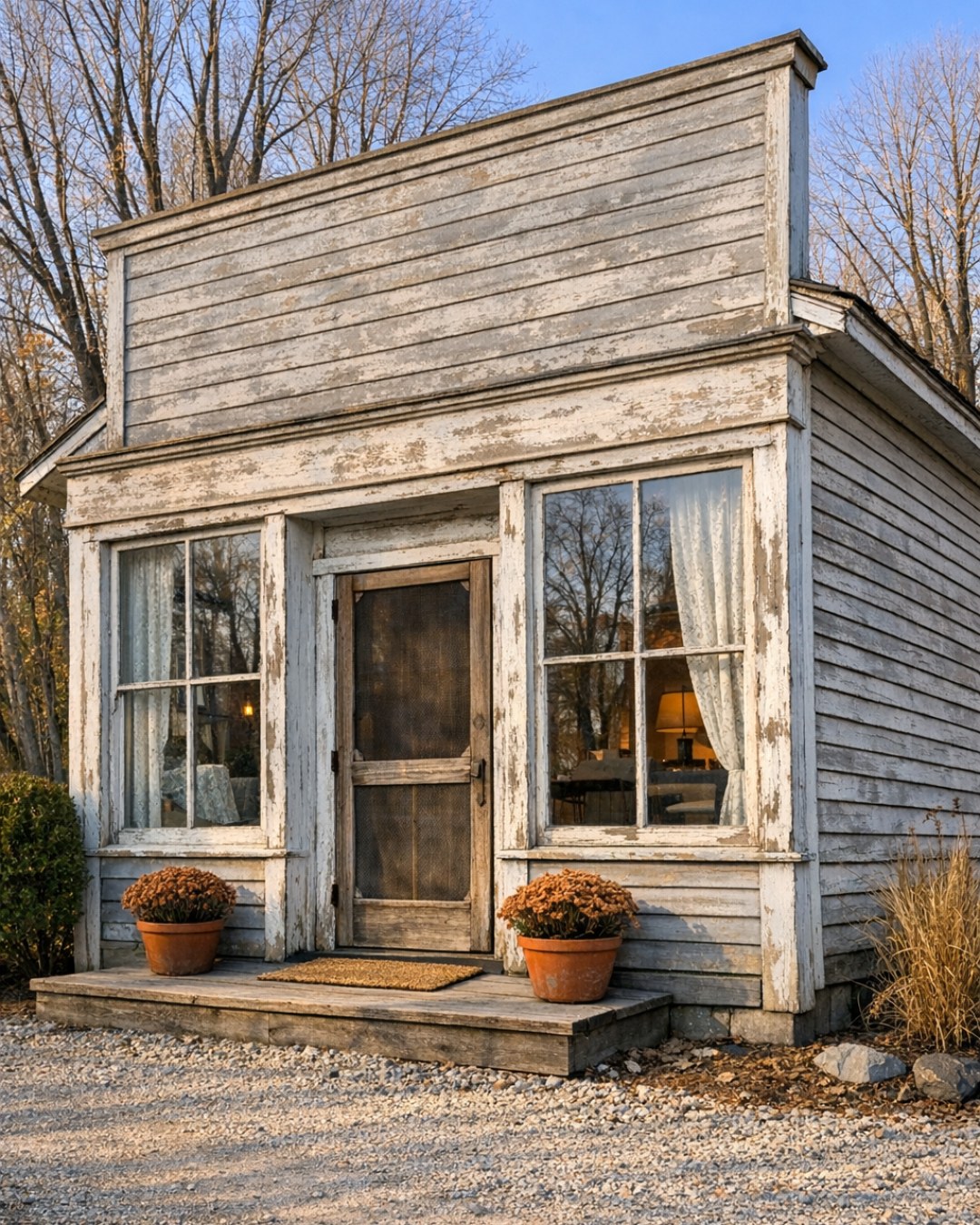
From the outside, the home still carries the honest silhouette of a neighborhood store, but the transformation into a cottage is wonderfully soft. The facade is finished in painted wood siding in a muted cream tone, with deep sage trim that grounds the structure without making it feel heavy. I love the way the old storefront windows have been retained and slightly reframed; they bring in so much light and give the exterior a welcoming, lantern-like quality in the evenings. A modest covered porch stretches across part of the front, furnished with a simple bench, a pair of weathered planters, and one old metal milk can that feels like the kind of thing nobody bought new.
The roofline remains straightforward, which I think is exactly the right move here, because it lets the texture do the talking. Shingles in a soft charcoal, brick foundation detailing with a little age to it, and a gravel path bordered with lavender and low boxwood all help the house settle into the landscape. Rather than trying to disguise its commercial past, the design leans into it with confidence, letting the broad front elevation feel generous and practical. It’s a home with curb appeal, yes, but more importantly, it feels approachable—the sort of place where you’d expect the kettle to be on before you even reached the door.
Living Room
The living room is where the old store really turns tender. The ceiling is slightly higher than you’d expect in a cottage, which gives the room breathing space, but everything else draws it back into a cozier register: wide-plank oak floors with a matte finish, creamy walls with a whisper of warmth, and painted built-ins that look as though they’ve always been there. A faded floral rug anchors the seating area, layered under a slipcovered sofa in natural linen and two cushioned armchairs in a muted moss fabric. Nothing feels overmatched or too coordinated, which is honestly my favorite kind of room because it feels collected over time.
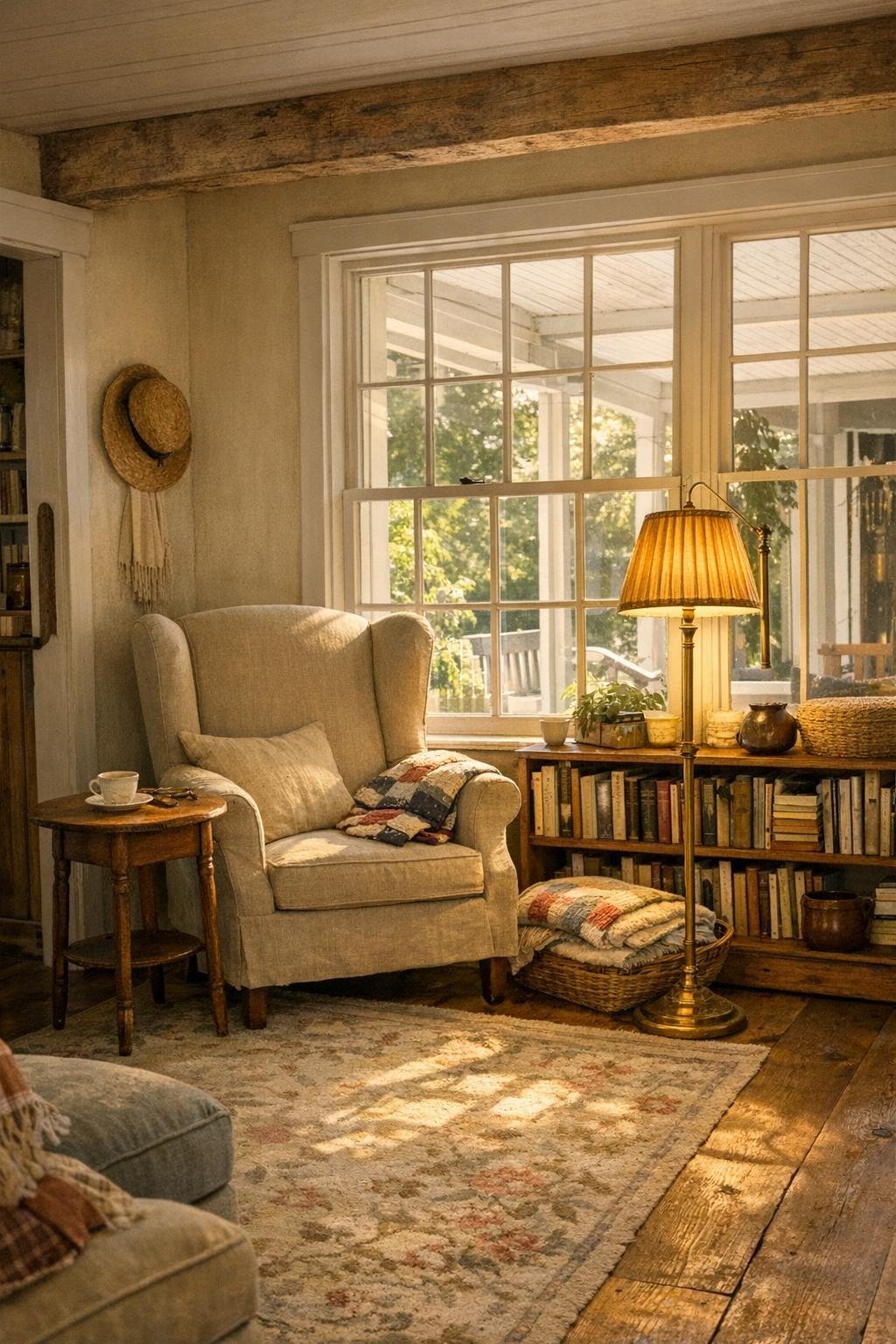
The reading corner is tucked into the best light, right by the large front window, and it’s exactly the kind of spot I’d lose a whole Saturday afternoon in. There’s a generous wingback chair in soft oat-colored upholstery, a small turned-wood side table just big enough for tea and reading glasses, and a brass floor lamp with a pleated shade that throws the nicest golden pool of light. A low bookcase runs beneath the window, topped with a folded quilt and a stack of hardcovers, so the whole nook feels useful and personal rather than staged. It reminds me of the kind of corner you’d naturally migrate to after dinner, once the dishes are done and the house gets quiet.
Dining Room
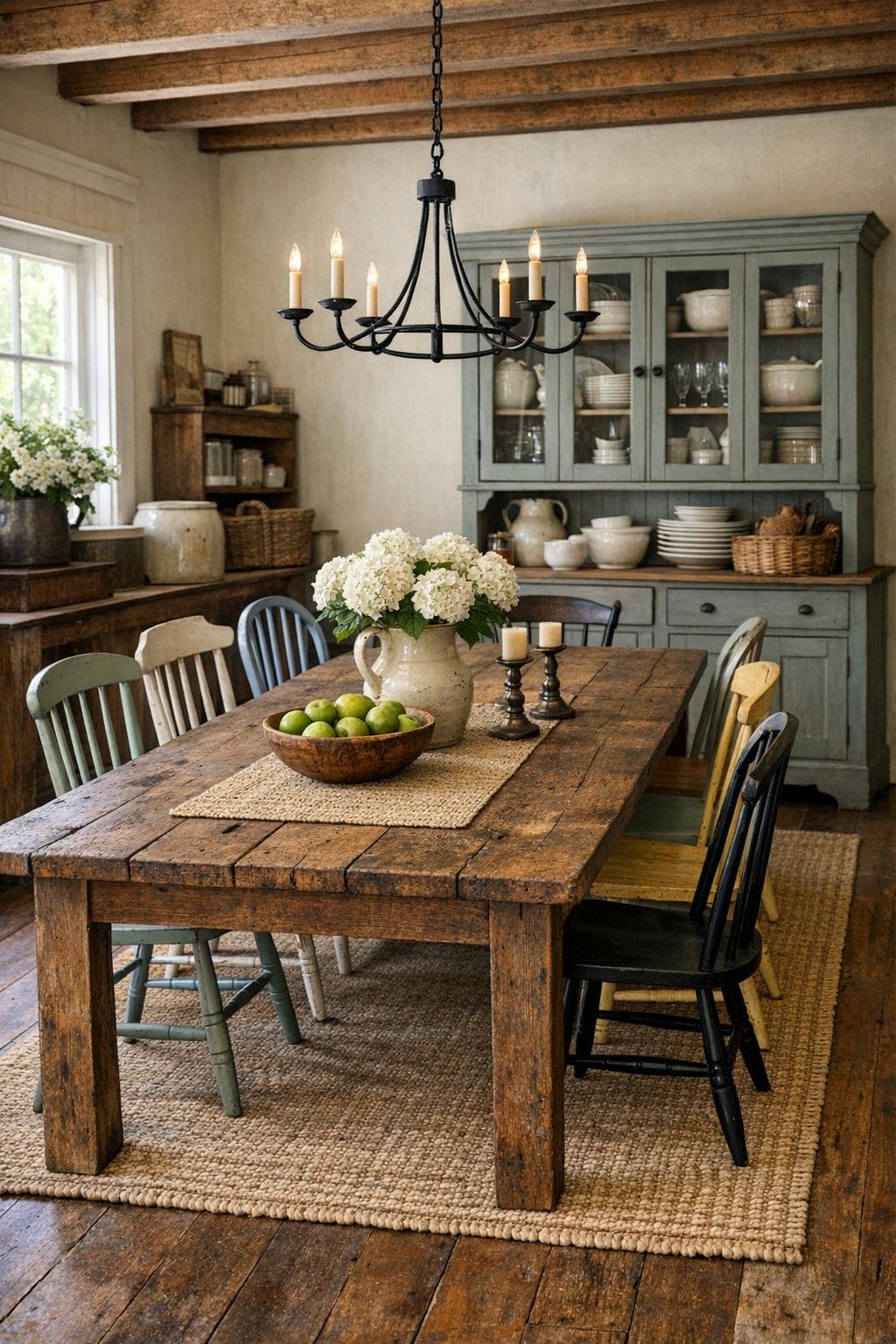
The dining area sits in easy conversation with the living room, and I can immediately picture it handling everything from weekday breakfasts to a big Sunday pot roast. The table is long, farmhouse-style, and made from reclaimed wood with enough knots and grain movement to keep it interesting without feeling rustic for rustic’s sake. Mismatched spindle-back chairs, all painted in softened tones of cream, sage, and smoky blue, make the room feel relaxed and lived-in. Overhead, a simple iron chandelier with candle-style bulbs gives the space a little structure, while still fitting the home's easygoing personality.
What I like most here is the restraint. The walls are mostly left open except for a narrow plate shelf and one vintage landscape painting in a dark wood frame, which keeps the room from tipping into clutter. A natural fiber runner under the table adds texture and durability, and a painted hutch along one wall stores everyday dishes behind glass-front doors. It has the kind of layout that encourages people to linger, the way good dining rooms do, especially when the lighting is soft and there’s something warm coming out of the kitchen nearby. As someone who is always thinking about where serving bowls will land and who’s refilling drinks, I appreciate how functional this room feels without losing any charm.
Kitchen
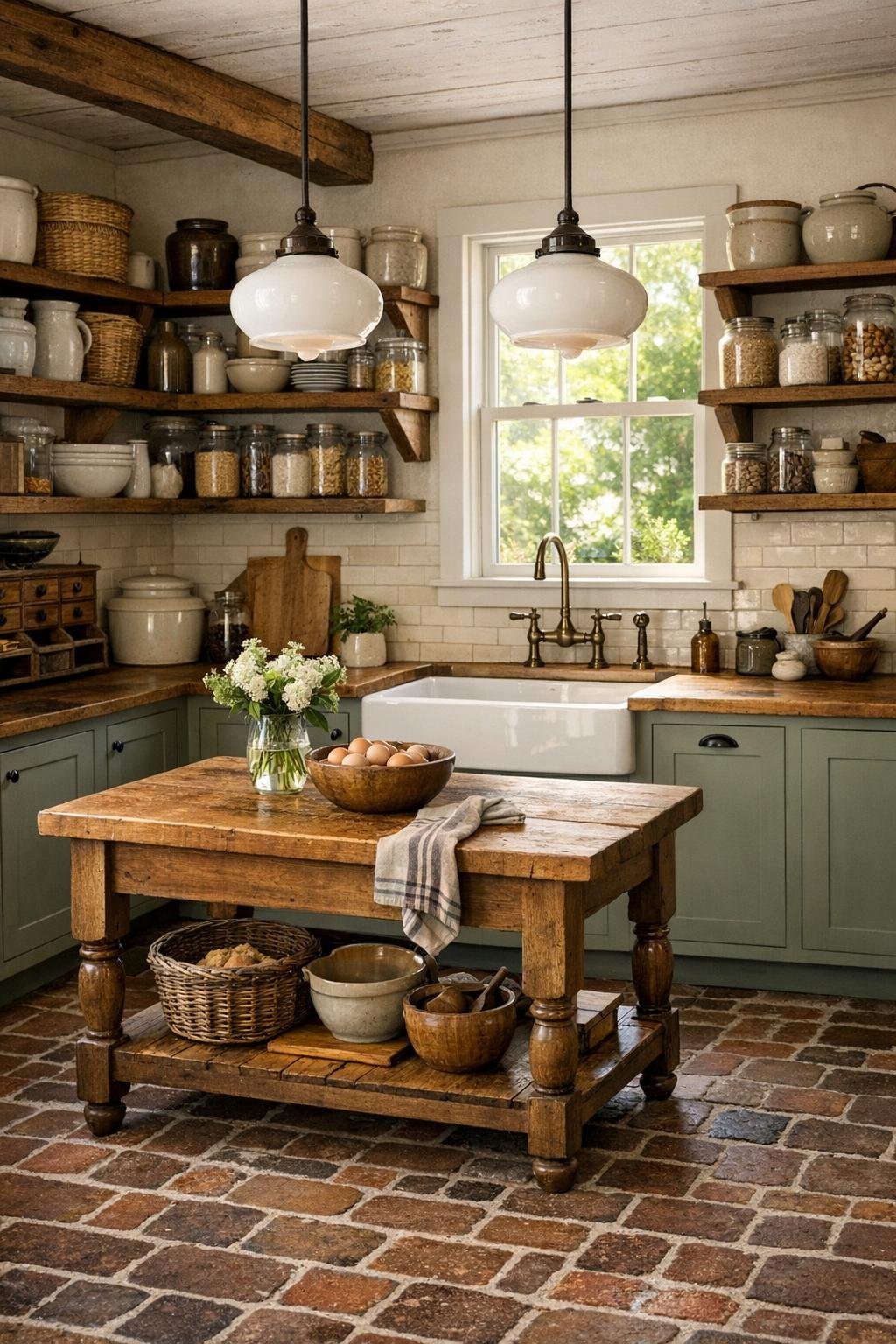
The kitchen is, not surprisingly, my favorite room after the reading nook. It’s designed with the kind of practical generosity that makes cooking easier, not fussier: painted shaker cabinets in a dusty sage, butcher-block countertops along the perimeter, and a central worktable-style island with turned legs and open shelving below. The old store footprint seems to have allowed for a wider-than-average workspace, and that extra circulation room is gold if you actually cook a lot. I can just imagine laying out ingredients for soup, bread dough rising off to one side, and enough room left over to pack lunches without feeling boxed in.
There’s a white apron-front sink set under a window, unlacquered brass hardware that will age beautifully, and a creamy subway tile backsplash with slightly irregular edges for a handmade look. Open shelves hold stacked stoneware, pantry jars, and a few everyday cookbooks, while a tall cupboard likely hides the less photogenic but absolutely necessary appliances. Pendant lights with milk-glass shades keep the task lighting bright but soft, and underfoot the brick floor adds that wonderful sense of permanence. It’s a hardworking kitchen, but it never loses the cottage warmth that makes the whole house feel so personal.
Bedroom
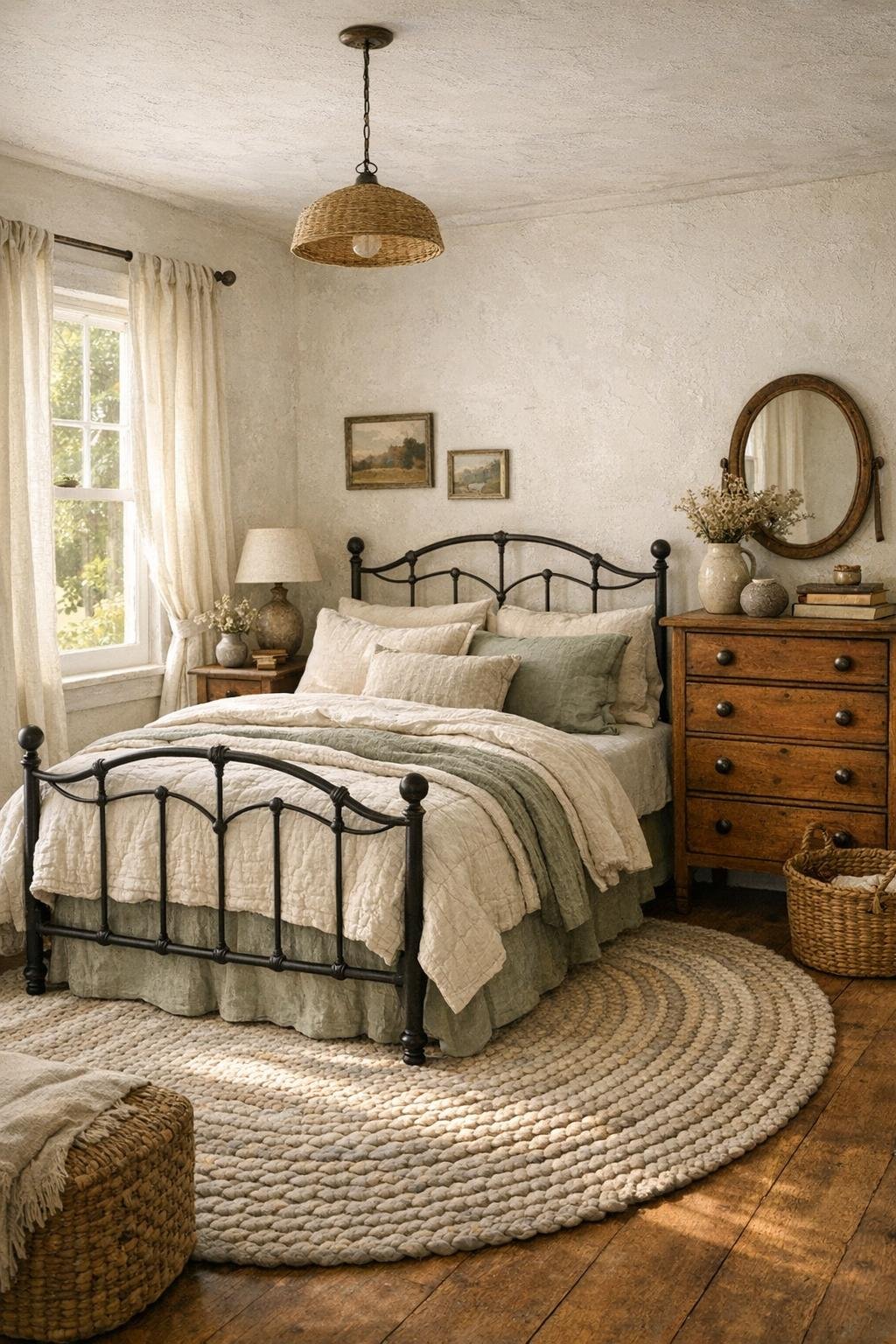
The bedroom takes a quieter approach, which feels right after the more open, social spaces. The palette shifts softer here—washed ivory walls, pale wood tones, and bedding in layers of cream, muted rose, and faded sage. An iron bed frame with a gently curved headboard gives the room a bit of structure without making it feel formal, and the linens are the kind that look better slightly rumpled. I always think bedrooms should feel a little exhale-inducing, and this one absolutely does.
A vintage dresser with worn brass pulls sits opposite the bed, topped with a ceramic lamp and a small dish for jewelry, while simple cotton curtains filter the daylight into a calm glow. There’s a braided wool rug underfoot and a small upholstered bench at the end of the bed, practical for dressing but also useful for holding one more folded blanket. The room doesn’t depend on dramatic design gestures; instead, it leans into comfort, familiarity, and the kind of softness that makes turning in early feel like a treat rather than a routine.
Bathroom
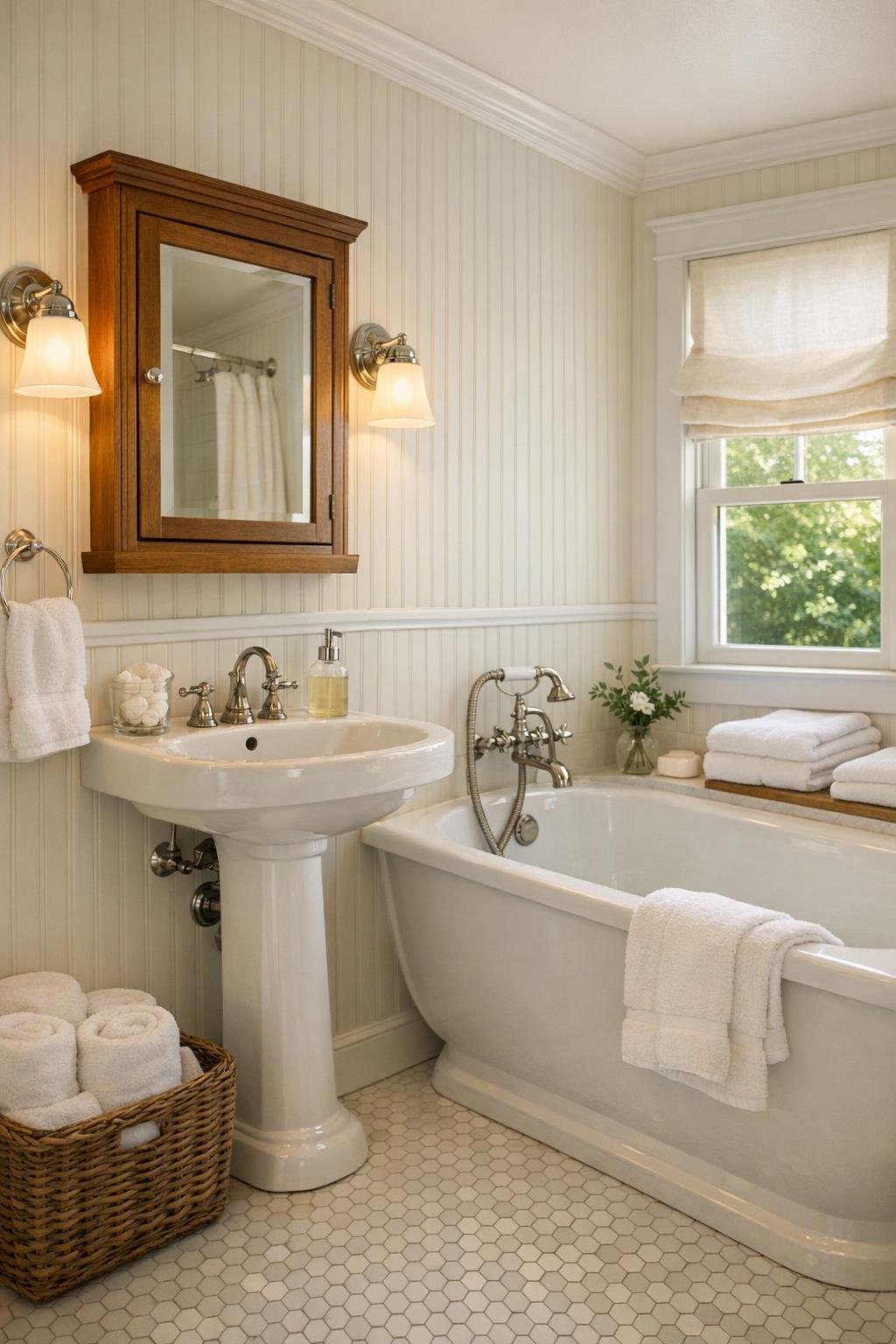
The bathroom is compact but thoughtful, and I’m always impressed when a smaller space manages to feel both efficient and a little bit special. Here, beadboard wainscoting painted a warm white wraps the lower half of the room, while the upper walls stay light and simple. A pedestal sink keeps the footprint open, and an old-fashioned medicine cabinet with a wood frame adds storage without introducing anything too sleek or modern. The floor is finished in small hex tile, which feels timeless in exactly the right way.
The standout feature is a deep soaking tub tucked beneath a window, dressed with a linen curtain and paired with classic bridge-style fixtures in polished nickel. Thick cotton towels, a woven hamper, and a narrow shelf for soaps and folded washcloths give the room that tidy, cared-for feeling that makes everyday routines nicer. Even the lighting is gentle: a pair of sconces with frosted shades that flatter the room rather than glare at it. It’s proof that practical spaces can still feel restorative when the materials are honest and the scale is handled well.
Other Areas
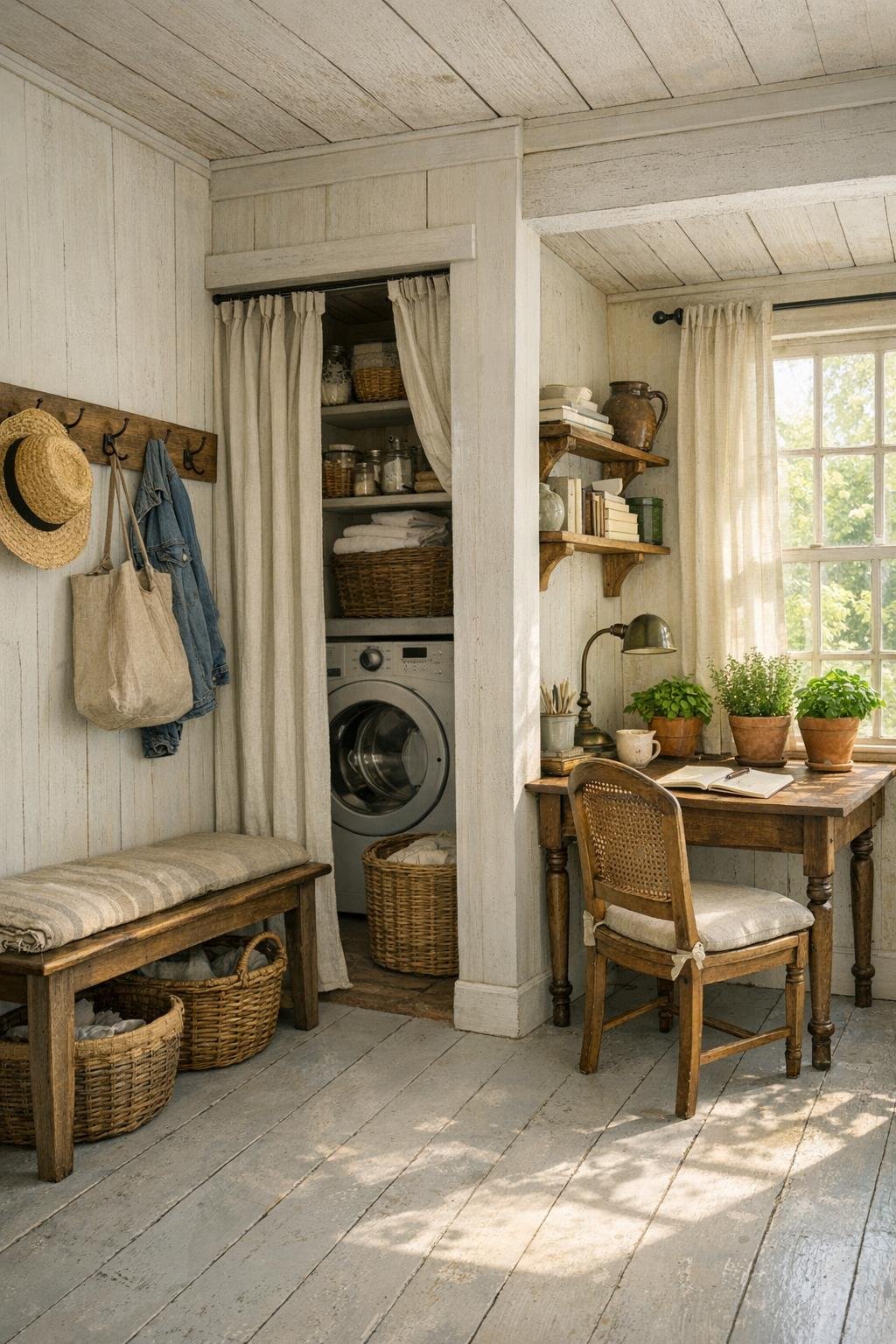
One of the sweetest surprises in this home is how well the in-between spaces are used. A narrow entry hall includes pegs for coats, a boot tray, and a small painted bench with baskets underneath—nothing fancy, just the kind of hardworking setup that keeps a house running smoothly. There’s also a petite laundry nook hidden behind curtain panels instead of doors, which feels perfectly in step with the cottage spirit. In a home like this, practicality isn’t tucked away; it’s integrated so gracefully you hardly notice it.
And then there’s that bonus corner near the back—part sunroom, part sitting area, part overflow space for hobbies. It holds a small writing desk, a cane-back chair, and shelves for baskets, sewing supplies, and stacks of magazines, with potted herbs in the window and painted floorboards underfoot. I can imagine this becoming the spot for letter writing, mending, or just taking five quiet minutes before dinner prep starts. These supporting spaces are what make the house believable to me; they round out the romance with routines, which is really the secret to a home that lasts.
Why You'd Live Here
You’d live here because it offers something that’s getting harder to find: character without inconvenience, and charm without pretense. The former general store bones give the house openness and light, while the cottage layering brings in warmth, softness, and a very real sense of home. Every room feels designed for daily rituals—reading by the window, cooking from scratch, hosting family, putting things away at the end of the day—and that kind of thoughtfulness matters more than square footage ever will.
For me, the appeal is also emotional. This is a home that suggests resilience and reinvention, but in a quiet, deeply livable way. It doesn’t need grand statements to be memorable; it wins you over with comfortable proportions, useful details, and rooms that seem to understand exactly how people want to feel in their own space. If your dream home is equal parts practical cottage and heartfelt retreat, this one makes a very convincing case.