
There’s something deeply comforting about a home that doesn’t try too hard to impress you and still manages to win you over completely. This little carriage-house-turned-cottage carries that kind of quiet magic, wrapping old-world character in a soft, lived-in elegance that feels both practical and tender. Set in what I imagine as a leafy, tucked-away corner of town, it has the kind of gentle presence that makes you slow down before you even reach the front door. As a concept design, it leans into the romance of small-space living in all the right ways.
What makes it special to me is how beautifully it honors the idea of home as refuge. The rooms feel scaled for real life rather than show, with warm painted wood, time-softened finishes, and thoughtful little moments that support daily rituals—tea steeping in the kitchen, a lamp glowing beside a good chair, a table ready for pie or soup with a friend. Above all, this home understands that comfort is not clutter or extravagance; it’s proportion, texture, light, and the invitation to stay awhile.
Exterior
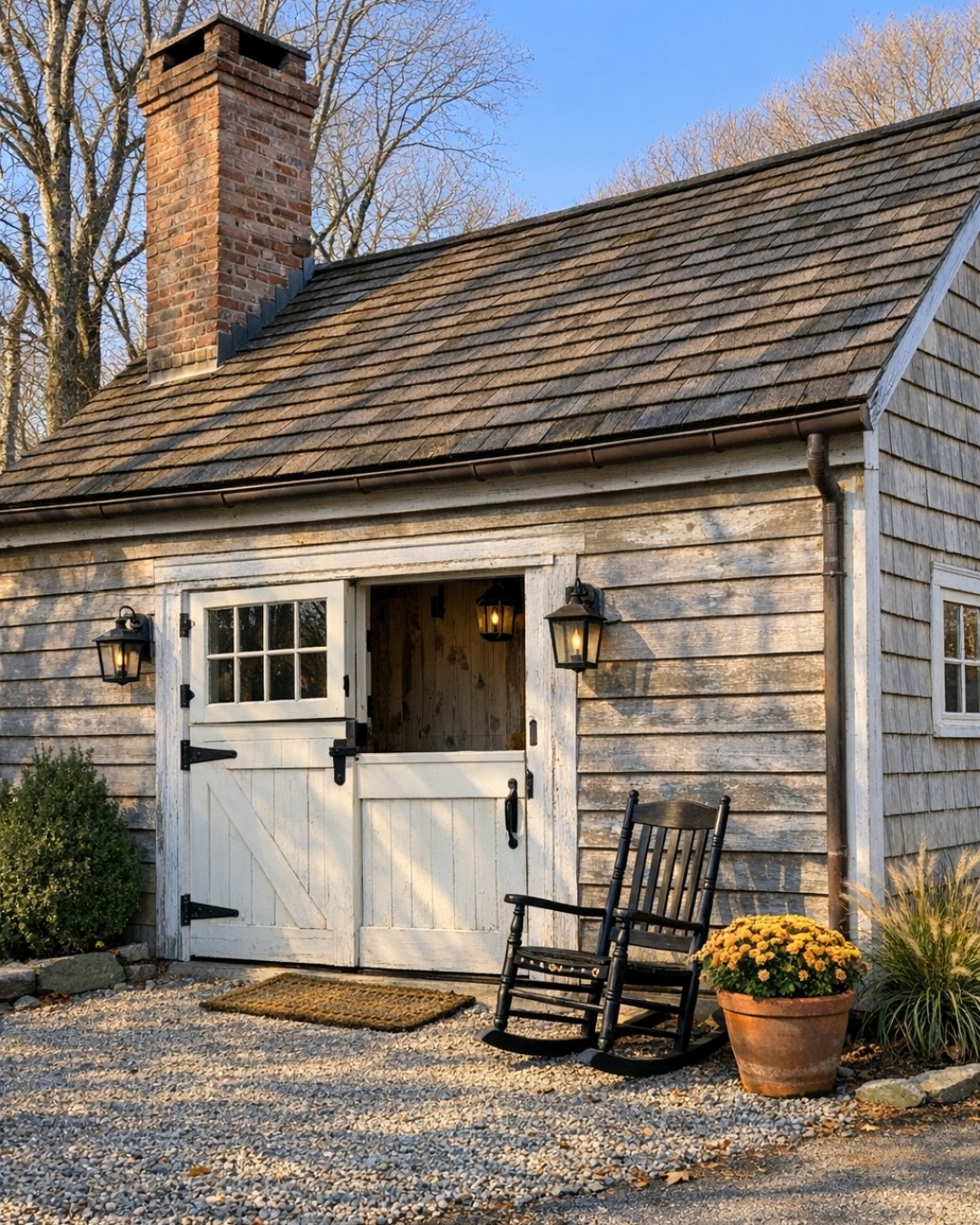
From the outside, the cottage keeps the humble bones of a carriage house but softens them with the kind of details that make a place feel lovingly claimed. I picture weathered clapboard painted a creamy mushroom white, with trim in a muted sage that settles beautifully into the landscape. The roofline remains simple and honest, while window boxes, climbing vines, and a gravel path give the structure an easy charm. Nothing feels overworked. It has that lovely balance between utility and sweetness, like a home that has learned how to age gracefully.
The entry is especially inviting, with a half-glazed door, an old brass knob polished by use, and a modest porch just deep enough for a bench and a pair of planters. I’d add a woven doormat and a lantern-style sconce to make dusk arrivals feel extra welcoming. The windows are likely one of the best features from the street, their proportions tall and cottage-like, hinting at bright interiors without giving everything away. It sets the tone perfectly: simple, storied, and full of gentle promise.
Living Room
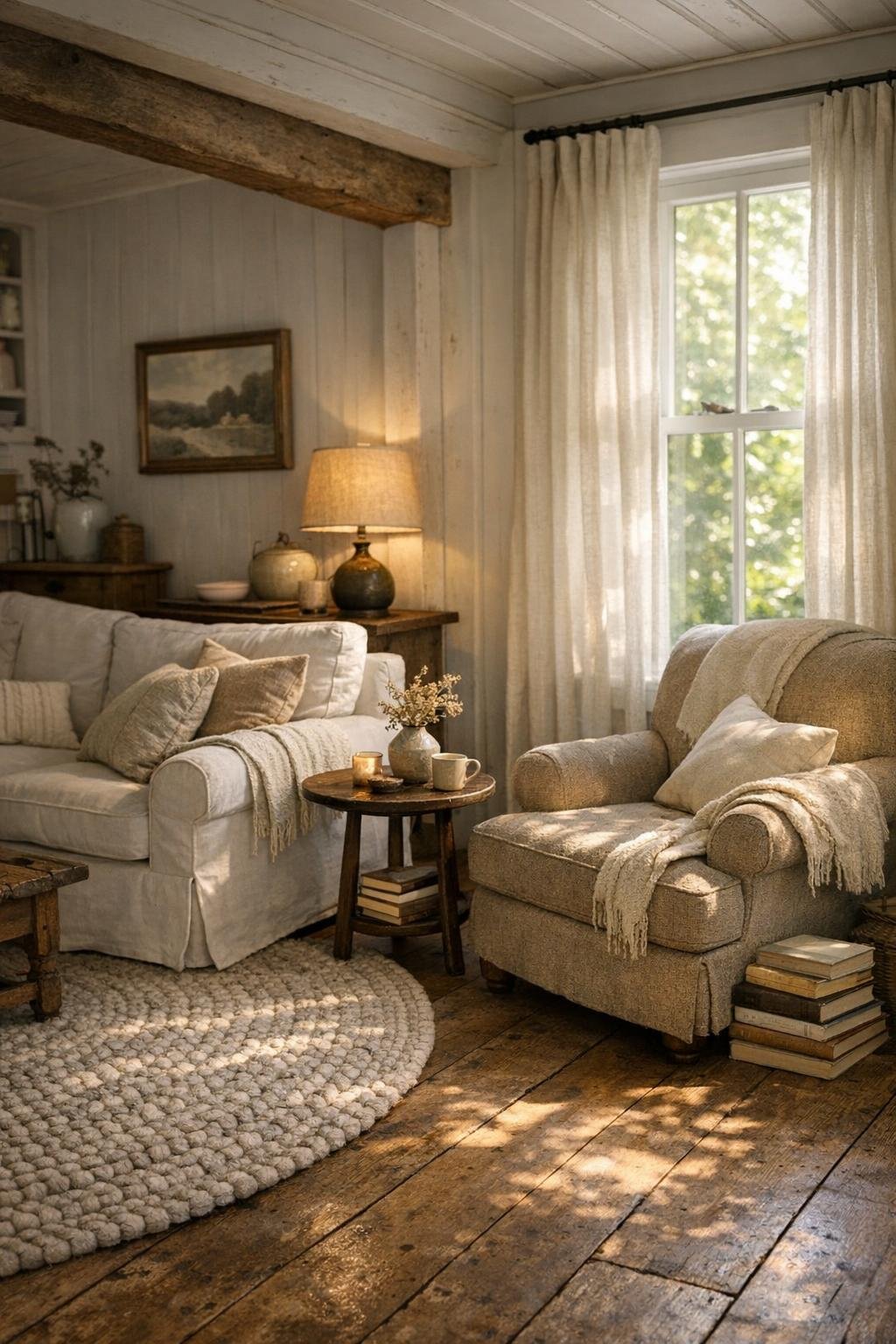
The living room is the heart-stealer here, and yes, it’s home to the reading corner that completely makes the house. The palette is quiet and nurturing—oatmeal linen, warm ivory, dusty green, and the soft brown of old wood—and it lets texture do the heavy lifting. A slipcovered sofa, two petite upholstered chairs, and a painted coffee table keep the arrangement comfortable without crowding the floor. I love how a room like this can still feel gracious even when it’s modest in size, especially when every piece earns its place.
That reading nook, tucked beside a generous window, is exactly the sort of feature I think people remember for years. I imagine a deep, cushioned armchair with a washable floral pillow, a small round table for tea and reading glasses, and a library lamp casting a warm pool of light in the evening. A low bookcase beneath the sill keeps favorite titles close at hand, and a braided wool rug softens the whole seating area. It feels like the kind of corner where you could read through a storm, write letters, or simply sit with a blanket while supper simmers in the next room.
Dining Room
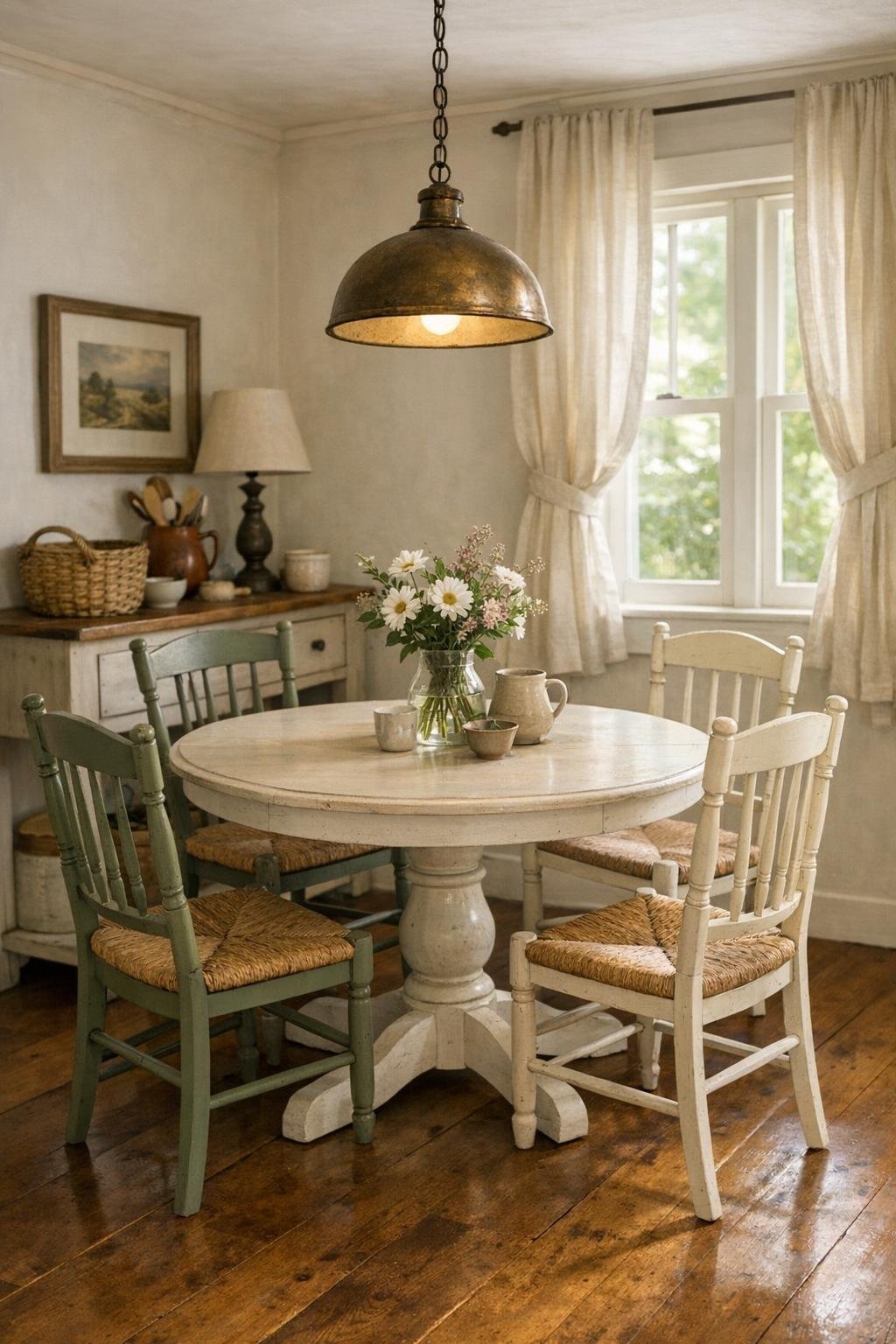
The dining room feels less like a formal destination and more like an everyday gathering spot, which honestly is my favorite kind of dining space. A round pedestal table makes wonderful sense in a smaller footprint because it keeps circulation easy and creates a natural sense of togetherness. I can see spindle-back chairs painted in a soft putty tone, perhaps with seat cushions in a tiny stripe or faded botanical print. The effect is charming without being precious, and it would work just as well for toast in the morning as it would for a neighbor dropping by for cake.
Lighting is what gives this room its glow. A simple pendant—maybe aged brass or painted metal with a milk-glass shade—hangs low enough to create intimacy but not so low that it interrupts conversation. I’d want linen curtains filtering daylight and a narrow sideboard for serving dishes, folded napkins, and a vase of whatever is blooming outside. As someone who loves feeding people, I always notice whether a dining room feels welcoming to all ages, and this one does. It’s easy to imagine setting out soup, fresh bread, and a little plain buttered noodle option for a picky eater without the room losing one bit of its charm.
Kitchen
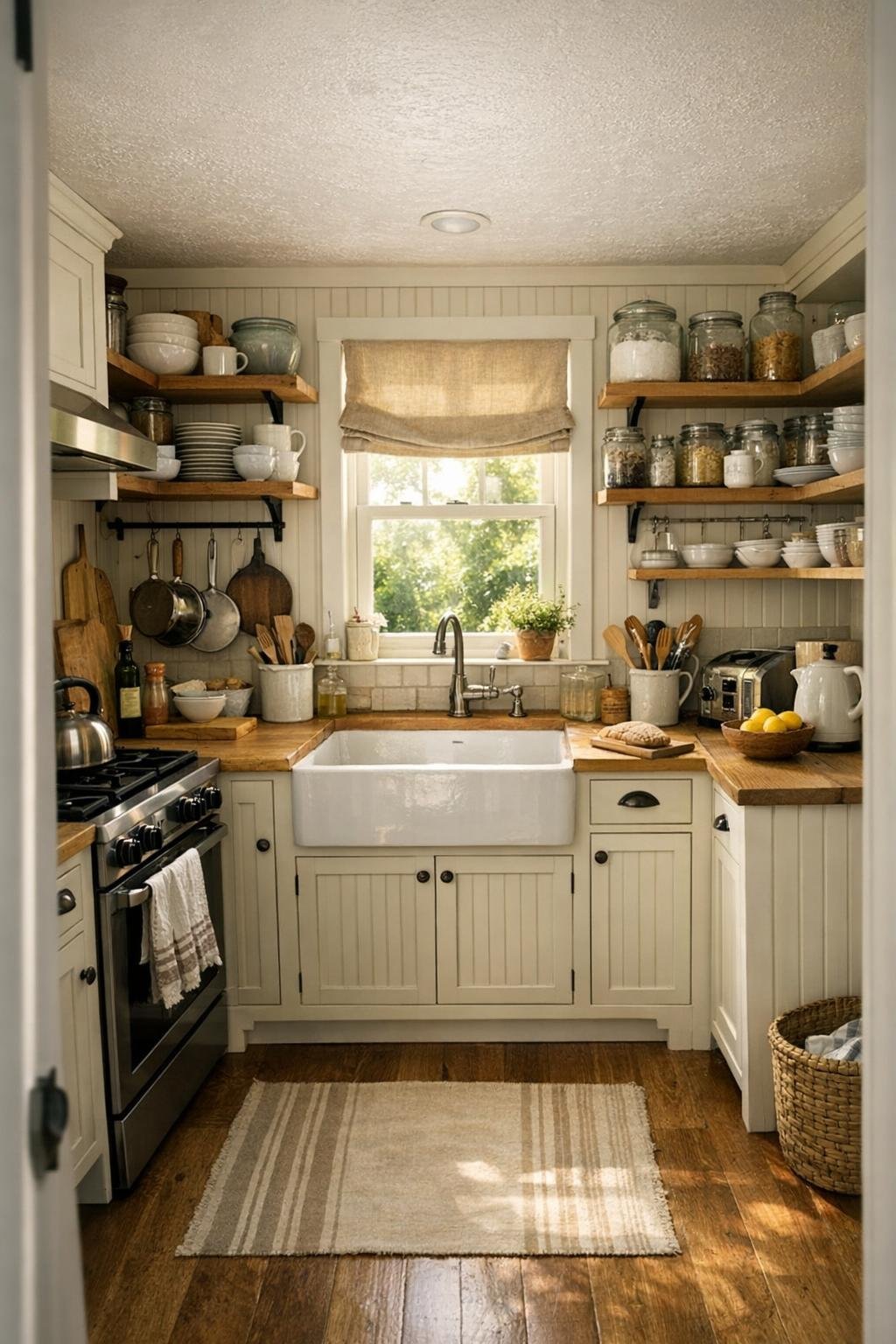
The kitchen is modest, but it has all the ingredients of a room that truly works. I picture shaker-style cabinets painted a creamy off-white, beadboard accents, and counters in a pale honed stone or butcher block that has grown more beautiful with use. Open shelving would suit the cottage spirit nicely, especially styled with everyday dishes, mixing bowls, and a few glass jars filled with baking staples. This is the kind of kitchen where the finishes don’t need to be fancy because the proportions and materials already feel honest and lasting.
What I especially enjoy is how a small kitchen can be designed to support real cooking instead of just looking pretty in photos. There’s room for a sturdy farmhouse sink under a window, easy-to-reach drawers for utensils, and enough counter space for biscuit dough, chopped vegetables, or a tray of sandwiches when family visits. If I were cooking here, I’d keep a crock of wooden spoons by the stove and maybe a little stand for recipe cards nearby. It feels wonderfully manageable, which is often the secret to making meals feel joyful instead of rushed—and for picky eaters, a kitchen like this makes it easy to set out simple toppings or sides so everyone can build a plate they’ll actually enjoy.
Bedroom
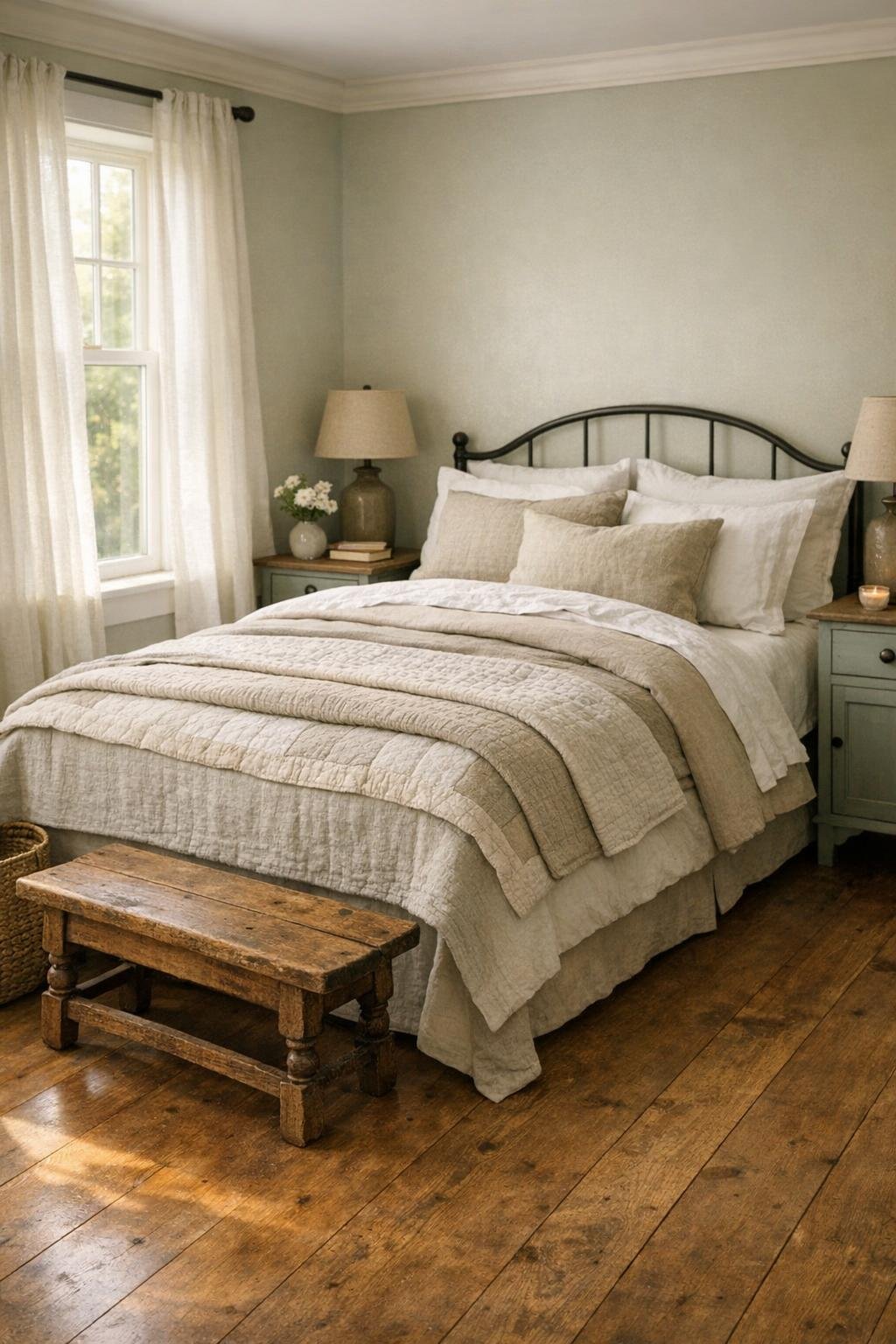
The bedroom has a calm, exhale-and-rest quality that feels especially right for a cottage like this. The bed is likely dressed in layered neutrals—washed cotton, a quilt with a faded floral or ticking stripe, and a lightweight coverlet folded at the foot. Painted nightstands, a small chest of drawers, and maybe a vintage bench keep the furnishings scaled and gentle. Nothing is too tall or imposing, which helps the room feel settled rather than crowded.
I’d lean into softness here with wall color in a pale parchment or misted sage and window treatments that glow in the morning light. Bedside sconces or petite lamps would free up table space while still keeping the room cozy for evening reading. One thing this home does so well is create emotional comfort through restraint; the bedroom doesn’t need a lot of ornament because the textures already tell the story. It feels like a room meant for deep sleep, slow starts, and that peaceful moment of turning down the bed at the end of the day.
Bathroom
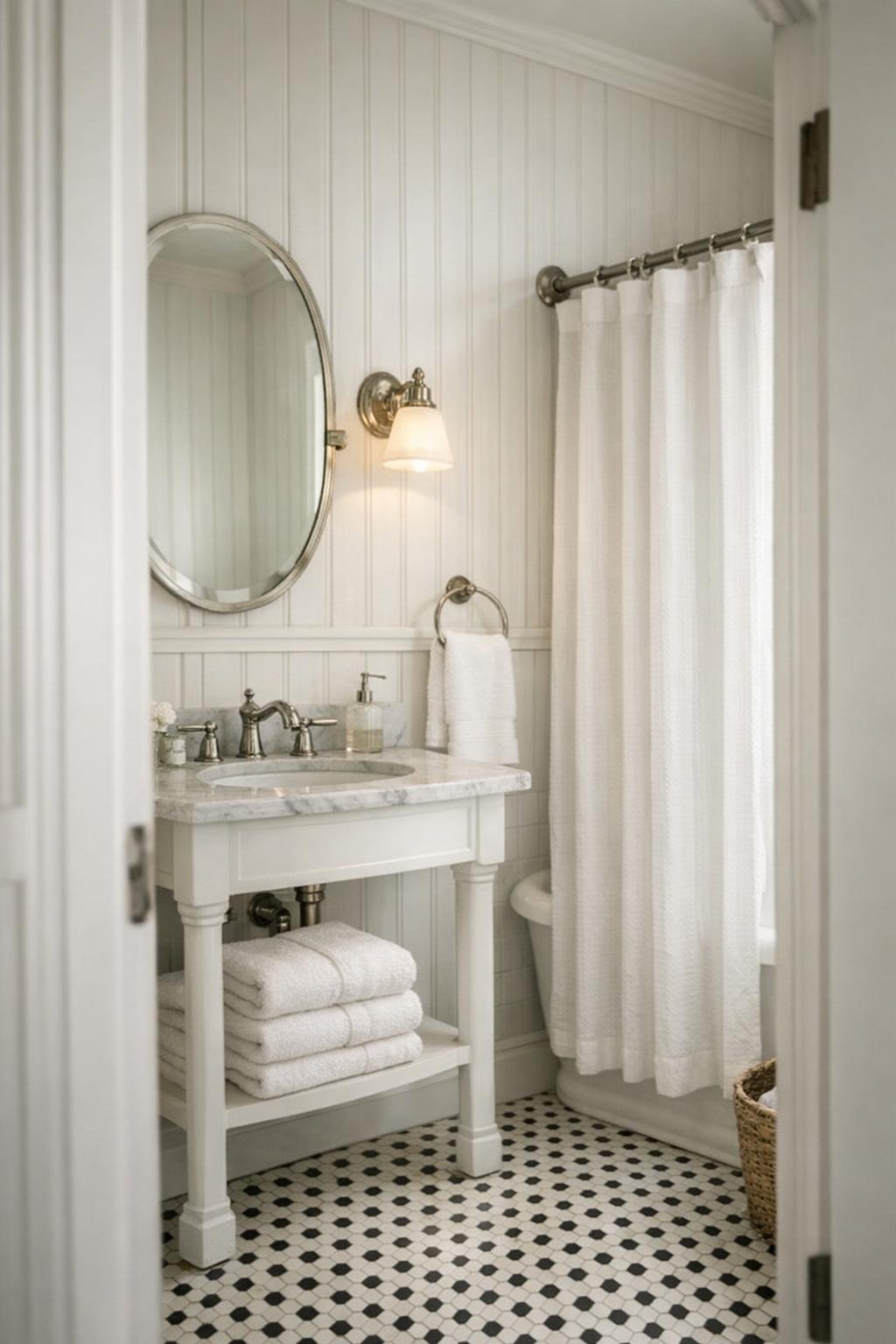
The bathroom carries the same thoughtful simplicity as the rest of the home, and that consistency matters in a small footprint. I imagine classic penny tile or a checkerboard floor, beadboard wainscoting, and a pedestal sink or narrow vanity with an aged finish. The palette stays light—creamy whites, soft gray, maybe the faintest green—so the room feels fresh and easy. Cottage bathrooms shine when they stay timeless, and this one seems to understand that perfectly.
A glass-front medicine cabinet, polished nickel fixtures, and plush white towels would give the room just enough polish without disturbing its modesty. If there’s a shower, I’d love to see simple white tile with dark grout and a fabric curtain instead of anything fussy. A little stool for folded towels or a basket for soaps adds the kind of practical warmth I always appreciate. This is the sort of bathroom that feels clean, bright, and reassuring—the design equivalent of a fresh towel warmed by the radiator.
Other Areas
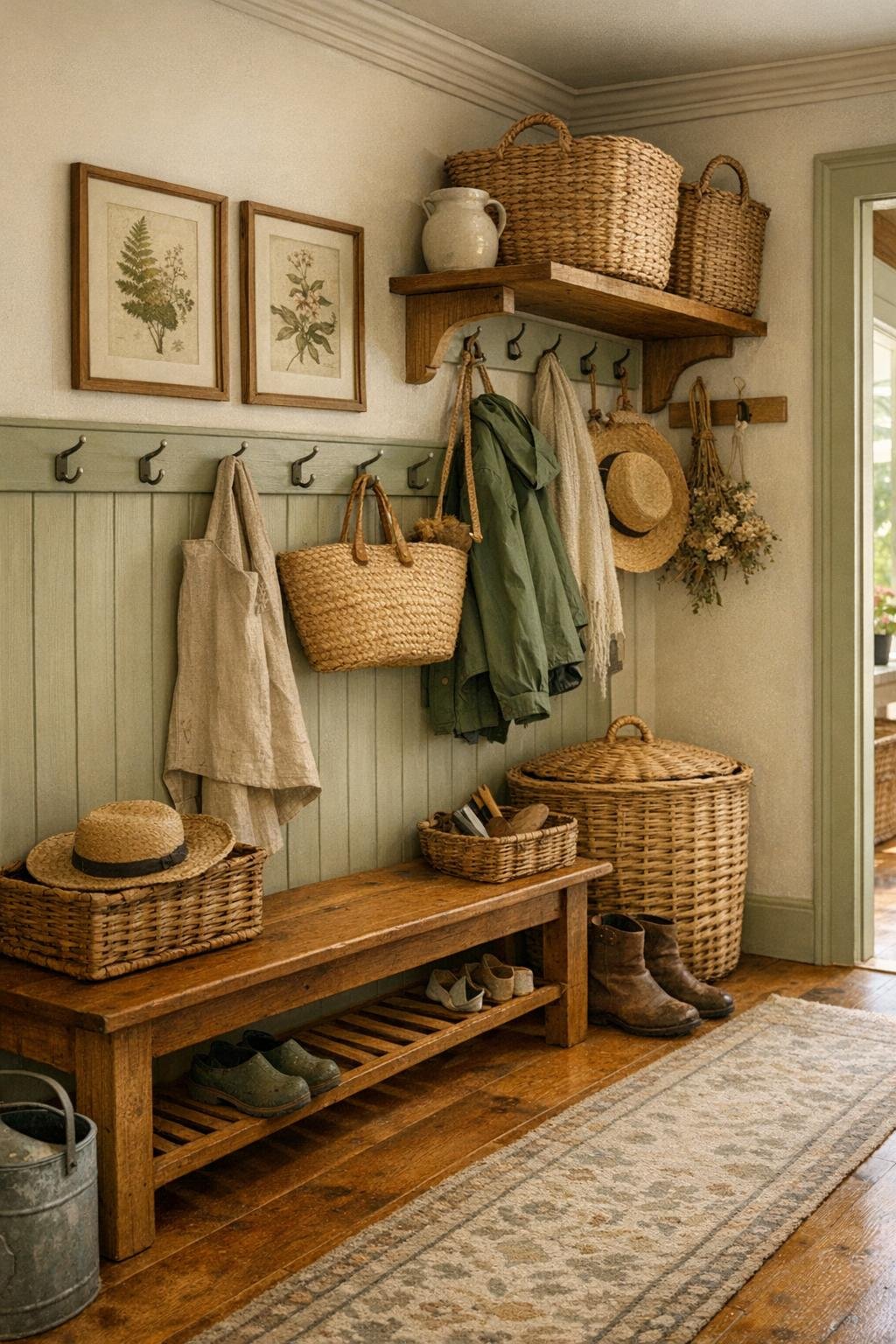
In a home like this, the in-between spaces are often where the personality really blooms. I’m thinking of a petite stair landing or hallway with framed botanical prints, a runner underfoot, and a narrow shelf for a lamp and a small bowl for keys. There may also be a practical mudroom corner near the entrance, with painted hooks, a bench, and baskets tucked below. Those details matter because they make daily routines easier, and when a home is compact, usefulness needs to be beautiful too.
If there’s a lofted nook or upper alcove, I’d turn it into a quiet secondary retreat—a writing desk, a sewing chair, or extra shelving for books and keepsakes. Even a small laundry area could feel charming with striped café curtains and a row of labeled wicker baskets hidden neatly away. This house seems to understand that comfort comes from being cared for in the little moments: a place to set your boots, a corner to write a note, a shelf that holds both beauty and necessity. That, to me, is where a cottage becomes truly lovable.
Why You'd Live Here
You’d live here because it proves that a home does not need grand square footage to feel generous. Every room offers something useful and lovely at once, whether it’s the hardworking kitchen, the intimate dining area, or that irresistible reading corner that gives the whole place its soul. I’m always drawn to homes that make ordinary routines feel meaningful, and this one does that beautifully through softness, scale, and intention.
More than anything, you’d choose this cottage because it feels kind. It welcomes quiet mornings, simple meals, old books, overnight guests, and the steady comfort of a life well tended. For someone ready to trade excess for ease, or simply craving a home with real warmth, this little carriage-house conversion offers a reminder I think many of us need: the best spaces are the ones that let us settle in, feed the people we love, and feel fully at peace.