
From the outside, this tiny home wears a soft, weathered kind of charm that feels right at home against an open rural backdrop. Its faded white siding, modest scale, and simple roofline could easily let it blend into the landscape, but that quiet first impression is exactly what makes the interior such a lovely surprise. The whole place feels guided by a gentle hand: practical, warm, and deeply rooted in comfort rather than show.
Though this is a concept design, it reads like the kind of small home I’ve known all my life—one that values light, usefulness, and a few beautiful things chosen with care. Inside, the palette turns creamy and natural, with pale woods, honest textures, and thoughtful built-ins that make every inch feel considered. It has that rare quality of seeming both fresh and familiar, as if a tidy farmhouse cottage had been distilled down to its very best essentials.
Exterior
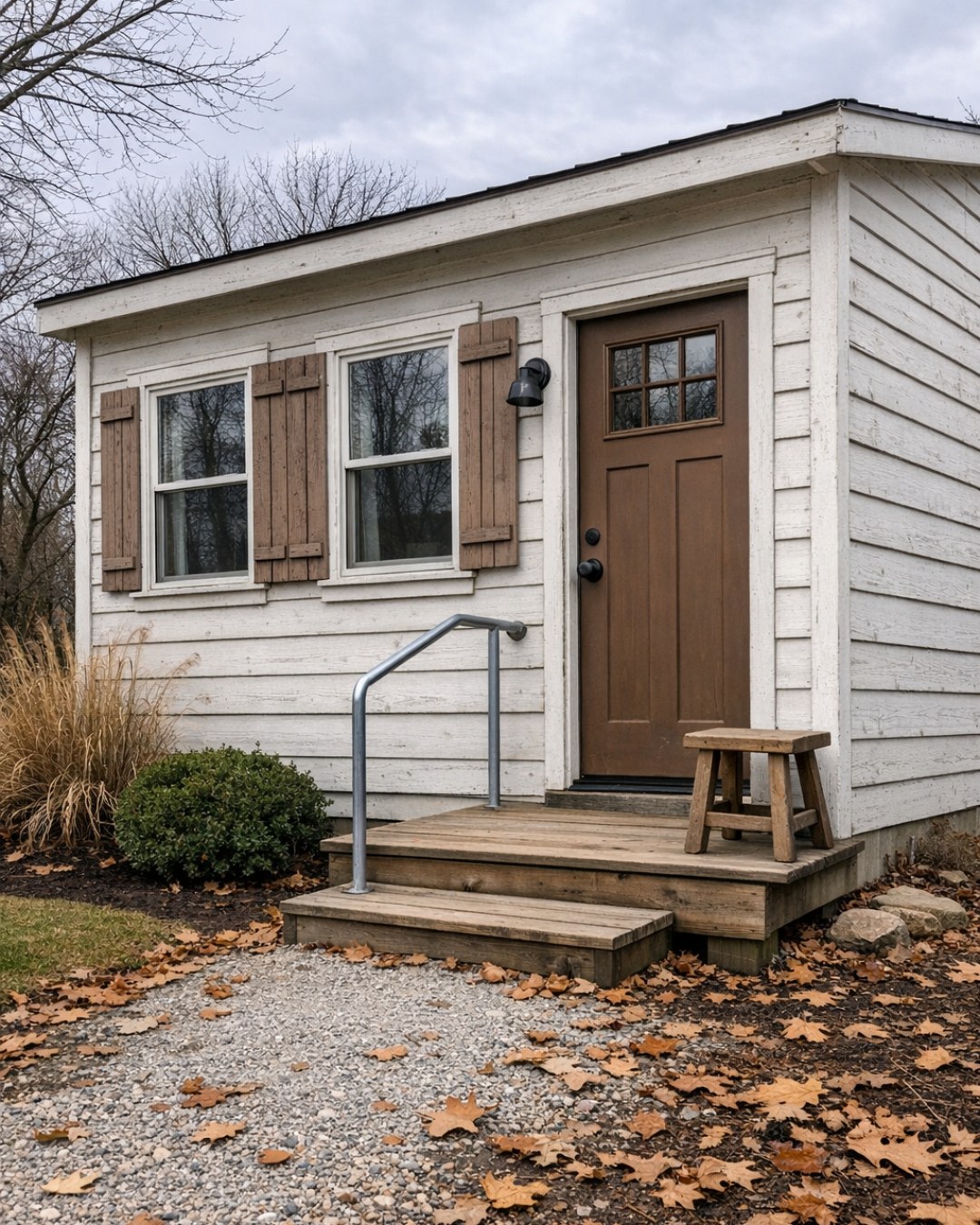
The exterior leans into restraint, and I think that is its strength. The faded white cladding has a chalky, sun-softened look, paired with simple trim and a front door that feels sturdy rather than decorative. A few black metal details—house numbers, a wall lantern, the hinges at the entry—give the façade definition without breaking its easy rhythm. The proportions are humble, but they are balanced beautifully, with windows placed to draw in light and frame the surrounding view.
There is a plainspoken grace to the way the home sits on its site, the sort of grace I associate with old outbuildings, summer kitchens, and little prairie cottages that were built to endure. A gravel path, a small stoop, and a pair of planters filled with herbs or grasses would be enough here; anything more would feel like overworking it. What I like most is that the exterior doesn’t reveal the whole story at once. It invites you in quietly, and then lets the interior do the talking.
Living Room
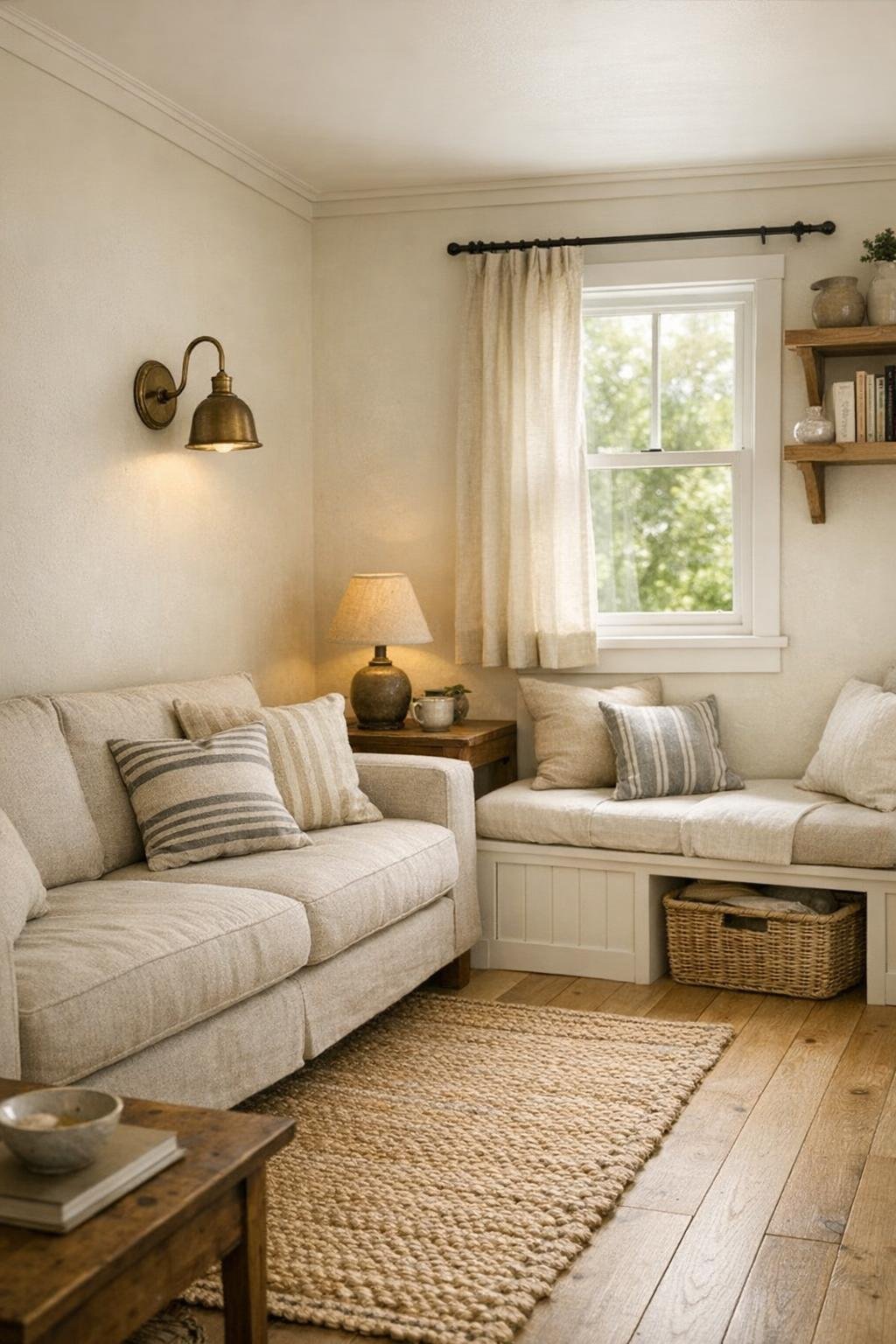
The living room is compact, but it never feels pinched. A small linen sofa in oatmeal sits beneath the main window, dressed with soft striped pillows in flax, faded blue, and warm rust. Across from it, a built-in bench doubles as storage, the sort of sensible feature I’ve always admired in smaller homes. Pale oak floorboards run the length of the room and bounce light upward, while a natural fiber rug anchors the seating area without closing it in.
What gives this room its soul is the layering. A slim wall sconce in aged brass casts a gentle evening glow, while a petite reading lamp by the chair adds another pool of light at eye level. There’s likely one open shelf with a few well-loved books, a crock or basket, and maybe a framed landscape that looks as though it came from a family attic rather than a showroom. The effect is calm and lived-in, with just enough texture from linen, wood grain, woven reeds, and matte plaster walls to make the room feel deeply welcoming.
Dining Room
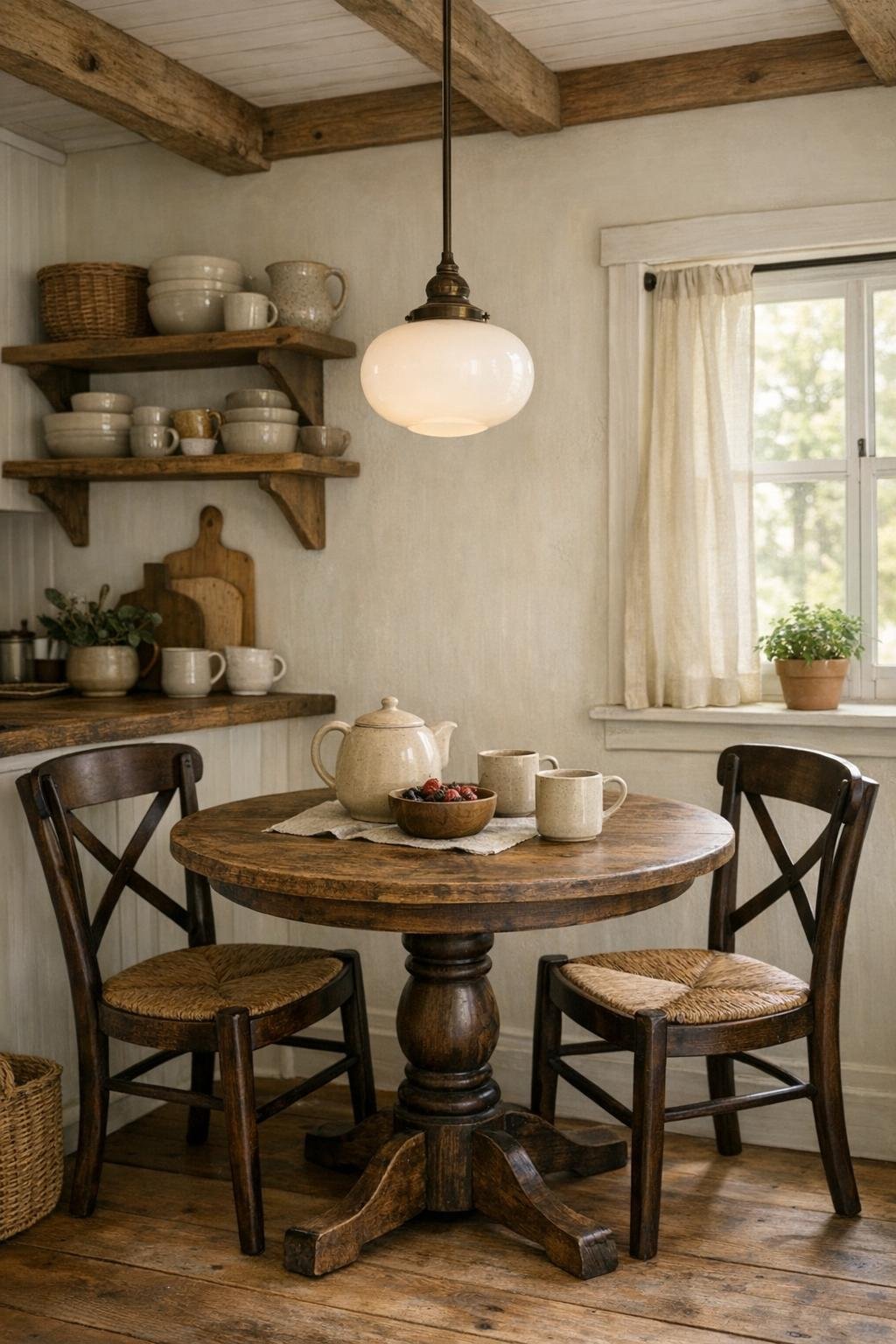
In a home this size, the dining area needs to earn its keep, and this one does so beautifully. Rather than a formal room, it feels like a natural extension of the living space, anchored by a small round pedestal table in rubbed wood. I can picture bentwood or ladder-back chairs tucked neatly around it, their dark finish giving a little contrast to the otherwise airy palette. Overhead, a simple pendant in enamel or opal glass would cast a clear, flattering light, making even an ordinary supper feel a touch special.
There’s something especially inviting about a dining nook that knows exactly what it is. The wall nearby might hold shallow shelving for stoneware bowls and everyday dishes, or perhaps a narrow ledge for a vase of field flowers and a candlestick or two. The finishes stay honest and unfussy—painted millwork, wood with visible grain, textiles in washed cotton or ticking stripe. It feels like the kind of place where coffee lingers in the morning and soup tastes better after sunset.
Kitchen
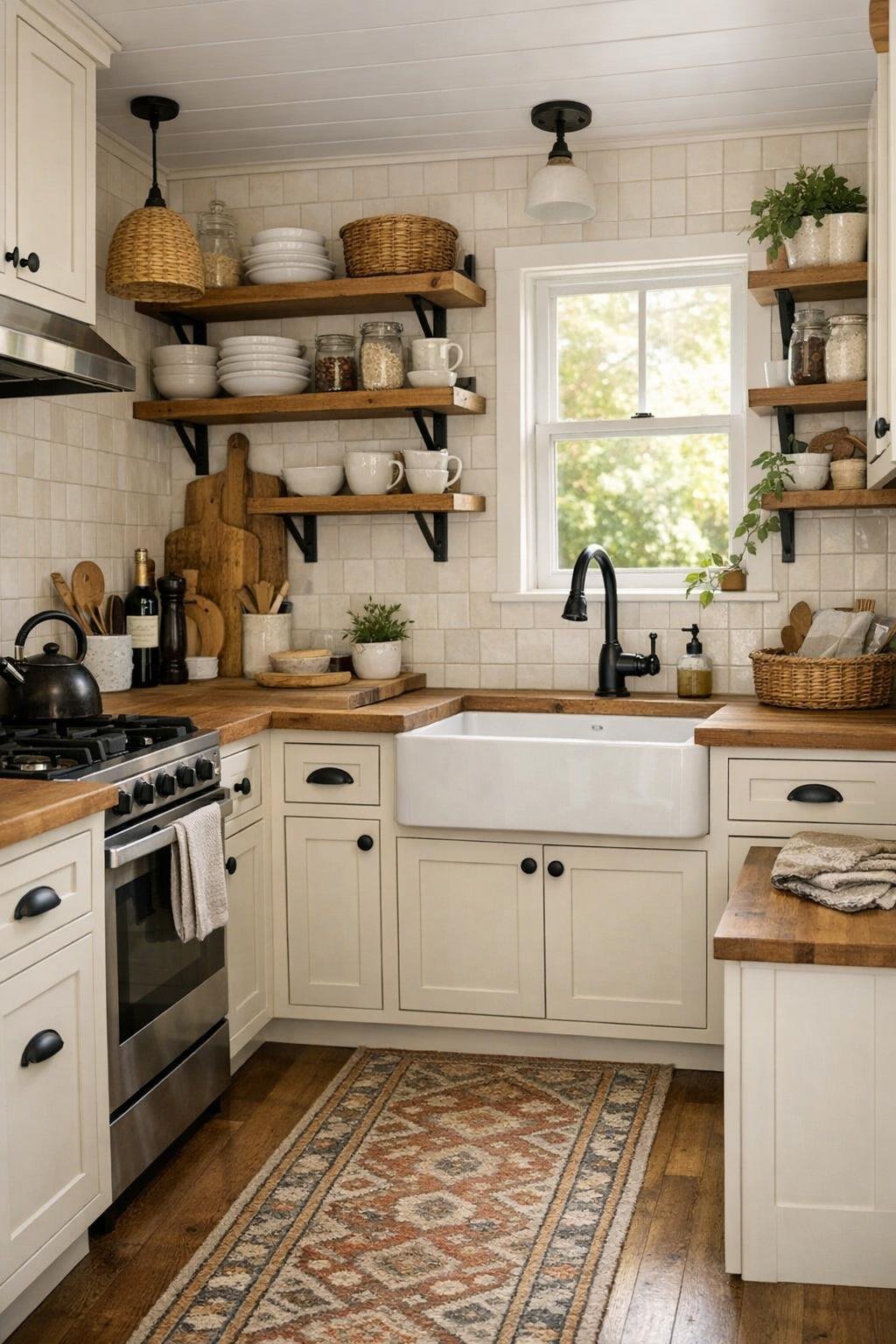
The kitchen is where this little home truly wins me over. It has the kind of sensible beauty I admire most: creamy cabinetry, compact proportions, and every surface working hard without seeming crowded. Lower cabinets in a warm off-white are paired with open upper shelving in natural wood, keeping the room visually light. A butcher-block countertop brings in immediate warmth, and a white apron-front sink lends that old-fashioned note so many modern small kitchens miss.
I especially like the contrast between the practical details and the softness of the finishes. A narrow runner underfoot adds pattern, while matte black or oil-rubbed bronze hardware gives the cabinetry definition. The backsplash may be simple square tile in a warm white, catching daylight from a small window over the sink. It’s easy to imagine bread cooling here, a stockpot simmering, or a pie set out on the counter. The room may be tiny, but it carries the spirit of a hardworking country kitchen.
Bedroom
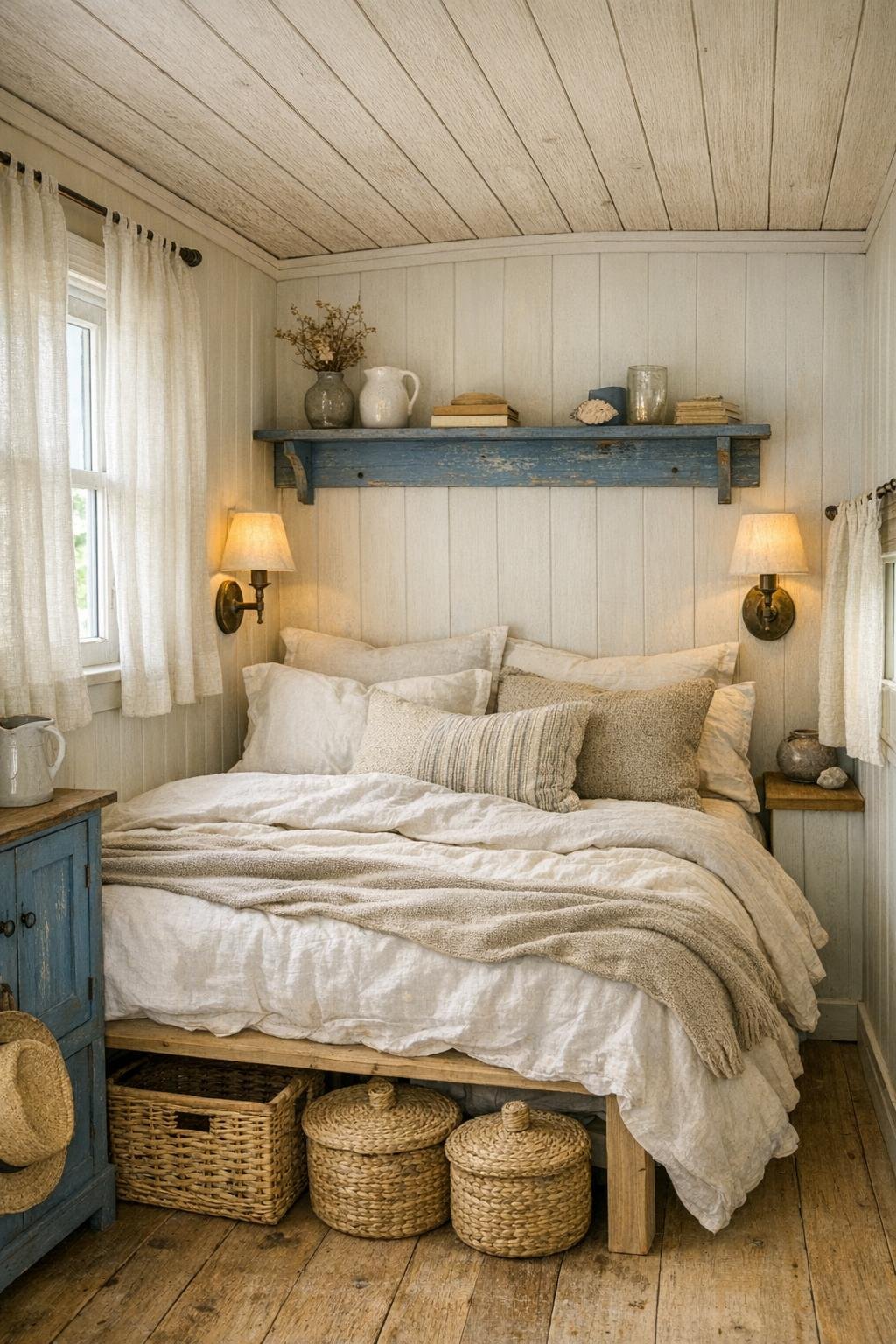
The bedroom carries the same restrained palette, but in a softer, quieter register. A neatly scaled bed with a simple upholstered or painted wood headboard sits dressed in layers of ivory, oatmeal, and weathered blue. Because space is precious, the room relies on vertical thinking: wall-mounted sconces instead of table lamps, a slim shelf in place of a bulky nightstand, drawers built beneath the bed, or cabinetry fitted tightly into the eaves if this is a lofted arrangement.
What I find most appealing is the sense of retreat it manages without excess. Linen curtains filter the daylight so the whole room takes on a milky glow, and the bedding has that slightly rumpled, deeply comfortable look that invites an afternoon nap. A small hook rail, a woven basket, and perhaps one framed botanical print are enough to finish the space. It feels restful in the truest sense—not sparse, but edited, with every object chosen for both usefulness and peace.
Bathroom
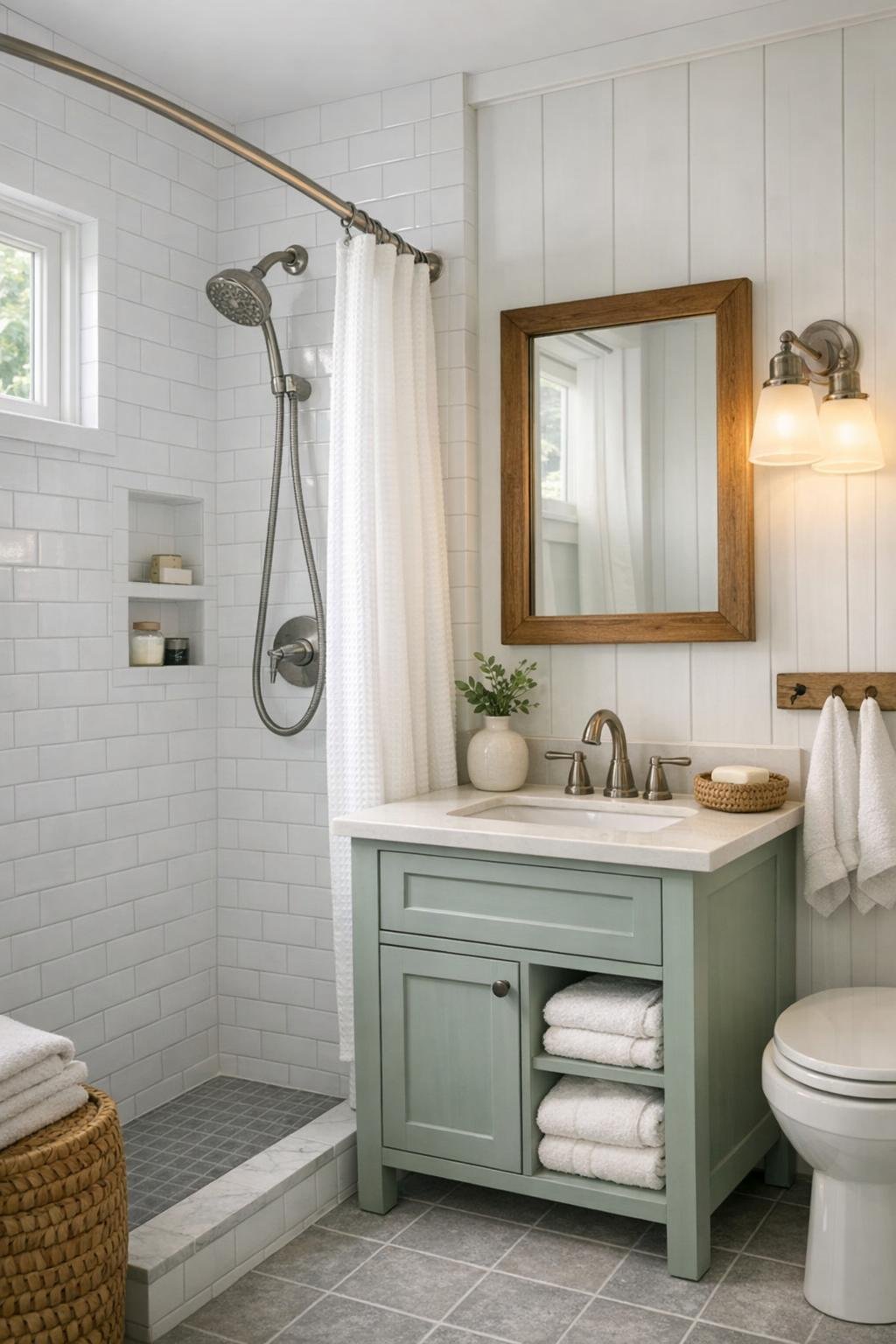
The bathroom is small, of course, but it doesn’t feel like an afterthought. It’s handled with the same care as the rest of the home, using materials that brighten and gently enlarge the space. I can see crisp white tile on the shower walls, perhaps paired with a penny tile or small-format floor in a softer gray or sand tone. A compact vanity in painted wood, topped with a simple stone or composite surface, keeps the look classic and tidy.
What makes it pleasant is the balance between freshness and warmth. A framed mirror with a thin wood or black metal edge, good sconces at face height, and soft cotton towels in cream or clay give the room a human touch. Even a tiny bathroom feels generous when it has proper light, a place to set down one’s things, and finishes that speak quietly to the rest of the house. Here, the result is clean, bright, and entirely in keeping with the home’s easy rural character.
Other Areas
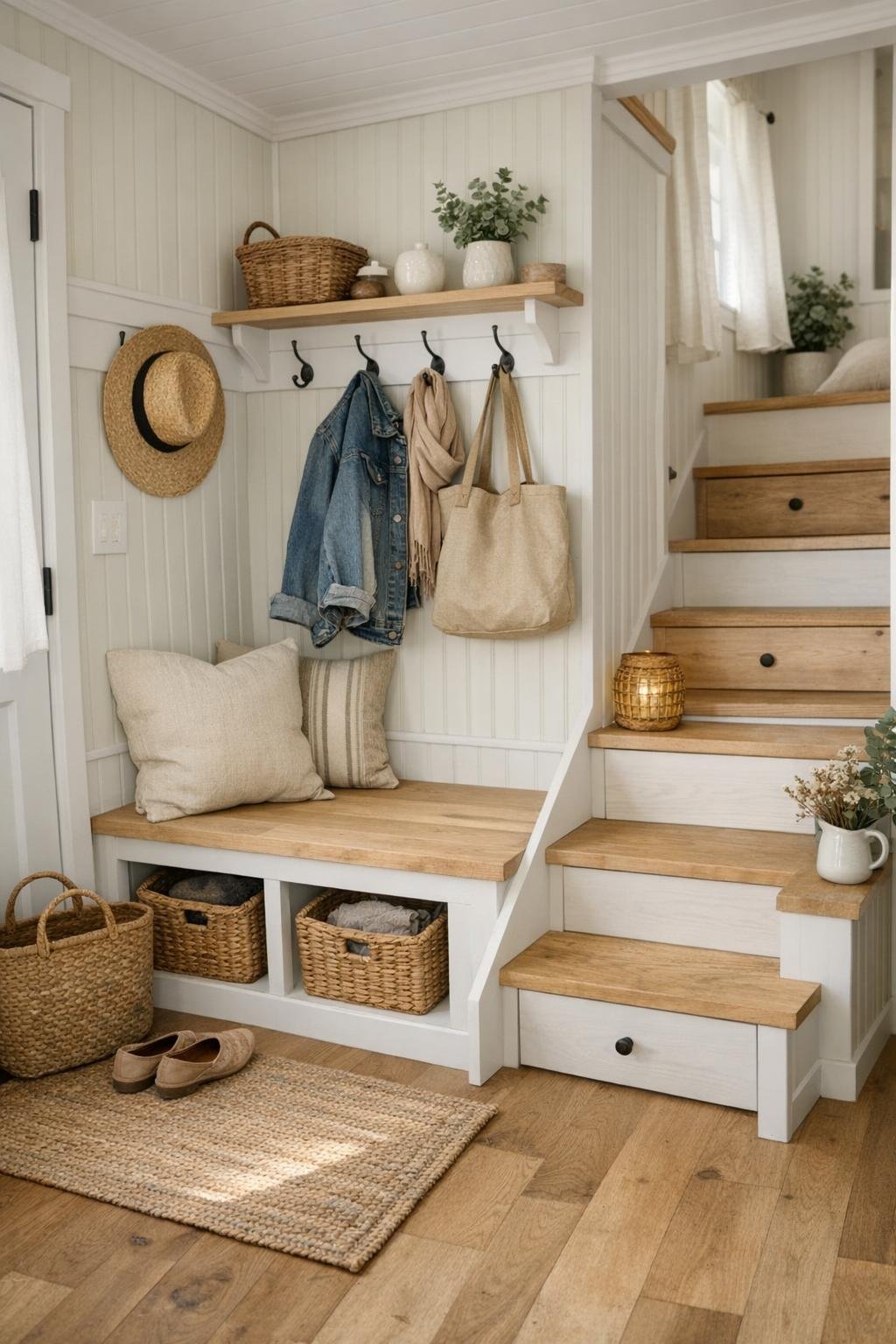
In a tiny home, the in-between spaces matter just as much as the main rooms, and this design seems to understand that. The entry likely includes a hardworking strip of hooks, a narrow shelf for keys or gardening shears, and a bench where boots can be slipped off without fuss. If there is a loft ladder or compact staircase, I’d expect it to be built with intention—painted or stained to match the millwork, with hidden drawers or cubbies tucked below. These are the kinds of details that make a small house feel not merely manageable, but graceful.
Even the circulation appears softened by good design. A short hall can become a gallery wall for simple art, a window nook can turn into a reading perch, and an awkward corner can hold baskets, folded quilts, or pantry overflow. I’m especially fond of homes that leave room for ordinary life to be visible in a handsome way. Here, utility is never disguised, only refined, and that gives the whole place a settled, deeply livable feeling.
Why You'd Live Here
You’d live here because it understands something many larger homes forget: comfort doesn’t come from square footage alone. It comes from proportion, light, texture, and the quiet pleasure of things made well and used every day. This tiny home offers all of that in a package that feels grounded, unpretentious, and beautifully calm. Nothing is wasteful, and yet nothing feels deprived.
For me, its appeal is deeply familiar. It reminds me of the best country kitchens, the handiest mudrooms, the spare bedrooms with fresh curtains and cool sheets, and the small family houses where every corner had a purpose. This home takes that old wisdom and gives it a cleaner, lighter expression for modern life. You may first notice the faded white exterior, but it’s the warmth within that would make you stay.