
I almost dismissed this park model RV as just another compact getaway, but the moment I slowed down and really took in its quiet good looks, I could tell there was more going on here. The exterior has that sweet spot I always love in a home: simple lines, welcoming proportions, and just enough polish to feel thoughtful without becoming fussy. Set against a peaceful natural backdrop, it carries an easy, unhurried mood that makes you imagine early coffee on the porch and family dinners that stretch a little longer than planned.
Inside, this concept design feels remarkably cared for, the way a well-run kitchen does before guests arrive—everything in its place, nothing wasted, and plenty of warmth. What makes it special is how it balances the practical needs of everyday living with the kind of texture, light, and comfort that make a smaller home feel generous. I found myself drawn to the way each space seems to work hard while still feeling soft around the edges, which, as any parent who cooks and gathers people often can tell you, is no small thing.
Exterior
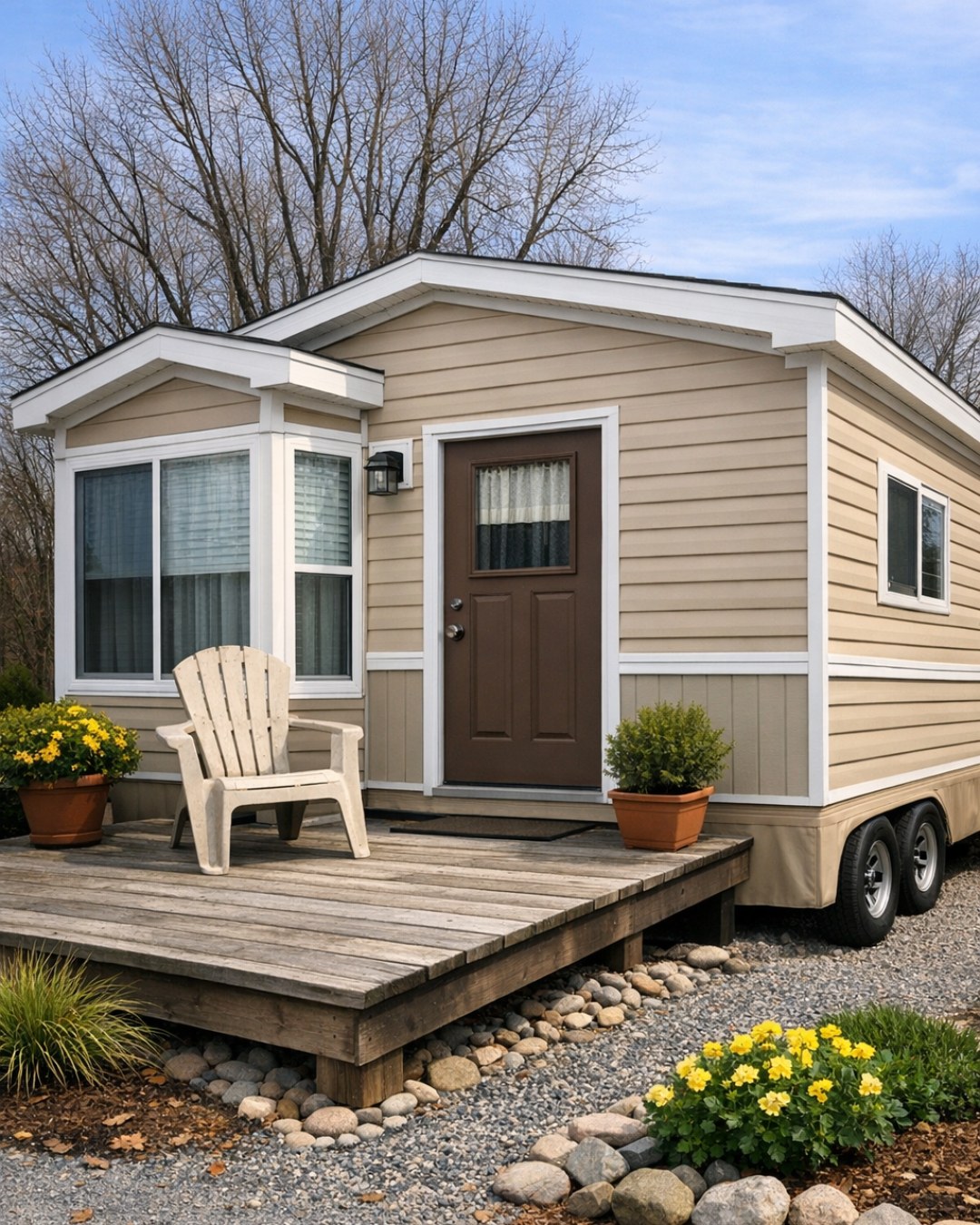
From the outside, this park model RV leans into a clean, cottage-meets-modern character that feels approachable rather than overly styled. The siding appears in a soft neutral tone—something in the family of warm white, pale greige, or light taupe—with crisp trim that gives the structure definition without harsh contrast. Large windows are placed carefully to pull in natural light, and that alone changes the whole personality of the home; instead of feeling closed up or temporary, it feels open, settled, and ready to be lived in. I especially like when smaller homes avoid unnecessary ornament and let proportion, texture, and light do the talking, and that seems to be the case here.
There is also a sense of outdoor living being taken seriously, which matters so much in a home of this scale. A modest deck or entry porch would make all the difference, creating that little pause between outdoors and indoors where muddy shoes, grocery bags, and sleepy kids can all be managed with grace. The overall effect is tidy and welcoming, with a style that suggests weekend retreat and full-time comfort at once. It has the kind of exterior that invites you in without trying too hard, and honestly, that’s often what ages best.
Living Room
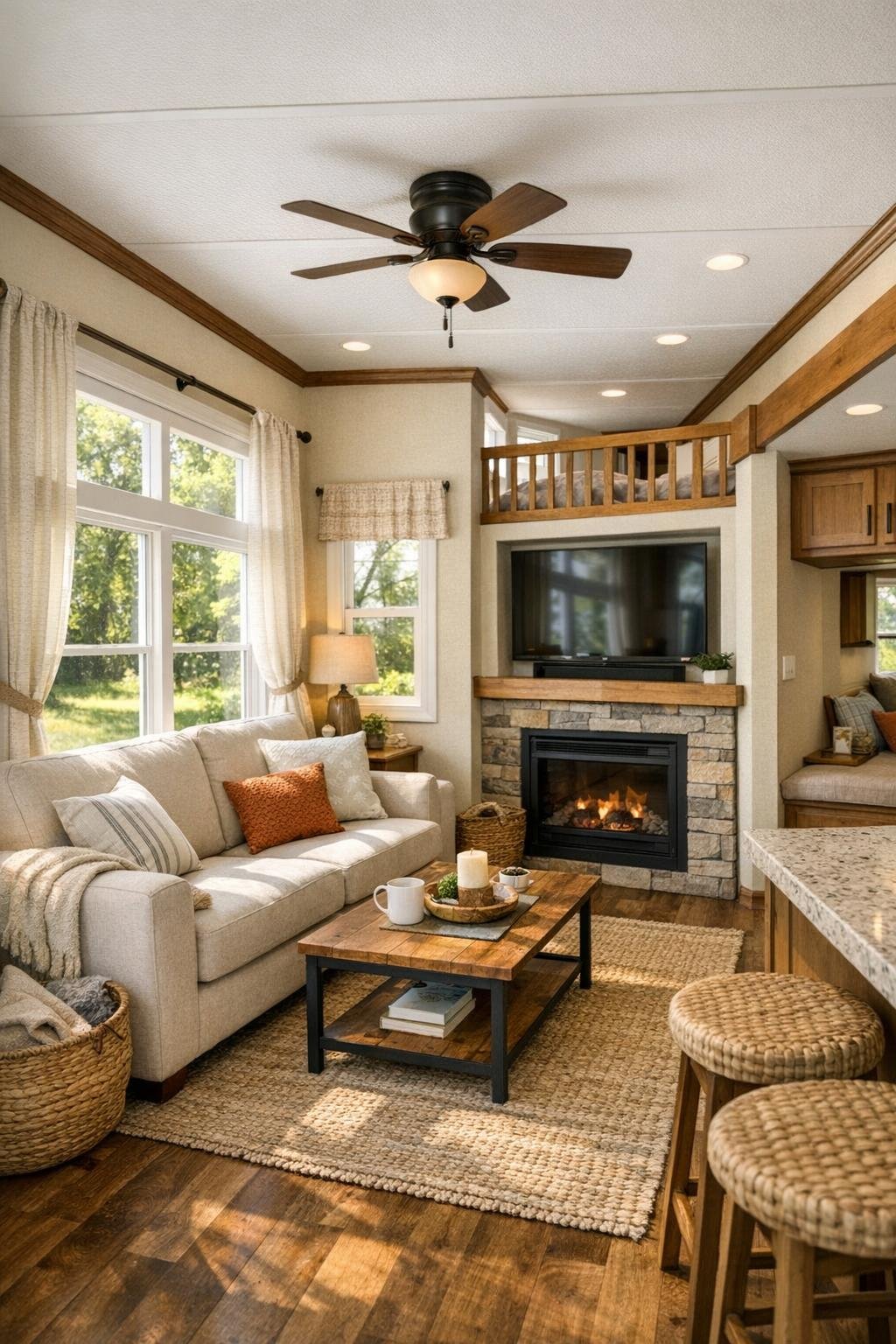
The living room is where this home really begins to charm, and I can picture it immediately as the place where everyone naturally lands at the end of the day. The palette stays light and calming—creamy walls, warm wood tones, and upholstery in oatmeal, sand, or soft gray—so the room feels airy instead of crowded. In a compact footprint, that matters. A comfortable sofa with clean lines likely anchors the space, layered with textured throws and a few sturdy pillows that can handle real life. I’d expect a woven rug underfoot to soften the room and add just enough pattern to keep the neutrals from feeling flat.
What I appreciate most is the way the layout likely respects how families actually use a room like this. The seating seems arranged for conversation as much as TV watching, with a compact coffee table or nesting tables that can handle board games, cocoa mugs, or a simple snack plate after dinner. Lighting would be crucial here, and I imagine a mix of daylight from generous windows, a warm overhead fixture, and perhaps a small lamp tucked onto a side table to keep the evening mood cozy. It feels like a room designed to hold both busy mornings and slow nights, which is exactly what I want in a main living space.
Dining Room
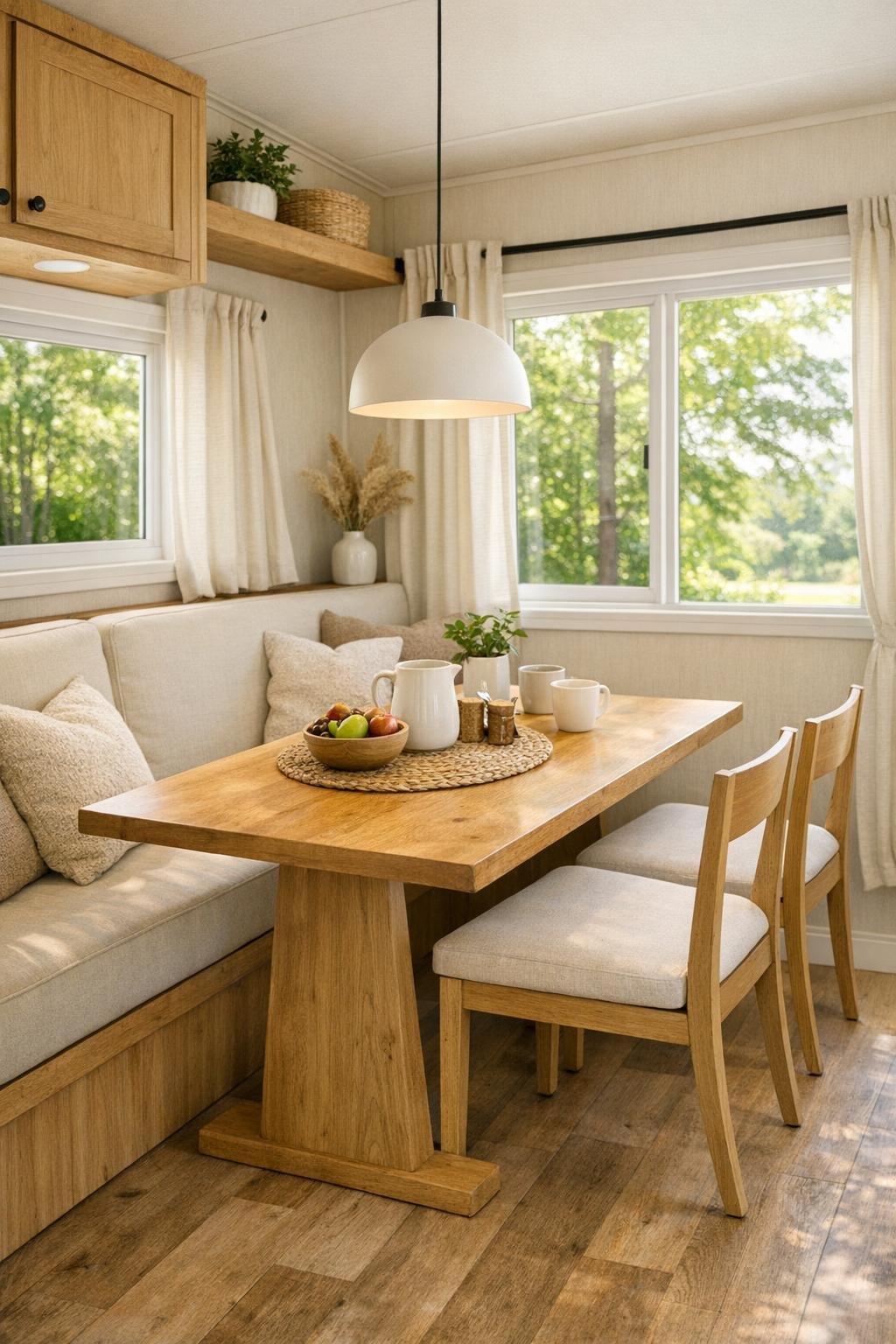
The dining area looks like it has been planned with real meals in mind, not just staged for appearance, and that makes me immediately trust the design. In a home like this, the dining room often blends into the kitchen or living space, so every choice has to carry its weight. I imagine a compact wood table with a matte finish that hides wear beautifully, paired with slim-profile chairs or even a built-in banquette to save space. If there’s a bench, even better—that always feels welcoming to me, especially for families, because it’s flexible and easy for squeezing in one more person at supper.
Design-wise, I’d keep my eye on the textures here: wood grain, linen seat cushions, a ceramic bowl as a centerpiece, maybe a pendant light overhead that brings shape without visual heaviness. The best small dining spaces feel intimate rather than cramped, and this one seems to understand that. It likely has enough breathing room to set down a casserole dish, a salad bowl, and maybe a little plate of bread without everyone feeling elbow-to-elbow. For picky eaters or kids who like a familiar routine, a dining nook like this also has a comforting, everyday sweetness that can make mealtime feel special without any extra fuss.
Kitchen
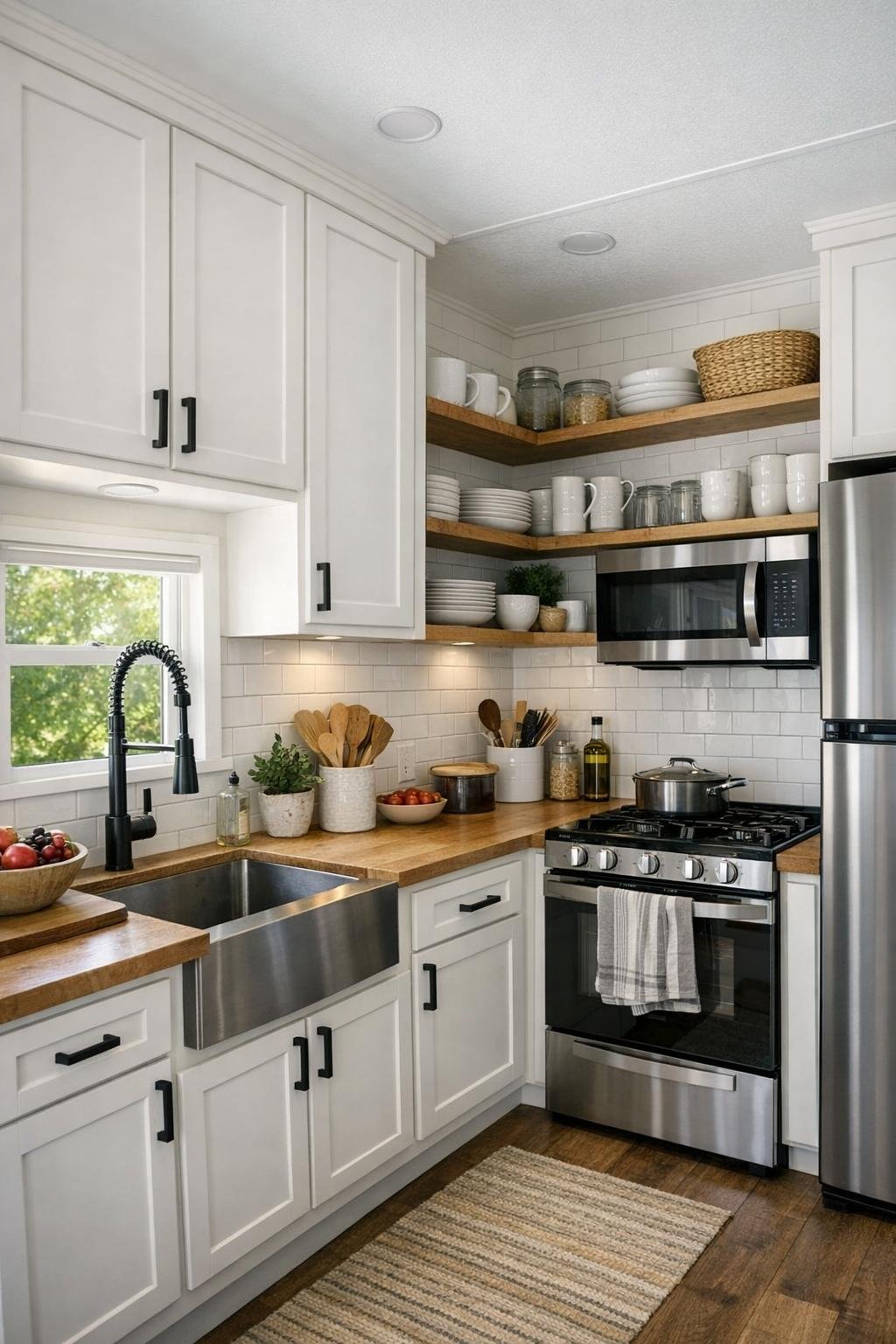
The kitchen is the space I always judge hardest, and this one wins me over by looking both pretty and practical. Even in a smaller footprint, it seems to deliver the essentials with intention: efficient cabinetry, durable counters, and enough workspace to make an actual meal instead of just reheating one. I imagine shaker-style cabinets in a soft white or mushroom tone, paired with butcher block or lightly veined quartz counters that keep the room feeling warm and bright. A simple tile backsplash would bring in that easy-clean functionality every busy cook appreciates, especially after a spaghetti night or a pancake breakfast that somehow uses every bowl in the house.
What really makes a kitchen like this shine is smart storage and good flow. If there are open shelves, I hope they’re used sparingly—for everyday dishes, maybe a few mixing bowls, not clutter—because in a compact home, visual calm matters almost as much as square footage. I can picture under-cabinet lighting, a deep sink, and appliances scaled to the home without making the room feel compromised. This is the kind of kitchen where I’d happily make soup on a cold afternoon, set out toppings so everyone can customize their bowl, and still have the space feel peaceful afterward. That combination of usefulness and charm is hard to fake.
Bedroom
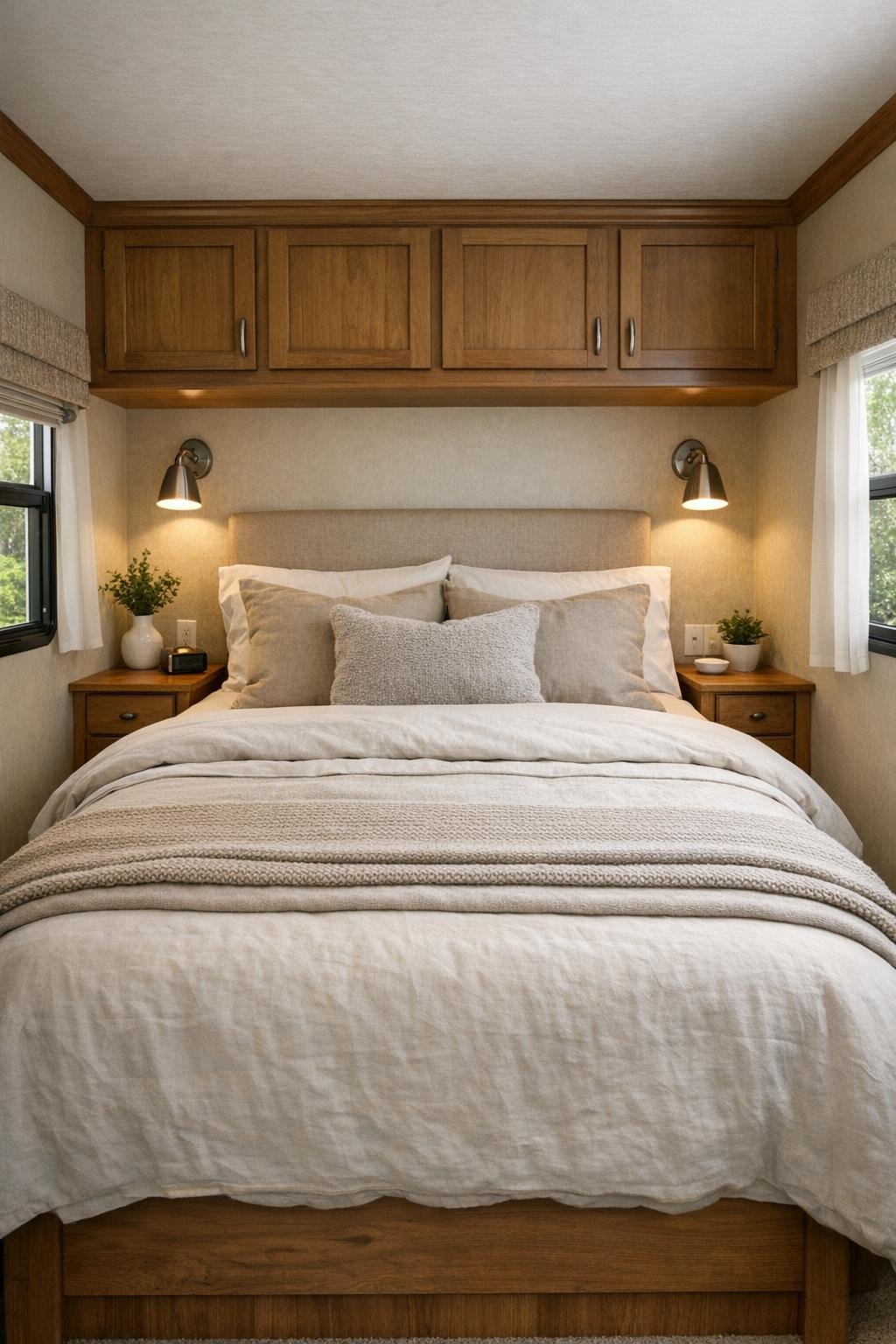
The bedroom carries the same gentle restraint as the rest of the home, which is exactly the right choice. In small homes, bedrooms can either feel tucked away and calming or tight and forgotten, and this one clearly aims for calm. I imagine soft wall colors, warm wood trim, and bedding layered in breathable neutrals—ivory, flax, dusty taupe, maybe a muted blue-gray for a little depth. There’s probably not room for excess furniture, but that actually helps the space feel more restful. A well-proportioned bed, compact nightstands, and thoughtfully placed reading lights would be more than enough.
What I love most in a bedroom like this is when storage is integrated quietly, so the room can stay serene. Built-in cabinetry, drawers under the bed, or a slim wardrobe would all make sense here, letting the eye rest instead of bouncing from object to object. Natural light during the day and soft bedside lighting at night would give the room two different personalities: fresh in the morning, cocooning by evening. It feels like the sort of bedroom where you could finally exhale, fold a quilt at the foot of the bed, and feel grateful for a home that doesn’t ask for more than it needs.
Bathroom
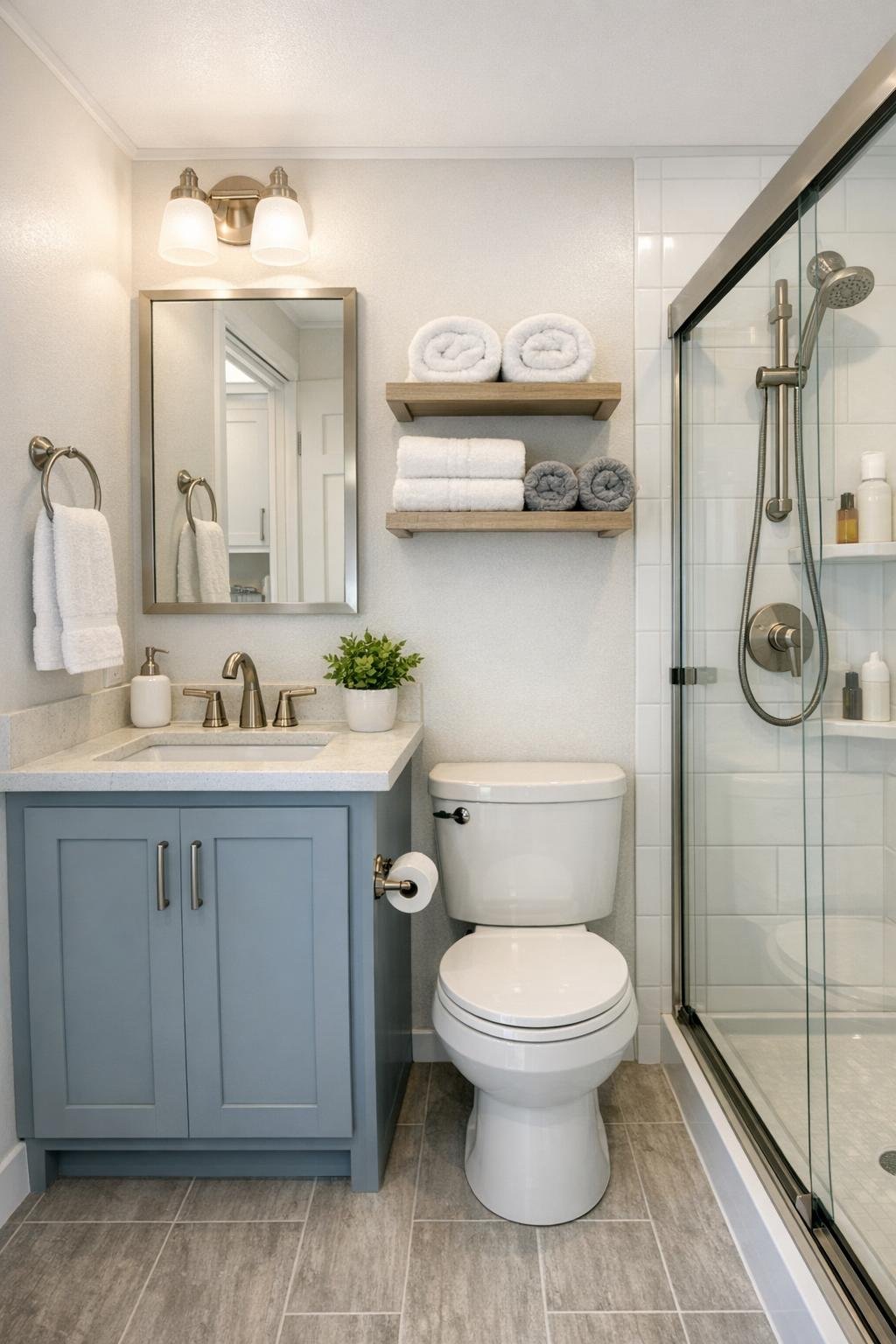
The bathroom looks like it understands the assignment: keep it bright, keep it clean-lined, and make every surface count. I picture a compact vanity in a painted wood finish, perhaps in warm white or sage-gray, topped with a durable counter and paired with polished chrome, matte black, or brushed nickel fixtures. A good mirror would bounce light around and help expand the room visually, while tile—whether on the floor, in the shower, or both—would bring the kind of structure and freshness that always makes a bathroom feel more substantial.
Texture becomes especially important in a smaller bath, and I imagine thoughtful contrast here: smooth ceramic tile, a woven basket for towels, crisp cotton, maybe a shower curtain or glass enclosure that keeps the room feeling open. If there’s a niche in the shower or built-in shelving above the toilet, even better—that’s the kind of practical detail that keeps countertops from turning chaotic. To me, the best bathrooms are the ones that make ordinary routines feel easier, and this one seems designed to do just that, with a quiet, tidy charm that would hold up beautifully to everyday family use.
Other Areas
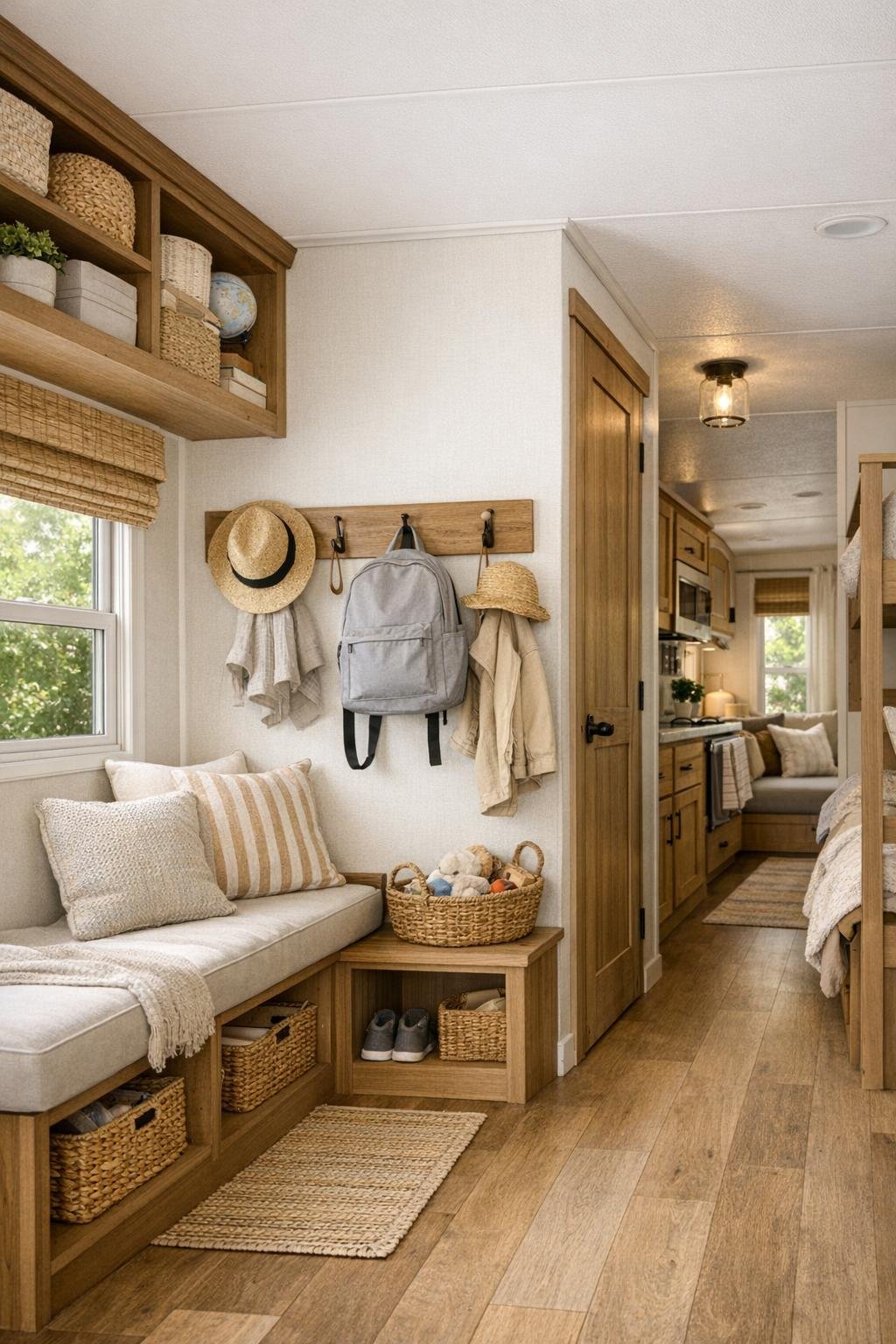
What often sets a well-designed park model apart is everything happening in the in-between spaces, and I suspect that’s true here too. Hallways, entry corners, lofts, built-ins, and multipurpose nooks are where a home either becomes wonderfully livable or frustratingly cramped. This design seems to treat those areas with real respect. I can easily imagine hooks by the door, a slim bench for shoes, overhead storage, or a small loft that could become a reading retreat, guest sleeping space, or the kind of hideaway kids instantly claim as their own.
Even the circulation likely feels considered, with enough openness to move comfortably and enough built-in function to avoid clutter collecting in plain sight. A little desk nook, stacked laundry, extra cabinetry, or window seating would all fit naturally into this style of home and make daily routines smoother. Those are the details I always notice because they support family life in such a practical way. When a compact home gives you places to tuck backpacks, fold linens, or sit with a cup of tea while dinner simmers, it starts to feel not just attractive, but deeply useful.
Why You'd Live Here
You’d live here because it proves that small-scale living does not have to feel like a compromise. This home offers warmth, order, and genuine beauty in the places that matter most, and it does so without wasting space or overcomplicating the design. I can see the appeal for anyone craving a simpler rhythm—less to manage, more to enjoy, and rooms that invite you to settle in rather than constantly keep up.
More than that, you’d live here because it feels like a home made for real life: meals cooked often, blankets pulled over sleepy legs, muddy shoes by the door, and everyday routines softened by good design. It has the kind of welcoming personality that makes people linger in the kitchen and drift back for one more cup of coffee. And to me, that’s always the test—whether a place can be lovely to look at and still support the people inside it. This one absolutely can.