
From the outside, this tiny home keeps its voice low. The faded gray cladding, simple roofline, and modest footprint let it slip quietly into its setting, and that restraint is exactly what drew me in. Set against what feels like a calm edge-of-town landscape, it has the kind of presence I associate with good pantry cooking: nothing flashy at first glance, but every element considered, balanced, and working harder than you expect.
Inside, the whole composition opens up with warmth, efficiency, and a surprising sense of ease. This is a concept design, but it is imagined with enough practical intelligence that I can almost smell coffee brewing in the morning. What makes it special is the contrast between the weathered, understated shell and an interior layered with pale wood, tactile finishes, smart storage, and light that moves beautifully from room to room.
Exterior
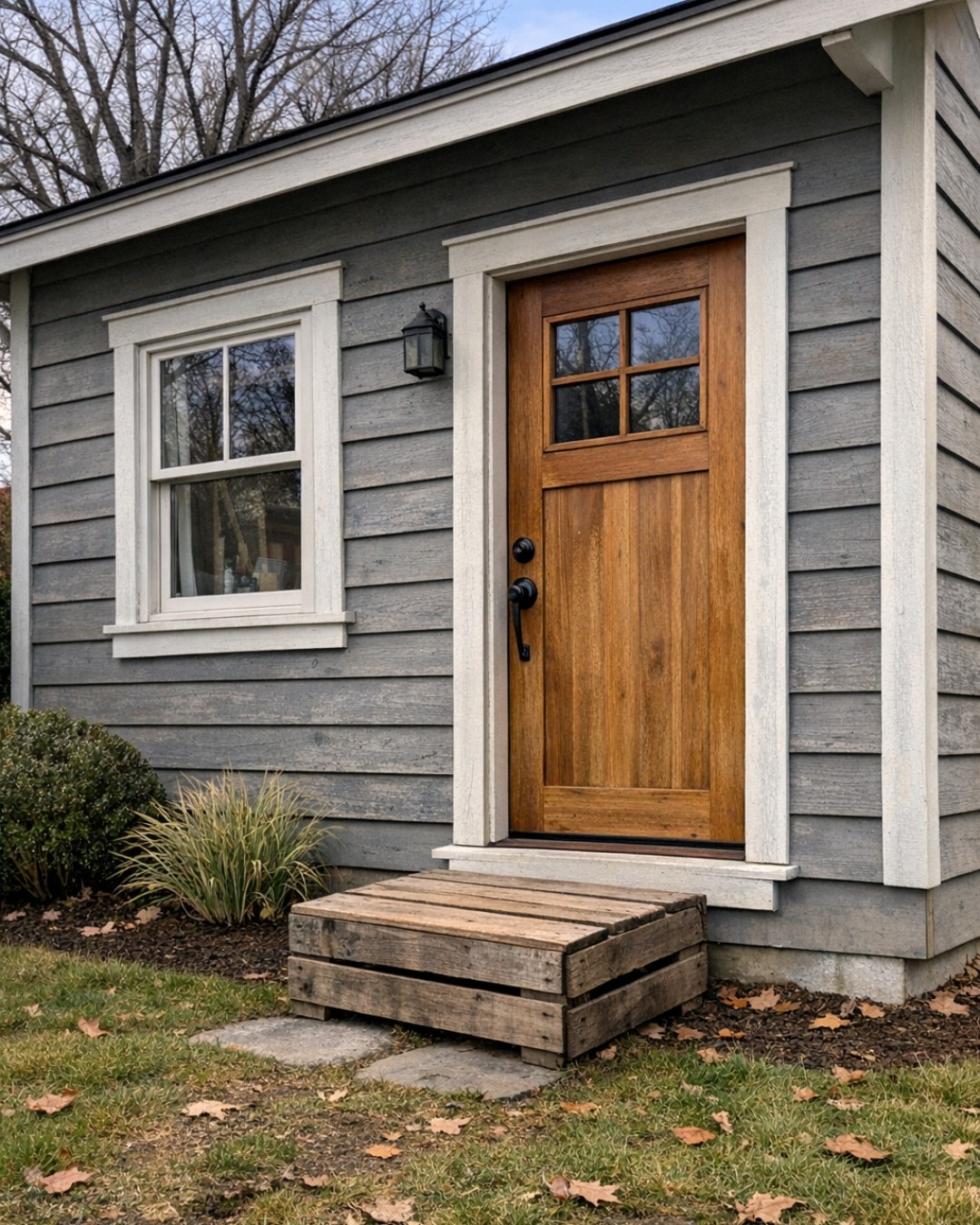
The exterior leans into a softened, timeworn palette that feels settled rather than neglected. Faded gray siding gives the home a gently washed look, and I like that it avoids the sharpness of a newly painted facade. Black-framed windows punctuate the envelope with a little definition, while the simple trim and compact proportions keep the architecture disciplined. There is no unnecessary ornament here, just a clean silhouette and materials chosen to age with grace.
What I find most effective is the tension between humility and intention. A small stoop, a warm wood front door, and restrained landscaping make the approach feel inviting without trying too hard. The scale is intimate, but not cramped, and the house reads as an edited object in the landscape. Like a well-seasoned cast-iron pan, it has character because it has been allowed to look useful, lived-in, and honest.
Living Room
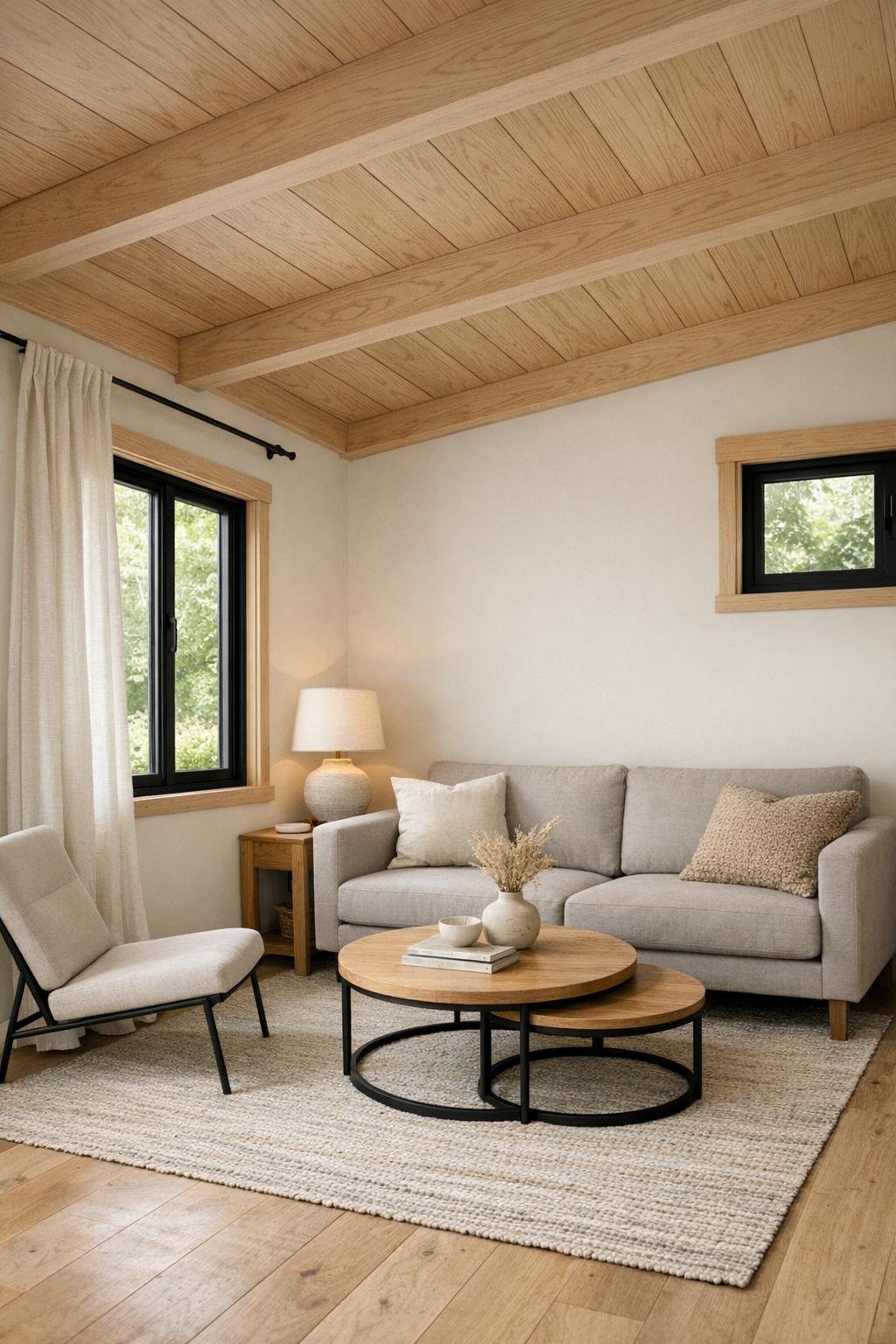
The living room is where the interior first makes its case. Pale oak surfaces brighten the small footprint, while creamy white walls and a soft greige sofa keep the palette quiet and expansive. I appreciate how the seating is scaled correctly for a tiny home: one deep, comfortable sofa, a slender lounge chair, and a nesting coffee table instead of anything bulky. A low media console doubles as storage, and open shelving is styled sparingly so the room feels breathable rather than busy.
Texture does much of the heavy lifting here. A flatwoven rug in oatmeal and charcoal adds pattern without visual clutter, linen drapery softens the window lines, and a matte ceramic lamp brings in a hand-finished note. The lighting appears layered and thoughtful, with daylight doing most of the work by day and warm sconces creating intimacy at night. The room feels calm, legible, and genuinely livable, which in a compact home is no small achievement.
Dining Room
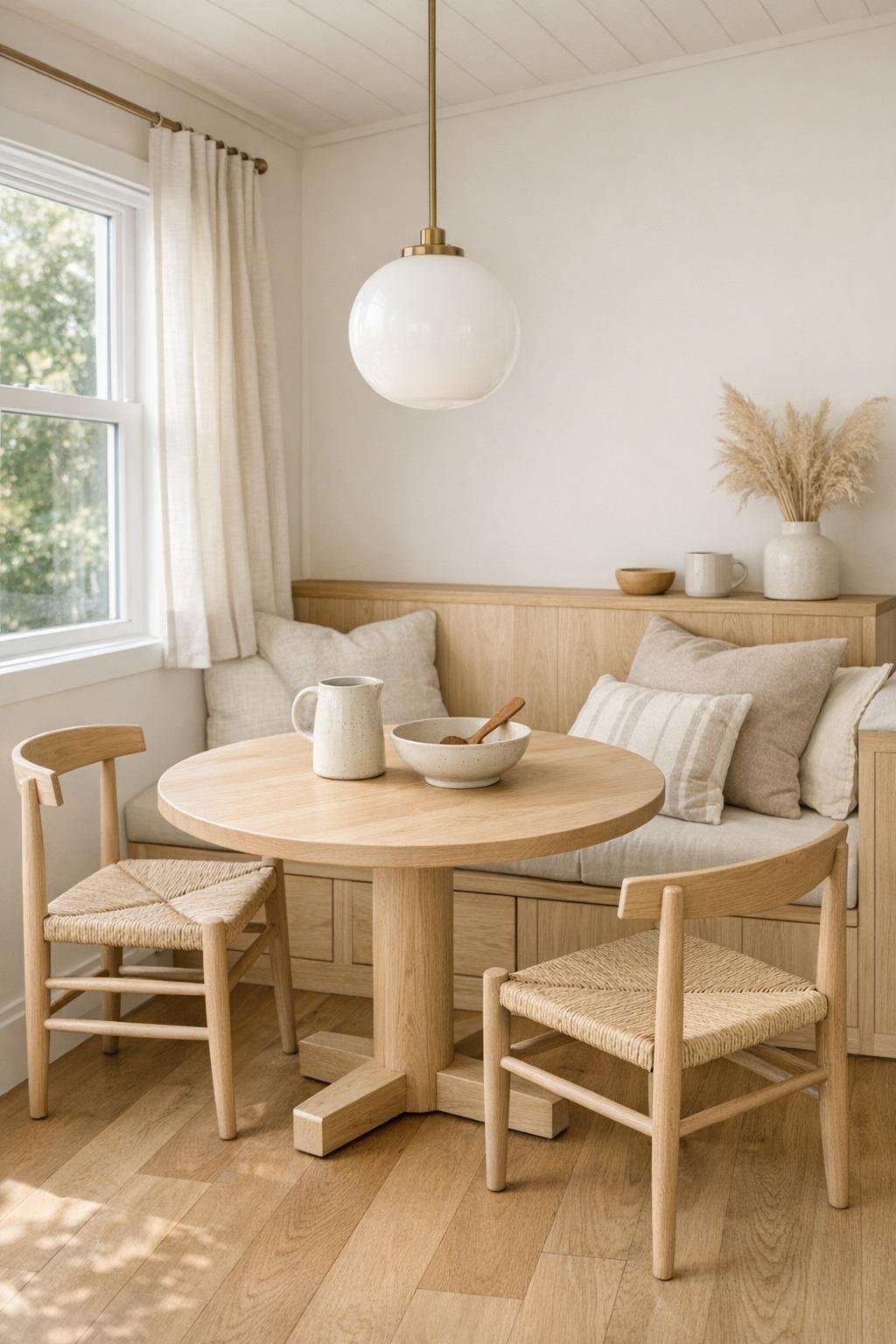
In a home this size, the dining area has to earn every inch, and this one does so elegantly. A compact round table in light wood keeps circulation fluid, and I think that choice matters; sharp corners in a small plan can make a room feel far more crowded than it is. Two to four simple chairs with woven seats bring in texture and a slightly handcrafted quality, while a built-in bench along one wall adds hidden storage below.
The finishes tie neatly back to the rest of the home, so the dining zone feels integrated rather than carved out. A small pendant in opal glass drops just enough visual weight over the table, and the wall nearby is left mostly bare except for one framed print in muted tones. I can easily imagine weeknight noodles here, or a loaf of bread cooling on the table by the window. It is casual, efficient, and pleasantly unpretentious.
Kitchen
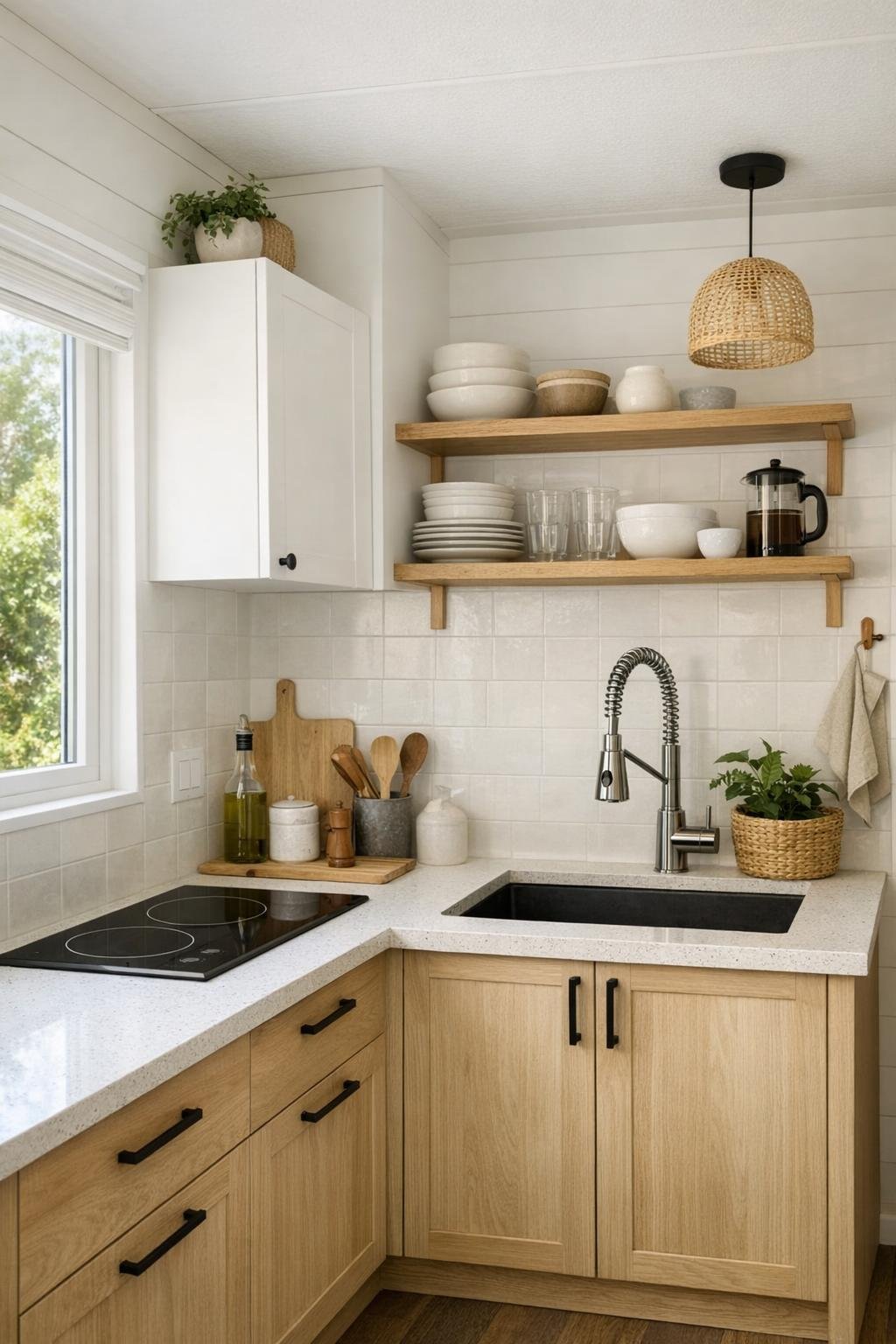
As an experienced cook, I tend to judge a small home by its kitchen first, and this one is impressively resolved. The layout appears galley-like but open enough to avoid that corridor feeling, with pale wood lower cabinets, warm white uppers or open shelves, and a light quartz countertop that reflects every bit of available light. The backsplash is kept simple, likely a handmade-look tile in a soft off-white, which adds surface interest without pulling focus. Everything seems placed with genuine cooking in mind: a sensible prep stretch, easy reach storage, and just enough display space for everyday ceramics.
The appliances are compact but integrated gracefully, and that makes a big difference. An induction cooktop, under-counter oven, narrow refrigerator, and deep single-bowl sink suggest efficiency without sacrifice. I especially like the small details I can imagine here: a rail for utensils, a magnetic knife strip, maybe a shelf for spices collected from different cuisines. The room feels disciplined, but not sterile; it has the welcoming order of a kitchen where someone actually knows how to cook.
Bedroom
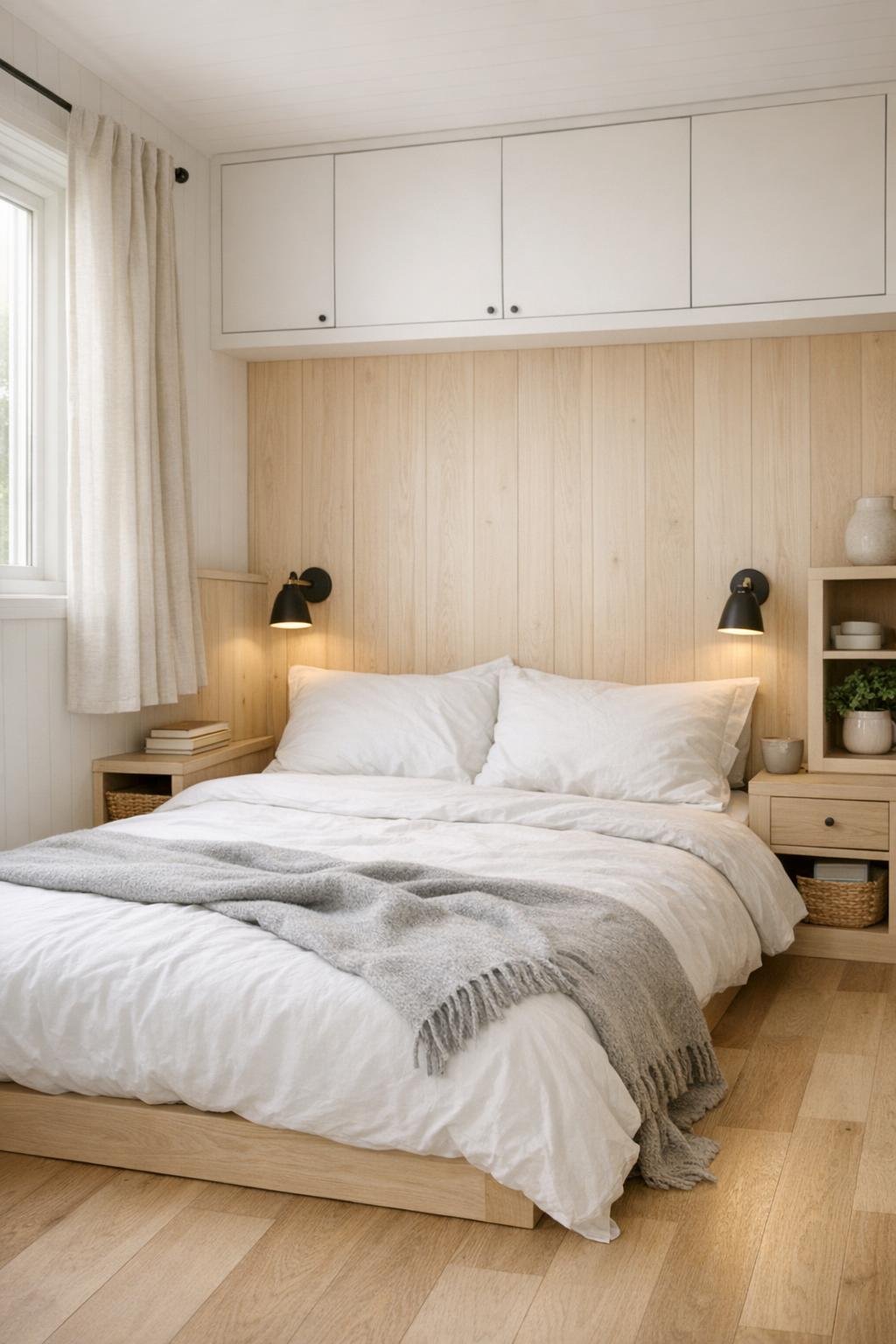
The bedroom is handled with the same quiet confidence as the main living spaces. Rather than trying to overfurnish it, the design keeps the focus on rest: a low platform bed, crisp white bedding, a wool throw in taupe or soft gray, and built-in night ledges instead of full bedside tables. Vertical wood paneling behind the bed gives the room a cocooning quality, and the limited palette helps the eye settle immediately.
Storage is tucked where it should be, likely under the bed and within a wall of millwork, so the room can remain visually calm. I would expect small reading sconces, blackout linen curtains, and one carefully chosen piece of art rather than an arrangement of many. In tiny homes, bedrooms can sometimes feel like afterthoughts, but this one feels composed and protected. It has the simplicity of a good guest room in a thoughtful inn, except more personal and more serene.
Bathroom
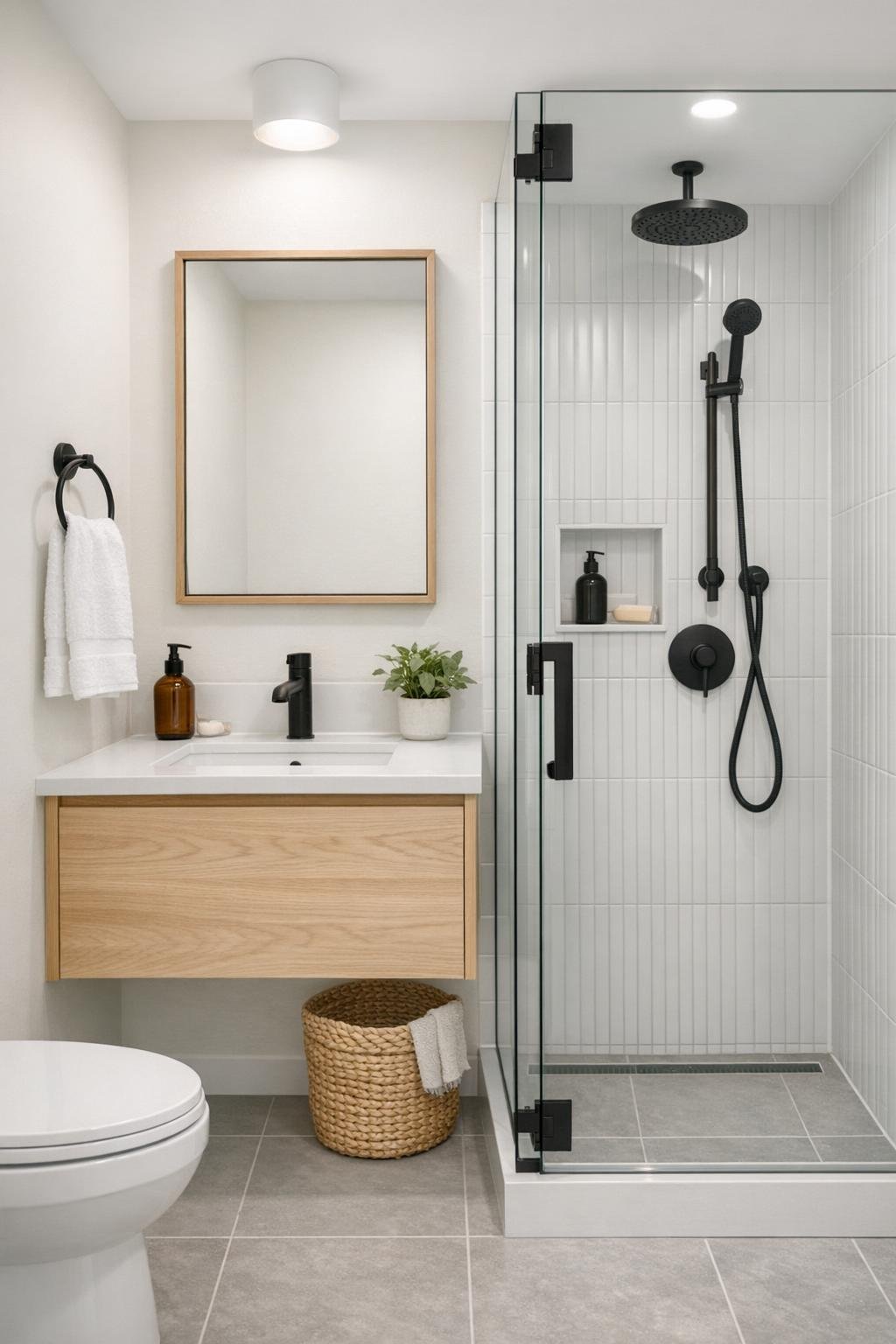
The bathroom continues the home’s disciplined material story, and that consistency is what makes the entire interior feel larger. A floating vanity in light oak keeps the floor visible, while a white countertop and integrated sink maintain clean lines. I can picture soft gray floor tile underfoot and vertically stacked ceramic wall tile in the shower, a combination that feels fresh, easy to maintain, and subtly tailored.
Even here, texture matters. A ribbed glass sconce, matte black fittings, and a simple framed mirror create contrast without harshness. If the room includes a walk-in shower with a clear glass partition, that would be especially smart in a tiny footprint because it preserves sightlines and light. The effect is practical but not plain, the kind of bathroom that would make a rushed morning feel a little more orderly.
Other Areas
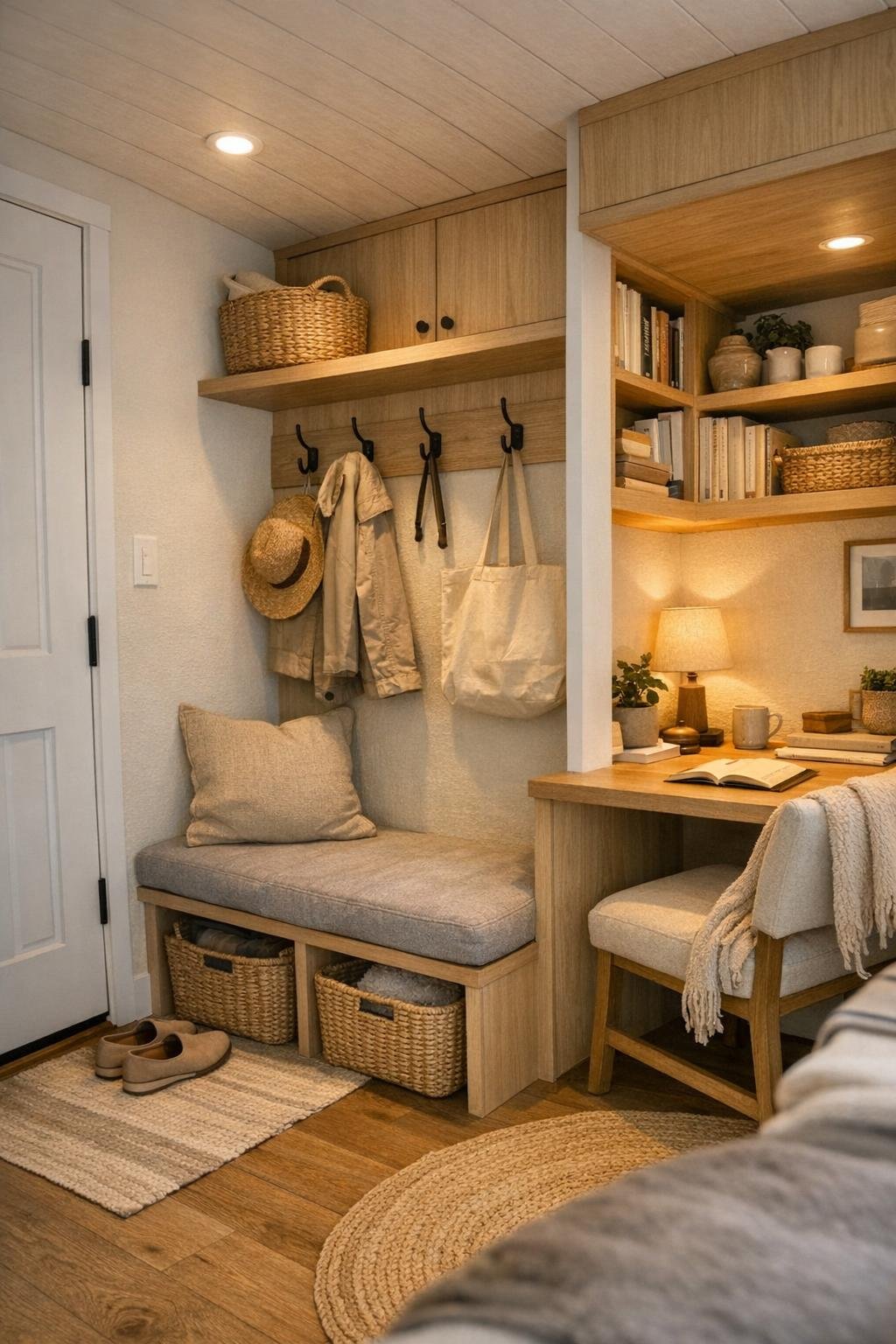
The supporting spaces are where this home shows real design maturity. A narrow entry zone likely includes wall hooks, a bench, and concealed storage for coats and shoes, preventing clutter from spilling into the main room. There may also be a compact loft, reading nook, or multipurpose built-in desk area, all handled in the same pale wood and soft neutral palette so the house reads as one continuous idea rather than a collection of squeezed-in functions.
I am especially fond of tiny homes that remember the value of transition spaces, however small, and this one seems to understand that instinctively. Even a short hallway, a stair with drawers, or a window seat can give the eye somewhere to pause. These in-between zones are treated with care through consistent millwork, understated hardware, and gentle lighting, which makes the whole home feel less like a compromise and more like a well-edited way of living.
Why You'd Live Here
You would live here because it proves small-scale design does not have to feel apologetic. The faded gray exterior sets modest expectations, then the interior answers with warmth, utility, and a level of finish that feels both thoughtful and believable. Every room has been edited carefully, with materials that are attractive but not precious, and with enough built-in intelligence to support daily life instead of merely photographing well.
I also think this home has something many larger houses lack: clarity. It knows what it is. It offers a quieter, more deliberate rhythm, where good light, honest materials, and sensible storage matter more than square footage. For anyone who values comfort, calm, and a kitchen that still respects the act of cooking, this tiny home makes a very convincing case.