
I’ve seen plenty of homes that ask for a second look, but this faded white converted bus has the kind of quiet charm that sneaks up on you. From the outside, it carries a plainspoken, work-worn honesty, the sort of look I’ve known all my life in the Midwest, where practical things are often the prettiest once you understand them. Set against an open, rural-feeling backdrop, this little home blends nostalgia, ingenuity, and a gentle hand with materials, creating a space that feels both rooted and surprisingly fresh.
What makes it special is the way it turns modest bones into something deeply comforting, a thoughtful concept design with the soul of a real lived-in retreat. Inside, the mood shifts from weathered and simple to warm and beautifully composed, with natural wood, soft textiles, and light-catching finishes doing the work of making every inch count. It’s compact, certainly, but never stingy; instead, it feels careful, calm, and full of the kind of common-sense beauty I always admire most.
Exterior
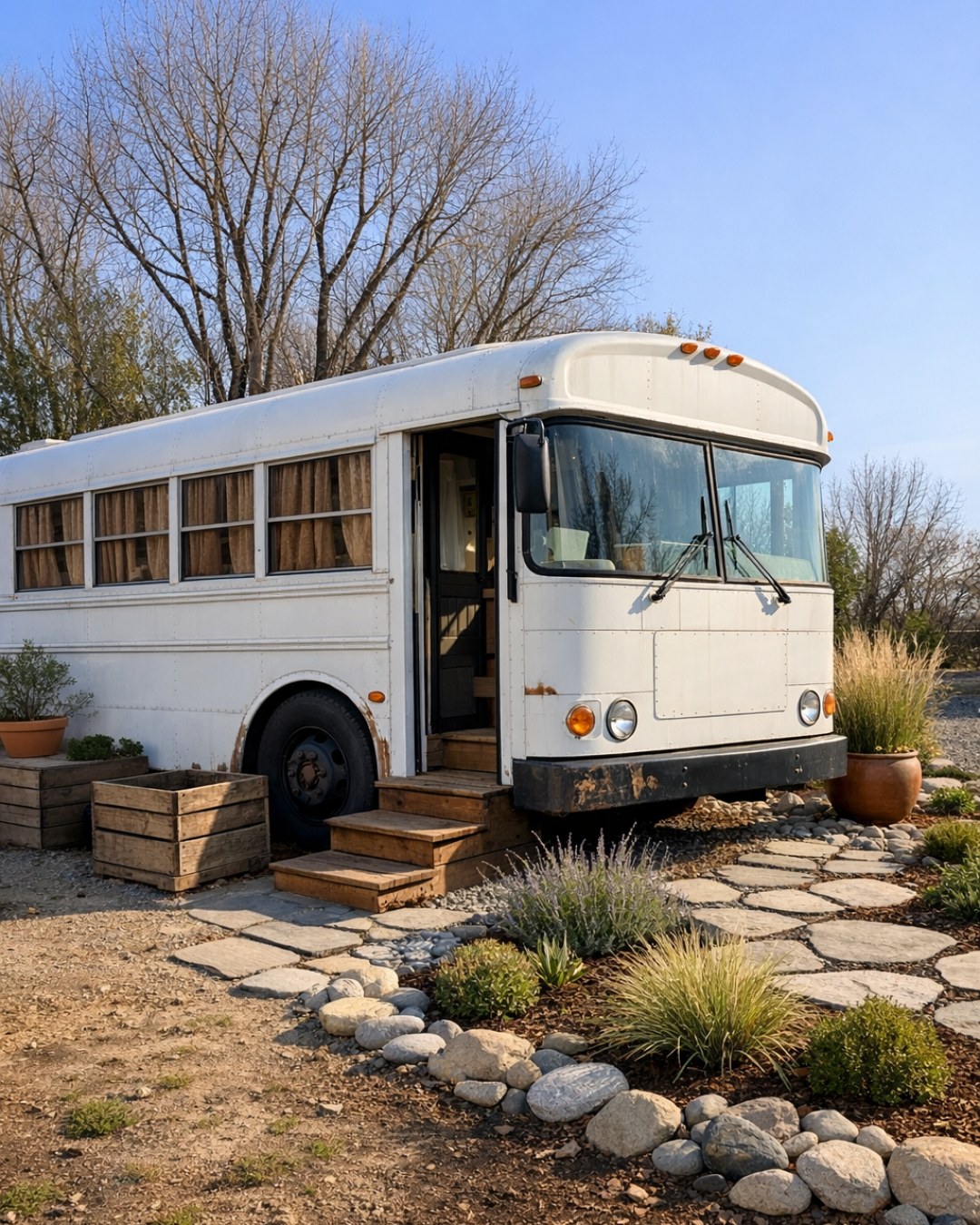
The exterior keeps much of the bus’s original character intact, and I think that restraint is exactly what gives it appeal. The faded white finish has a chalky, time-softened quality that feels honest rather than neglected, and the black window trim adds just enough definition to sharpen the silhouette. There’s a lovely balance between utility and welcome here: a simple entry stair, a modest awning, and perhaps a few potted herbs or galvanized planters near the door to soften the long, linear profile without pretending it’s anything other than what it is.
What I appreciate most is how the proportions guide the whole design language inside. Those ribbon windows promise light, the curved roofline hints at coziness, and the narrow footprint encourages a disciplined, uncluttered approach. It reminds me of old farm structures that were never built for show but still ended up beautiful because every part had a purpose. This bus has that same sensible grace, and it sets the tone beautifully for the rooms that follow.
Living Room
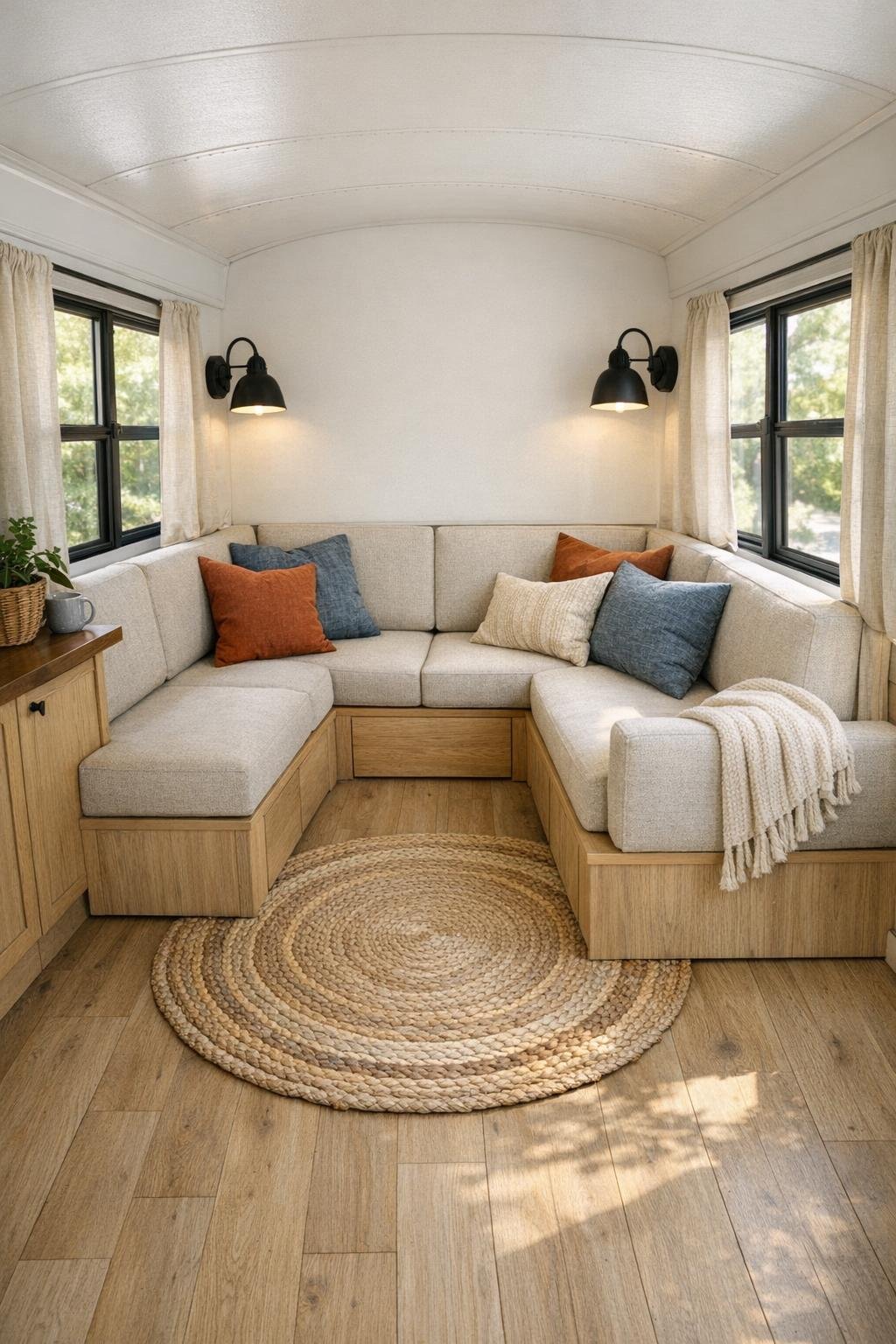
The living room is where the bus first reveals its softer side. A built-in bench sofa runs neatly along one wall, upholstered in a durable oatmeal-colored fabric that feels equal parts practical and inviting. Underneath, hidden storage keeps the room from feeling crowded, while a pair of loose throw pillows in muted rust, wheat, and faded blue add a touch of homestead warmth. The floor is finished in pale oak-toned planks that visually widen the narrow space, and the original bus windows are dressed simply, perhaps with linen café curtains or woven shades that filter the daylight instead of blocking it.
Across from the seating, I’d imagine a slim wood ledge or compact cabinet rather than anything bulky, leaving the aisle open and easy. The lighting is layered in a way I always find comforting: black metal sconces for evening glow, a small reading lamp tucked into a corner, and plenty of natural light washing in during the day. There’s texture everywhere you need it—nubby fabric, smooth sealed wood, a braided rug underfoot—but no fuss. It feels like the sort of room where you could sit with coffee at sunrise or mend a quilt by lamplight after supper.
Dining Room
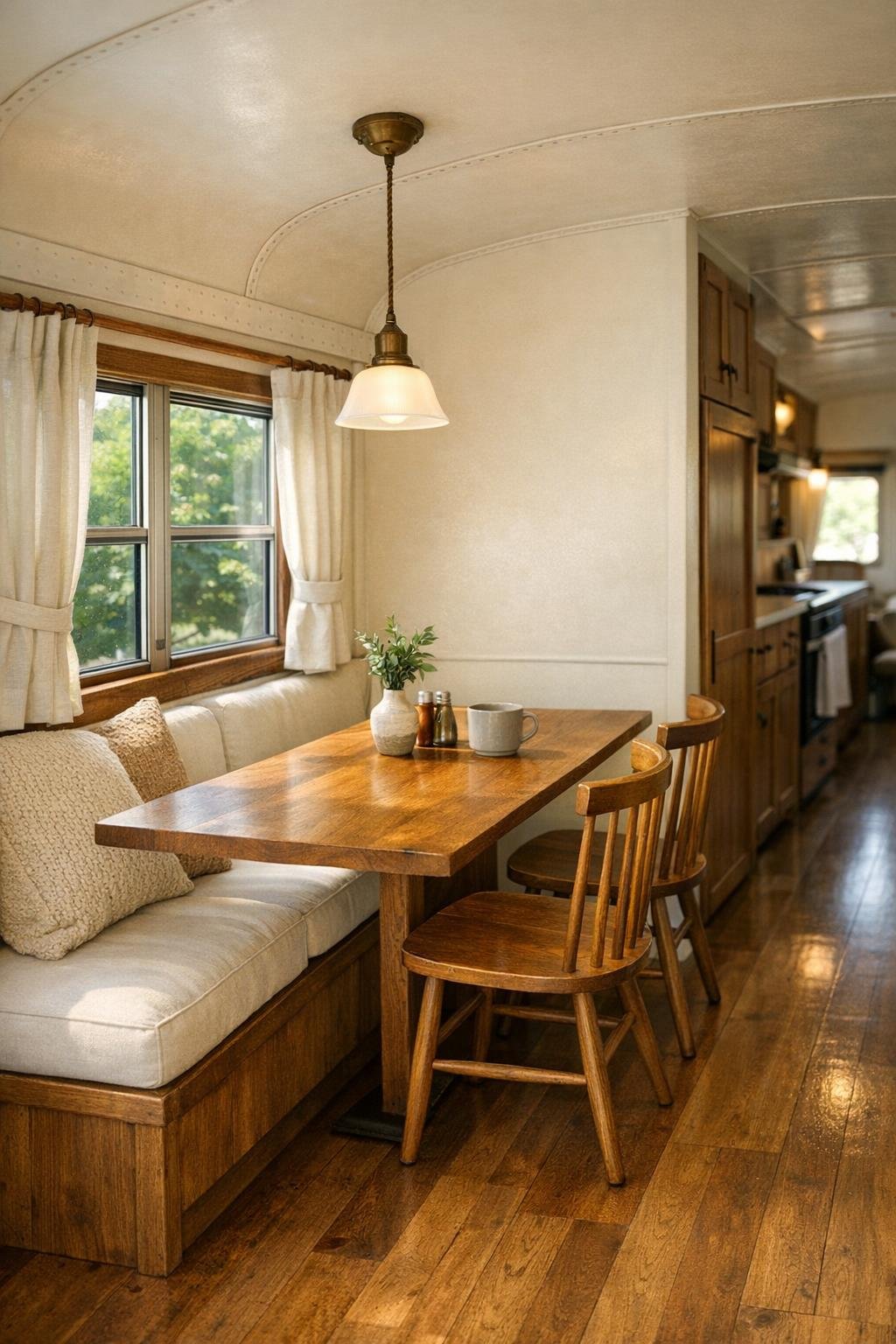
In a home this size, the dining area has to work hard, and here it does so with real grace. A slim built-in table, likely crafted from warm butcher block or lightly stained ash, anchors the space without overpowering it. One side may be paired with a fixed bench to save room, while the other uses simple spindle-back chairs or compact stools that can tuck away neatly. I love that kind of arrangement—it feels old-fashioned in the best possible way, like a breakfast nook made sensible for modern living.
The palette stays quiet and harmonious, with creamy walls, honeyed wood, and a few dark accents to keep everything from drifting too sweet. A small pendant in enamel or opal glass would cast a lovely pool of light in the evening, making even a weeknight meal feel settled and special. Because the windows are so generous, the dining area never reads as cramped; instead, it becomes one of those cheerful little corners that invite conversation, card games, and a second helping of pie.
Kitchen
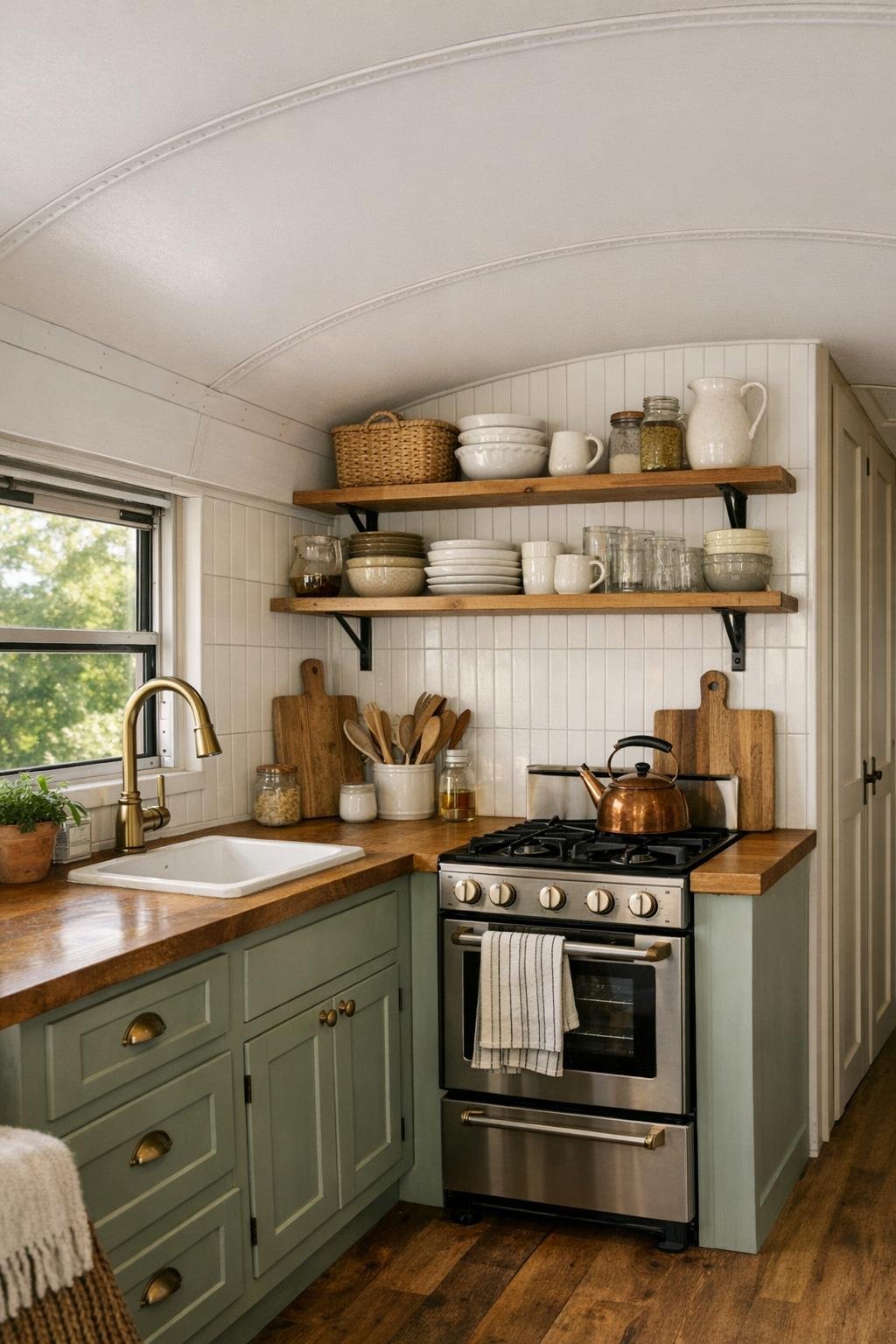
The kitchen is, to my eye, the real heart of the whole design, and I say that as someone who has spent a lifetime believing a home is known by the way its kitchen works. This one is compact but beautifully disciplined, with flat-front cabinetry or simple Shaker-style doors painted a soft cream or dusty sage. The countertops may be butcher block for warmth or a pale solid surface for ease, and I can picture a white farmhouse-inspired sink scaled down just enough to suit the footprint. Open shelves hold everyday dishes, mason jars, and a few well-used crocks, turning storage into part of the room’s charm.
What keeps it from feeling precious is its practicality. A narrow range, undercounter refrigerator, and carefully fitted drawers make excellent use of every inch, while a vertical tile backsplash in a handmade-looking white adds brightness and a touch of old-world texture. Brass or black hardware gives the cabinetry definition, and the natural light from the side windows makes the finishes glow instead of glare. It’s the kind of kitchen where biscuits would make perfect sense, where soup could simmer all afternoon, and where nothing feels oversized except the welcome.
Bedroom
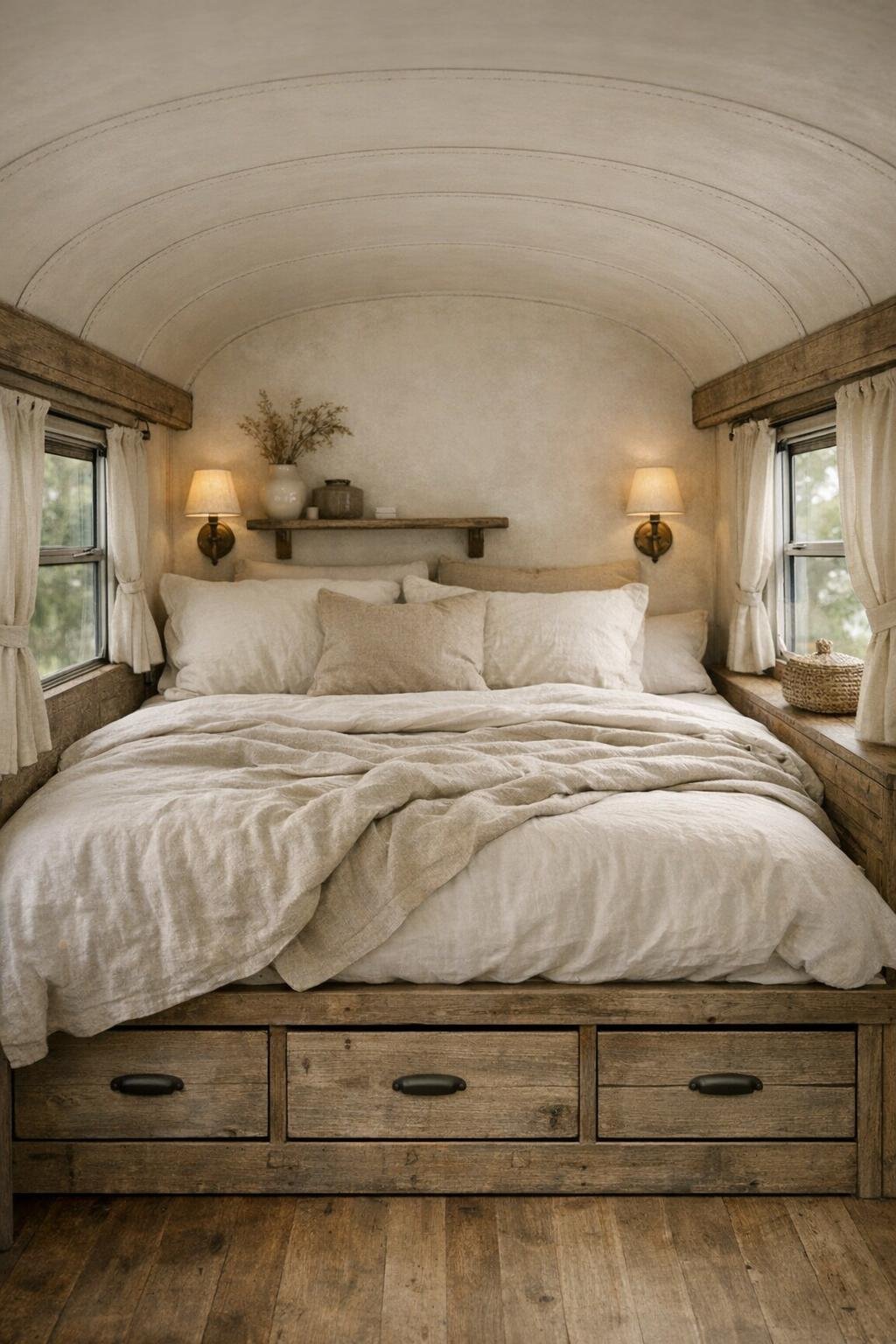
The bedroom takes advantage of the bus’s tucked-away end space, and that slight separation gives it a cocooned, restful feeling. A built-in bed platform, dressed in soft ivory and flax linens, keeps the lines clean and allows for storage drawers below—always a wise idea in a small home. I’d keep the palette especially calm here: weathered wood, creamy whites, maybe a little muted green or dusty blue to echo the landscape outside. Because the ceiling curves overhead, the room naturally feels snug, and that closeness becomes an asset when handled with gentle materials.
There’s something deeply appealing about a bedroom that doesn’t try too hard. A pair of small sconces, a narrow ledge instead of traditional nightstands, and perhaps a woven blanket folded at the foot of the bed are enough to make it complete. The windows become framed views rather than mere openings, and with the bedding kept soft and unfussy, the whole room feels like an exhale. It reminds me of guest rooms in old country houses, where comfort came from clean sheets, quiet colors, and the absence of anything unnecessary.
Bathroom
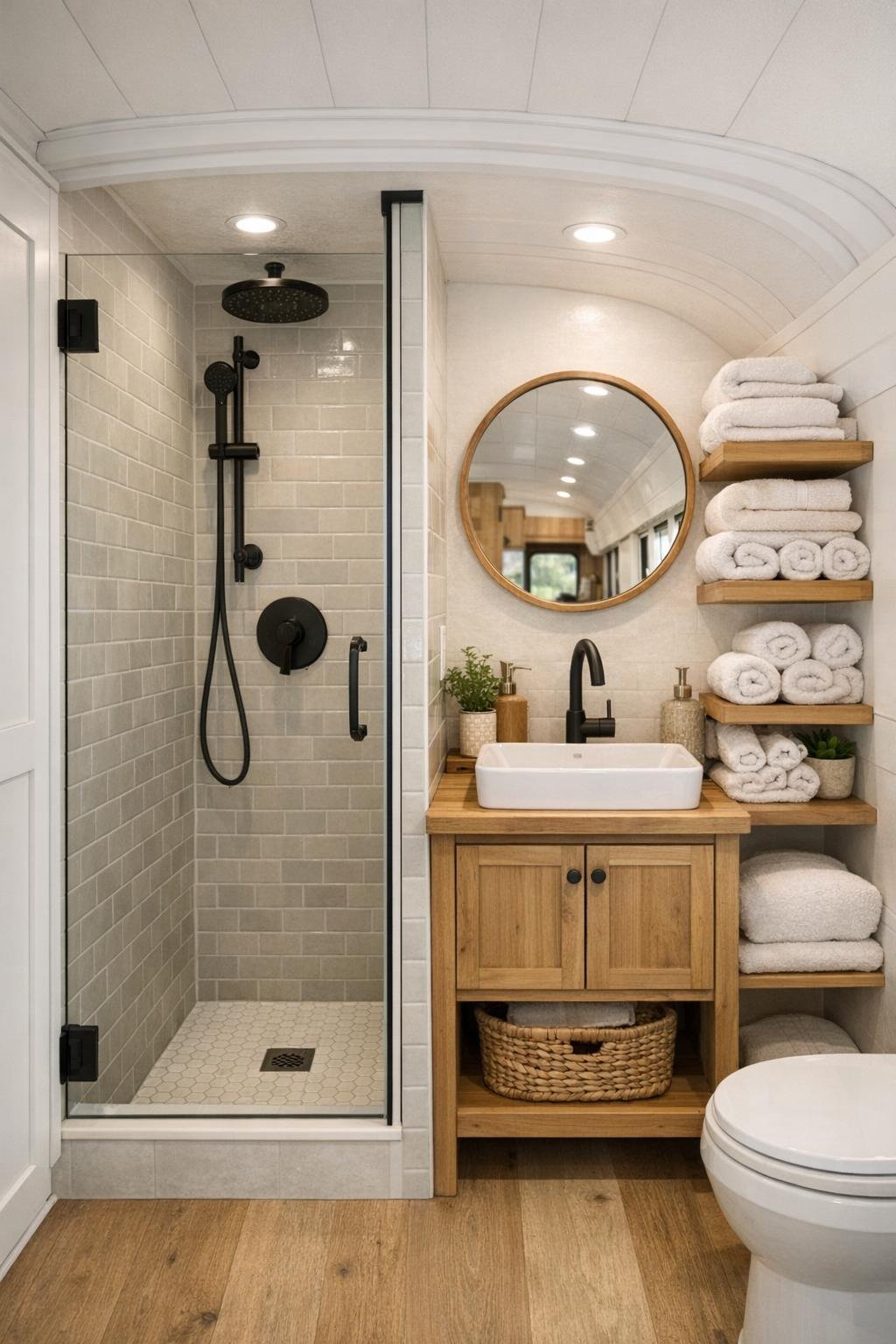
The bathroom is where small-space design can so easily go wrong, but this one sounds every sensible note. I imagine a compact wet-room style layout or a neatly enclosed shower finished in creamy tile, with perhaps a pebble or matte porcelain floor for slip resistance and subtle texture. A petite vanity in natural wood or painted sage would warm the room nicely, especially paired with a simple white basin and a round mirror to soften all the straight lines. Nothing is extravagant, but everything looks considered.
Good lighting matters in a bathroom more than people sometimes realize, and here I’d expect a flattering, practical combination of daylight and soft sconces. Brass hooks, open cubbies for folded towels, and a shower niche built right into the wall would keep the room useful without cluttering it. The overall effect is fresh, tidy, and surprisingly serene, which is no small feat in a converted bus. It feels less like making do and more like living thoughtfully, and there’s a world of difference between the two.
Other Areas
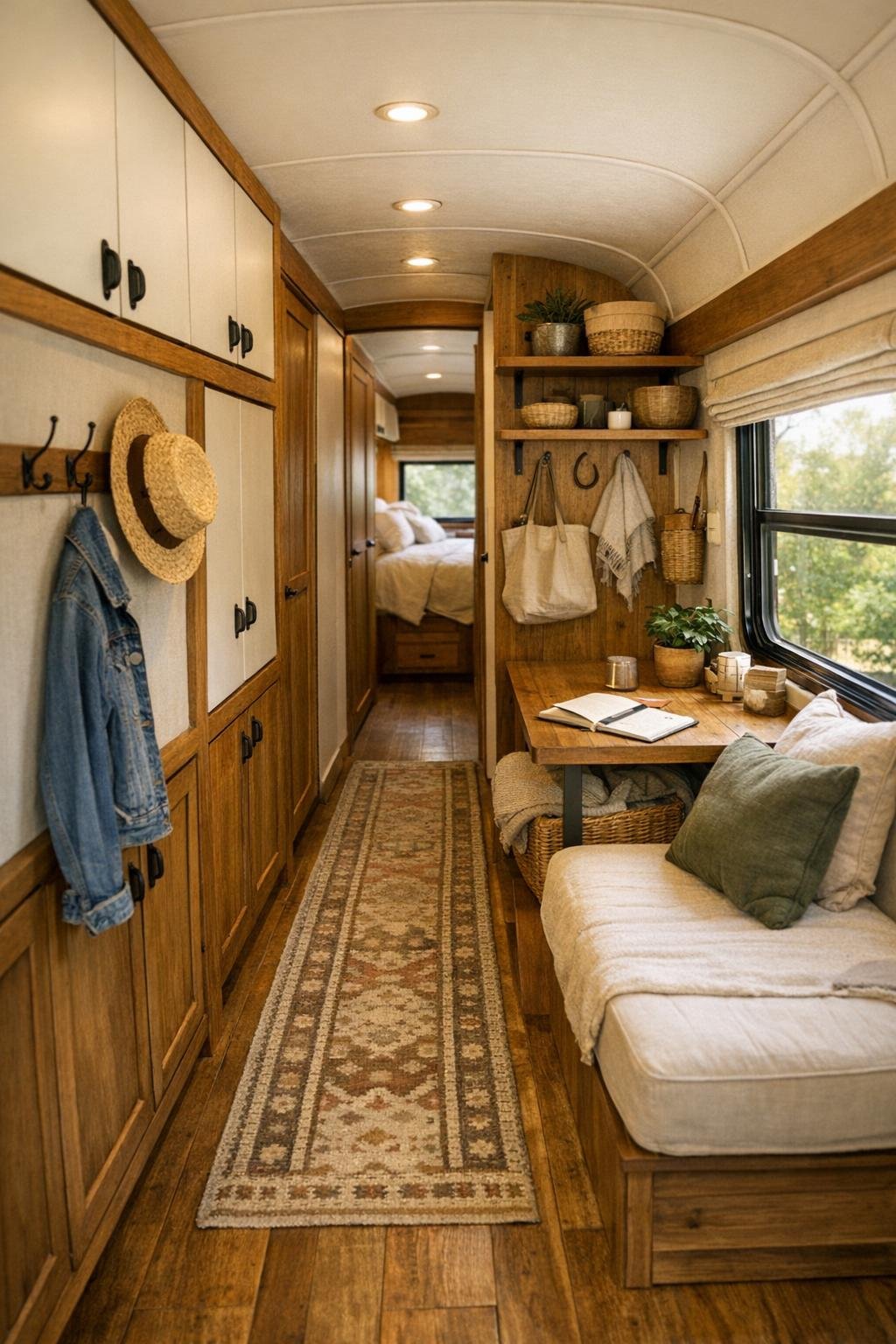
What I find especially clever are the in-between spaces, those hardworking stretches of wall and walkway that can make or break a home like this. Overhead cabinets fitted neatly between window lines, toe-kick drawers, narrow coat hooks by the entry, and little ledges for books or pottery all contribute to the sense that the bus has been tailored rather than merely furnished. Even the corridor can become part of the design, with consistent wood trim, thoughtfully placed lighting, and a runner that softens footsteps while drawing the eye from one zone to the next.
If there’s a small workspace tucked under a window or a reading perch built into an unused corner, all the better. These little extra moments are what give a compact home richness. I always think a good house, no matter the size, needs a few places where life can happen quietly—writing a note, shelling peas, setting down a basket, watching the weather change. In this bus, the secondary areas seem to do exactly that, turning necessity into charm with a wonderfully steady hand.
Why You'd Live Here
You’d live here because this home understands something many larger houses forget: comfort is not about excess, but about care. Every material, every built-in, every soft and useful finish seems chosen to support daily life rather than impress from a distance. It has a humble exterior and a deeply welcoming interior, and I think that contrast is part of its magic. Like the best Midwestern cooking, it doesn’t need fanfare to leave an impression; it simply does its job beautifully and leaves you feeling well tended.
I can also see the appeal for anyone craving a slower, more intentional rhythm. This converted bus asks you to live with what matters, to keep things close at hand, and to notice the loveliness in grain, linen, sunlight, and order. For me, that’s the great success of the design. It turns a once-ordinary vehicle into a home with memory, warmth, and real staying power—the sort of place that makes you pause, look again, and imagine a very good life inside.