
There’s something instantly comforting about a home that doesn’t try too hard, and this one absolutely nails that feeling. Set inside a former general store, this cottage leans into its history with weathered wood, big old windows, and a layout that still hints at its past life, but everything is softened through a gentle, lived-in style that feels warm from the first glance. I love how the whole place balances practicality and charm, with cozy layers, honest materials, and the kind of quiet personality that makes you want to slow down and stay awhile.
What makes it especially memorable, at least to me, is the way it turns an unconventional shell into something deeply personal without losing the building’s original spirit. As a concept design, it imagines the dream version of adaptive reuse: a cottage full of creamy whites, soft sage, worn brass, floral touches, and that incredible reading corner that feels like it was made for rainy afternoons, tea on the side table, and one more chapter before dinner.
Exterior
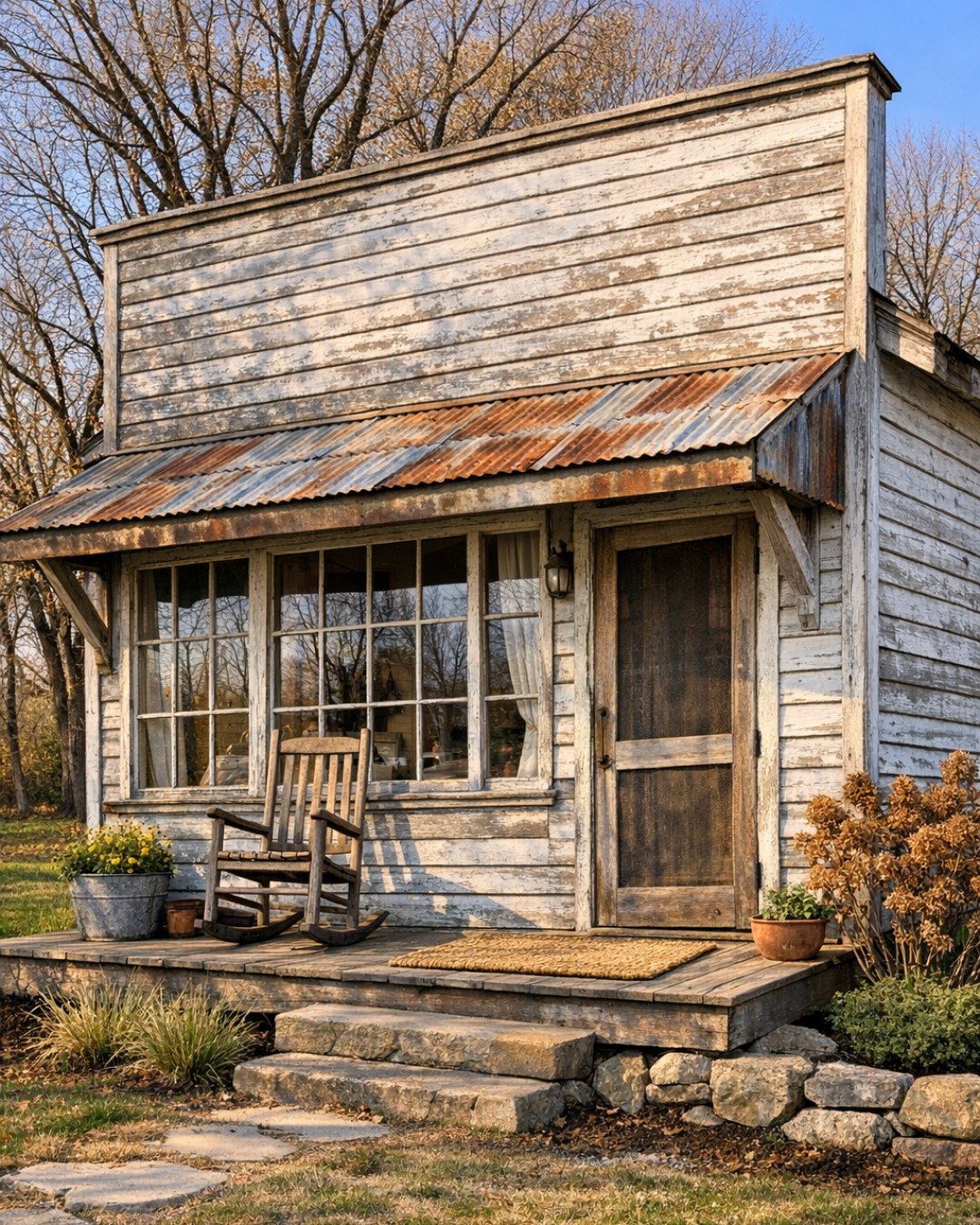
From the outside, the home still carries the straightforward shape of a neighborhood store, and that’s exactly why it’s so appealing. The facade keeps its tall storefront proportions and broad front windows, but they’re reframed with cottage details: painted trim in a muted cream, window boxes spilling over with herbs and trailing greenery, and a Dutch door in a faded sage tone that instantly softens the structure. The siding has that slightly imperfect, timeworn texture that always reads as welcoming to me, and a simple metal awning adds just enough utility to honor the building’s past.
The landscaping is relaxed rather than manicured, which suits the house beautifully. Gravel paths, old brick edging, climbing roses, and a pair of weathered planters make the entrance feel approachable, not formal. I can picture someone brushing dirt off their hands after clipping basil by the front steps, then heading inside with the screen door tapping shut behind them. Even before you reach the threshold, the home gives off that rare sense of being both resourceful and tender, like every update was made with care instead of flash.
Living Room
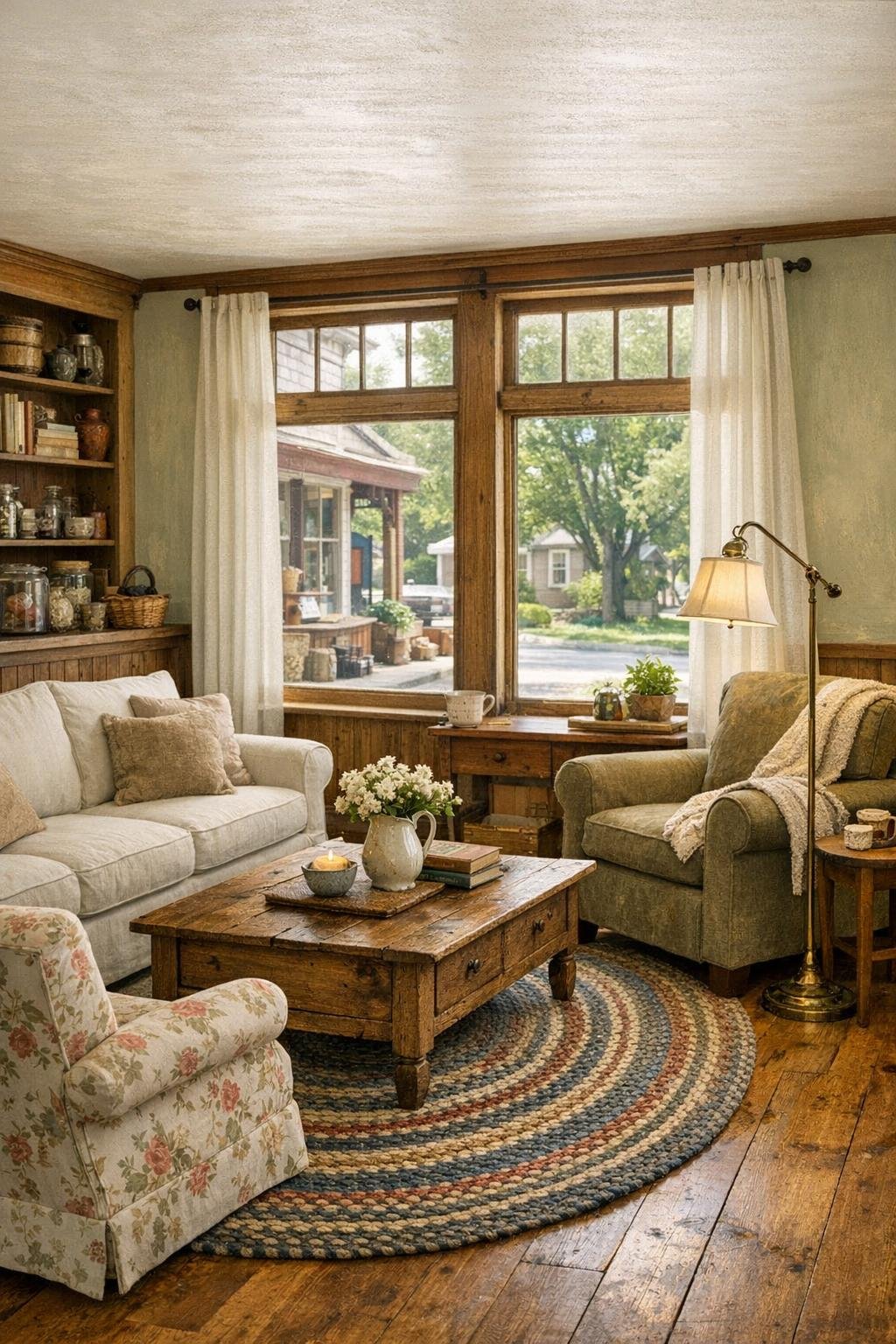
The living room is where the cottage feeling really settles in. Because of the building’s original storefront windows, the space is washed in natural light, and instead of fighting that openness, the design makes it feel intimate with layered textiles, soft paint, and low, comfortable furniture. A slipcovered sofa in warm ivory anchors the room, paired with a floral armchair, a small plaid ottoman, and a vintage wooden coffee table marked by age in the best way. The palette stays gentle—cream, sage, dusty blue, and honeyed wood tones—so even with plenty of furnishings, nothing feels visually busy.
My favorite feature is easily the reading corner tucked beside the front window, where a deep cushioned chair, a spindle-leg side table, and a brass floor lamp create a little world of their own. Built-in shelves painted the same soft color as the walls make the books feel collected over time, not staged, and a braided rug helps define the nook without closing it off. It’s the kind of corner I’d end up using every day, even if I only had ten minutes between emails and making dinner, because it feels genuinely restorative rather than decorative.
Dining Room
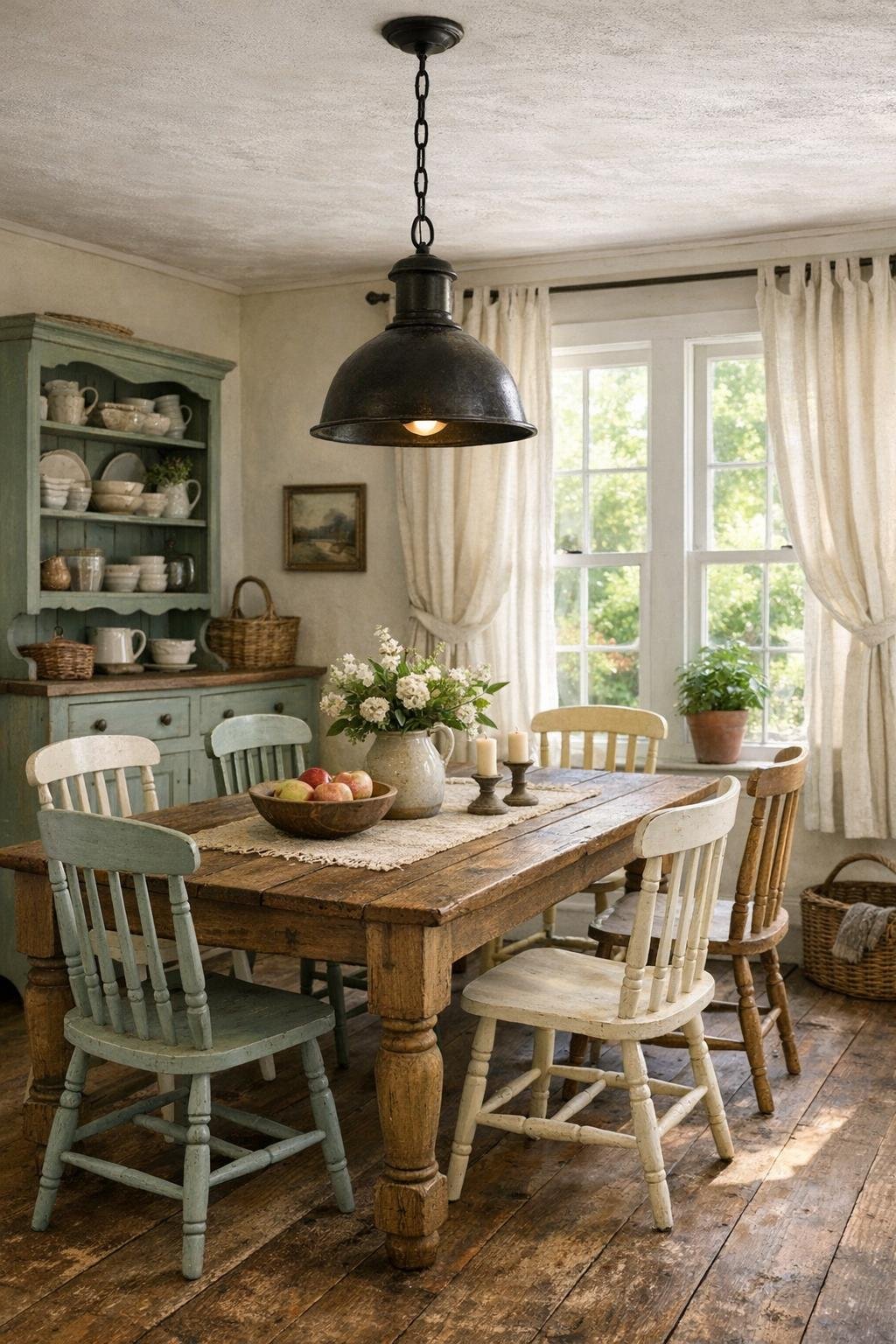
The dining room feels casual and gathered, like it’s ready for a simple weeknight soup or a longer Sunday lunch with pie cooling somewhere nearby. A sturdy farmhouse table sits at the center, surrounded by mismatched spindle chairs painted in soft, chalky tones that somehow make the room feel even more personal. Overhead, a modest iron pendant keeps the lighting focused and warm, while linen curtains at the windows add just enough softness without blocking the daylight that moves through the main level.
What I appreciate most here is the restraint. Instead of overfilling the room, the design leaves breathing space around the table, so the old floorboards and wall paneling can do some of the storytelling. A narrow hutch in painted wood displays everyday dishes, clear glass jars, and serving bowls that look actually used, which always makes a home feel more believable to me. It has that rare quality of being pretty and practical at once, the kind of dining room where you could set out muffins for breakfast meal prep and still feel like the room was special.
Kitchen
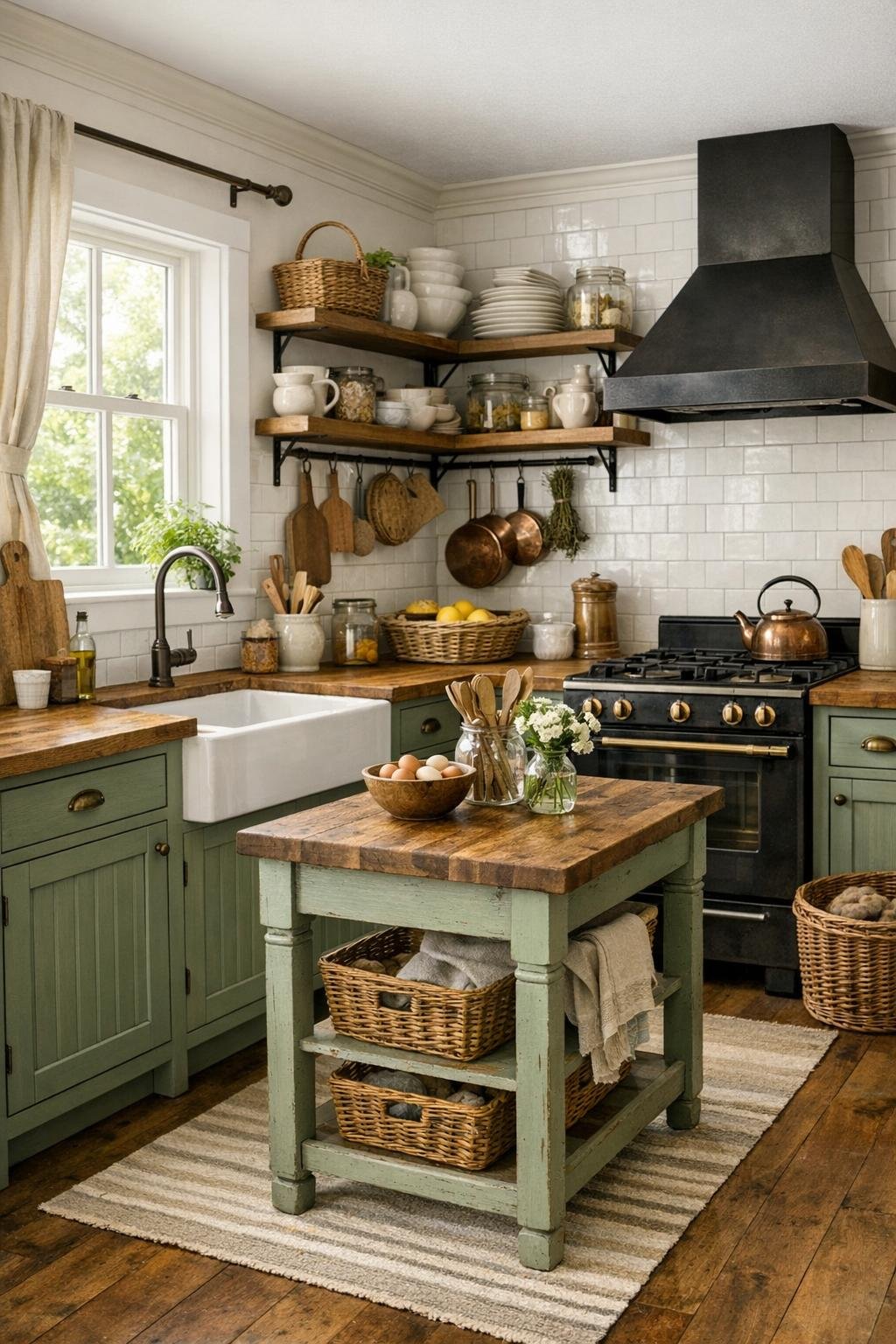
The kitchen is probably the room I’d be most tempted to steal ideas from for real life. It keeps the footprint efficient, but every finish works hard: beadboard cabinetry in a muted sage, butcher block counters that add warmth, open shelves for everyday bowls and mugs, and a creamy apron-front sink placed beneath a window. There’s a vintage-style range in soft black, aged brass hardware, and a simple white tile backsplash with dark grout that keeps the room grounded. It feels thoughtfully arranged for actual cooking, not just admiring from a distance.
As someone who’s always thinking about what’s for dinner while answering one more work message, I notice when a kitchen supports real routines, and this one does. There’s enough counter space for chopping vegetables, setting out ingredients, or packing up leftovers, and the mix of closed storage and open display prevents it from feeling cluttered. A peg rail for linens, a freestanding island with turned legs, and baskets tucked below for produce make the whole room feel flexible and hardworking. It’s cozy, yes, but not precious—exactly the kind of kitchen where a pot of soup simmering in the background would feel completely at home.
Bedroom
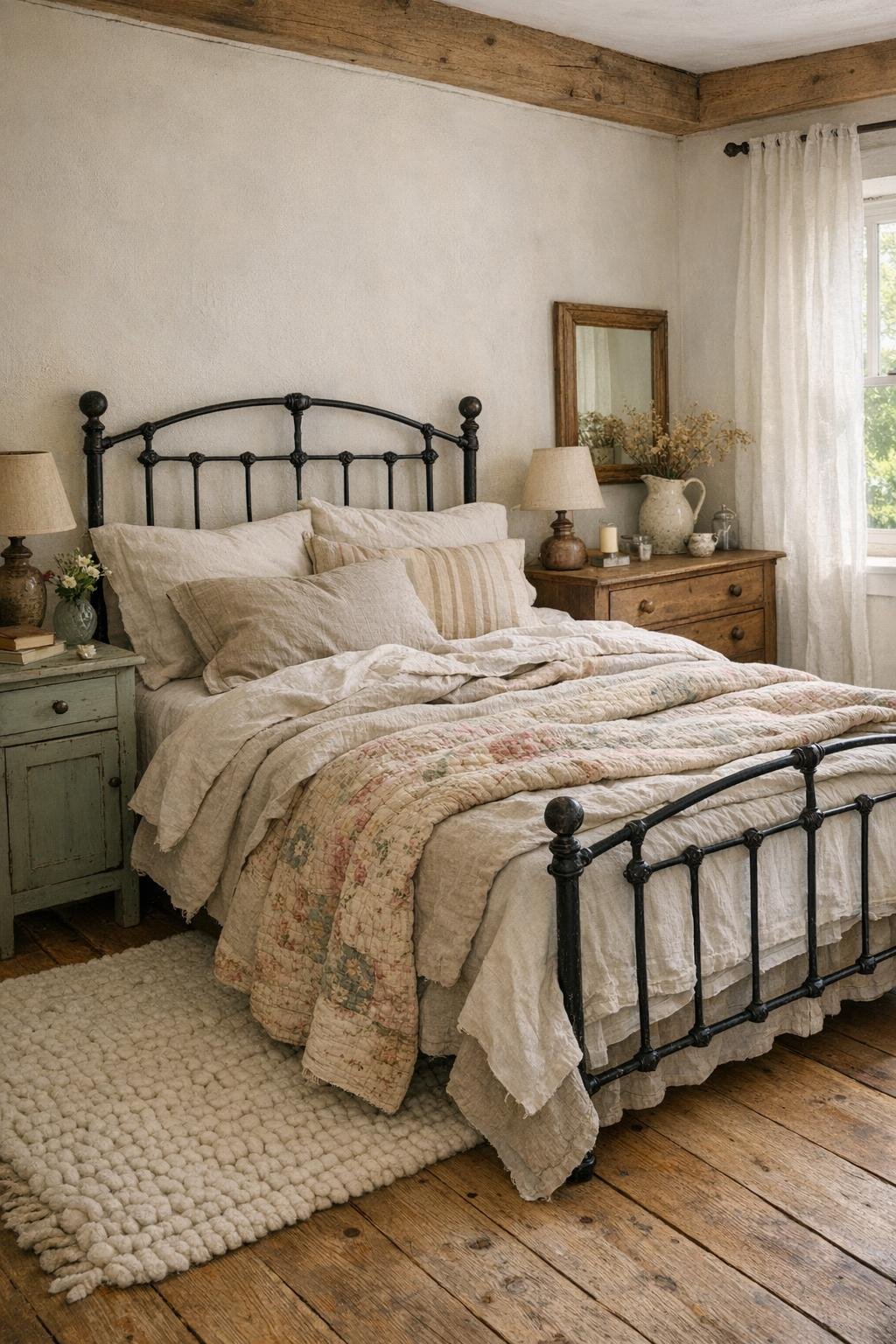
The bedroom takes a quieter turn, which feels right after the more open, social spaces. The palette becomes softer and more muted here, with warm white walls, faded floral textiles, and natural linen bedding layered with a quilt that looks like it’s been loved for years. An iron bed frame gives the room a little structure, while painted nightstands and a vintage dresser keep everything feeling humble and unfussy. Nothing is oversized, and that helps the room stay restful instead of crowded.
I especially like the way texture does most of the work. Gauzy curtains filter the light, a wool rug warms up the floor, and a small upholstered bench at the foot of the bed adds function without clutter. There’s probably a ceramic lamp, a stack of books, and a folded sweater on a hook by the door—little details that make the space feel inhabited in the nicest way. It’s a bedroom that doesn’t demand attention, but that’s exactly its charm; it feels easy to exhale in here.
Bathroom
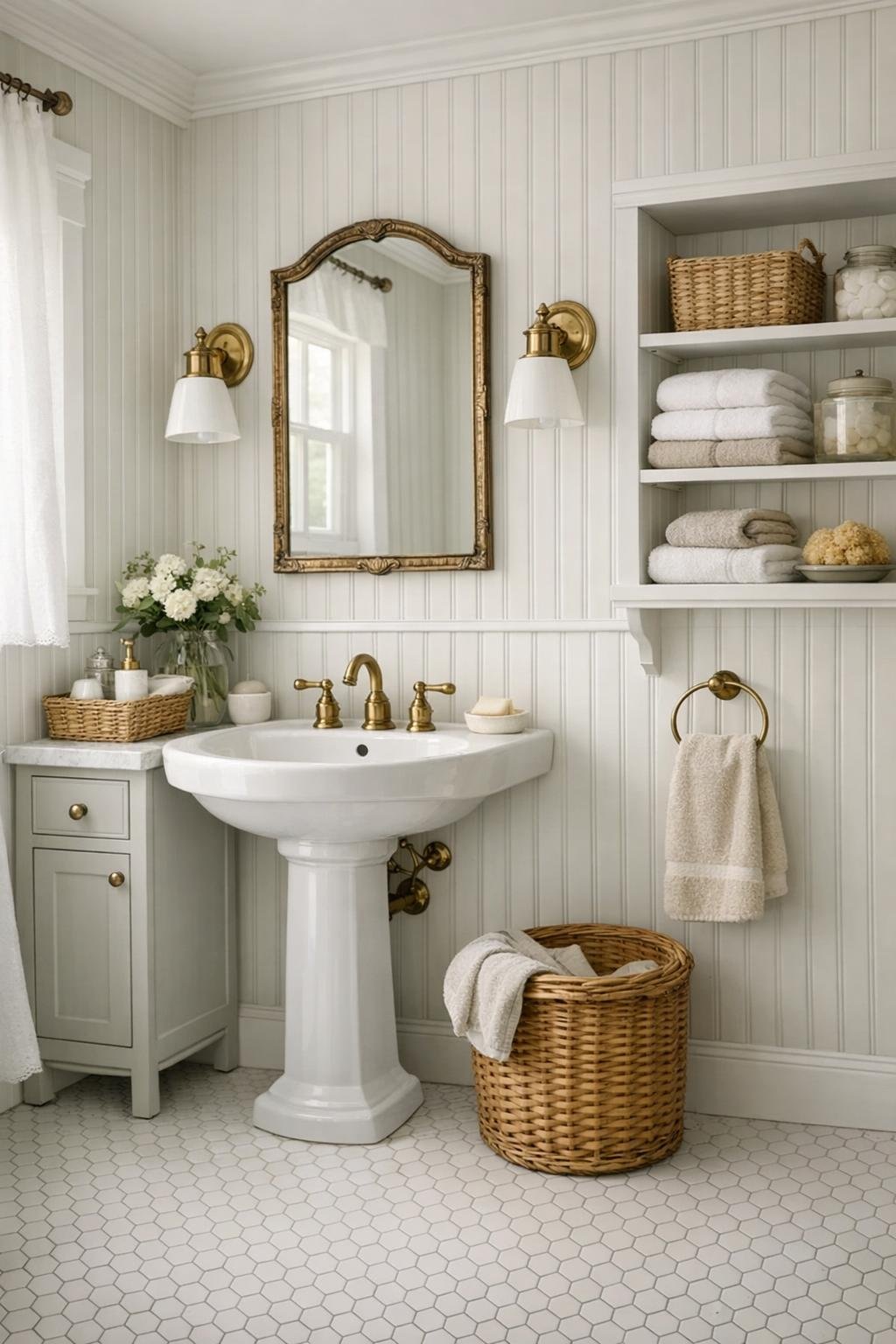
The bathroom is small, but it uses every inch beautifully. A pedestal sink and compact vanity keep the footprint airy, while beadboard walls and tiny hex tile on the floor bring in that classic cottage language without feeling overly styled. The fittings are finished in unlacquered brass, which adds just enough glow against the crisp white surfaces, and a framed mirror with a slightly antique look helps the room feel connected to the rest of the house.
There’s also a practical sweetness to the space that I really respond to. Open shelving holds folded towels in soft neutrals, a woven basket corrals necessities, and a glass sconce gives off the kind of flattering, gentle light that makes a bathroom instantly more comfortable. If there’s a shower curtain, I imagine it in a simple ticking stripe or quiet floral, something that adds pattern without taking over. It’s fresh, modest, and nicely edited—proof that small bathrooms can still feel full of character.
Other Areas
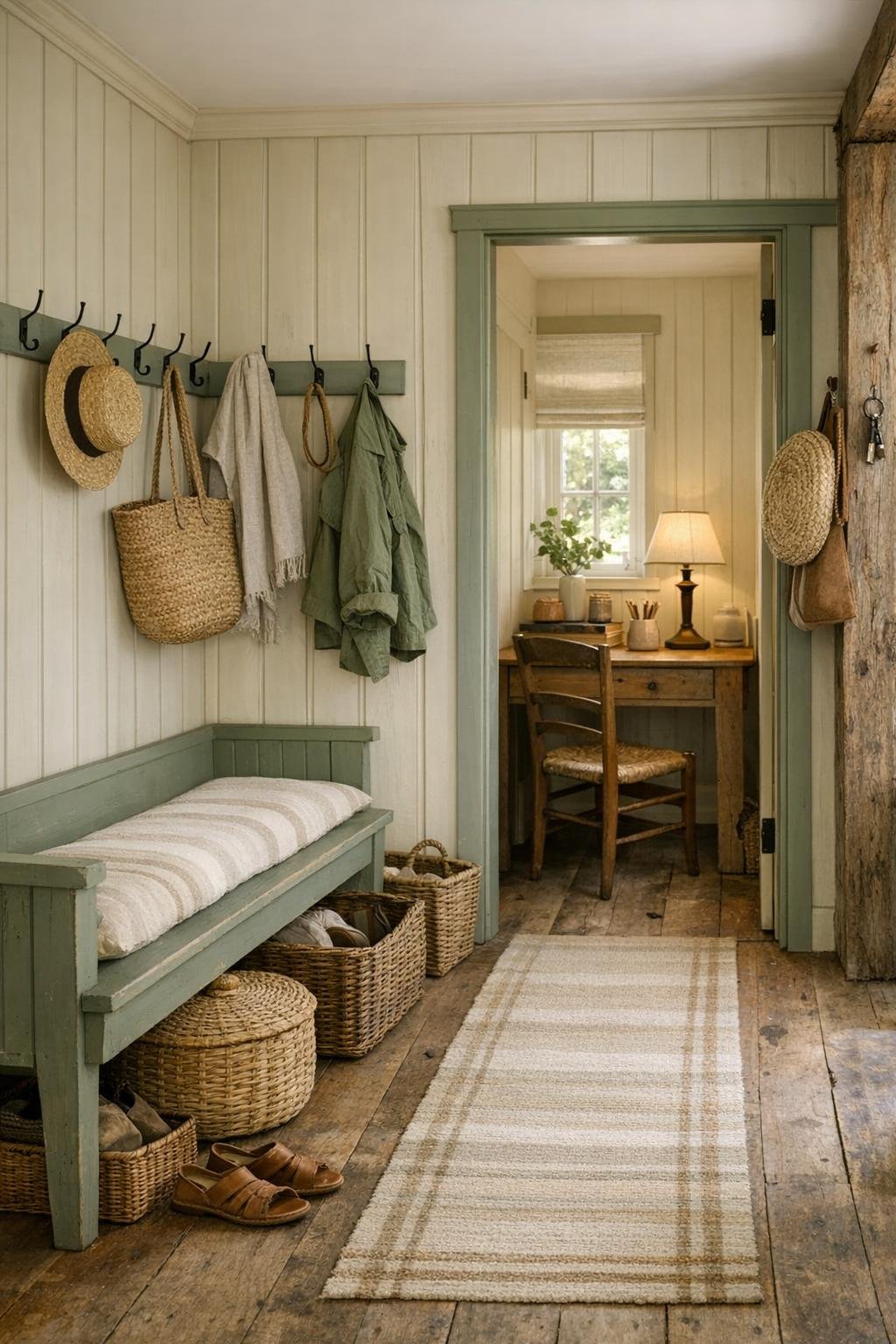
The supporting spaces are part of what make this home feel so believable. A narrow entry area near the old storefront door includes wall hooks, a painted bench, and baskets underneath for shoes and market bags, making the transition indoors feel organized without losing its charm. There may also be a tiny office nook carved into an alcove, with a small wooden desk, task lamp, and pinboard above—exactly the kind of spot I’d appreciate for paying bills, making a grocery list, or squeezing in a little work before shifting back into home mode.
Even the circulation spaces seem thoughtfully handled. Hallways are kept light with painted paneling and simple runners, and tucked storage helps the cottage stay serene rather than crowded. I can also imagine a little back mudroom with a utility sink, folded laundry, and shelves for jars, linens, and pantry overflow, which is the kind of practical bonus I always notice because real life needs somewhere to land. These quieter corners may not be the headline moments, but they’re what make the home feel complete and easy to live in.
Why You'd Live Here
You’d live here because it understands that comfort is more than a style—it’s a way a home supports your routines and lifts your mood at the same time. This cottage turns an unexpected building into a place with real softness, history, and usefulness, and that combination is hard to fake. Every room feels approachable, from the hardworking kitchen to the peaceful bedroom, and the design never loses sight of the fact that beauty is nicest when it’s easy to live with.
And honestly, that reading corner alone might have won me over. But beyond that one dreamy spot, the whole house has a grounded, resourceful warmth that feels especially appealing if you love spaces with personality but still need them to function on a busy day. It’s the kind of home that suggests simpler rhythms without being unrealistic about daily life, and I think that’s exactly why it lingers in your mind.