
There is something deeply comforting about a home that knows exactly what it wants to be, and this converted church bus has that sort of confidence in every inch. Set up for slow mornings, good suppers, and a life pared down to the essentials that really matter, it blends practical craftsmanship with a kind of homespun grace that feels very close to my heart. The overall look is simple country-modern, softened with warm wood, painted cabinetry, vintage touches, and sturdy finishes that can stand up to daily living without ever feeling cold.
Though this is a concept design, it feels rooted in the real rhythms of retired life: coffee before sunrise, biscuits cooling on the counter, and a place for everything from canning jars to a favorite reading quilt. What makes it special is not just that it turns a church bus into a home, but that it does so with uncommon generosity, especially in the kitchen, where the design gives over precious square footage to the place so many of us gather, cook, and tell our stories.
Exterior
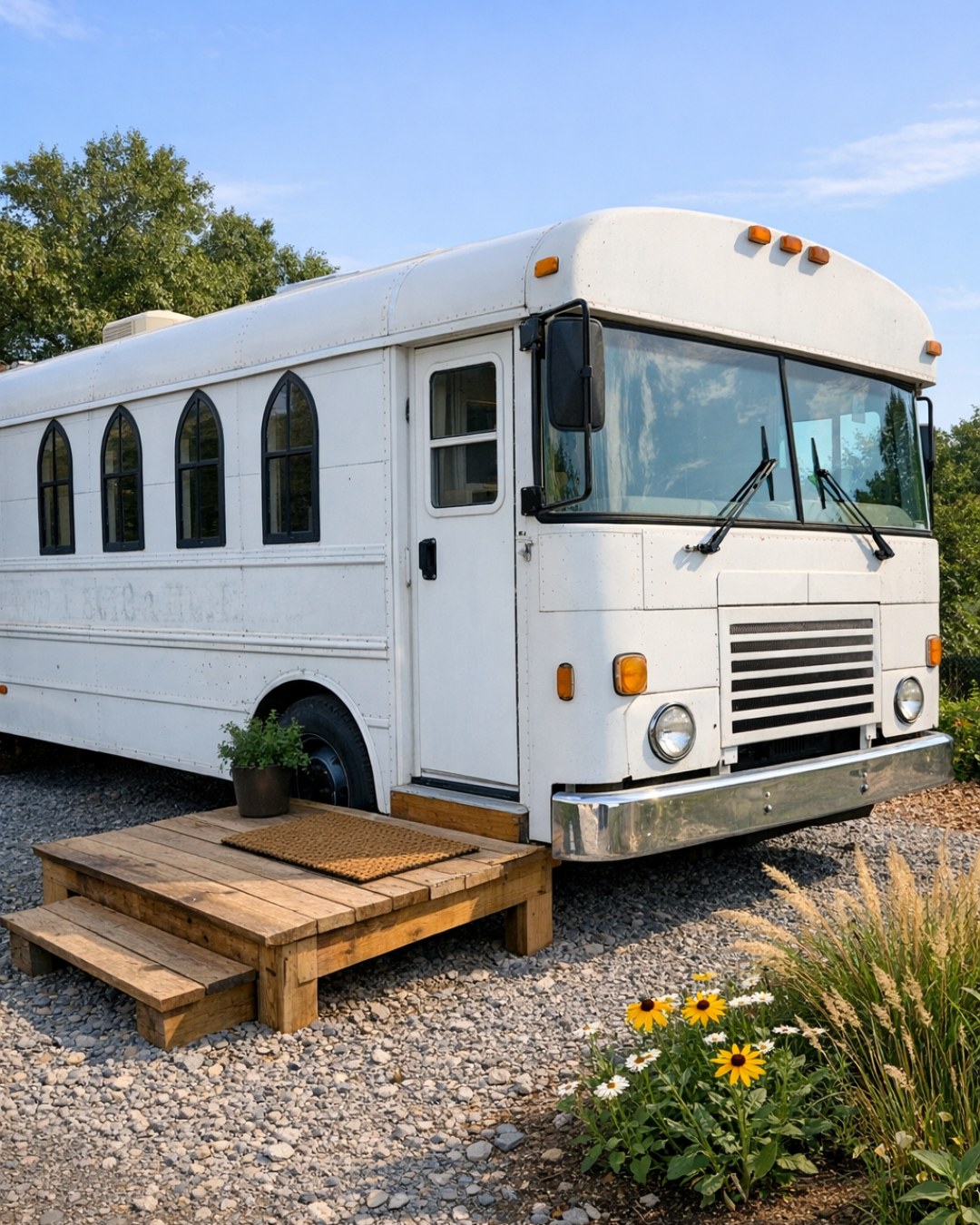
From the outside, the bus keeps just enough of its original character to honor where it came from. The long body, generous windows, and familiar proportions are still recognizable, but the finish has been transformed with a soft cream paint, muted sage trim, and matte black hardware that make it feel less utilitarian and more settled, almost like an old country cottage stretched into a graceful line. I especially like the way the entry has been handled, with simple wood steps, a compact awning, and potted herbs nearby, giving the whole bus an inviting front-porch spirit.
The roofline is thoughtfully equipped without looking fussy, with low-profile solar panels, a tidy storage rack, and vents integrated cleanly into the silhouette. Along the sides, the windows appear carefully reconsidered rather than merely retained, framed with trim that helps the exterior feel composed and intentional. Parked beside a field, under cottony clouds or a line of trees, this bus would feel right at home in the Midwest, where usefulness and beauty have always had a way of sitting side by side.
Living Room
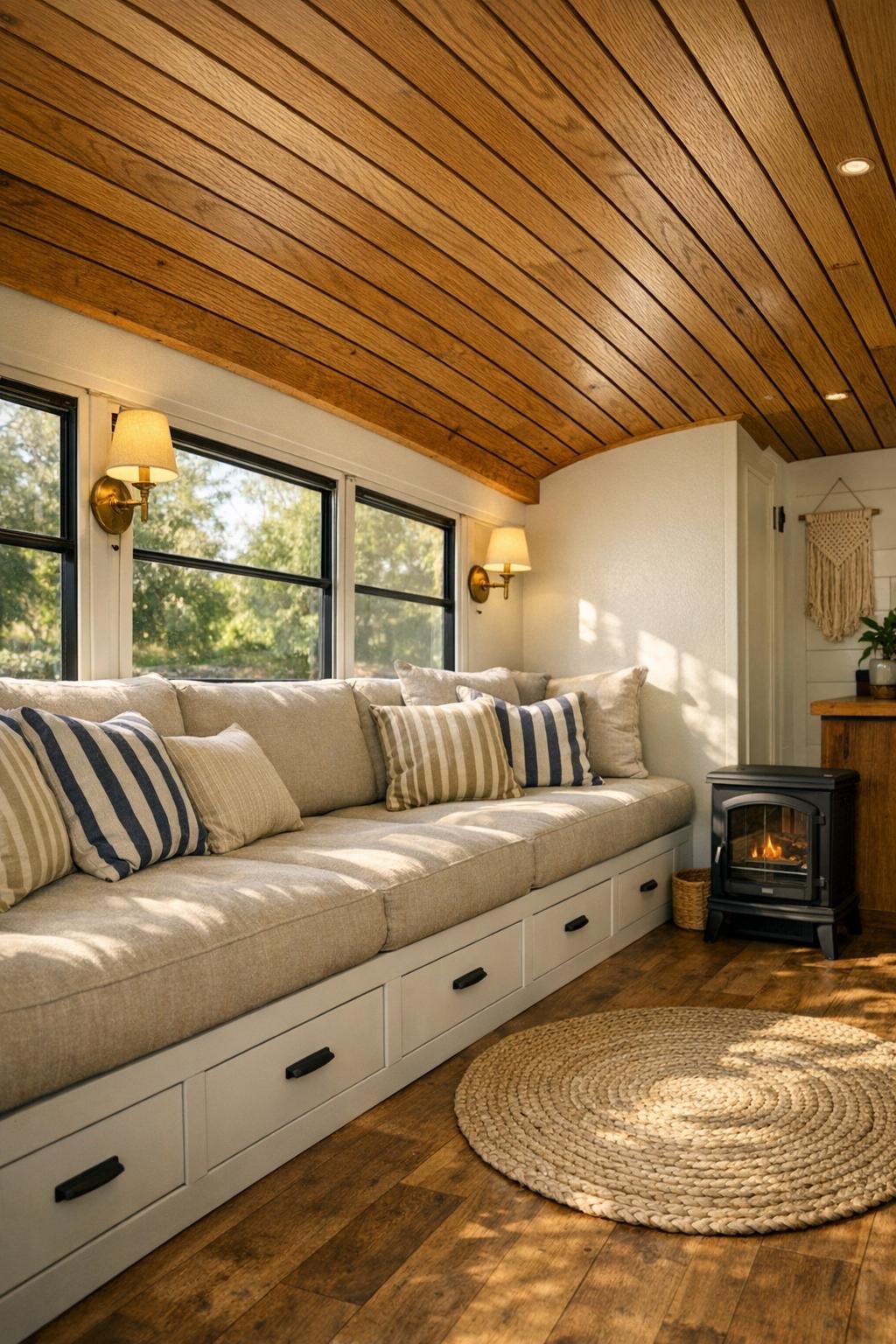
The living room is arranged with a keen understanding of scale, using the narrow footprint of the bus to create intimacy instead of compromise. A built-in sofa upholstered in oatmeal linen runs along one side beneath the windows, layered with ticking-stripe pillows, a wool throw, and storage drawers tucked neatly below. Across from it, a slim wood cabinet and a compact stove-style heater ground the space, while the original bus windows let in broad ribbons of light that keep everything from ever feeling pinched.
What I find most appealing here is the texture. The ceiling is clad in honey-toned wood planks, the walls are painted a soft warm white, and the floor is finished in durable oak-look boards with just enough grain to give them a lived-in honesty. Small brass sconces, a reading lamp at the corner seat, and a braided rug underfoot bring in that gentle layered feeling that reminds me of farmhouses where every object had a purpose and somehow still managed to be pretty.
Dining Room
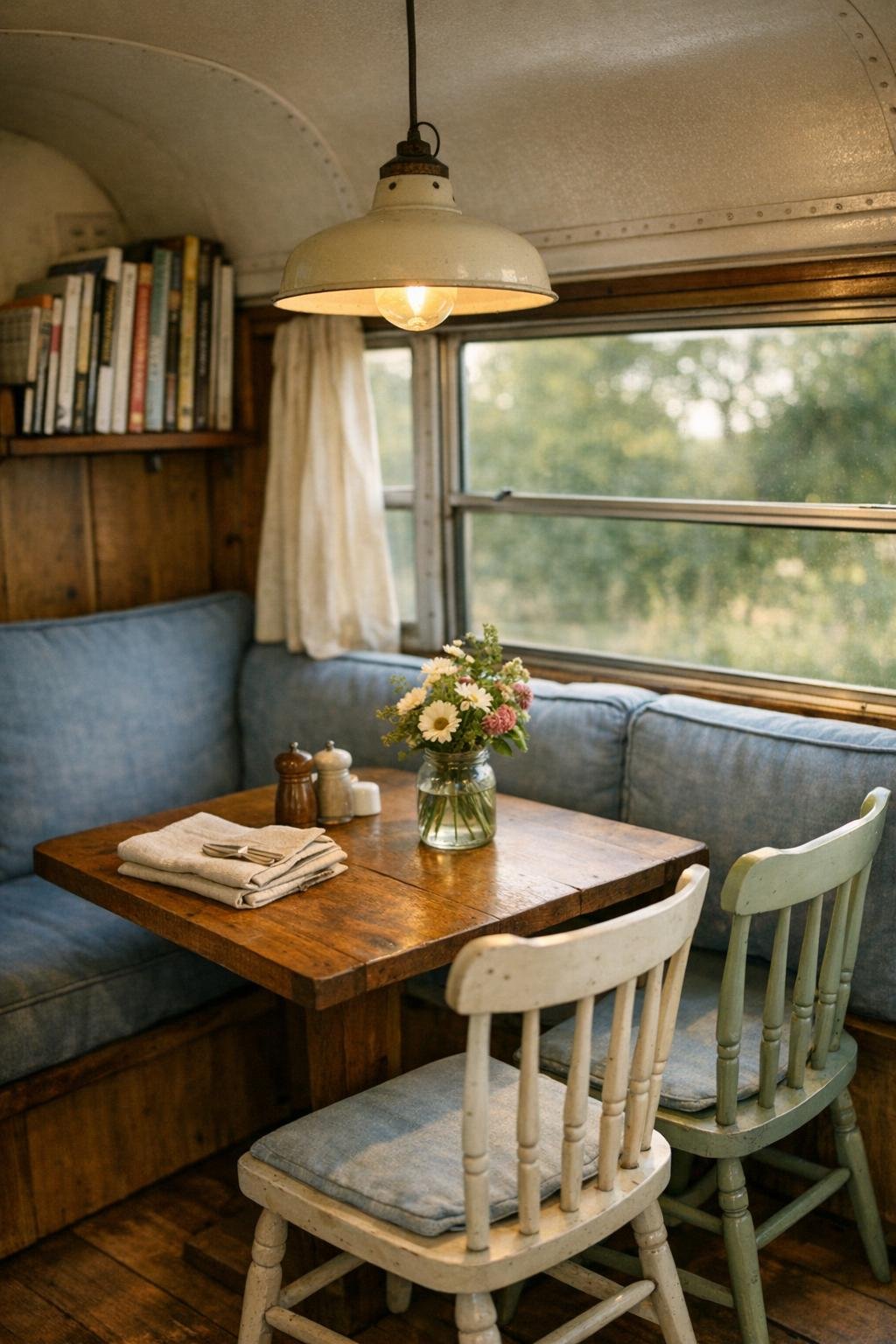
In many small homes, the dining area feels like an afterthought, but not here. This one is given a lovely window-side banquette with a solid wood table scaled just right for two, with room for a grandchild or neighbor to squeeze in when needed. The bench seating is topped with cushion pads in a faded blue fabric, and the opposite chairs are simple spindle backs painted a soft black, creating a look that feels collected over time rather than bought in a hurry.
The details give this corner its heart: a small shelf for cookbooks, a narrow vase of roadside flowers, linen napkins folded in a crock, and a pendant overhead with an enamel shade that casts a warm circle of light in the evening. I can picture a chicken pot pie set in the middle of that table, steam fogging the nearest pane, and that is the mark of a successful dining nook to me. It feels both efficient and tender, built for real meals and unhurried conversation.
Kitchen
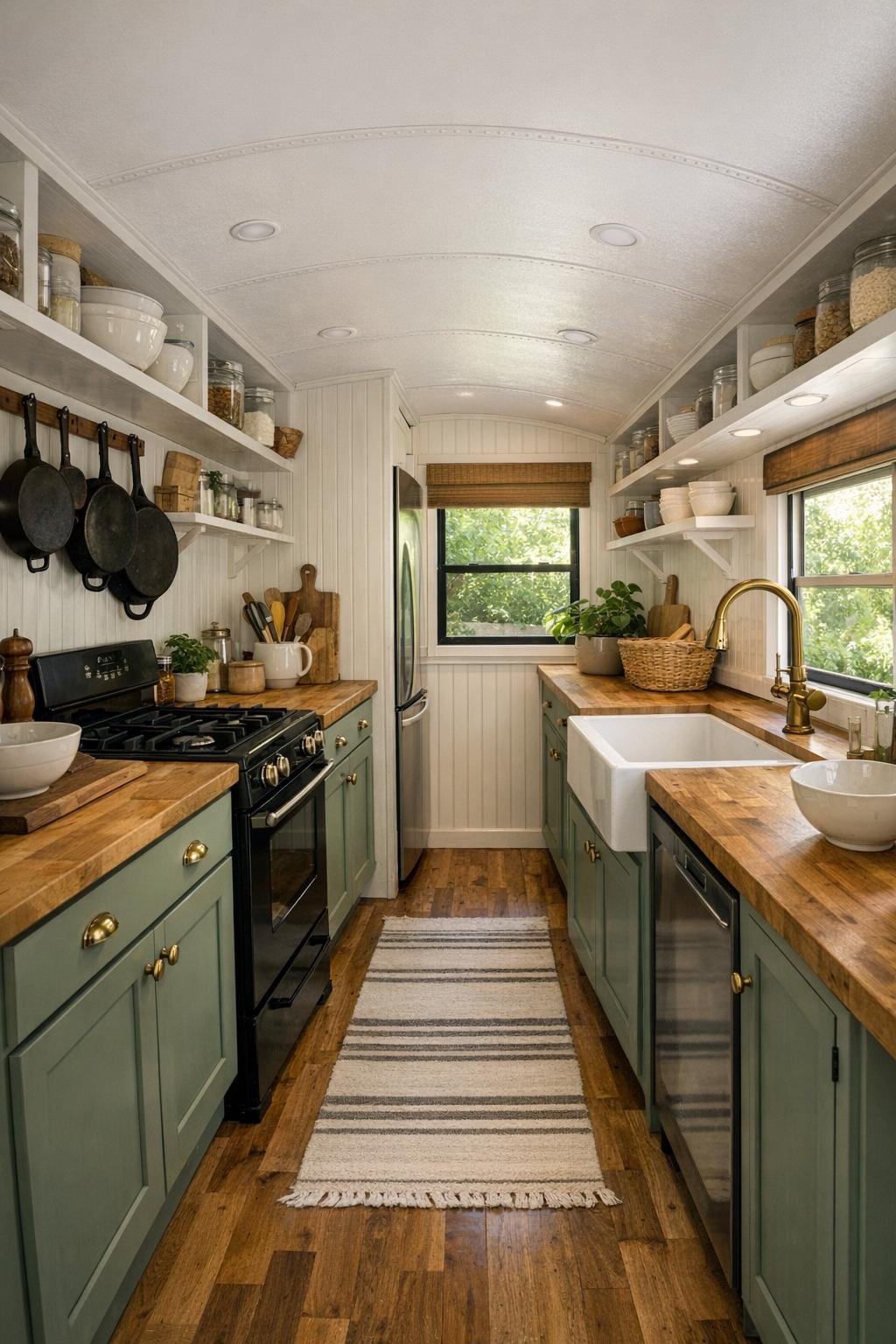
This kitchen is, without question, the soul of the bus, and it has been planned by somebody who clearly understands cooking as a daily act of love. Instead of shrinking it down to a token galley, the design gives it real presence with generous stretches of butcher-block counter, lower cabinets in a muted sage green, open shelves for mixing bowls and dry goods, and a proper farmhouse-style sink set beneath a window. There is enough workspace to knead dough, shell peas, or lay out ingredients for a Sunday roast, and that alone makes this home memorable.
The finishes strike that sweet balance between hardworking and welcoming. A creamy beadboard backsplash, unlacquered brass pulls, white upper shelves, and a classic range in black create a palette that feels timeless without becoming precious. I love the inclusion of practical things too: a narrow pantry pullout, hanging rails for utensils, a rail for dish towels, and even a little spot for pie tins and cast-iron pans. In a small footprint, this kitchen still manages to feel abundant, and to my mind that is the finest compliment a cook can give.
Bedroom
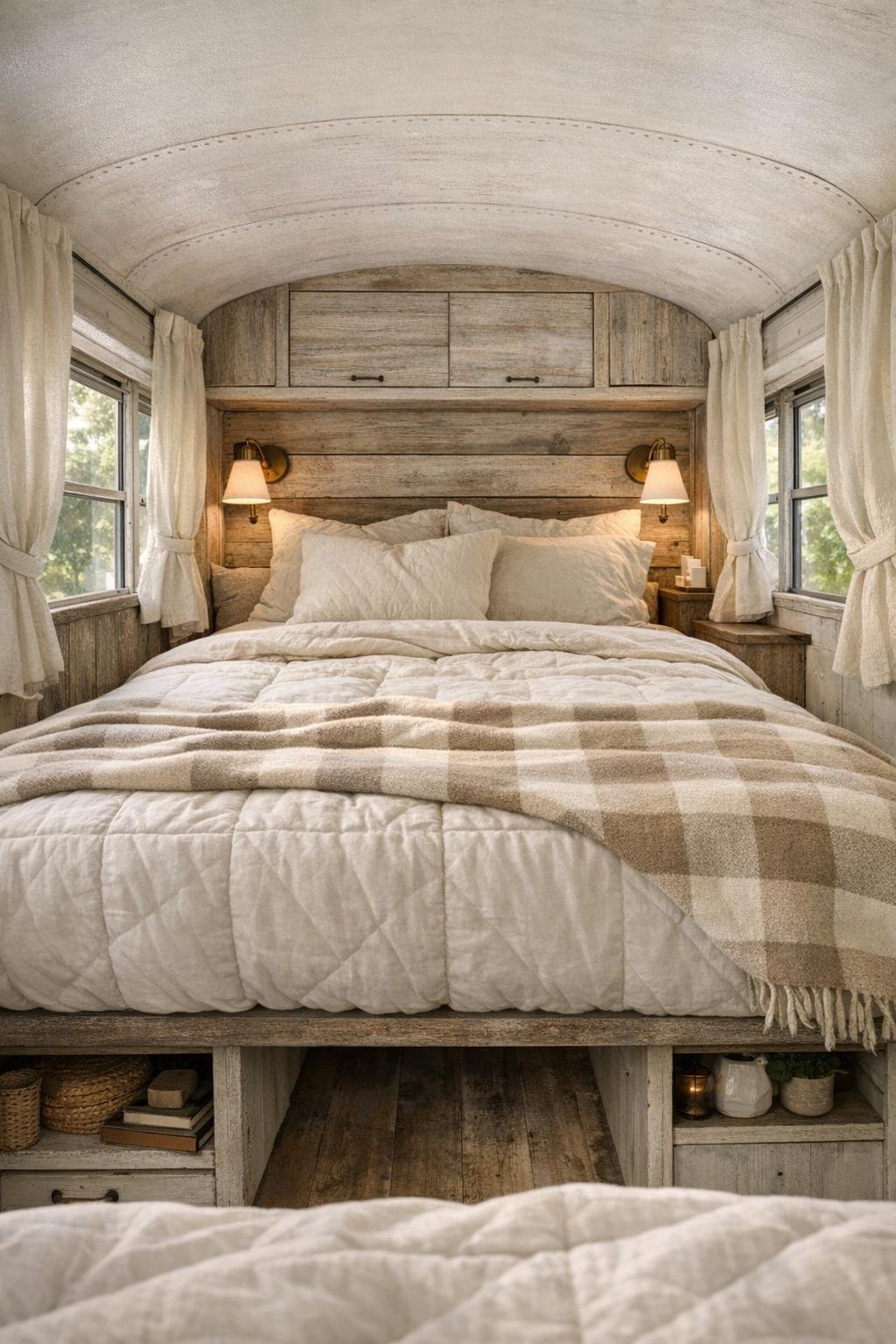
The bedroom is tucked into the quieter end of the bus and handled with a lovely sense of restraint. A raised bed platform creates storage underneath, while the bed itself is dressed simply in ivory quilts, a checked blanket folded at the foot, and pillows in soft earthy tones. Rather than crowding the room with too much furniture, the design relies on built-in night ledges, petite sconces for reading, and overhead cabinetry painted to blend into the walls.
What makes this space feel restful is the way it avoids fuss. The palette stays gentle, with creamy whites, weathered wood, and little touches of faded green that connect back to the kitchen cabinetry and exterior trim. Windows are softened with linen curtains that filter the light rather than block it, so the room keeps a pleasing brightness through the day. It is the kind of bedroom that would encourage early nights, quiet books, and the sort of sleep that comes from feeling safe and settled.
Bathroom
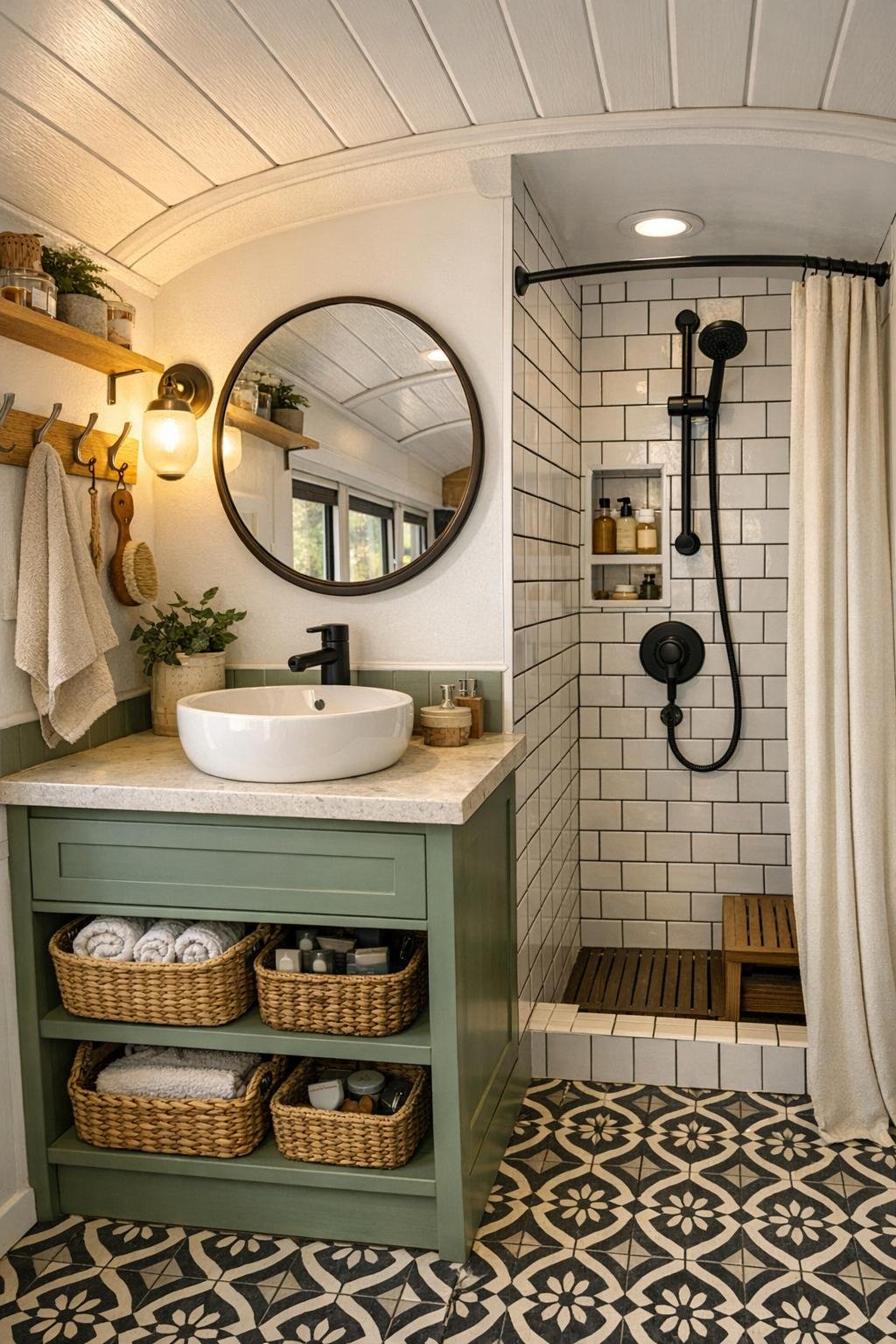
The bathroom may be compact, but it is treated with the same dignity as the larger spaces, and that matters. A small vanity in painted wood, topped with a pale stone counter, gives just enough room for daily rituals, while a round mirror and warm wall lighting keep the space open and flattering. The shower is lined in simple white tile with dark grout, adding a crisp structure that works beautifully against the warmer woods used elsewhere in the bus.
I appreciate the practical thought here too. Woven baskets, recessed shelves, hooks for robes and towels, and a pocket door all help the room function without clutter. The floor appears to be a patterned tile or tile-look surface in muted charcoal and cream, which gives the room a bit of old-fashioned personality. It feels fresh, sturdy, and easy to keep, which is exactly what a good bathroom ought to be, especially in a home where every inch needs to earn its keep.
Other Areas
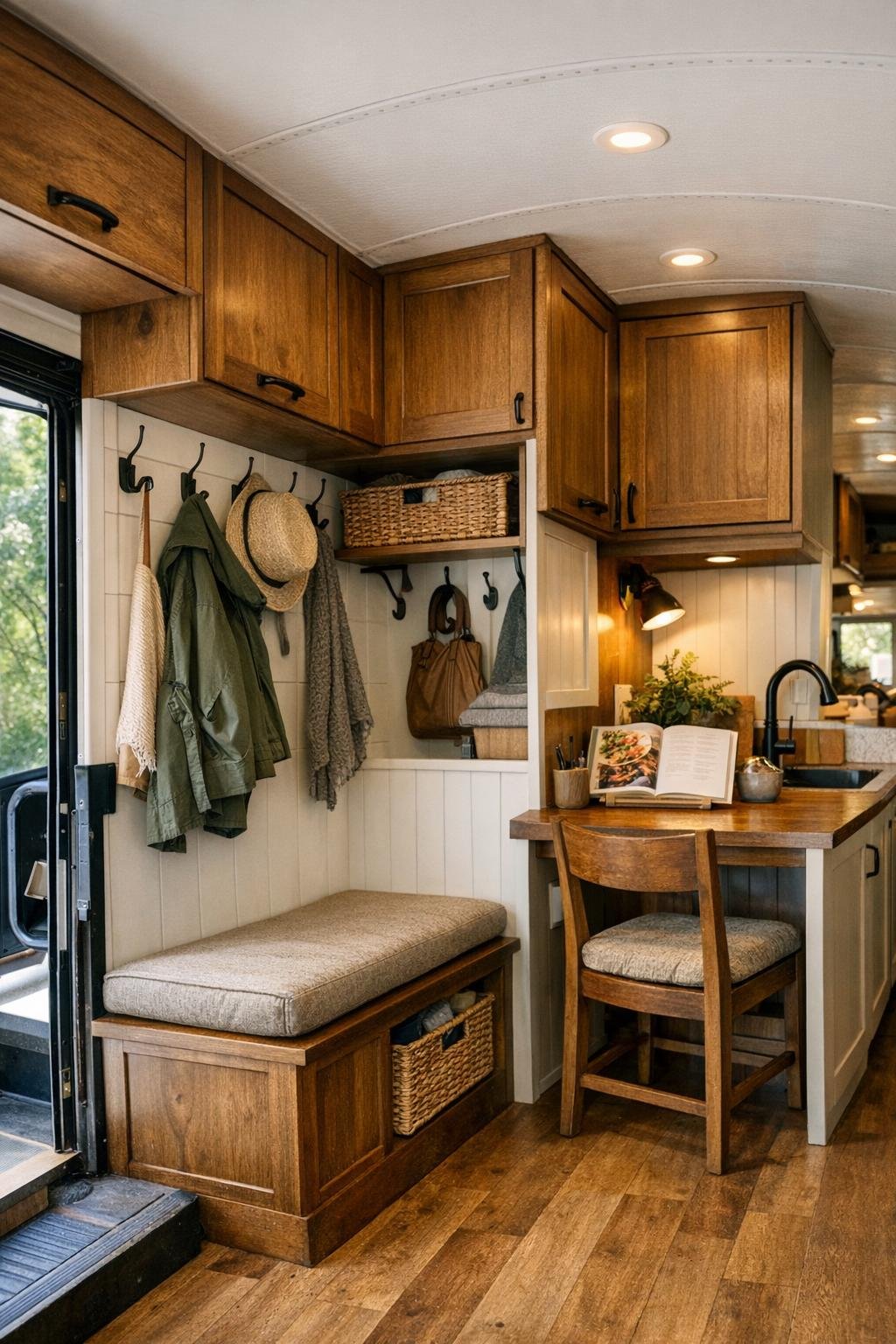
What rounds out the design are the hardworking in-between spaces, those little zones that make a home truly livable. There is likely a narrow entry moment with hooks for jackets, a bench lid hiding muddy shoes, and a tray for garden clippings or market bags. I can also imagine a compact desk nook somewhere along the wall, just enough for paying bills, writing letters, or keeping a favorite cookbook open to a soup recipe that has been made so often it hardly needs reading anymore.
Storage, as always in a small home, is where the intelligence really shows. Overhead cabinets are integrated cleanly so they do not loom, under-seat compartments make use of dead space, and even the stair risers or tucked corners seem ready to hold tools, pantry extras, or a sewing basket. These areas may not be the stars of the bus, but they give the home its calm competence. They are the reason the whole place feels not merely charming, but truly capable of supporting a full and comfortable life.
Why You'd Live Here
You would live here if you believed that smaller living does not have to mean giving up beauty, comfort, or the rituals that make a house feel like home. This bus manages to be clever without showing off, and compact without ever feeling stingy. Most of all, it understands that good design is not just about where the furniture goes, but about how a life unfolds from morning to night, from the first kettle of the day to the last lamp switched off.
I think many people would be won over by the kitchen alone, and rightly so, but the deeper appeal is the sense of care stitched through the whole place. It honors usefulness, welcomes tradition, and still leaves room for pleasure, which is a combination I have always trusted. For a retired couple ready to travel lightly or simply live more deliberately, this converted bus offers a thoughtful, warmhearted version of home that feels both adventurous and wonderfully familiar.