
There is something deeply satisfying about a home that knows exactly what it wants to be, and this rustic off-grid converted bus does just that. Set into a summer homestead landscape with tall grass, kitchen gardens, and the easy hush of open country, it carries a handmade sort of beauty that feels both practical and tender. I can almost smell warm pine boards and sun-baked earth just looking at it. Though it is a concept design, it feels wonderfully lived-in in spirit, with the kind of thoughtful details that make a small footprint seem generous.
What makes this home special is the way it turns constraint into charm. The narrow shell of the bus becomes a blessing rather than a limitation, encouraging every inch to work harder and feel cozier. Rustic wood finishes, softened metal, linen textures, and well-placed windows give it a mood that is part cabin, part farmhouse, and part memory of summer visits out in the country. It is off-grid without feeling austere, and simple without giving up beauty.
Exterior
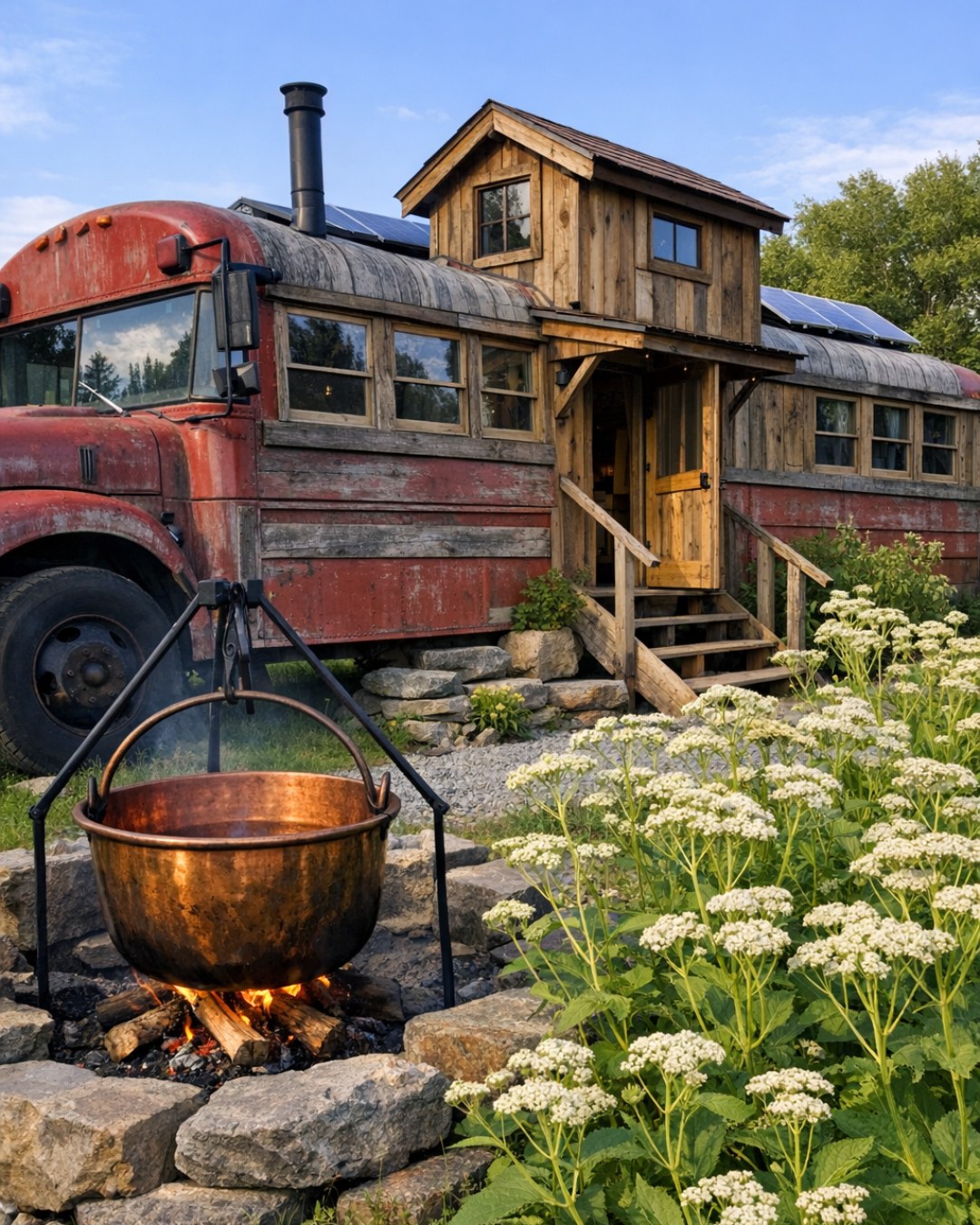
From the outside, the bus keeps enough of its original form to honor its history, but it has been softened into the homestead with natural materials and a weathered, welcoming palette. The body is painted in a muted cream with olive undertones, the sort of color that sits quietly against fields and trees, while trimmed cedar around the windows and entry gives it warmth and a hand-built character. A small wood porch with simple steps grounds the bus in the landscape, and potted herbs, a galvanized watering can, and a pair of old wooden crates make the approach feel useful rather than decorative for decoration's sake.
The roofline tells the off-grid story in the plainspoken way I always admire: compact solar panels set low and neatly, a vent pipe in matte black, and a subtle rainwater collection detail that feels smart and unfussy. Nearby, I imagine a clothesline moving gently in the breeze and a few raised beds catching the afternoon sun. Nothing here is flashy. The beauty comes from proportion, weathered textures, and the way the bus looks as though it has finally found the patch of land where it belongs.
Living Room
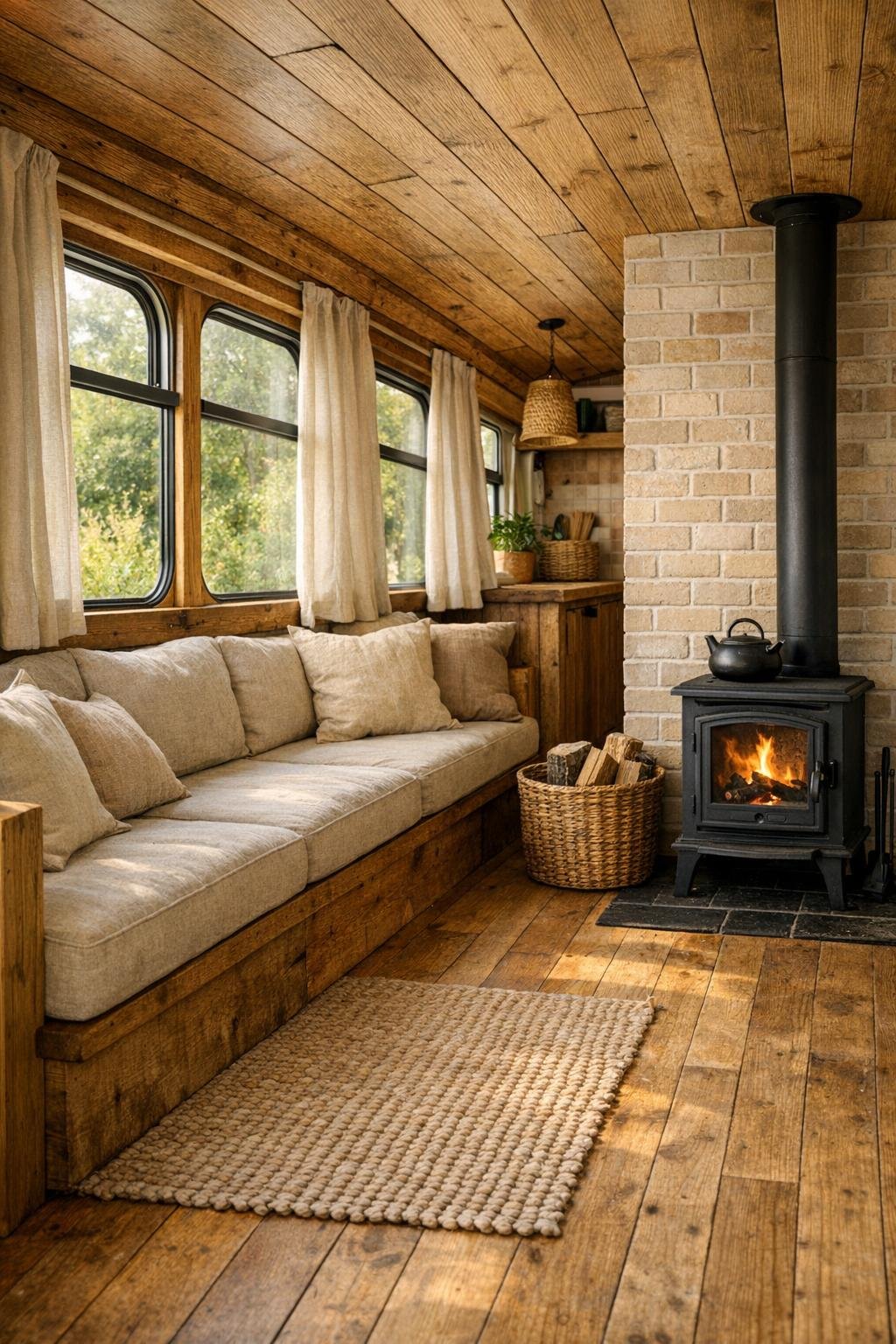
The living room sits just inside with the sort of comfort that reminds me of country homes where every chair was chosen because someone truly wanted to sit in it. A built-in bench runs along one side beneath the windows, topped with thick natural linen cushions in oatmeal and faded moss, while storage drawers below keep the footprint tidy. Across from it, a compact wood stove in black cast iron becomes the visual anchor, set against a heat-safe wall of pale brick tile and reclaimed wood trim. The floor is finished in honey-toned plank wood, which gives the whole bus a warm glow from end to end.
What I love most is how the light works in this little room. Daylight pours through the original bus windows, now framed with soft flax curtains that move easily and never feel fussy. A narrow shelf above the seating holds a few old books, enamelware, and a crock with dried wildflowers, and a small ladder-style wall lamp adds a golden evening glow. The furniture is scaled carefully, with a low stool that can serve as a table or extra seat, and a woven rug underfoot to soften the long corridor feel. It is humble, yes, but beautifully so.
Dining Room
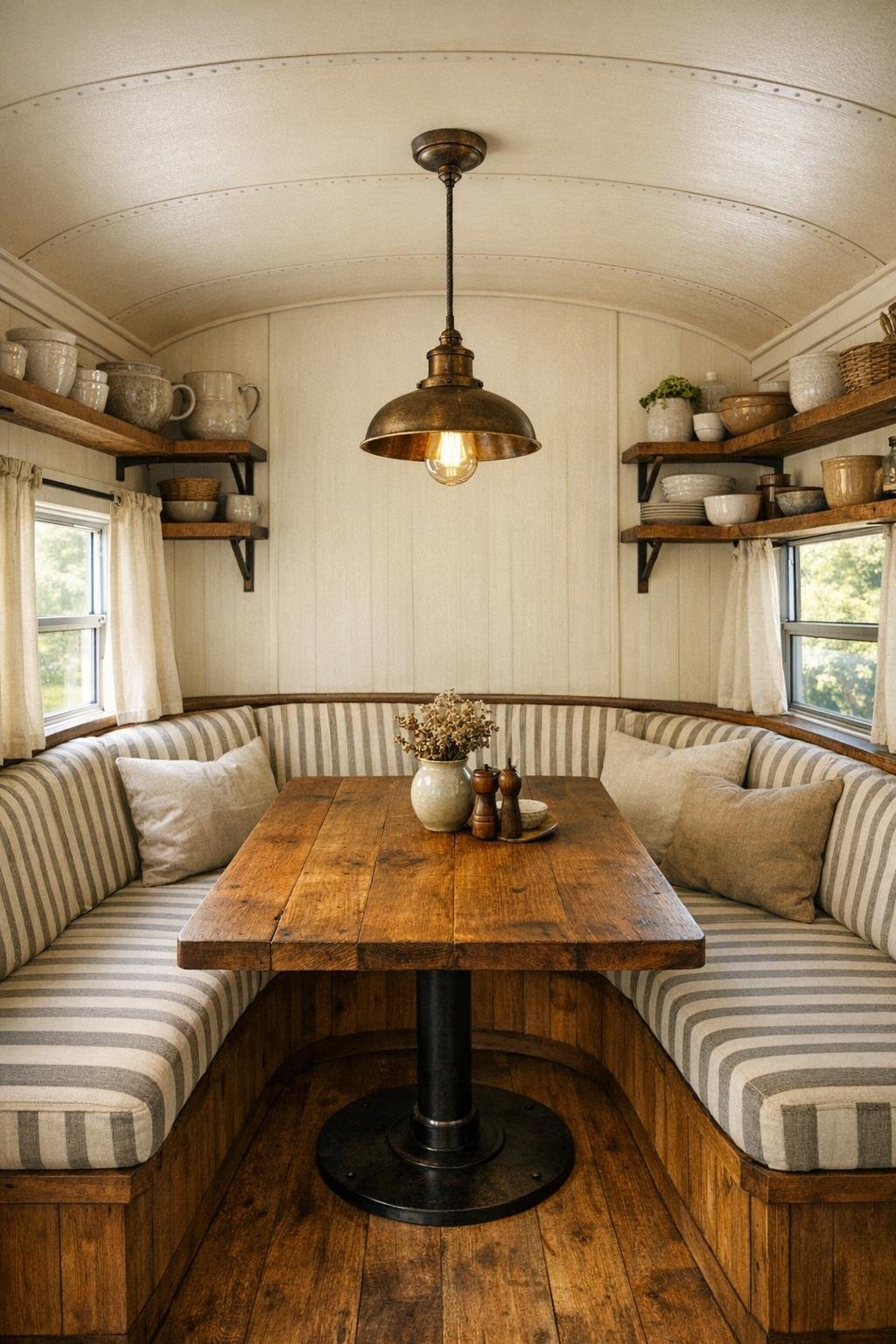
The dining area is tucked neatly between the living room and kitchen, and it has the dear, hardworking charm of a breakfast nook on an old farm. A custom banquette follows the curve of the bus wall, making the most of the narrow interior, while a solid wood table with a softly worn finish sits at the center. The seating is practical but inviting, layered with striped ticking cushions and one or two simple throw pillows in washed rust and sage. Overhead, a modest metal pendant with an aged brass finish pools light directly onto the tabletop, making this little corner feel like the heart of everyday life.
I can picture this space holding everything from early coffee to late summer suppers with tomatoes still warm from the vine. The palette stays grounded in cream, wood brown, dusty green, and touches of black for contrast, which keeps the small area from feeling cluttered. Open shelving nearby displays stacked stoneware, mason jars, and a loaf board leaning casually against the wall. Because the windows are so close, meals here would never feel boxed in; instead, you would dine with the fields right beside you, like an old porch enclosed just enough to be useful.
Kitchen
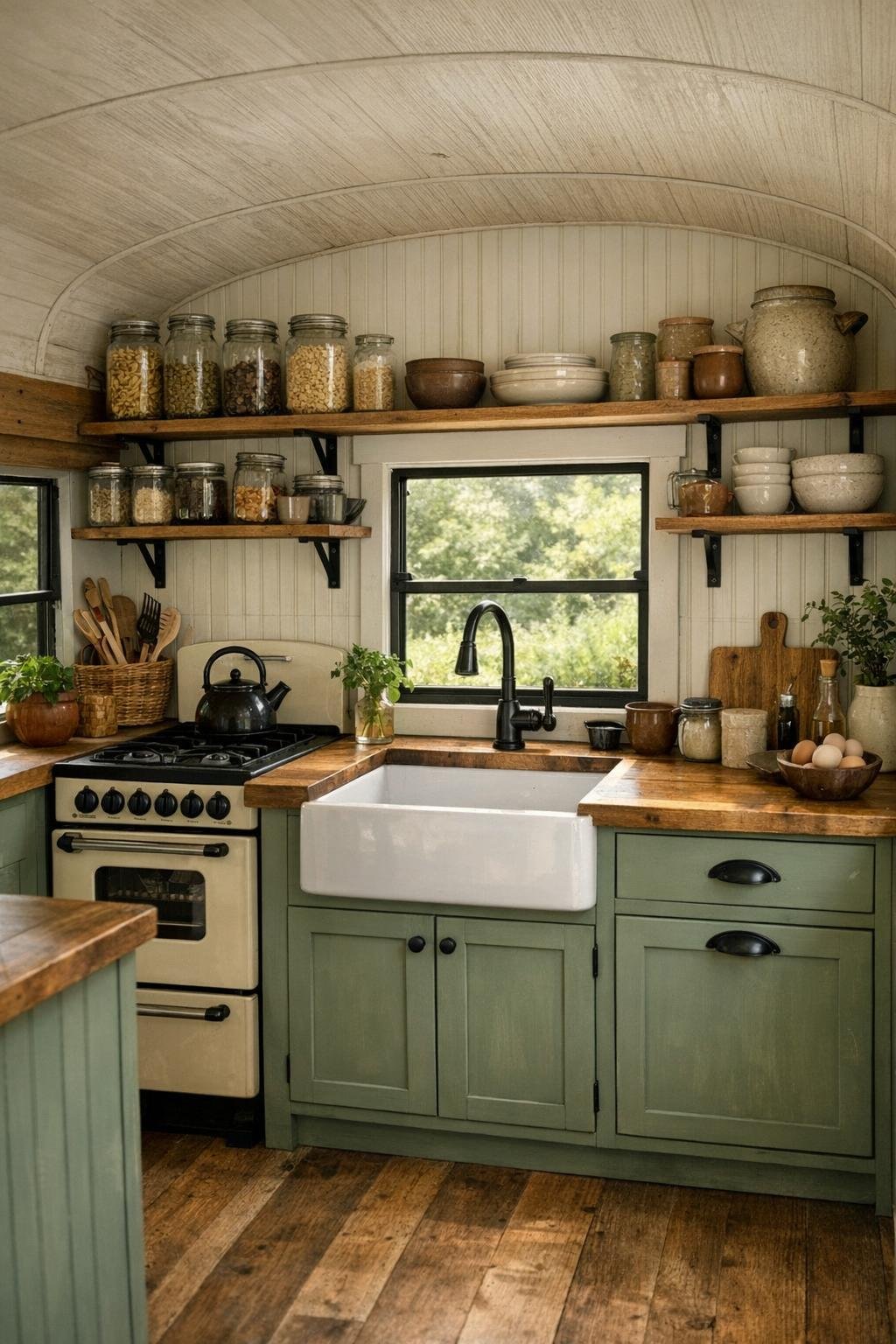
The kitchen is, to my mind, the soul of this home, and I say that as someone who has always believed a kitchen tells the truth about how a house lives. Here, the galley layout is handled with remarkable grace. One side holds lower cabinets in a muted sage paint with simple black latches, topped by butcher block counters worn to a soft satin finish. On the other side, open shelves and a beadboard backsplash keep the room feeling airy instead of boxed in. A deep apron-front sink sits beneath a window, which is exactly where it ought to be in a country-minded home, giving the ordinary work of washing greens or mixing biscuit dough a view worth pausing for.
For an off-grid setup, it is especially thoughtful. There is a compact vintage-style propane range, a slim undercounter refrigerator hidden behind a paneled front, and carefully integrated storage for dry goods in baskets and glass jars. Brass hooks hold everyday utensils, and a narrow rail keeps favorite pans close at hand. The materials do much of the storytelling: wood, enamel, iron, beadboard, and old-fashioned hardware all speaking in the same gentle voice. Nothing is excessive, yet nothing feels lacking. It is the kind of kitchen where one good soup pot and a reliable skillet would be all the luxury you need.
Bedroom
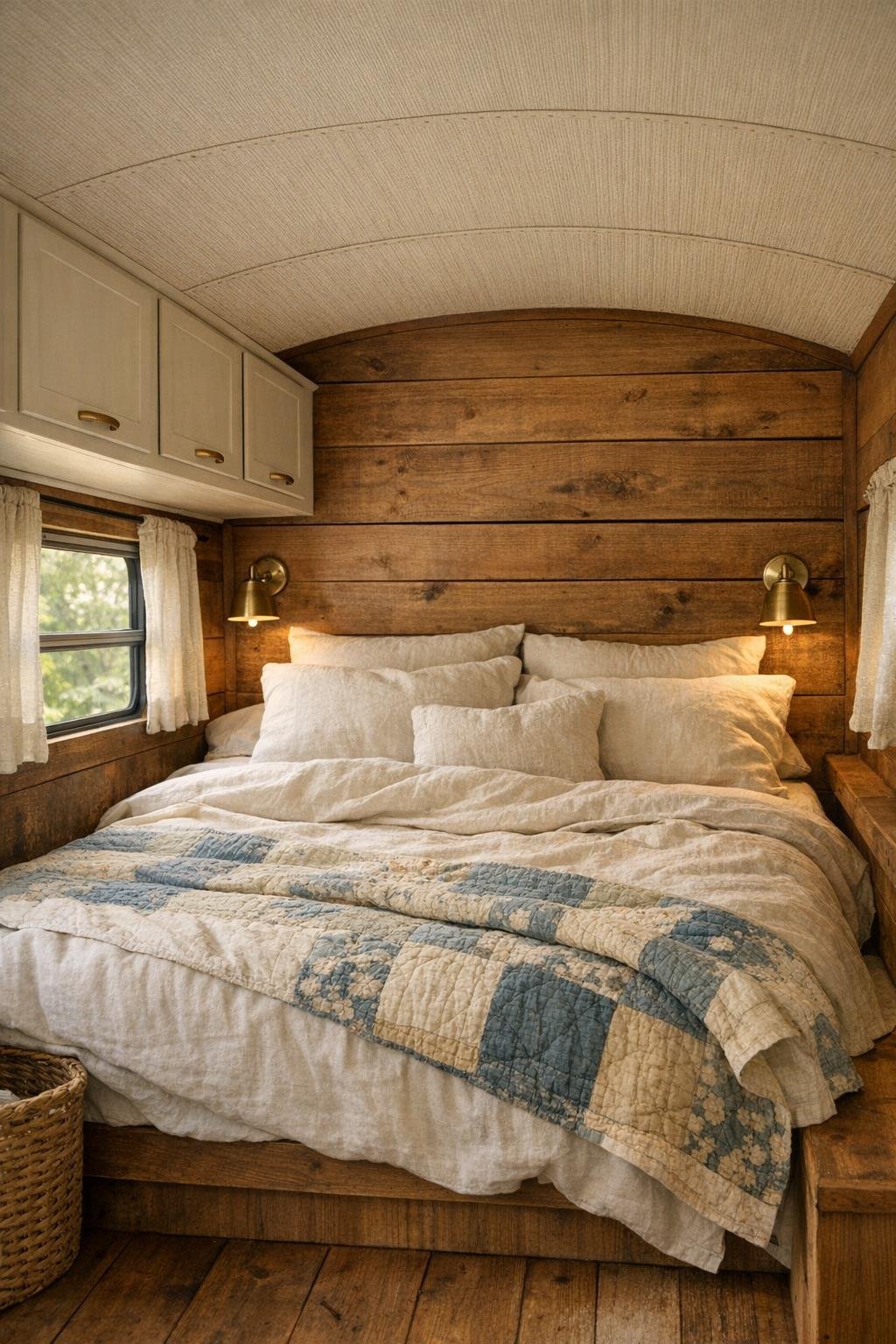
The bedroom at the back of the bus feels like a quiet exhale. It is small, certainly, but it does not feel skimpy because the design leans into calm rather than complication. A built-in bed platform stretches wall to wall, dressed in soft ivory linen, a quilt in faded blue and cream, and a wool throw folded at the foot. The wood surround gives the sleeping area a tucked-in quality, almost like a berth, but elevated by better materials and softer color. Small reading sconces in brushed brass are mounted neatly at each side, and there is just enough shelf space for a book, a pair of glasses, and a ceramic cup.
The storage is especially clever here, slipped beneath the bed and into overhead cabinets painted the same warm cream as the walls so they recede instead of crowding the eye. A narrow window at pillow height and another at the foot of the bed pull in cross-breezes and views of the grasses outside, making the room feel connected to the land. I appreciate that the designers did not try to over-style this space. Rest is the ornament. Between the quiet palette, the natural fabrics, and the closeness of wood all around, it would be very easy to sleep soundly here.
Bathroom
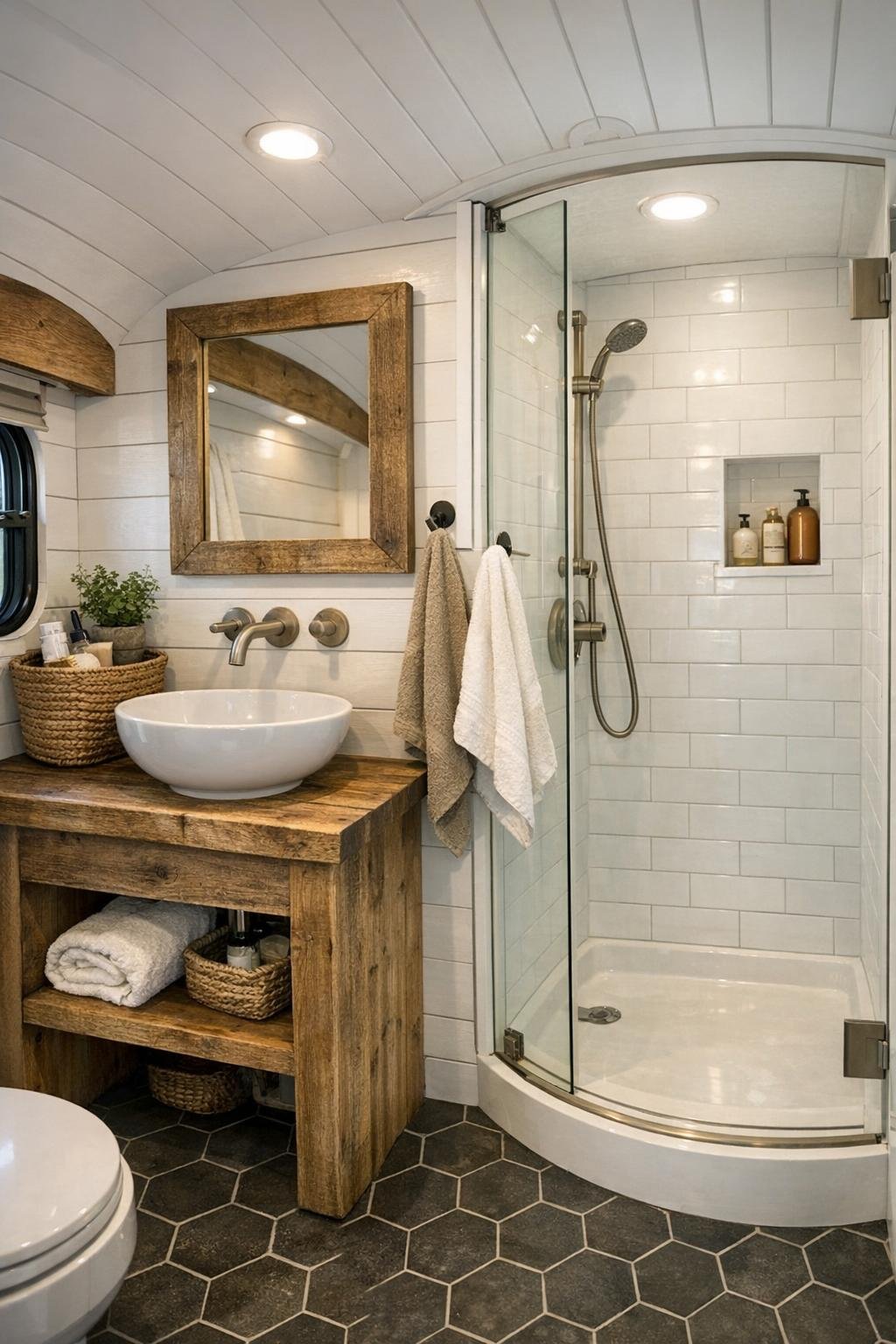
The bathroom is a little lesson in restraint and good sense. Rather than fighting the limited width, the layout embraces a clean, efficient arrangement with a compact vanity on one side, a shower at the end, and thoughtful storage fitted wherever a sliver could be found. The vanity is made from reclaimed wood with a soapstone-look countertop and a small round basin, paired with an old-style wall-mounted faucet in brushed nickel. Vertical shiplap painted a soft warm white helps lift the ceiling visually, and the floor shifts to small hex tiles in a muted charcoal that ground the room beautifully.
The shower is especially charming, enclosed with a clear glass panel to preserve openness and lined in simple white tile with dark grout for a touch of vintage utility. A tiny shelf niche holds plain bottles and a bar of soap, while a woven basket and linen hand towels keep the room from feeling cold. Light bounces off a modest mirror with a wood frame, and a small window offers the sort of fresh air that no fan can quite replace. It feels crisp and clean, but still belongs to the same rustic story as the rest of the bus.
Other Areas
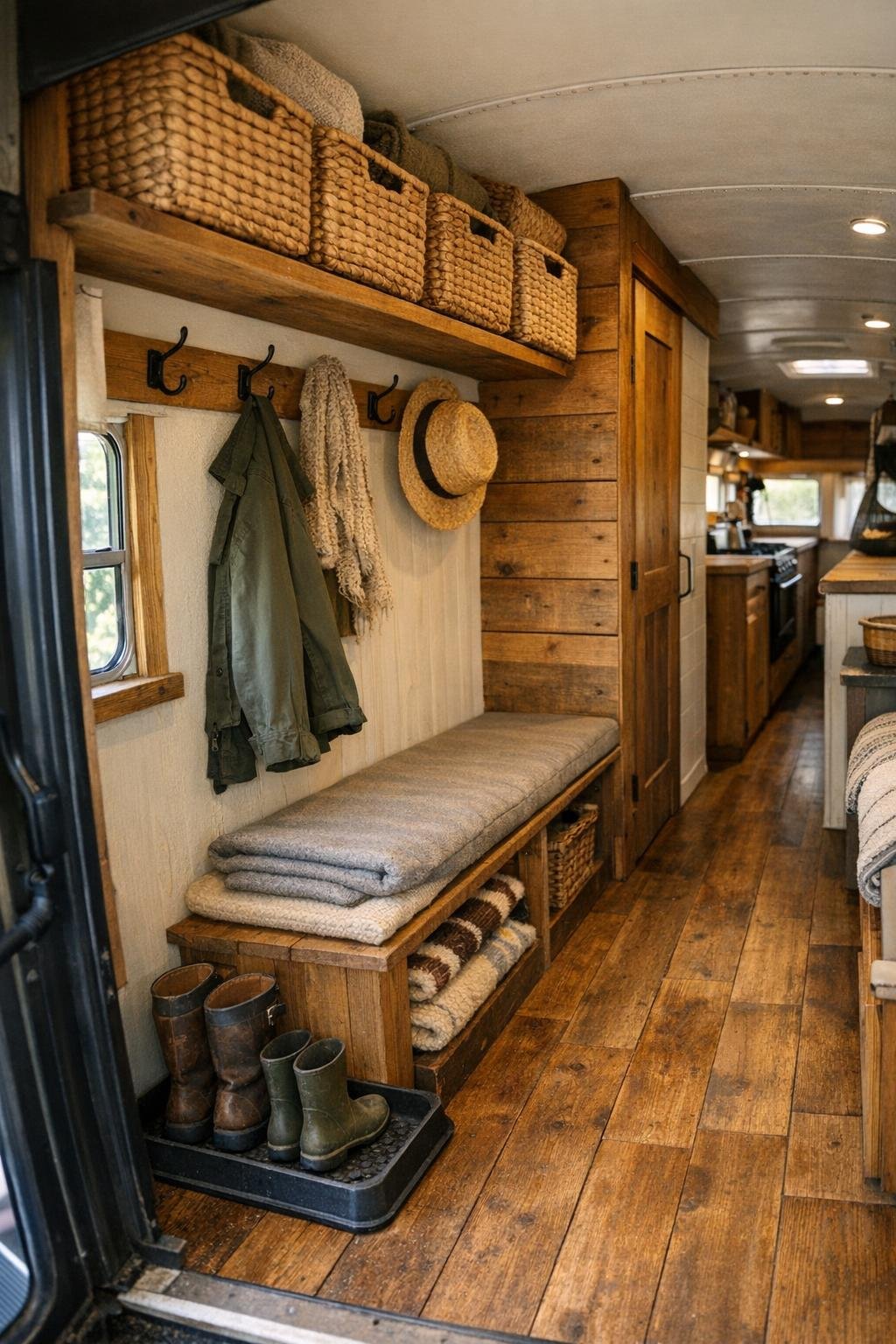
What rounds out this home are the transition spaces and practical details, those often-overlooked areas that make daily life smoother. The entry corner includes sturdy hooks for hats and field jackets, a narrow boot tray, and a bench lid that lifts for hidden storage. Overhead shelves run selectively along the bus, never so much that they crowd the ceiling, but enough to hold baskets, folded blankets, and pantry overflow. Even the hallway is treated with care, using rhythm in the wood planks, window placement, and little pools of light to make movement through the bus feel intentional rather than cramped.
I also like the way the home gestures outward. Just beyond the bus doors, there is room in the design for an outdoor wash station, a simple sitting area, and perhaps a shade awning for hot afternoons. Inside, every threshold seems to acknowledge that country living rarely stays neatly indoors. Mud, herbs, aprons, watering cans, and armfuls of produce all need a place to land, and this layout understands that. It is a small home, but it makes room for real life, which is more than can be said for many houses twice the size.
Why You'd Live Here
You would live here if you believe comfort has more to do with care than with square footage. This bus offers a slower, more attentive kind of beauty, the kind that asks you to notice morning light on wood grain, the usefulness of a well-placed shelf, or the peace that comes from owning only what you truly use. It is off-grid and modest, yes, but it never reads as deprived. Instead, it feels deeply competent, settled, and warm.
To me, the greatest success of this design is that it makes rustic living feel gracious. It honors rural traditions without turning them into a costume, and it treats small-space living with dignity rather than novelty. I can imagine a pie cooling on the counter, muddy boots by the door, and a lantern glow settling in after sunset. That is the promise of this home: not extravagance, but a good and beautiful life arranged with wisdom.