
This tiny home takes its cues from an old Amish meetinghouse, and I have to say, it wears that inspiration beautifully. From the sage green exterior to the quiet, honest lines of the architecture, everything about it feels settled and sincere, as if it has stood in this rural landscape for generations. The proportions are simple, the detailing restrained, and the mood is one of calm usefulness rather than show. Even as a concept design, it has the kind of soul I’m always hoping to find in a home.
What makes it special is not just the look, but the way craftsmanship leads every decision. I’m drawn to homes that understand the comfort of natural wood, good light, and rooms arranged for real living, and this one does that with uncommon grace. There’s a humility to it that reminds me of the farm kitchens and gathering spaces I’ve known all my life in the Midwest, where beauty came from care, patience, and work done well by hand.
Exterior
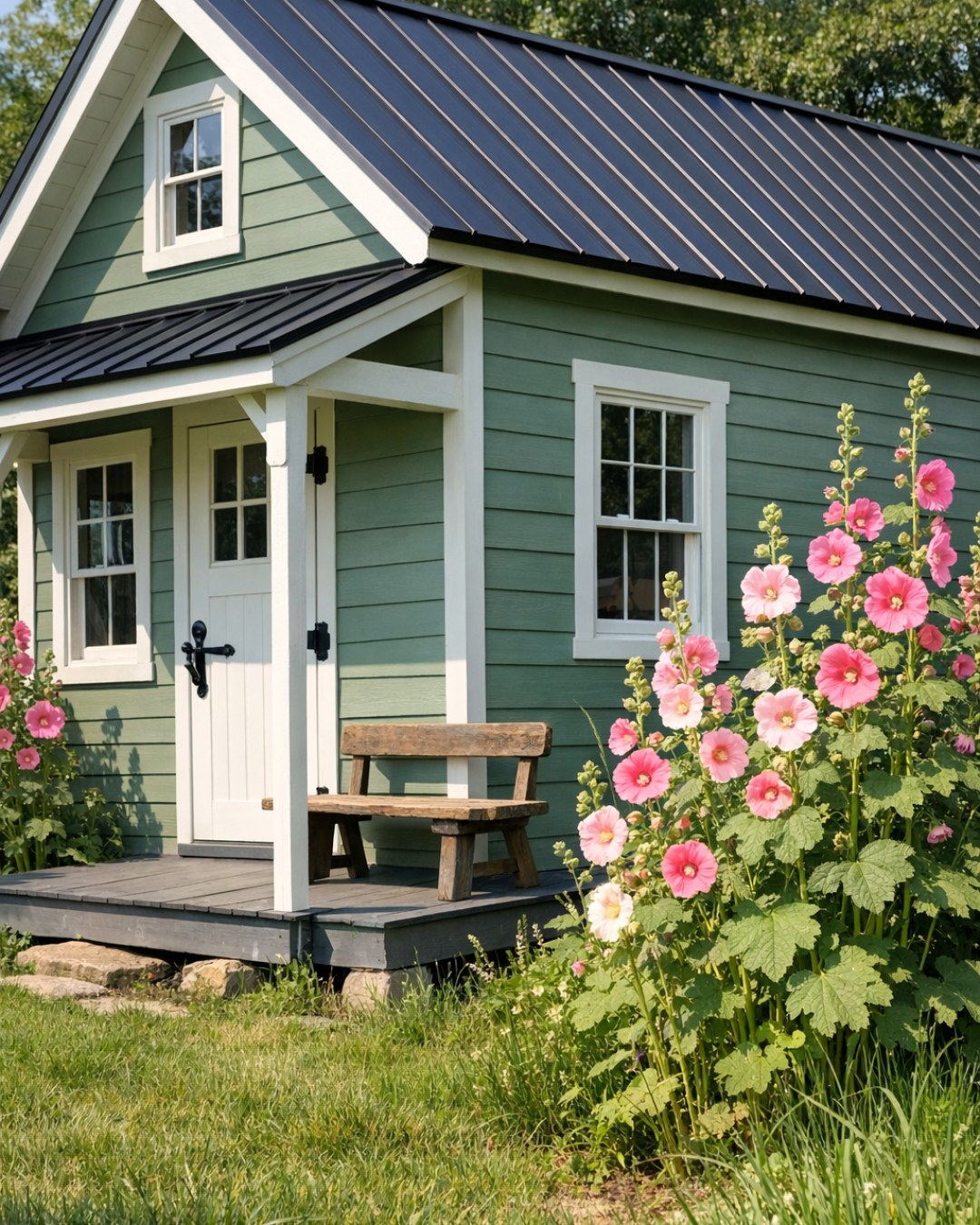
The exterior is finished in a muted sage green siding that feels soft against the landscape, with creamy trim and a dark metal roof giving it just enough contrast. Its meetinghouse influence shows in the clean gabled form, tall windows, and centered entry, all handled with a neatness that feels both traditional and fresh. I can picture it sitting at the edge of a field or tucked beside a gravel lane, looking especially handsome in early morning light when the color takes on a silvery cast.
What I appreciate most is the restraint. There’s no unnecessary ornament, only the pleasure of proportion and materials that age with dignity. A modest stoop, simple wood door, black iron hardware, and lantern-style sconces give it a welcoming face without fuss. It feels sturdy and grounded, the kind of small home that doesn’t need to call attention to itself because every line already knows exactly what it’s doing.
Living Room
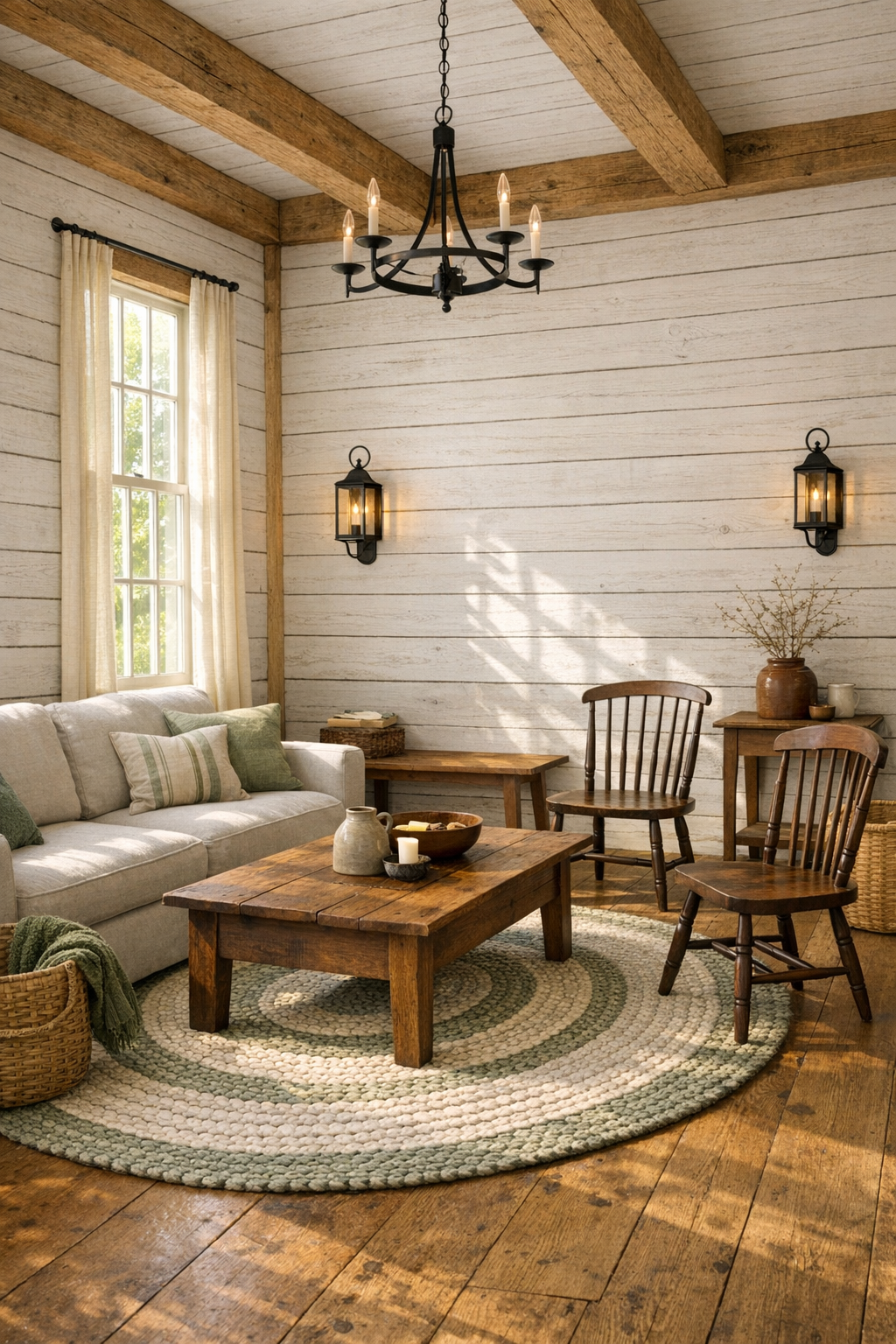
Inside, the living room opens with a warmth that catches me right away. Whitewashed plank walls keep the small footprint feeling airy, while honey-toned wood beams and wide-board oak floors bring in the depth and character that make a room feel lived in. The palette stays close to the exterior, with sage, cream, oatmeal, and soft brown layered through upholstery and textiles. A compact linen sofa, a pair of spindle-back chairs, and a solid wood coffee table create a seating area that feels intimate without seeming crowded.
The lighting is especially lovely here. Tall windows let in generous natural light, and by evening the room would glow under a wrought-iron chandelier and shaded wall sconces with a candlelit look. Woven baskets, a braided wool rug, and handmade quilts folded over the arm of a chair add texture in a way that feels deeply personal. It’s the kind of room that invites quiet conversation, mending by the window, or a cup of coffee at daybreak before the rest of the house stirs.
Dining Room
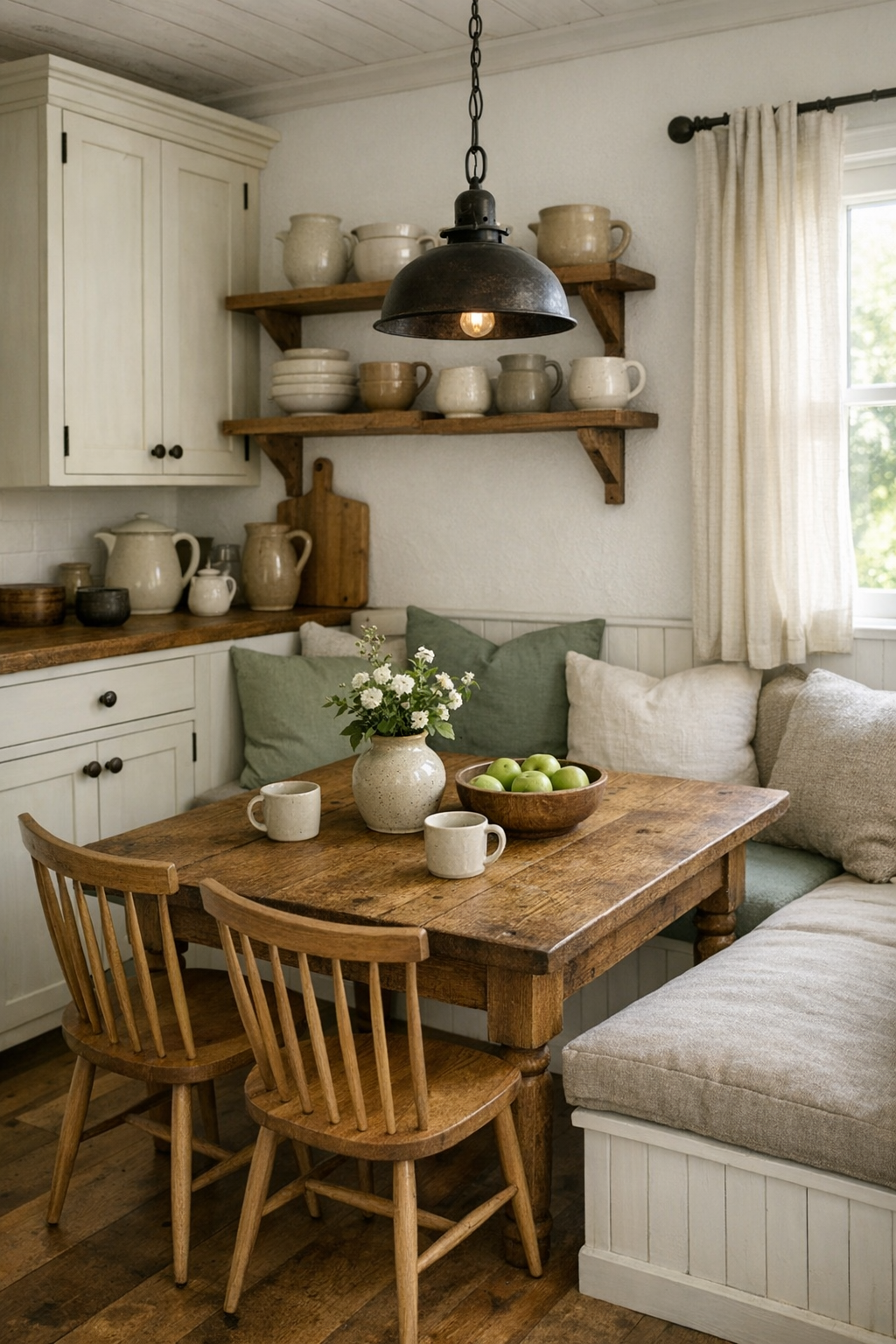
The dining area is modest in size but rich in presence, anchored by a rectangular farmhouse table in rubbed oak with enough room for four to gather comfortably. A built-in bench along one wall makes smart use of space and softens the room with seat cushions in faded green and natural flax. I like the honesty of the materials here: wood with visible grain, simple peg rails, and a cabinet painted in a creamy milk-paint finish that looks as if it has been loved for years.
Above the table, a pared-down iron pendant keeps the look grounded, while the nearby windows keep the whole space bright and cheerful through the day. The room doesn’t rely on decoration so much as texture and proportion. A plain woven runner, stoneware dishes displayed on open shelves, and a crock of wooden utensils are enough to give it life. It feels like a place where supper would be served without hurry, where every meal, even a simple one, might turn into a memory.
Kitchen
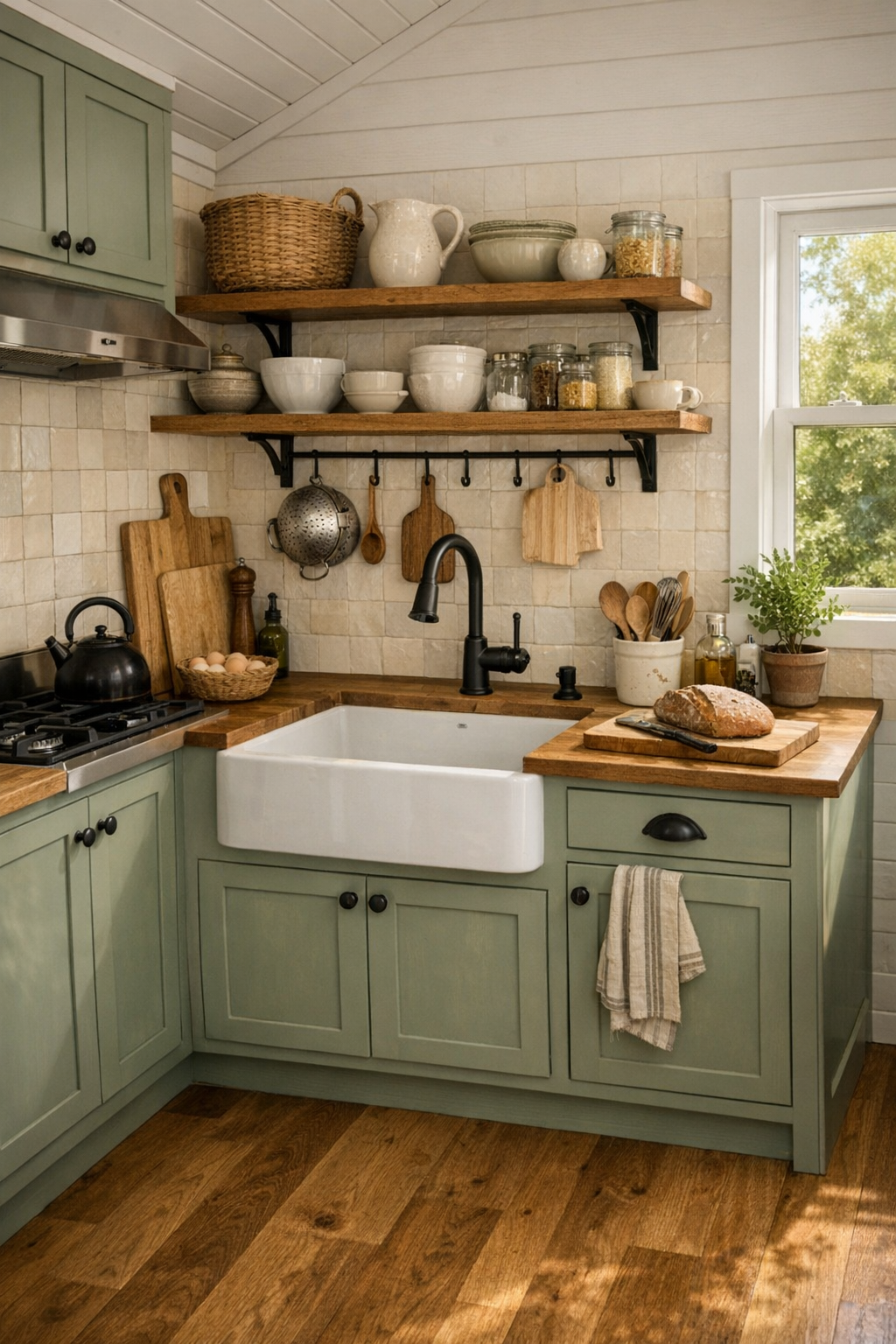
The kitchen may be compact, but it’s planned with the kind of common sense I admire. Cabinetry in a soft sage paint is paired with butcher-block counters and a white apron-front sink, creating a look that is practical, durable, and deeply inviting. Open shelving keeps everyday dishes within easy reach, and a narrow bank of drawers and lower cabinets makes the most of every inch. The backsplash, done in creamy handmade-look tile, reflects light softly and keeps the room from feeling tight.
I can tell this is a kitchen meant for actual cooking, which always wins me over. There’s enough clear work surface for biscuit dough or pie pastry, and the warm wood details keep it from drifting into anything too sleek or impersonal. Small black hardware, a bridge faucet in an aged finish, and a peg rail for linens all reinforce the old-meets-new mood. It feels rooted in tradition, yet perfectly capable of serving modern life, which is no small trick in a tiny home.
Bedroom
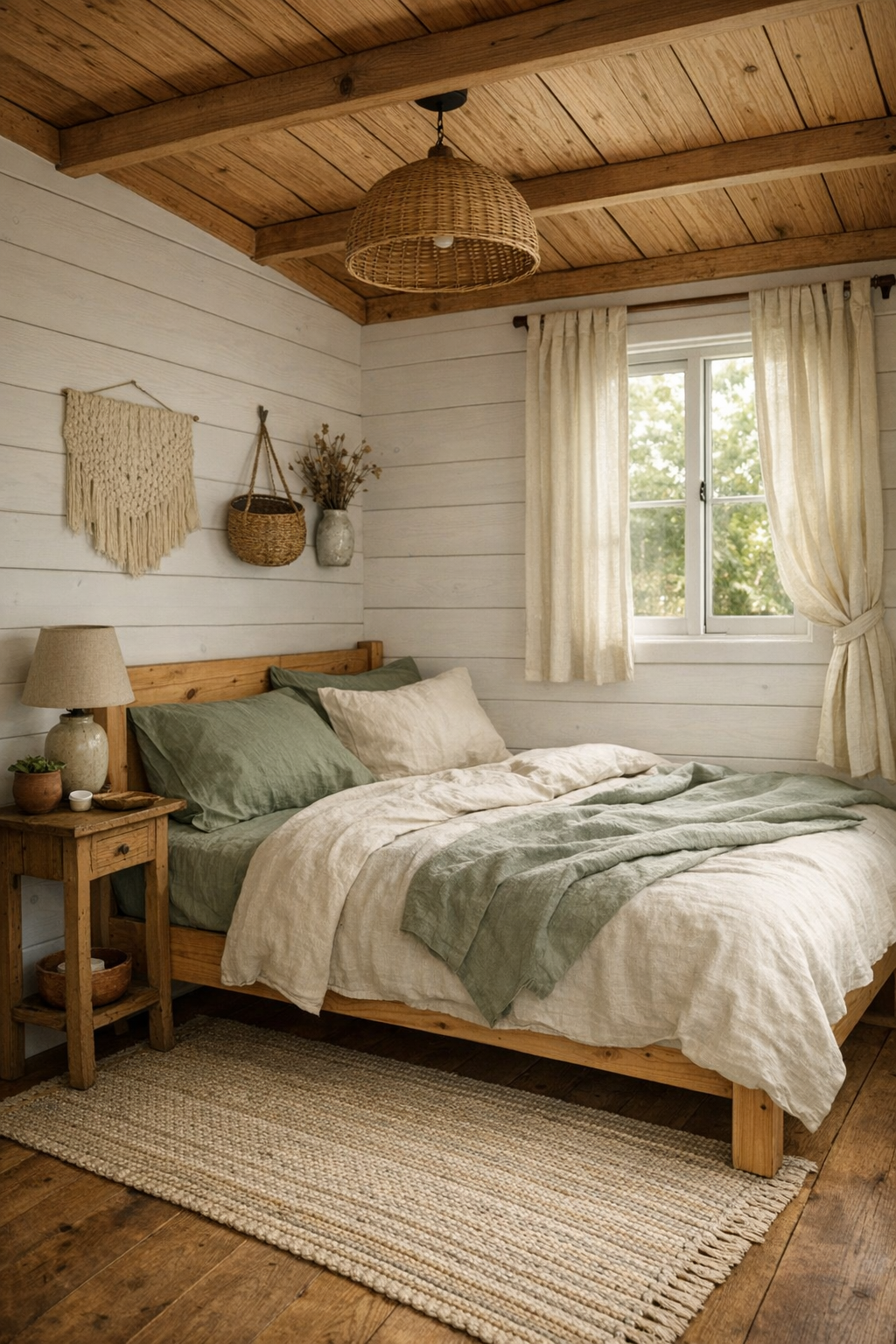
The bedroom is quiet and spare in the best possible way. A simple wood bed frame stands against white plank walls, dressed in layered linen bedding in cream, sage, and weathered taupe. Rather than crowding the room with too much furniture, the design keeps things intentional: a narrow nightstand, a small wall-mounted reading lamp, and perhaps a peg shelf above for a book, a folded quilt, and a little pottery vase. That restraint lets the craftsmanship and the calm do the talking.
What makes the room feel generous is the use of texture and light. Soft curtains filter the daylight, and the wood ceiling overhead brings a cocooning warmth that balances the pale walls. Underfoot, a flatwoven rug adds comfort without visual heaviness. It has the peace of a room designed for rest rather than display, and I think that is something many of us are hungry for. There’s an old-fashioned modesty here that feels deeply comforting.
Bathroom
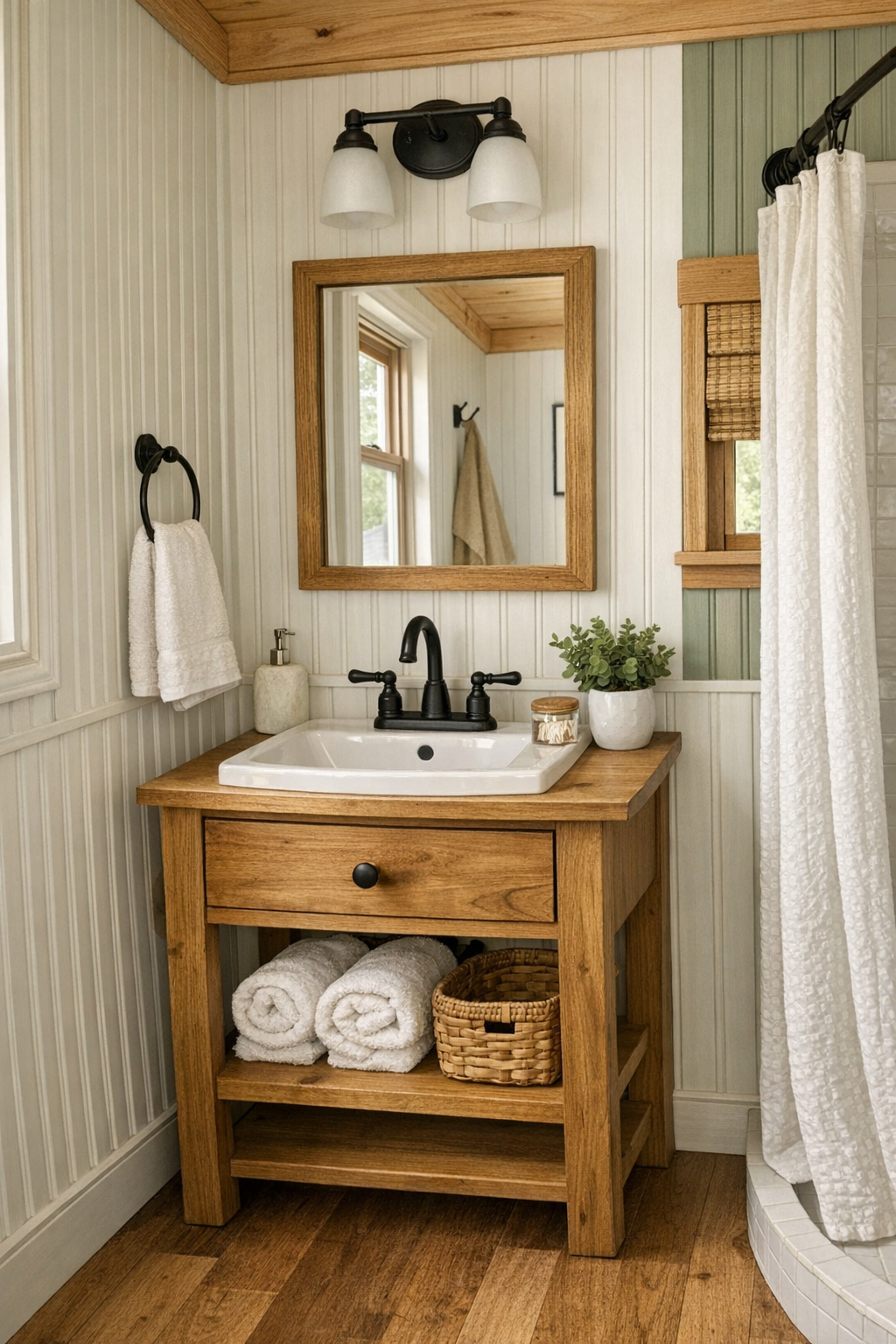
The bathroom carries the same plainspoken beauty as the rest of the home. A petite wood vanity, perhaps in a natural or lightly stained finish, supports a simple porcelain sink, while unlacquered brass or black fixtures give the room a touch of age and substance. Vertical wall boards or beadboard add period character, and the floor, whether brick, stone-look tile, or painted wood, grounds the space with a sense of permanence.
I especially like the idea of keeping the palette soft here: warm whites, weathered greens, and natural wood tones, with crisp cotton towels adding a clean note. A small mirror in a handmade frame and a shaded wall light or two would be plenty. In a tiny home, bathrooms can so often feel like afterthoughts, but this one seems treated with the same care as every other room. It’s simple, yes, but simplicity done well has a beauty all its own.
Other Areas
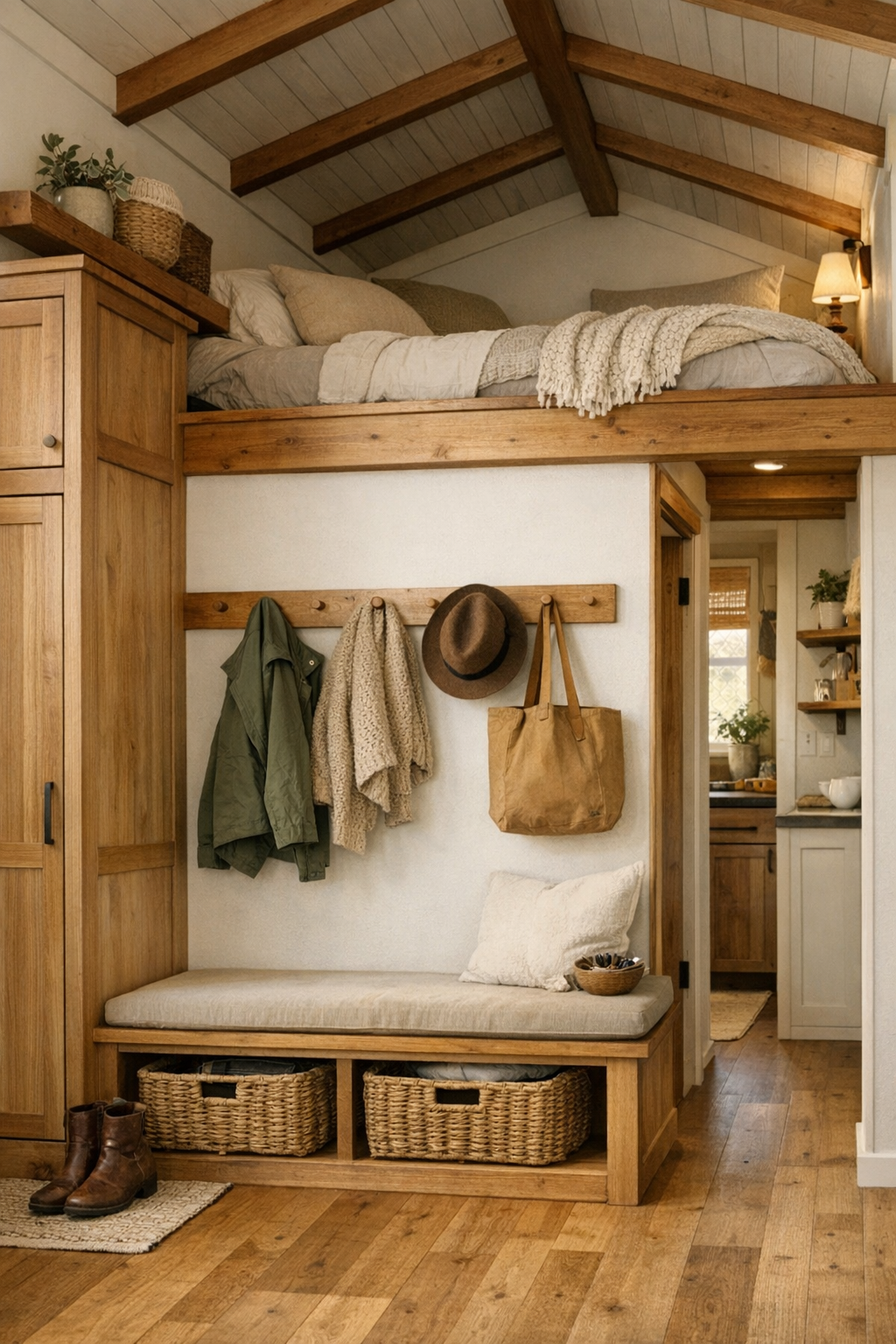
In a home like this, the in-between spaces matter just as much as the main rooms, and they’ve been handled with real thought. A compact entry nook with pegs for coats, a bench for boots, and baskets tucked underneath would make daily life easier without taking up much room. If there’s a loft or sleeping alcove, I imagine it trimmed in warm wood with low built-in storage and just enough headroom to feel cozy rather than cramped. These are the details that help a small house live larger than its square footage suggests.
Circulation throughout the home feels gentle and efficient, with sightlines that allow one room to borrow light and spaciousness from the next. Built-ins are likely doing a good deal of the heavy lifting, from under-bench storage to narrow shelves fitted neatly between studs. I’m always touched by homes that respect everyday routines, and this one clearly does. Even the overlooked corners seem designed to support a slower, tidier, more intentional way of living.
Why You'd Live Here
You’d live here because it offers something many larger homes never quite manage: peace. Not emptiness, not austerity, but a steady, deeply grounded sense that everything you need has been chosen with care. The design honors rural traditions without becoming theatrical about them, and that balance gives the home a timelessness I find very appealing. It feels honest, hardworking, and tender all at once.
I think, too, you’d live here for the feeling of being held by your surroundings. The sage palette, the hand-touched wood, the practical layout, and the modest beauty all work together to create a home that asks you to slow down and settle in. It reminds me that the most memorable places are not always the grandest ones. Sometimes they are the homes that know exactly who they are and welcome you in as if you’ve belonged there all along.